
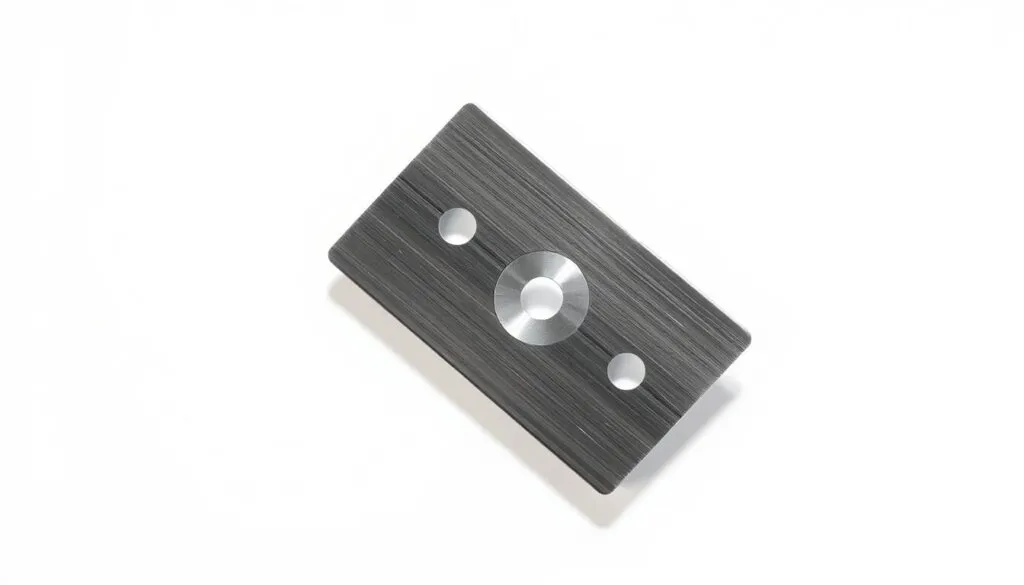
Have you ever wondered if your grass could look healthier after mowing? The secret might lie in a tool you rarely think about. Your cutting equipment’s edge plays a crucial role in your yard’s appearance and vitality.
Many homeowners overlook this critical maintenance aspect. A properly maintained cutting edge creates clean slices through grass blades. This promotes faster healing and reduces stress on your turf. Dull edges tear and shred the grass instead of cutting cleanly.
This tearing action can damage delicate grass plants. It’s especially important when dealing with new growth. For instance, begin with sharp mower blades before that first after overseeding. Dull blades can pull weak seedlings right from the soil.
Finding the perfect edge sharpness matters more than you might realize. There’s a specific sweet spot that maximizes performance. This guide will show you how to achieve and maintain that ideal cutting condition throughout the season.
Key Takeaways
- Proper blade sharpness directly impacts grass health and appearance
- Clean cuts heal faster and reduce turf stress
- Dull blades tear grass instead of slicing cleanly
- Sharp blades are essential when mowing new seedlings
- There’s an optimal sharpness level for maximum performance
- Regular maintenance extends blade life and improves results
- Correct sharpness reduces strain on your mower’s engine
Why a Sharp Mower Blade is Essential for Your Lawn
Proper edge maintenance on your cutting equipment delivers immediate benefits to your landscape. The quality of each cut directly impacts turf health and visual appeal throughout the growing season.
The Role of a Butter Knife Edge
Professionals recommend the “butter knife edge” standard for optimal performance. This means your cutting tool has enough sharpness to slice cleanly through vegetation without being overly fragile.
Jason Keeley, lawn care expert at Mowing Magic, explains that clean cuts heal quickly. This reduces stress on each grass plant and maintains vibrant green coloration. The right edge condition protects your turf from diseases and pests.
Over-sharpening creates problems too. Razor-sharp edges damage easily from rocks and debris. They lose their effectiveness faster than properly maintained edges.
Effects of a Dull Blade on Lawn Health
Dull equipment tears and shreds grass instead of making clean slices. This creates ragged edges that turn white or brown within days. The damaged tips dry out quickly, giving your landscape a dull appearance.
These torn edges expose turf to fungal infections and pest damage. Cornell University research shows that dull cutting tools increase fuel consumption by 20-30%. This costs you money while harming your grass.
Regular maintenance ensures your equipment operates efficiently. It keeps your landscape healthy and reduces strain on the engine. Proper care extends the life of your cutting tools significantly.
How Sharp Should a Lawn Mower Blade Be: Expert Recommendations
The perfect cutting edge strikes a balance between sharpness and durability. Professionals use specific standards to achieve consistent results.
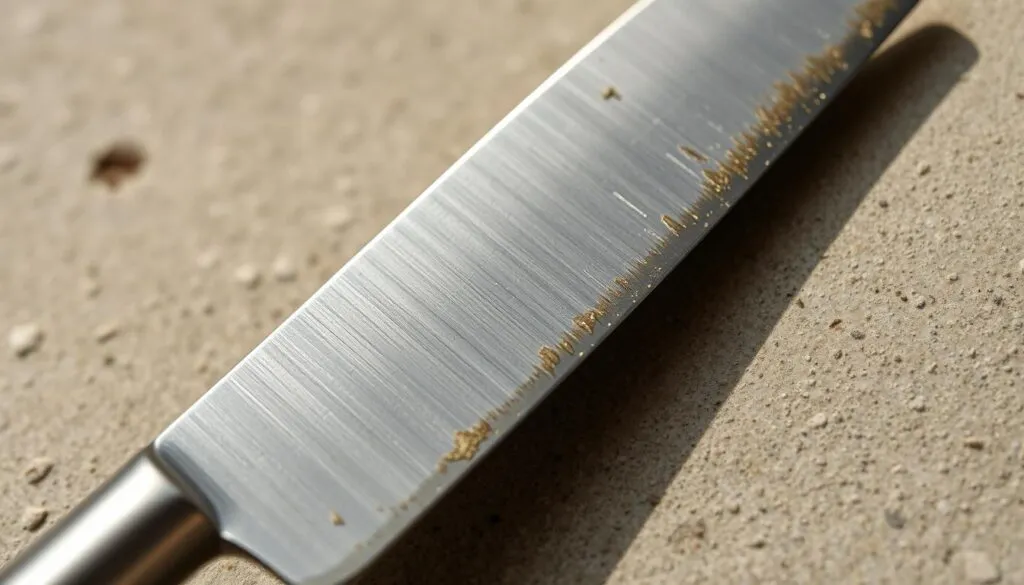
Optimal Edge Angle and Cutting Performance
Manufacturers design cutting tools with a specific bevel angle. This ranges from 30 to 45 degrees for most equipment.
The factory angle provides durability while maintaining effective cutting performance. Sharpening below 30 degrees creates a thinner edge that wears quickly.
Angles over 45 degrees cause ragged cuts and faster dulling. Stick with the original specifications for best results.
Balancing Your Blade for Reliability
Proper balance ensures smooth operation and extends tool life. An unbalanced cutting component causes vibration and uneven wear.
This affects both your equipment and the quality of your work. Regular balancing checks prevent premature replacement needs.
The right edge profile maintains consistent cutting quality between maintenance sessions. This reliability saves time and effort throughout the season.
Signs Your Mower Blade Needs Sharpening
Your lawn’s appearance often reveals the first clues about your cutting equipment’s condition. Recognizing these warning signs early prevents serious turf damage and maintains optimal performance.
Uneven Grass Cuts and Clumped Clippings
Immediately after mowing, inspect your grass blades closely. Properly sharpened equipment creates clean, even cuts. Dull blades tear vegetation instead of slicing cleanly.
Look for ragged edges on individual grass plants. Uneven cutting patterns create patches at different heights. Clumped clippings indicate pulling rather than cutting action.
Two to three days later, watch for discoloration. Brown or white tips appear where blades were torn. Your entire lawn may develop a yellowish, sun-scorched appearance.
Visible Nicks, Dents, and Damage
Regular visual inspections detect physical damage before it affects cutting quality. Examine the cutting edge for obvious nicks and dents. These imperfections compromise performance significantly.
Rounded edges indicate advanced wear. Look for rust accumulation along the cutting surface. Bent sections create vibration and uneven cuts.
Performance changes also signal problems. Increased mowing time and multiple passes over the same area suggest dullness. Unusual noises or excessive shaking demand immediate attention.
Tools and Safety Measures for Sharpening Your Blade
Having the right equipment and following proper safety protocols transforms this maintenance from a chore into a simple, rewarding task. Proper preparation ensures excellent results and protects you from harm.
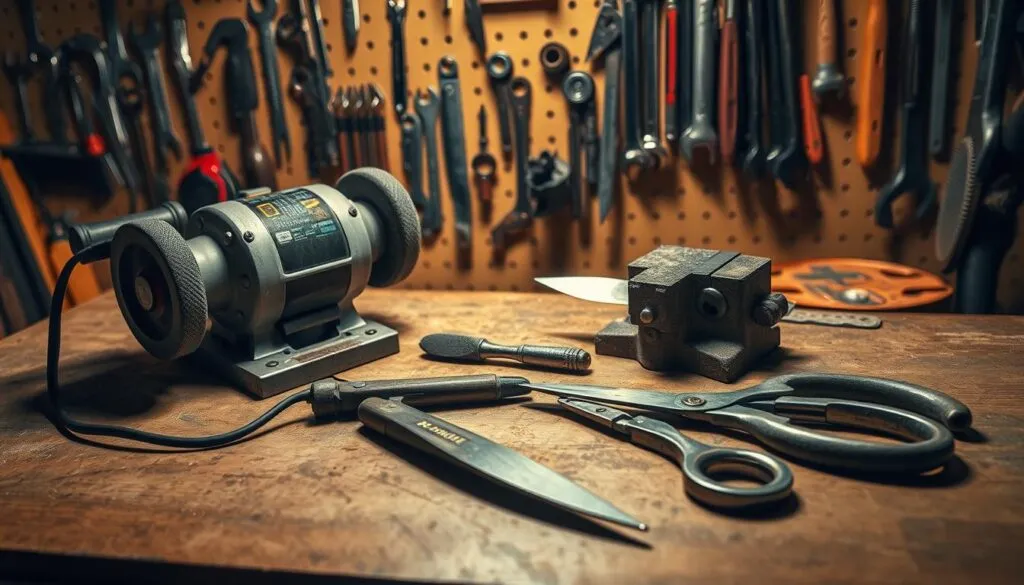
Essential Tools for a DIY Approach
You likely own most of the necessary tools already. A socket wrench, lubricant like WD-40, and a wood block are essential for removal. A bench vise or C-clamp securely holds the cutting component during work.
For the sharpening itself, you have options. A basic metal file offers control for beginners. A drill-based sharpener provides more speed. For the most efficient removal of metal, an angle grinder with a 60-grit flap disk is the pro choice. Don’t forget a balancer to check your work.
Safety Precautions and Proper Handling
Safety is your top priority. Before starting, always disconnect the power source. For gas models, disconnect the spark plug wire. For electric mowers, remove the battery. This prevents accidental startups.
Wear appropriate personal protective equipment. Safety goggles and a face mask shield your eyes and lungs from tiny metal particles. Thick work gloves protect your hands from sharp edges. Long sleeves add another layer of protection.
Larger equipment like lawn tractors requires special caution. Use proper lifting equipment to access the blades safely. Always work on a stable, level surface to prevent the machine from tipping.
Step-by-Step Guide to Sharpening Your Mower Blade
Achieving professional-level results begins with mastering the removal and refinement process. This systematic approach ensures safety and effectiveness throughout your maintenance routine.
Blade Removal and Cleaning Techniques
Start by tilting your equipment to access the cutting component. Apply penetrating lubricant to the mounting bolts and wait 10-15 minutes. This loosens stubborn connections.
Mark the grass-facing side with paint for correct reinstallation. Place a wooden block against the edge to prevent rotation while loosening bolts. Clean all surfaces thoroughly before proceeding.
Choosing the Right Sharpening Method
Three primary techniques exist for restoring your cutting edge. Each offers different benefits based on your experience and available tools.
The metal file provides maximum control for beginners. Position it at the original factory angle, typically 30-45 degrees. Use consistent downward strokes from the inner edge to the tip.
| Method | Time Required | Skill Level | Best For |
|---|---|---|---|
| Metal File | 30-45 minutes | Beginner | Precise control |
| Drill Attachment | 15-20 minutes | Intermediate | Speed with guidance |
| Angle Grinder | 5-10 minutes | Advanced | Fastest results |
Drill-based sharpeners offer faster results with built-in angle guides. The angle grinder method delivers the quickest sharpening but requires experience to avoid removing excess metal.
Always work on both sides equally. Check your progress frequently. Aim for that perfect butter knife edge that slices cleanly without being razor-sharp.
Maintaining Balance for a Clean, Even Cut
After honing the cutting edge, the next crucial step ensures your equipment operates smoothly. Proper balance prevents vibration and protects your machine from damage.
An unbalanced blade creates uneven cuts and strains the engine. The sharpening process removes metal, potentially creating imbalance if one side loses more material.
How to Check and Correct Unbalanced Blades
Testing balance requires simple tools. Place the center hole of your cutting tool on a dedicated balancer. If it tilts, the lower side is heavier.
Improvised methods work effectively too. Suspend the component on a nail driven into wood or a screwdriver clamped securely. The blade should hang perfectly level.
When imbalance occurs, carefully remove more metal from the heavier end. Recheck frequently until balance is restored. This prevents costly damage to the mower deck and internal components.
| Balance Check Method | Tool Required | Accuracy Level |
|---|---|---|
| Dedicated Balancer | Commercial tool | Professional |
| Nail Test | Common nail | Good |
| Screwdriver Method | Standard screwdriver | Good |
| Bolt Technique | Large bolt in vise | Good |
Proper balance extends the life of your mower and ensures clean cuts. Never skip this vital maintenance step after sharpening your equipment’s cutting components.
Maintenance Tips to Prolong Blade Sharpness
Developing smart maintenance habits prevents premature wear and ensures consistent performance. Proper care extends the time between sharpening sessions significantly.
Regular Inspection and Cleaning Routine
Establish a seasonal schedule for your equipment. Spring is ideal for comprehensive inspection and sharpening before heavy use begins.
Check cutting edges every 25 hours of operation. Thick grass varieties may require attention every 8-12 hours. Sandy or rocky conditions demand more frequent checks.
Clean components after each use in wet climates. Remove debris before mowing to minimize damage. These simple steps maintain optimal performance.
When to Replace Versus Sharpen Your Blade
Replacement becomes necessary when components show significant damage. Deep nicks, bends, or cracks indicate the end of useful life.
Consider new blades every 1-2 years under normal conditions. Replacement costs typically range from $15-25. Fresh components reduce strain on your equipment.
Sharpening works well for minor wear and routine maintenance. Balance this approach with periodic replacement for best results throughout the seasons.
Conclusion
Consistent blade care separates amateur lawn maintenance from professional-level results. This comprehensive guide demonstrates that proper cutting tool maintenance is essential, not optional.
The ideal butter knife edge provides the perfect balance for clean cuts and durability. Regular attention to your mower blade directly impacts turf health and equipment longevity.
Implement the techniques covered here to save time and money. DIY sharpening gives you control over your equipment’s performance while building valuable skills.
Always prioritize safety during maintenance procedures. Your confidence will grow with each session, making blade care a rewarding part of your lawn care routine.
The end result is a healthier, more attractive lawn and reliable equipment performance season after season.
FAQ
What happens if my mower blade is too dull?
A dull blade tears grass instead of cutting it cleanly. This causes ragged, brown tips that make your lawn look unhealthy. Torn grass is more vulnerable to disease and loses moisture faster. You’ll also see more clumps of clippings left on the turf.
How often should I sharpen my mower blades?
For most lawns, you should sharpen the cutting edge every 20-25 hours of mowing. This typically means once or twice per mowing season. If you hit rocks or other debris, inspect and sharpen your blades more frequently to maintain a clean cut.
What is the best angle for sharpening a lawn mower blade?
Most manufacturers recommend maintaining the original angle, which is usually between 30 and 45 degrees. You can use a sharpening guide tool to help you match the existing bevel. Keeping the correct angle is crucial for both cutting performance and blade balance.
Can I sharpen my mower blade without removing it?
It is not recommended. For safety and to achieve a proper, balanced edge, you must always remove the blade from the mower deck. This allows for thorough cleaning, inspection for damage, and safe handling during the sharpening process.
What tools do I need to sharpen a blade myself?
Basic tools include a wrench to remove the blade, a sturdy vise, safety gloves, and eye protection. For the sharpening itself, you can use a metal file, a bench grinder, or an angle grinder with a flap disc. A blade balancer is also essential to check your work.
How can I tell if my blade is unbalanced?
After sharpening, use a dedicated blade balancer or a simple nail through the center hole. If one side consistently dips lower, the blade is unbalanced. An unbalanced blade causes excessive vibration, which can damage your mower’s engine and spindle.
When should I replace the blade instead of sharpening it?
Replace the cutting tool if it has significant damage, like large bends, deep cracks, or excessive metal loss from repeated sharpening. If more than two inches of the cutting edge is worn away, it’s time for a new blade to ensure optimal lawn care.