
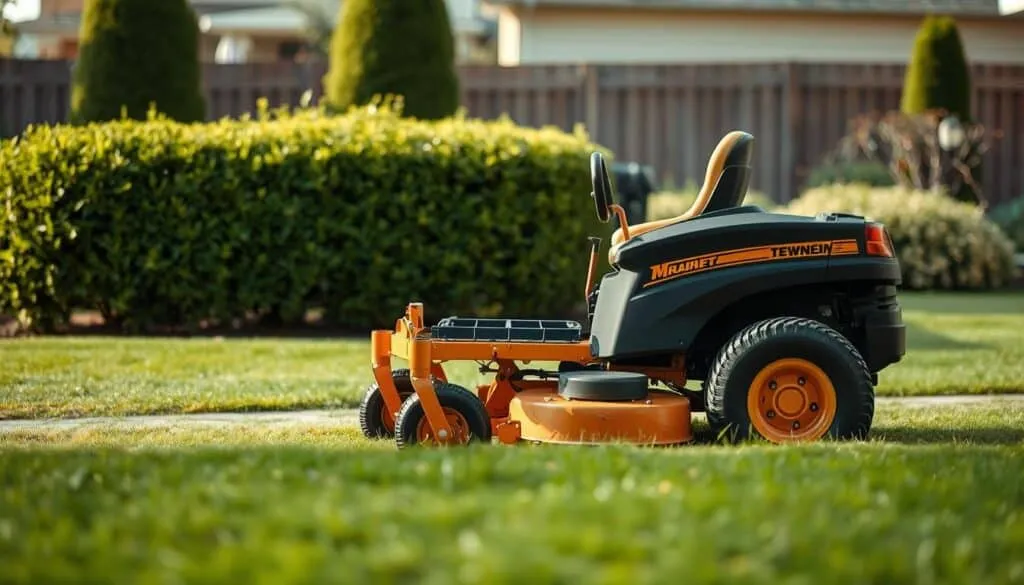
Have you ever considered that the single most important measurement for your lawn tractor might not be what you think? Many people focus on engine power or brand reputation, but the true key to a perfect cut lies in the dimensions of your machine.
Your mower’s cutting deck size is the primary factor determining its working width. This measurement dictates how much grass you can cut in one pass. It directly influences your mowing efficiency and the time you spend on lawn care.
The physical size of the machine is usually just slightly larger than its cutting deck. This is a critical detail for storage planning. You need to ensure the equipment fits comfortably in your garage or shed.
Choosing the correct dimensions for your property is essential. A machine that’s too large becomes difficult to maneuver around obstacles. One that’s too small will turn a simple task into a lengthy chore.
Key Takeaways
- The cutting deck width is the most important measurement for mowing efficiency.
- Your mower’s overall physical size is crucial for storage considerations.
- Larger decks cover more area quickly but are less agile in tight spaces.
- Smaller decks offer better maneuverability but require more passes to mow the same area.
- The right size for your property depends on your lawn’s total area and landscape complexity.
- Understanding dimensions before purchase helps avoid frustration and buyer’s remorse.
- Proper sizing transforms routine lawn maintenance from a chore into a simple, efficient task.
Understanding Cutter Width and Lawn Tractor Dimensions
The efficiency of your lawn maintenance routine hinges largely on one specific dimension of your equipment. Cutting width serves as the primary factor determining how much grass area your machine covers with each pass. This measurement directly impacts your total mowing time and overall productivity.
The Role of Cutting Width in Lawn Mowing Efficiency
Your mower’s cutting width establishes a direct relationship with area output. Larger cutting widths allow you to mow wider strips of grass, reducing the number of passes needed. This significantly decreases your overall mowing time.
The cutting deck’s performance works together with travel speed and turning capability. A wide deck alone doesn’t guarantee efficiency if the machine lacks proper maneuverability. Multiple blades in the cutting deck ensure better coverage during each pass.
Comparing Mini Riders, Lawn Tractors, and Zero-Turn Mowers
Different property sizes require specific machine categories. Mini-riders with 24-30 inch cutting widths excel at properties around 1,000-2,500 m². Their compact dimensions provide excellent navigation around obstacles.
Lawn tractors feature cutting decks exceeding 40 inches, handling 2,000-10,000 m² areas. Zero-turn mowers offer the largest cutting widths up to 72 inches. These professional-grade machines efficiently manage areas exceeding 10,000 m².
Your equipment’s physical width typically matches its cutting width closely. This matters significantly when calculating storage space requirements for your property.
How Wide is a Ride on Mower: Factors to Consider
Choosing the right mower width involves balancing multiple factors specific to your landscape. Your property’s unique characteristics determine which cutting deck size will work best for efficient maintenance.
Assessing Your Lawn Size and Mowing Frequency
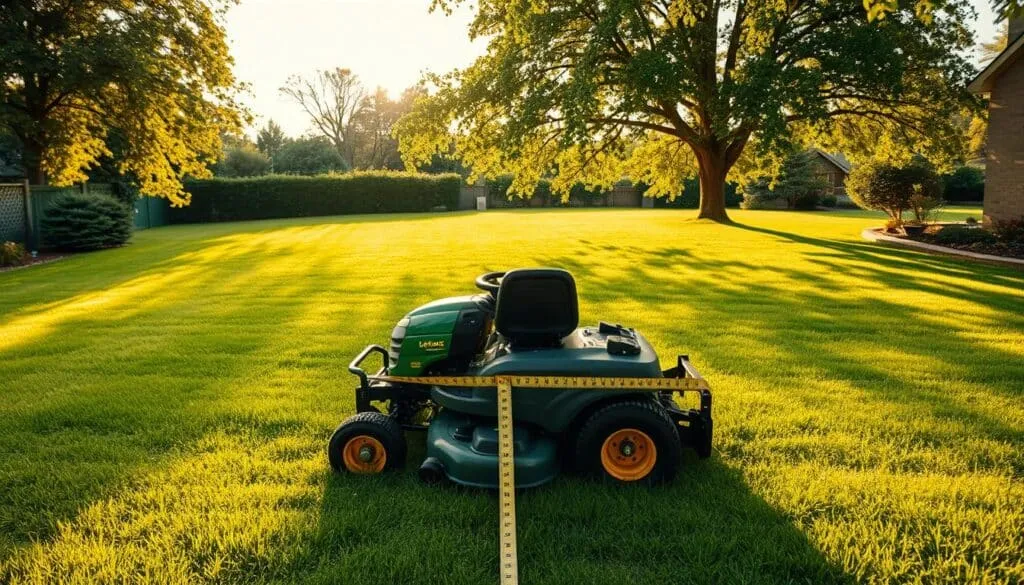
Start by measuring your total lawn area. Properties under 1,000 square meters typically need narrower mowers around 50-80 cm wide. Larger spaces exceeding 2,000 square meters benefit from cutting decks over 100 cm.
Your mowing schedule affects width requirements. Frequent cutting allows for narrower decks since grass stays shorter. Infrequent maintenance demands wider machines to handle taller growth efficiently.
Consider your garden’s shape and obstacle density. Curved boundaries and numerous trees may require a more maneuverable machine despite having substantial lawn area.
Maneuverability, Storage, and Additional Features
Available storage space directly limits your maximum mower width. The machine’s physical size closely matches its cutting deck measurement. Ensure your garage or shed can accommodate the equipment comfortably.
Terrain characteristics influence your selection. Sloped properties might need all-wheel drive models regardless of cutting width. These specialized mowers often come in specific size ranges.
Think about long-term property plans. A mower that barely meets current needs may become inadequate if you expand your lawn area or remove existing obstacles.
Selecting the Right Mower Based on Your Lawn’s Size
The relationship between your lawn’s square footage and appropriate cutting deck size forms the foundation of smart equipment purchasing. Proper matching ensures efficient mowing sessions without wasted capacity or frustrating limitations.
Your property measurements directly determine which mower model will serve you best. Smaller lawns under one acre typically need compact machines with up to 42-inch decks.
Matching Mower Models to Lawn Area Requirements
Properties between one and two acres require mid-range equipment. These mowers feature 42-46 inch cutting decks with enhanced horsepower. They handle extended sessions across moderate-sized lawns.
Large properties exceeding three acres demand professional-grade machines. Look for decks measuring at least 48 inches with robust engines. This combination maintains efficiency across expansive areas.
Residential versus Commercial Mower Specifications
Your usage frequency determines whether residential or commercial specifications suit your needs. Homeowner models provide adequate power for weekly maintenance. They offer excellent value for typical residential use.
Commercial-grade equipment features heavy-duty construction for daily professional operation. These mowers deliver superior durability and larger fuel capacity. They represent the optimal choice for intensive use patterns.
Maximizing Mowing Efficiency with Optimal Mower Features
Beyond cutting width, your mower’s engine specifications play a crucial role in determining overall performance. The right combination of power and cutting system design transforms routine maintenance into an efficient process.
Engine Power, Cutting Deck Configuration, and Blade Count
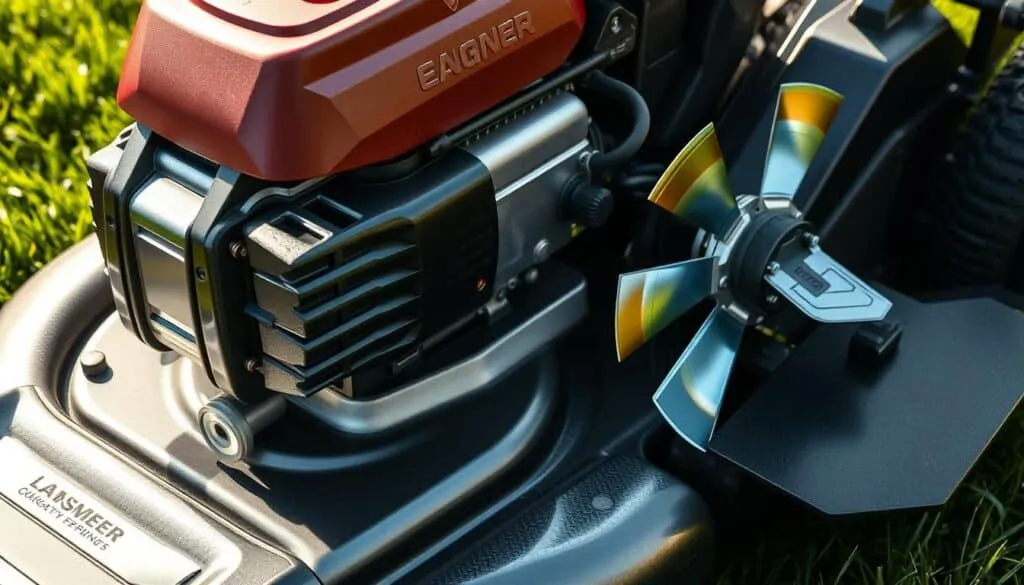
Your machine’s engine power is measured through several key metrics. Horsepower indicates overall output capacity, while engine displacement in cubic centimeters shows cylinder size. Higher displacement typically delivers more power for demanding conditions.
Torque specifications measured in foot-pounds determine the rotational force keeping blades spinning. This becomes essential when your cutting deck encounters thick or damp grass. Proper torque ensures consistent cutting quality.
V-twin engine configurations offer significant advantages for larger models. These engines provide increased power with reduced vibration and quieter operation. They also run cooler, extending the machine’s lifespan.
Your cutting deck’s blade count directly impacts efficiency. Multiple blades ensure more complete grass cutting during each pass. This configuration allows for faster travel speeds while maintaining professional results.
The cutting deck design affects how your model handles different conditions. Deeper decks provide better airflow for grass discharge. Reinforced construction resists damage from debris in less manicured areas.
Conclusion
Your lawn maintenance success depends on selecting equipment with the right proportions for your specific needs. This comprehensive guide demonstrates that optimal mower selection involves balancing cutting efficiency with practical considerations like storage space and maneuverability.
The ideal cutting deck size directly impacts your mowing time and overall satisfaction. Wider decks cover more area quickly but require adequate storage and open garden spaces. Smaller machines offer better navigation around landscape features.
Remember that your property’s unique characteristics should guide your final decision. Consider both current needs and future garden plans when choosing between various mower types and tractors. The right choice transforms routine maintenance into an efficient, enjoyable process.
FAQ
What is the typical cutting width for a residential riding mower?
Most residential models, like those from John Deere or Cub Cadet, feature a cutting deck between 42 and 54 inches wide. This size offers a great balance, allowing you to cover ground quickly while still fitting through standard garden gates.
How does the size of my garden influence the mower deck width I should choose?
For smaller lawns under half an acre, a compact machine with a 42-inch deck provides better maneuverability. If your property is an acre or larger, a wider 54-inch or 60-inch deck on a lawn tractor or zero-turn mower will significantly reduce your mowing time.
Are wider mower decks always better for efficiency?
Not necessarily. While a wider cutting path covers more area per pass, it can be harder to navigate around tight corners, trees, and garden beds. You must balance cutting width with your landscape’s specific obstacles to achieve true efficiency.
What is the main difference between a lawn tractor and a zero-turn mower in terms of size?
Lawn tractors often have a similar cutting width to zero-turn mowers, but their overall machine size is typically larger and less agile. Zero-turn mowers, from brands like Ariens or Husqvarna, have a more compact frame that pivots tightly, making them ideal for properties with many obstacles despite their wide decks.
Can I store a riding mower in a standard garden shed?
You need to check the dimensions of both your shed and the mower. Measure the machine’s total width and length, including the discharge chute. Many residential riding mowers will fit, but larger commercial-grade models with 60-inch+ decks often require more dedicated storage space.
Besides deck width, what other features impact mowing performance?
Engine power, cutting deck material, and blade count are critical. A powerful engine ensures consistent performance in tall grass. A fabricated steel deck is more durable than stamped steel. Multiple blades under a wider deck provide a cleaner, more even cut across the entire swath.