
Ever wonder why your trusty machine sometimes struggles to start, even with a seemingly good power source? The secret often lies in understanding its electrical heart.
Most modern equipment relies on a standard 12-volt system. This provides enough energy for reliable operation. Some larger models demand more juice, using 24 volts for extra muscle.
Petrol engines with electric starters also use these compact 12V units. They offer convenient starting without the pull cord hassle. Knowing your specific requirements prevents damage and ensures peak performance.
A fully charged unit should measure between 12.6 and 12.7 volts. This simple check can save you time and frustration. I’ll guide you through testing, maintenance, and choosing the perfect option for your model.
Key Takeaways
- Most common machines operate on a standard 12-volt electrical system.
- Larger, more powerful equipment may require a 24-volt setup for optimal performance.
- Petrol mowers with electric start features utilize convenient 12V batteries.
- A healthy, fully charged 12V battery should read between 12.6 and 12.7 volts on a meter.
- Using the correct voltage is crucial to prevent damage to the machine’s electrical components.
- Different brands and types of equipment can have varying power requirements.
- Proper knowledge helps extend the life of your machine and its power source.
Understanding Lawn Mower Battery Voltage: A Starter’s Guide
That ’12-volt’ label on your equipment’s energy cell isn’t exactly what it appears to be. This number represents a category rather than a precise measurement you’ll always see.
I want to clarify a crucial distinction between two states. Resting voltage refers to the reading when your equipment sits idle. Charging voltage occurs during active power replenishment.
A healthy, fully charged unit should measure between 12.6 and 12.8 volts at rest. This indicates optimal energy storage capacity. Readings in this range mean your power source is ready for action.
During operation or charging, the numbers change significantly. Your system might show up to 14 volts in these active states. This temporary increase is completely normal and expected.
The term “12-volt” serves as a classification system. Various models within this category display different actual measurements. Understanding this prevents confusion during maintenance checks.
Regular voltage monitoring is essential for longevity. Readings consistently below 12.6 volts signal the need for attention. This simple check helps maintain reliable performance.
Different energy cell types behave uniquely. Lead-acid units have specific voltage characteristics. Lithium-ion options may show slightly different patterns.
Proper voltage maintenance ensures your equipment starts reliably every time. It also protects the electrical system from potential damage. Consistent care extends the overall life of your power source.
The Standard Voltage Range for Most Lawn Mowers
Across the landscape of residential grass cutting tools, a specific power specification has become the industry norm for reliable operation. This standardization makes maintenance and replacement straightforward for homeowners.
Whether you’re using a push model or a compact riding unit, the electrical requirements remain remarkably consistent. This uniformity benefits both manufacturers and consumers alike.
12-Volt Batteries: The Common Powerhouse
The 12-volt system dominates residential outdoor power equipment for good reason. It provides ample energy for starting engines while maintaining a compact, affordable form factor.
Most push models and smaller riding units utilize this efficient power source. The design balances performance with practical considerations like weight and cost.
A healthy 12V energy cell should measure between 12.6 and 12.8 volts when fully charged and at rest. This reading indicates optimal energy storage capacity.
| Voltage Reading | Battery Condition | Recommended Action |
|---|---|---|
| 12.6 – 12.8V | Fully charged, optimal health | Ready for use, maintain regular checks |
| 12.4V | Partially discharged | Needs charging before use |
| Below 12.0V | Significantly discharged | Requires immediate charging, may need testing |
| 13.5 – 14.4V | During charging process | Normal charging operation |
This simple voltage check provides immediate insight into your power source’s condition. Regular monitoring helps prevent unexpected starting issues during critical mowing seasons.
Understanding Charging vs. Resting Voltage
The numbers on your multimeter tell different stories depending on when you take measurements. Resting voltage represents the stored energy when the system is completely idle.
Charging voltage occurs during active energy replenishment and shows higher readings. This temporary increase is normal and indicates the charging process is working correctly.
During charging, you might see readings between 13.5 and 14.4 volts. This elevated measurement doesn’t indicate a problem—it shows the energy transfer in progress.
Understanding this distinction prevents unnecessary concern about seemingly high readings. It also helps accurately diagnose actual issues when they occur.
Fluctuations outside these expected ranges can signal underlying electrical system problems. Consistent monitoring helps identify trends before they become major failures.
Regular voltage checks represent the simplest form of preventive maintenance. This quick test can extend the life of your power source and ensure reliable operation for years.
How to Test Your Lawn Mower Battery’s Voltage with a Multimeter
Knowing your power source’s condition prevents unexpected starting problems. I’ll show you how to measure it accurately using basic tools.
Regular checks help maintain peak performance. They also extend the life of your equipment.
Step 1: Gather Your Tools and Ensure Safety
You’ll need a digital multimeter for this task. Make sure it’s set to DC volts in the 0-20V range.
Safety comes first when working with electrical systems. Always turn off your machine completely.
Allow it to sit unused for at least one hour. This ensures you get a proper resting measurement.
Step 2: Locate and Prepare the Battery
Most units are found under the seat or near the engine. Consult your manual if you’re unsure about placement.
Inspect the terminals for any corrosion or dirt buildup. Clean them carefully before testing.
Proper preparation ensures accurate results. Dirty connections can give false readings.
Step 3: Take an Accurate Reading and Interpret It
Connect the red probe to the positive terminal. Attach the black probe to the negative terminal.
A healthy power source should show 12.6-12.7 volts. This indicates full charge and good condition.
Readings above this range suggest overcharging. Values below 12 volts mean discharge.
Regular testing helps avoid costly repairs. It also ensures reliable starts for years.
Why Maintaining Correct Battery Voltage is Crucial
Keeping your equipment’s electrical system in perfect balance makes all the difference between smooth operation and costly repairs. Proper power levels protect every component from unnecessary stress.
I’ve seen many machines fail prematurely due to simple voltage issues. These problems are completely preventable with regular monitoring.
Preventing Damage to Your Mower’s Electrical System
Incorrect power levels create serious risks for your machine’s delicate electronics. High readings can cause immediate overheating and component failure.
Low measurements strain the entire system. The alternator works overtime trying to compensate.
This extra load accelerates wear on critical parts. It can lead to complete electrical system failure.
Consistent overcharging damages the internal plates. Undercharging causes sulfation that reduces capacity.
Ensuring Reliable Starts and Optimal Performance
Proper power guarantees your machine starts instantly every time. You’ll never face the frustration of a dead engine when you need to work.
Consistent voltage delivery maintains peak cutting performance. The blades spin at optimal speed for clean, even results.
Electrical accessories like lights and gauges function perfectly. Everything works as the manufacturer intended.
You’ll notice smoother operation across all functions. The engine responds immediately to throttle changes.
Extending the Overall Lifespan of Your Battery
Correct maintenance significantly increases service life. You’ll enjoy years of reliable performance from your power source.
Proper charging cycles prevent premature aging. The unit maintains its original capacity much longer.
You’ll avoid frequent replacements that cost time and money. A well-maintained unit can last through multiple seasons.
Regular voltage checks represent the simplest form of preventive care. This small habit delivers big returns in longevity.
Economic benefits become obvious over time. You save on replacement costs and avoid expensive electrical repairs.
Your equipment maintains its value better with proper care. Potential buyers appreciate well-maintained machines.
You’ll spend more time working and less time troubleshooting. That’s the real value of consistent voltage maintenance.
Different Types of Lawn Mower Batteries and Their Specs
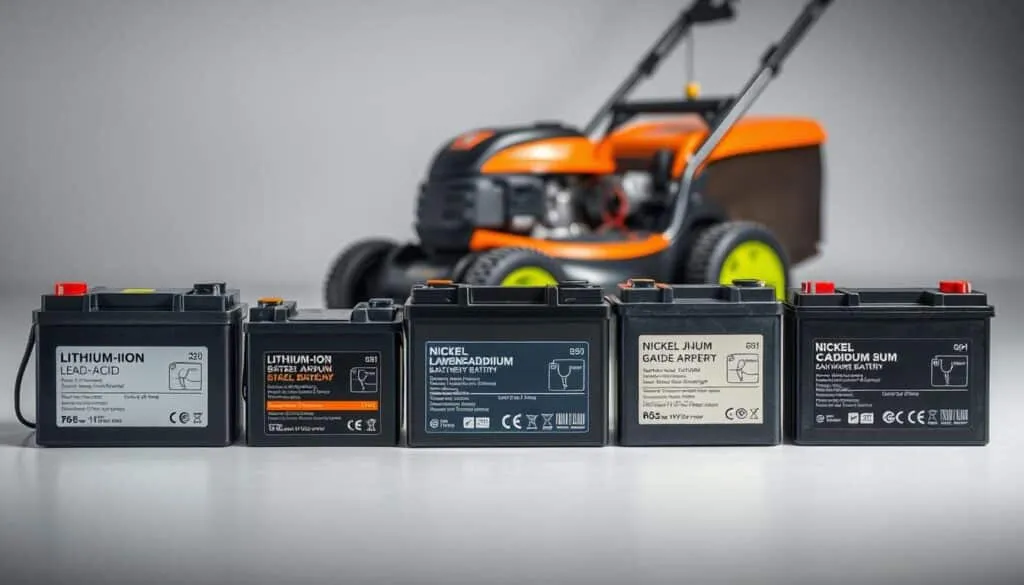
Selecting the right energy source for your equipment involves understanding two main technologies. Each offers distinct advantages depending on your needs and budget.
I’ll help you navigate these options with clear comparisons. You’ll learn which type suits your specific situation best.
Lead-Acid Batteries: The Traditional Workhorse
These units have powered equipment for decades with proven reliability. They remain popular for their affordability and widespread availability.
You’ll find them in many older models and some current machines. Their construction uses tried-and-true technology that mechanics understand well.
Regular maintenance is essential for optimal performance. You must check fluid levels and clean terminals periodically.
They tend to be heavier than modern alternatives. This weight can affect the overall balance of your equipment.
Despite these requirements, they offer excellent value. Many users appreciate their predictable performance characteristics.
Lithium-Ion Batteries: The Modern, Lightweight Option
Newer technology brings significant advantages to outdoor power equipment. These units weigh considerably less than traditional options.
You’ll enjoy longer run times between charging sessions. They maintain consistent power output throughout their discharge cycle.
Maintenance requirements are minimal compared to older technologies. There’s no need to check fluid levels or clean corrosion regularly.
Built-in protection circuits prevent over-discharge damage. This feature extends their service life significantly.
Although initially more expensive, their longevity often makes them cost-effective. You’ll appreciate their convenience and reliability.
Understanding Cold Cranking Amps (CCA) and Amp-Hours (Ah)
These measurements help you evaluate performance capabilities accurately. CCA indicates starting power in cold conditions.
Most equipment requires 130-150 CCA for reliable operation. This ensures easy starts even on cooler mornings.
Amp-hours measure energy storage capacity. Higher Ah ratings mean longer run times between charges.
A typical 12V unit offers approximately 35Ah capacity. This provides enough energy for most residential properties.
| Battery Type | Weight | Maintenance | Lifespan | Cost |
|---|---|---|---|---|
| Lead-Acid | Heavier | Regular required | 3-5 years | Lower initial |
| Lithium-Ion | Lighter | Minimal | 5-8 years | Higher initial |
Popular brands demonstrate the range of available options. EGO offers 56V lithium-ion systems for extended runtime.
Greenworks provides choices from 24V to 80V configurations. Ryobi covers 18V to 40V for various property sizes.
DEWALT’s 20V-60V lines cater to professional users. Toro’s 60V systems balance power and efficiency perfectly.
Your selection should match your property size and usage patterns. Consider how often you use your equipment and the terrain you cover.
Budget considerations play an important role in decision-making. Sometimes the higher initial investment pays off through longer service life.
How to Choose the Right Battery for Your Mower
Finding the perfect power source for your equipment can seem overwhelming with so many options available. I’ll simplify the process with clear guidelines tailored to your specific needs.
Always start by checking your owner’s manual for exact specifications. This ensures compatibility with your machine’s electrical system.
Matching the correct specifications prevents performance issues. It also protects your investment from unnecessary damage.
Your equipment requires specific power characteristics for reliable operation. The right choice ensures smooth starts every time.
Cold Cranking Amps (CCA) measure starting power in lower temperatures. Most machines need 130-150 CCA for consistent performance.
Proper voltage matching is equally important. Using an incorrect unit can cause electrical system failures.
Selecting an appropriate charger is just as crucial as choosing the power source itself. Use units specifically designed for smaller equipment.
I recommend automatic smart chargers with 1-3 amp rates. These monitor levels and adjust automatically.
They shut off when fully charged to prevent overcharging. This protects your investment and extends its life.
Avoid using high-amp automotive chargers rated at 10 amps or more. These can overheat and damage smaller units.
Excessive heat causes internal damage that reduces capacity. It can permanently shorten service life.
Check manufacturing date codes before purchasing any replacement. Most units have a three-year expected lifespan.
Newer production dates mean longer service life. Avoid old stock that may have degraded already.
Consider the long-term value when comparing different types. Lithium-ion options cost more initially but last longer.
Lead-acid units offer lower upfront costs but require more maintenance. Choose based on your budget and usage patterns.
| Consideration | Lead-Acid | Lithium-Ion |
|---|---|---|
| Initial Cost | Lower | Higher |
| Maintenance | Regular cleaning required | Minimal maintenance |
| Lifespan | 3-5 years | 5-8 years |
| Weight | Heavier | Lighter |
| Charging Time | Slower | Faster |
Proper selection contributes directly to better machine performance. You’ll enjoy reliable operation season after season.
Regular maintenance and correct charging practices preserve your investment. These habits ensure maximum value from your purchase.
Conclusion: Powering Your Lawn Care with Confidence
Mastering your equipment’s electrical needs transforms maintenance from guesswork to certainty. A properly maintained energy source delivers reliable performance season after season.
Remember that a healthy 12V unit shows 12.6V or higher when fully charged. This simple check prevents most starting problems before they occur.
Regular testing with a multimeter protects your investment. It also extends the overall lifespan of your power source significantly.
Understanding the difference between resting and charging readings avoids confusion. Each measurement tells a different story about your system’s condition.
Choose the correct charger type for your specific model. Proper charging practices maintain optimal performance and prevent damage.
Implementing these simple routines ensures your machine starts instantly every time. You’ll enjoy worry-free operation for years to come.
FAQ
What is the most common voltage for a lawn mower battery?
Most modern riding mowers and lawn tractors use a 12-volt battery. This is the standard for powering the starter and electrical system. Always check your owner’s manual to confirm, as some older or smaller models might differ.
How can I test my mower battery’s health with a multimeter?
Set your multimeter to DC volts. Connect the red probe to the positive terminal and the black to the negative. A fully charged 12V battery should read around 12.6 to 12.8 volts. A reading below 12.4 volts often means it needs charging.
Can I use a car battery charger on my lawn mower battery?
Yes, but you must use caution. Ensure the charger is compatible with your battery type (like lead-acid) and has a low amp setting (2-10 amps). A high-amp automotive charge can damage smaller mower batteries, so a smart charger designed for small engines is a safer option.
What does it mean if my battery voltage is good but the mower won’t start?
A proper voltage reading means the battery has charge, but it may lack the necessary power (amperage) to crank the engine. This could indicate internal damage or aging cells. Testing the Cold Cranking Amps (CCA) or checking for corrosion on the terminals is the next step.
How often should I charge my lawn mower battery?
If you use your mower regularly, the engine’s alternator should maintain the charge. For seasonal storage, I recommend giving it a full charge before storing and then using a maintainer or topping it up every 4-6 weeks to prevent sulfation and extend its life.
What is the difference between lead-acid and lithium-ion mower batteries?
A: Lead-acid batteries are the traditional, affordable option but are heavier and require more maintenance. Lithium-ion batteries are lighter, last longer, hold their charge better when not in use, and often have a longer overall lifespan, though they come at a higher initial cost.
How long should a typical lawn mower battery last?
With proper care, including keeping it charged and clean, a standard lead-acid battery typically lasts 3 to 5 years. Lithium-ion models can often last 5 years or more. Factors like climate, usage frequency, and maintenance practices greatly influence its longevity.