
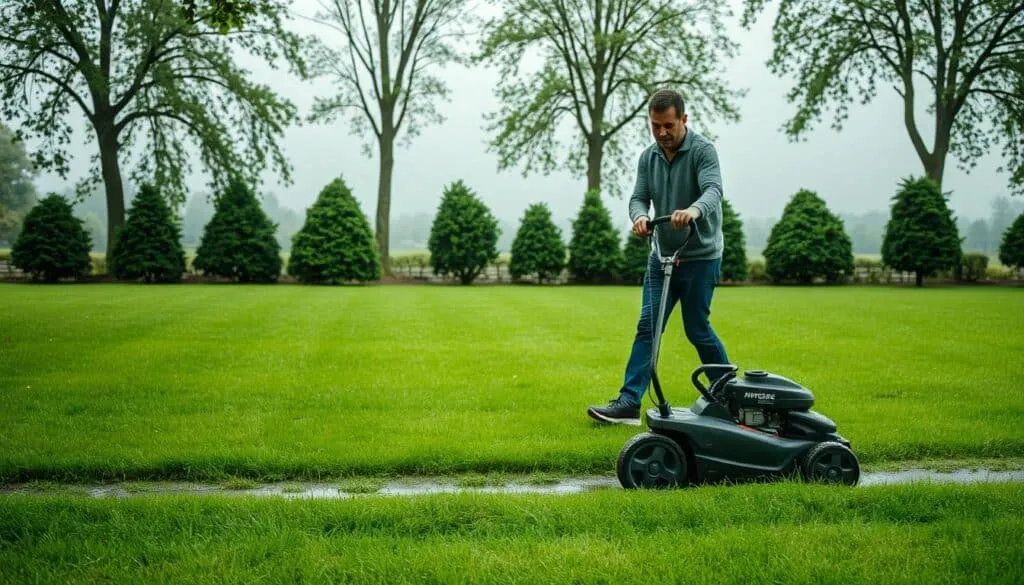
Ever feel that sudden urge to tackle your yard right after a rain shower? That damp, overgrown turf can be tempting. You might wonder if waiting for perfect dryness is truly necessary.
Handling soaked turf creates multiple challenges for your property and safety. This guide explains the significant risks involved. We will cover the potential harm to your landscape and machinery.
Understanding these dangers helps you make smarter choices for your property’s care. While patience is the best policy, sometimes circumstances demand action.
You will learn practical solutions for those unavoidable moments. Our advice comes from expert sources and real-world experience, giving you reliable, actionable steps.
Key Takeaways
- Mowing damp turf can cause significant damage to your grass and soil health.
- Operating machinery on a soaked lawn increases safety risks for the user.
- Your mower’s performance and longevity suffer under these challenging conditions.
- Clumping grass and an uneven cut are common, frustrating results.
- Knowing the correct techniques can minimize problems when mowing is absolutely necessary.
- Preventive care and proper timing are the best strategies for a healthy, beautiful yard.
Understanding the Risks of Mowing Wet Grass
When moisture lingers on your yard, attempting to trim it can lead to multiple complications. The combination of water and mechanical cutting creates problems that affect both your turf’s appearance and long-term health.
Uneven Cuts and Damage to Grass Blades
Water weight causes individual grass blades to bend over instead of standing upright. Your mower cannot effectively cut this flattened turf, resulting in torn edges rather than clean slices.
This tearing creates brown tips and a patchy appearance across your lawn. Once the moisture evaporates and blades stand straight, uneven cutting becomes clearly visible. You may need a second pass to achieve uniform results.
Increased Spread of Lawn Diseases
Torn grass blades provide perfect entry points for fungal infections. Moist conditions allow diseases like brown patch and dollar spot to thrive rapidly.
Wet clippings stick to your mower’s deck and blades. Fungal spores hitch rides on this debris, spreading infections throughout your entire property during subsequent sessions.
Waiting for dry conditions remains the most effective prevention strategy. This approach protects both your turf’s appearance and overall health from these significant risks.
is it bad to mow a wet lawn: Evaluating the Drawbacks
Cutting through saturated vegetation introduces specific performance issues for your outdoor power tools. These challenges affect both your equipment’s functionality and your overall experience.
Understanding these mechanical limitations helps you make informed decisions about timing your yard work properly.
Risks to Your Mower’s Performance
Water from damp vegetation can infiltrate fuel systems, causing engine sputtering or complete shutdown. This moisture contamination creates operational failures during critical moments.
Electric models face particular struggles with thick, wet grass. They possess less torque than gas-powered units, making stalling more likely. Even morning dew creates sufficient resistance to strain the engine.
Blocked blades force the motor to work excessively hard. This overexertion leads to overheating and premature component wear.
Issues with Clumping and Debris
Moist clippings naturally stick together, forming dense masses that clog your equipment’s deck. These blockages prevent proper dispersal of cut material.
The collected wet grass adds significant weight to your bagging system. This extra burden reduces fuel efficiency and slows your progress dramatically.
Debris adheres to shoes, wheels, and clothing, creating stubborn stains. The mess extends cleanup time beyond the actual cutting session.
| Condition | Mower Performance | Clipping Behavior | Operator Experience |
|---|---|---|---|
| Dry Grass | Smooth operation | Even dispersal | Efficient progress |
| Wet Grass | Frequent clogging | Heavy clumping | Slowed pace |
| Dew-Covered | Moderate strain | Light sticking | Extended cleanup |
These performance challenges demonstrate why proper timing matters for equipment longevity and efficient yard maintenance.
How Wet Conditions Affect Your Lawn Mower
Your lawn care machinery faces unique hazards when dealing with moisture-soaked vegetation. Damp conditions create immediate operational challenges that can lead to long-term damage. Understanding these specific threats helps you protect your equipment investment.
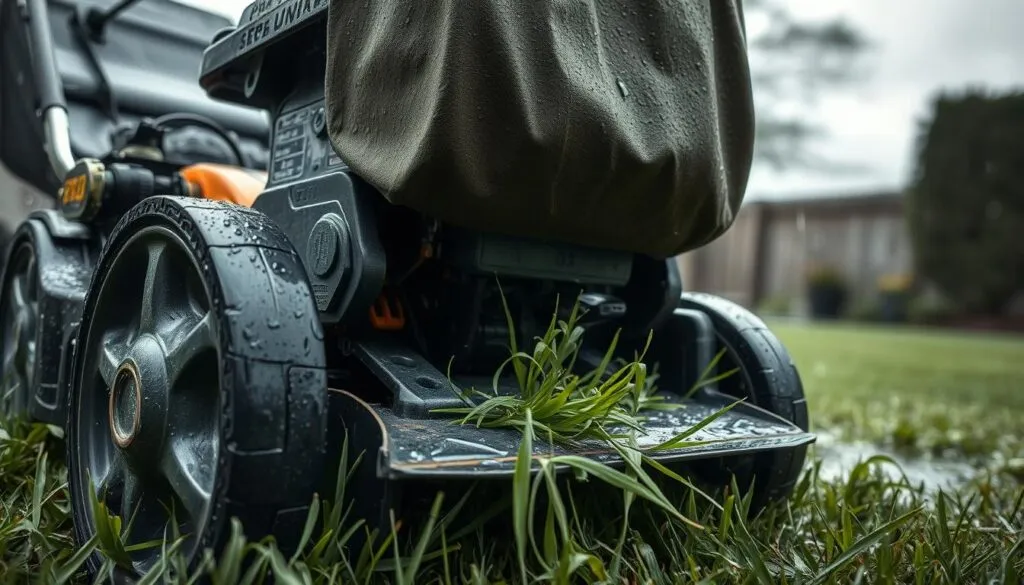
Clogging and Rust on Mower Blades
Wet grass clippings accumulate rapidly on your mower deck. This buildup restricts crucial airflow needed for proper operation. The sticky material jams discharge ports and prevents normal blade rotation.
Moisture trapped in accumulated clippings promotes rust on metal components. Your mower blades suffer accelerated dulling from the abrasive nature of saturated vegetation. This requires more frequent sharpening or replacement.
Even thorough cleaning cannot always prevent corrosion from starting. The moisture often penetrates components before you can address the problem.
Engine Overload and Excessive Fuel Use
When blades encounter resistance from wet clumps, your engine works much harder. This strain leads to overheating and potential stalling. The reduced engine lifespan becomes a costly consequence.
Your equipment consumes significantly more fuel under these challenging conditions. Added weight from soaked clippings in collection bags slows progress dramatically. The machine must exert extra effort for diminished results.
Proper maintenance timing remains essential for protecting your machinery. Avoiding damp conditions preserves both performance and longevity.
The Impact on Lawn Health and Soil
The ground beneath your turf suffers lasting consequences from improper mowing timing. While surface issues like uneven cuts are visible immediately, deeper problems develop over time.
Soil Compaction and Restricted Root Growth
Heavy equipment pressing down on saturated ground creates significant soil compaction. This compression eliminates essential air pockets that roots need for breathing.
Your grass roots become suffocated when oxygen cannot reach them. Nutrients and water also struggle to penetrate compacted soil layers.
Mower wheels leave deep ruts in soft, waterlogged terrain. These depressions create tripping hazards and collect standing water. Mosquito breeding sites form in these persistent puddles.
Thatch Buildup from Wet Clippings
Moist grass clippings clump together instead of spreading evenly. These dense masses block sunlight and air from reaching the turf below.
Decomposing clumps kill healthy grass underneath them. They contribute to thick thatch layers that prevent proper nutrient absorption.
Severe soil compaction may require professional lawn aeration to restore healthy soil structure. This extra maintenance adds unnecessary cost and effort to your lawn care routine.
Safety Considerations When Mowing Wet Grass
Emergency rooms document over 80,000 lawn mower-related injuries annually. Many incidents occur during challenging conditions where safety becomes compromised. Your personal protection should always come first when evaluating yard work timing.
Slick surfaces create significant risk for slips and falls. Maintaining footing becomes difficult on damp terrain. Hills and slopes present particular dangers for losing control.
Risks of Slips and Falls on Slick Surfaces
Wet vegetation turns your property into a hazardous surface. A simple misstep could lead to serious injuries. Falling near operating equipment creates catastrophic potential.
Riding mowers face traction issues on saturated ground. Skidding or tipping becomes more likely on uneven terrain. Operators risk being thrown from their seats during loss of control.
Tall, damp grass hides obstacles that become dangerous projectiles. Rocks, toys, and debris can fly when struck by blades. Proper visibility remains crucial for preventing accidents.
Potential Electrical Hazards with Corded Mowers
Electric models introduce shock risk when used in moist conditions. Water contacting electrical components creates serious safety concerns. Even minor cord damage becomes hazardous around moisture.
Battery-powered units also carry manufacturer warnings against damp grass use. Water resistance does not guarantee waterproof operation. Short circuits can damage equipment and create shock hazards.
These electrical dangers make cordless options preferable for occasional damp mowing. However, waiting for drier conditions remains the safest approach overall.
Best Practices for Mowing After Rain
Learning to read your property’s moisture levels helps you schedule maintenance effectively. Proper timing prevents the numerous issues discussed earlier. This approach saves you from equipment problems and turf damage.
Optimal Waiting Times for Drying
Following precipitation, allow two to five hours after light showers. Heavy downpours require approximately twenty-four hours before cutting. These periods let moisture evaporate sufficiently.
Test conditions by walking across your property. If shoes become damp, postpone your session. Another method involves checking for footprints left behind.
Grass that springs back indicates adequate drying. Visible impressions mean the soil remains saturated. These simple checks provide reliable guidance.
| Rainfall Type | Recommended Wait | Test Method | Indicator |
|---|---|---|---|
| Light Shower | 2-5 Hours | Shoe Test | Dry Footwear |
| Heavy Rain | 24 Hours | Footprint Check | Springy Turf |
| Morning Dew | 2-3 Hours | Visual Inspection | Evaporated Moisture |
Weather conditions significantly influence drying periods. Sun exposure, temperature, and wind speed affect evaporation rates. Shaded areas may need additional time.
In rainy seasons, full waiting periods might prove challenging. Still, proper assessment prevents equipment strain and maintains turf health. Patience yields better results.
Expert Tips for Cutting Wet Grass When Necessary
When your turf grows excessively tall during persistent rainfall, delaying maintenance may cause more harm than good. Purdue University research confirms that cutting slightly damp vegetation proves preferable to allowing overgrowth. Sometimes you must address the situation despite challenging conditions.
Proper Mower Settings and Blade Maintenance
Sharp blades create cleaner cuts that reduce tearing and minimize damage. Always sharpen your equipment before attempting this task. Kansas State University recommends setting your cutting height as high as possible.
Raise the deck to avoid removing too much material at once. This approach prevents severe tearing and clumping. Higher settings help your machine handle the challenging conditions more effectively.
Strategies for a Smoother Mowing Experience
Adopt a slow, steady pace when you must address damp turf. Reduced speed allows blades to cut more evenly. This technique prevents excessive clumping and produces better results.
Use side discharge instead of mulching or bagging systems. Wet clippings quickly clog mulching equipment. Bagging systems struggle with heavy, saturated material.
Clean the deck frequently during your session. Stop periodically to remove accumulated vegetation. This maintenance prevents airflow restriction and maintains cutting efficiency.
Consult your owner’s manual for specific guidance. Follow manufacturer recommendations for safe operation. Proper personal protective equipment remains essential during these challenging sessions.
Choosing the Right Mower for Different Lawn Conditions
Your choice of mower can significantly impact how well you handle various weather situations. Selecting appropriate equipment makes challenging sessions more manageable.
Self-Propelled Versus Traditional Mowers
Self-propelled models ease physical burden by moving forward independently. They provide consistent speed and cutting precision even when conditions are less than ideal.
Powered drive systems maintain steady forward motion without relying solely on operator pushing force. This feature proves valuable when dealing with damp vegetation that creates extra resistance.
Traditional push mowers serve as lighter alternatives that cause less soil compaction. However, they demand more physical effort, especially on challenging terrain.
| Mower Type | Best For | Weight Impact | Operator Effort |
|---|---|---|---|
| Self-Propelled | Medium areas, moderate slopes | Higher compaction risk | Reduced physical strain |
| Traditional Push | Small lawns, flat terrain | Minimal soil impact | Significant pushing required |
| Heavy-Duty Self-Propelled | Large properties, hills | Deep ruts on wet soil | Easy steering control |
Heavier self-propelled models increase the risk of soil compaction and create deeper wheel ruts. Avoid using any equipment on overly saturated ground where weight and moisture combine destructively.
Understanding your property’s typical conditions helps you choose equipment that performs well across various scenarios. The right tool for each job ensures your lawn receives optimal care.
Conclusion
Your lawn’s health and your equipment’s longevity depend heavily on proper timing decisions. The comprehensive reasons for avoiding mowing wet conditions span turf damage, machinery strain, and personal safety concerns.
While you can technically perform cutting wet grass, this practice invites multiple problems. Soil compaction, disease spread like brown patch, uneven cuts, and equipment damage all result from this choice.
The straightforward rule remains clear: wait for dry conditions. Understanding proper drying times and recognizing adequate moisture levels empowers better decisions. Implement expert tips only when absolutely necessary.
Safety considerations alone provide compelling reasons to prioritize dry sessions. For challenging schedules or persistent wet grass conditions, consider professional services in your area.
FAQ
What are the main risks of cutting wet grass?
The primary risks include causing an uneven cut, tearing the grass blades, and spreading lawn diseases like brown patch. You also risk compacting the soil and creating ruts with the mower’s weight.
How does mowing in wet conditions affect my lawn mower?
Wet grass clippings can quickly clog your mower deck, putting extra strain on the engine and increasing fuel consumption. The moisture also promotes rust on the mower blades and other metal components.
Are there safety hazards when I must mow a wet lawn?
A> Yes. Wet grass creates slick surfaces, increasing your risk of slips and falls, especially on slopes. Using a corded electric mower in these conditions poses a serious electrical hazard.
How long should I wait to mow after it rains?
For the best results, wait until the grass is mostly dry. This can take several hours to a full day, depending on sunlight and wind. Walking on the area to check for squishy soil is a good test.
What if I absolutely have to cut wet grass?
If you must mow wet, set your mower to a higher cutting height to reduce stress on the grass. Ensure your blades are sharp for a cleaner cut, and make multiple passes to help manage heavy clumps of clippings.
Is a self-propelled mower better for wet lawns?
A self-propelled mower can reduce the physical effort required to push through heavy, wet grass. However, it does not eliminate the core issues of soil compaction, clumping, or potential damage to your turf.