
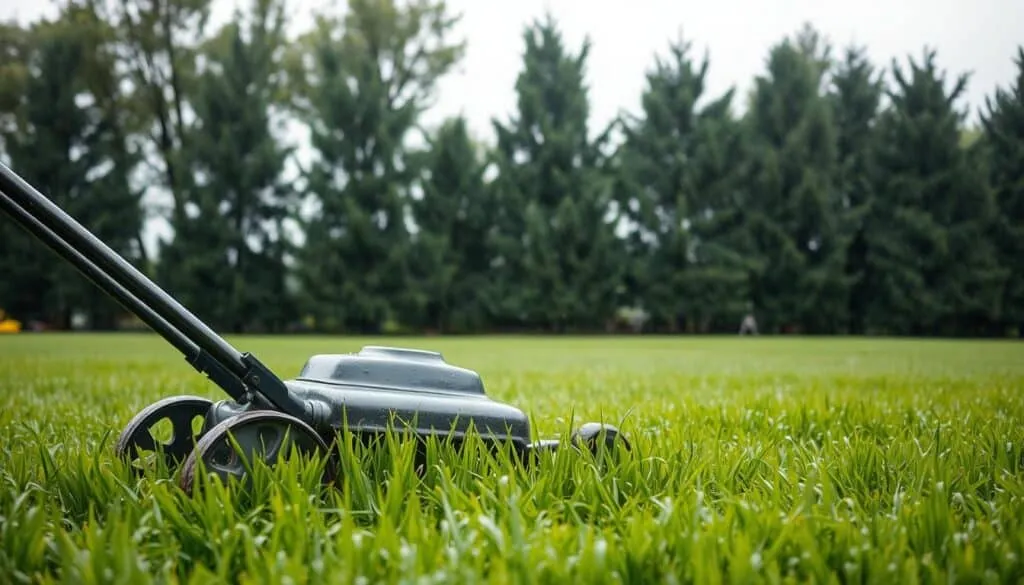
Have you ever stared out your window at a soggy yard, wondering if you should just grab your mower and get the job done? Many homeowners face this exact dilemma when their turf is soaked from a downpour or heavy morning dew.
I’ve learned from experience that pushing forward with yard work during wet conditions often leads to regret. While a tight schedule might make trimming that damp grass tempting, understanding the potential consequences is crucial for maintaining a healthy, beautiful landscape.
This article explores the significant challenges involved. We will cover the risks to your grass blades, the increased chance of disease spreading across your property, and the strain on your equipment. Safety concerns and soil health are also major factors to consider.
Ultimately, waiting for optimal conditions saves you significant time, effort, and money in the long run. It prevents damage to both your green space and your machinery. Let’s dive into the compelling reasons to wait for drier weather.
Key Takeaways
- Mowing on a wet surface can tear grass blades, leading to an uneven and unhealthy-looking yard.
- Damp conditions promote the spread of fungal diseases across your entire lawn.
- Your mower can clog easily with clumps of wet clippings, causing performance issues.
- Slippery surfaces create serious safety risks for the person operating the equipment.
- Heavy machinery can compact soggy soil, damaging the root system of your grass.
- Patience allows for a cleaner cut and a much healthier lawn overall.
Understanding the Challenges of Mowing Wet Grass
A moisture-laden landscape creates conditions where routine maintenance becomes unexpectedly problematic. Working with saturated vegetation introduces complications that affect both your equipment and the health of your green space.
Uneven Cuts and Tattered Grass Blades
Water weight causes individual strands to bend and clump together. This prevents your equipment from achieving a clean, uniform cut across the surface.
Instead of sharp edges, you get torn ends and brown tips. Once everything dries, the uneven appearance becomes obvious, often requiring a second pass.
| Condition | Cut Quality | Grass Health | Time Required |
|---|---|---|---|
| Dry Grass | Clean, even cut | Healthy appearance | Single session |
| Wet Grass | Ragged, torn blades | Brown tips visible | Often needs re-cutting |
| Damp Conditions | Uneven, clumpy | Susceptible to damage | Increased effort |
Increased Lawn Disease Risk
Torn vegetation creates entry points for fungal infections. Common problems include dollar spot and brown patch diseases.
Moisture clinging to equipment blades can harbor harmful organisms. These get distributed across your entire property during future sessions.
Preventing disease spread represents one compelling reason for patience. Waiting for optimal conditions protects your investment in landscape beauty.
Impact on Mower Performance and Maintenance
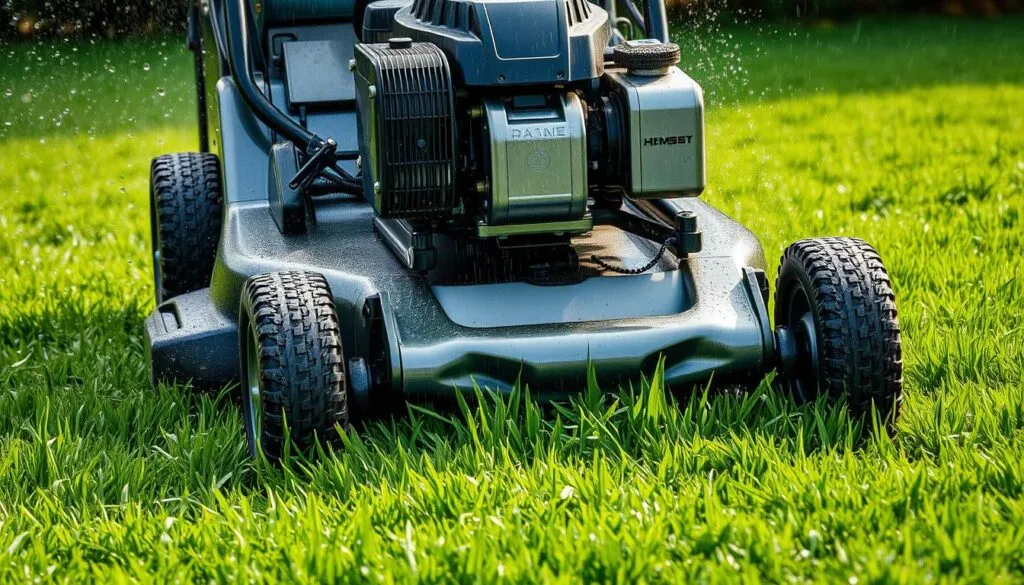
When grass contains excess moisture, your cutting machinery faces operational hurdles that accelerate wear and tear. The additional water weight creates resistance that strains components not designed for such conditions.
Engine Strain and Clogged Mower Decks
Wet clippings clump together and stick to the mower deck. This blockage restricts airflow and jams the cutting mechanism.
The engine must work harder to maintain blade rotation. This extra strain can cause overheating or complete failure.
Electric models struggle more with thick, wet vegetation. Their lower torque makes powering through heavy clippings challenging.
Potential Rust and Component Damage
Moisture trapped in the deck promotes corrosion on metal parts. This includes mower blades and other critical components.
Rust development leads to expensive repairs or premature replacement. The damage extends beyond cosmetic issues to functional problems.
Wet grass also dulls cutting edges faster than dry vegetation. Frequent sharpening or blade replacement becomes necessary.
These maintenance issues create long-term financial consequences. The short-term convenience of cutting damp turf isn’t worth the equipment strain.
Safety Hazards When Mowing in Rainy Conditions
Operating lawn equipment on saturated turf introduces serious personal danger that many homeowners overlook. Emergency room statistics reveal alarming numbers of injuries occur annually from such activities.
The U.S. Consumer Product Safety Commission estimates 80,000 people visit ERs each year with mower-related injuries. Over 250,000 received treatment in 2010 alone. These numbers highlight the real risks involved.
Slippery Surfaces and Fall Risks
Wet grass creates dangerously slick surfaces that compromise footing. Hills and slopes become particularly hazardous zones for slips and falls.
Losing control of your mower on slippery terrain can lead to serious consequences. Minor sprains represent the best-case scenario in such situations.
Catastrophic injuries may occur if someone falls near moving blades. Maintaining solid footing becomes challenging when vegetation contains excess moisture.
Electrical Risks with Corded and Electric Mowers
Water and electricity create a lethal combination that demands extreme caution. Corded models pose the greatest danger during damp conditions.
Frayed extension cords touching wet grass can deliver dangerous shocks. Even battery-powered equipment faces short circuit risks from water infiltration.
Manufacturers typically warn against using their products on moist turf. No lawn appearance justifies risking electrocution or severe injury.
Personal safety should always outweigh convenience when scheduling yard work. Waiting for optimal conditions protects both your health and property.
Soil Health and Lawn Appearance Concerns
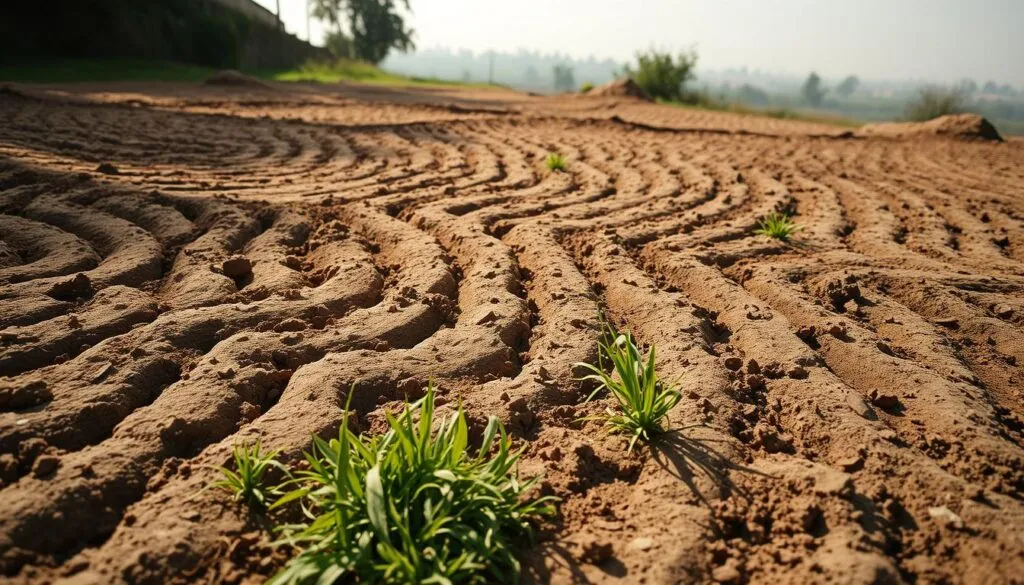
Beyond visible grass damage, working on wet ground creates lasting problems for your landscape’s foundation. The soil structure suffers significantly when heavy equipment operates under saturated conditions.
Soil Compaction and Formation of Ruts
Mower weight pressing down on waterlogged ground compresses soil particles. This compaction eliminates essential air pockets that roots need for oxygen.
Without proper aeration, your grass struggles to access nutrients and moisture. The result shows as thin, patchy areas where vegetation cannot thrive.
Soft, saturated ground also leads to rut formation. Wheel tracks create permanent depressions that remain after drying. These uneven channels make future maintenance difficult and create tripping hazards.
Deep ruts can collect rainwater, becoming mosquito breeding sites. Repairing this damage often requires professional lawn aeration services.
Wet clippings compound these issues by forming thick mats. These clumps block sunlight and airflow to the underlying turf. Addressing compaction becomes necessary to restore healthy growing conditions.
Is It Bad to Mow the Lawn in the Rain? Analyzing the Risks
Despite knowing better, I once pushed forward with mowing while dew still covered my property. That decision provided firsthand insight into the challenges of working with moisture-laden turf.
Pros and Cons from Personal Experience
My early morning attempt seemed practical at first. Damp grass clogged the mower blades within minutes. Engine strain became immediately apparent as the machine struggled.
Removing wet clumps wasted more time than waiting for proper conditions would have taken. What appeared as time-saving actually created additional work and equipment stress.
Purdue University research offers valuable perspective. Their experts note that slightly wet grass may be preferable to excessively overgrown turf during extended rainy periods.
| Situation | Advantage | Disadvantage | Recommendation |
|---|---|---|---|
| Morning Dew | Early completion | Equipment clogging | Wait 1-2 hours |
| Light Rain | Prevents overgrowth | Uneven cutting | Use side discharge |
| Heavy Rain | None significant | Multiple risks | Always postpone |
The evidence clearly favors patience. While occasional mowing wet grass becomes necessary, the potential damage outweighs convenience in most circumstances.
Techniques for Mowing Wet Grass Safely
Sometimes, waiting for perfect conditions just isn’t possible during extended rainy periods. When you absolutely must proceed, specific adjustments can minimize damage.
Following expert guidance from Kansas State University Research and Extension makes this challenging task safer for your landscape.
Adjusting Mower Height and Speed
Set your cutting deck as high as possible. This reduces the amount of damp vegetation being cut at once.
Taller settings help prevent tearing of grass blades. Moving slowly allows mower blades more time to cut effectively.
Reduced speed minimizes clumping and creates a more even finish. Sharp blades are crucial for cleaner cuts on resistant turf.
Using Side Discharge to Avoid Clumping
Choose side discharge instead of mulching or bagging attachments. Wet clippings easily clog mulching systems.
Bags become heavy and difficult to manage when filled with moisture-laden grass. Periodically stop to clean accumulated clippings from underneath the deck.
For excessive buildup, consider a double-cut or bagging for compost use. Remember that these techniques are temporary solutions for urgent situations only.
Alternative Lawn Care Strategies in Rainy Seasons
During prolonged wet spells, homeowners often seek practical alternatives to maintain their outdoor spaces. These approaches help preserve landscape health while avoiding damage from working on saturated ground.
Patience represents the simplest solution for property maintenance during damp periods. Waiting for proper drying ensures optimal results without risking harm to your green space or machinery.
Waiting for Optimal Drying Conditions
Light rainfall typically requires two to five hours of drying time before you can safely cut vegetation. Heavy downpours demand a full twenty-four hour waiting period.
Test moisture levels by walking across your property. If shoes become damp or footprints remain visible, additional drying time proves necessary. Properly dried turf springs back when compressed.
| Rainfall Type | Minimum Wait Time | Test Method | Ready Signal |
|---|---|---|---|
| Light Rain | 2-5 hours | Shoe dampness check | No moisture transfer |
| Heavy Rain | 24 hours | Footprint visibility | Grass springs back |
| Morning Dew | 1-2 hours | Blade moisture test | Dry surface |
Hiring Professional Lawn Care Services
Professional services offer valuable expertise during challenging weather patterns. These companies possess commercial-grade equipment designed for various conditions.
Experts can schedule work during brief dry windows between precipitation events. Many providers also offer additional services like weed management and soil aeration.
This approach ensures consistent maintenance without equipment strain or personal risk. The investment often costs less than repairing damage from improper cutting practices.
Conclusion
After examining all the evidence, the verdict on cutting damp turf becomes crystal clear. The comprehensive analysis demonstrates significant risks outweigh any perceived convenience.
Working with saturated vegetation invites multiple problems. These include torn grass blades, increased disease spread, equipment strain, safety hazards, and soil compaction. Each issue creates long-term consequences for your property.
While technically possible to proceed with wet grass mowing, the practice proves inadvisable. Establishing a personal rule to only cut when vegetation dries prevents cascading damage. Simple moisture tests empower informed decisions.
Patient timing and proper planning yield healthier landscapes and longer-lasting equipment. This approach creates safer maintenance experiences overall. Learning this lesson through experience made me a more effective property caretaker.
Quality maintenance always triumphs over rushed convenience for sustainable lawn care results.
FAQ
Why does wet grass cause an uneven cut?
Wet grass blades are heavy and tend to bend over instead of standing upright. My mower blades can’t get a clean, straight cut on bent blades, resulting in a ragged, uneven appearance. This tattered look can also make the lawn more susceptible to diseases like brown patch.
Can mowing wet grass damage my lawn mower?
Yes, absolutely. Wet clippings are sticky and clump together, clogging the mower deck and chute. This puts extra strain on the engine. The constant moisture also promotes rust on the blades and undercarriage, leading to premature wear on my equipment.
What are the main safety risks of mowing in the rain?
The biggest dangers are slipping on wet grass and the risk of electric shock. Wet soil is slippery, increasing my chance of a fall near spinning blades. For corded electric mowers or even battery-powered models, mixing water and electricity is extremely hazardous.
How does mowing on wet soil affect my lawn’s health?
The heavy weight of a mower, especially riding mowers, can compact wet soil. This compression squeezes out air pockets that grass roots need. It also creates unsightly ruts and can hinder water absorption, stressing the entire lawn area.
Are there any techniques to make mowing wet grass safer?
If I absolutely must mow, I raise the cutting height and slow my pace. Using the side discharge setting, rather than bagging or mulching, helps prevent heavy clumps from forming and clogging the deck. However, waiting for drier conditions is always the best practice for disease control.
When is the best time to mow after it rains?
I wait until the grass is completely dry to the touch. This might mean waiting a full day or more after heavy rain, depending on sunshine and wind. Mowing in the late morning, after the dew has evaporated, is often the ideal time for a quality cut.