
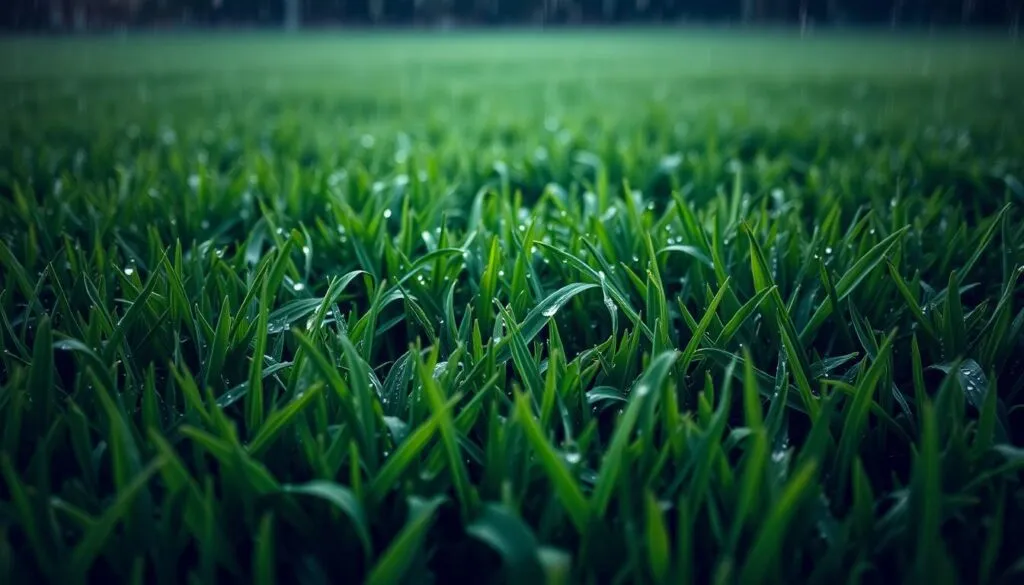
Have you ever stared out your window at a freshly watered lawn, wondering if that quick trim will lead to long-term trouble?
This common dilemma faces many homeowners. Rainy weather often disrupts your best-laid plans for yard maintenance. Understanding moisture conditions becomes critical before you start your machine.
Cutting damp turf presents unique challenges for your property’s health. Wet grass clumps together, potentially smothering the vibrant green blades underneath. Your mower also struggles, with a higher risk of clogging and uneven cuts.
Patience truly pays off for your landscape’s long-term vitality. Rushing the process can create a patchy, damaged appearance. This requires extra recovery time and additional maintenance work later on.
Our guide explores the key considerations for this situation. You will learn about potential lawn damage, equipment performance issues, and important safety concerns. These insights help you make an informed decision for a beautiful, healthy yard.
Key Takeaways
- Mowing on a wet lawn can cause significant damage to your grass and create an uneven cut.
- Wet grass clippings tend to clump, which can smother the living turf beneath and promote disease.
- Your mower works harder on saturated ground, increasing the risk of clogging and potential equipment damage.
- Safety becomes a major concern, as wet conditions are slippery and increase the chance of accidents.
- Waiting for the lawn to dry typically yields a superior cut and supports the long-term health of your grass.
- Proper timing after a rainfall is crucial for achieving a professionally manicured appearance.
Understanding the Impact of Mowing Wet Grass
A rain-soaked lawn presents unique cutting challenges that can compromise both your equipment and turf health. Moisture fundamentally changes how your machine interacts with the landscape.
Waterlogged conditions create problems that extend beyond mere inconvenience. Your mower’s performance suffers dramatically under these circumstances.
Lawn Damage and Uneven Cuts
Wet grass blades clump together and bend under water weight. This prevents clean, even cutting across your property.
Your machine tears rather than slices through saturated vegetation. Ragged edges result, turning brown and creating an unhealthy appearance. Missed patches become inevitable with flattened grass.
The table below shows key differences between cutting dry versus wet grass:
| Aspect | Dry Grass Cutting | Wet Grass Cutting |
|---|---|---|
| Cut Quality | Clean, even cuts | Ragged, torn edges |
| Blade Condition | Stays sharp longer | Dulls rapidly |
| Clipping Distribution | Evenly dispersed | Clumps together |
| Mower Performance | Smooth operation | Frequent clogging |
Effects on Mower Performance
Sticky vegetation accumulates under the mower deck, restricting essential airflow. This jams the blades and strains the engine.
Excessive stress can cause overheating or stalling. Moisture also promotes rust in critical components without prompt cleaning.
Sharp blades dull faster when cutting saturated grass. This increases maintenance frequency and costs significantly.
is it ok to mow after rain: Evaluating the Conditions
Assessing your property’s readiness for cutting after wet weather involves checking specific ground conditions. Multiple factors determine when your landscape becomes suitable for maintenance work.
Different rainfall amounts create varying drying requirements across your property. Understanding these differences helps you make informed decisions about timing.
When to Wait vs. When to Proceed
A general guideline suggests waiting approximately 24 hours following significant precipitation. Light showers may only require 2 to 5 hours before the grass dry enough for cutting.
Heavy downpours demand extended waiting periods—often a full day or more. The table below shows typical drying times based on rainfall intensity:
| Rainfall Type | Minimum Wait Time | Optimal Wait Time | Testing Method |
|---|---|---|---|
| Light Shower | 2-3 hours | 5 hours | Footprint test |
| Moderate Rain | 12 hours | 18 hours | Grass spring-back |
| Heavy Downpour | 24 hours | 36+ hours | Multiple tests |
Environmental elements significantly influence drying rates. As one lawn care expert notes:
“Proper timing considers sunlight exposure, wind patterns, and humidity levels—not just elapsed hours.”
Perform a simple walk test to evaluate moisture content. If footprints remain visible or vegetation fails to rebound, conditions remain unsuitable. Areas with shade retain dampness longer than sunny spots.
Wait until the entire property reaches appropriate dryness before proceeding. This careful approach ensures superior cutting results and maintains turf health.
Risks Associated with Mowing Wet Conditions
Personal injury risks escalate dramatically when maintaining a saturated lawn with powered equipment. Beyond equipment strain, your personal safety and lawn health face serious threats under these circumstances.
Safety Hazards and Slippery Surfaces
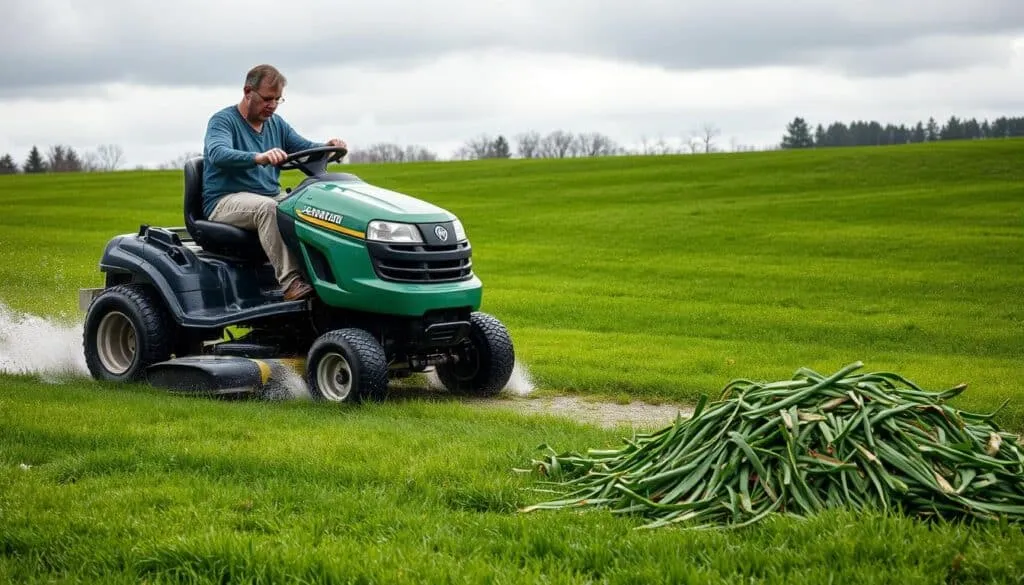
Wet grass creates extremely slippery surfaces that challenge your footing and machine control. The U.S. Consumer Product Safety Commission reports approximately 80,000 emergency room visits annually for lawn mower injuries.
This statistic highlights how wet conditions significantly increase risk. Falls on slippery turf can result in sprains, cuts, or devastating injuries near moving blades.
Riding mowers lose traction on wet grass, potentially throwing operators during slips. Corded electric models present electrocution hazards when water contacts electrical components.
Spread of Lawn Diseases
Mowing wet grass increases risk of fungal infections throughout your property. Torn blades combined with moisture create ideal conditions for disease development.
Common fungal diseases include dollar spot, rust disease, brown patch, and red thread. Each causes distinctive damage patterns that can severely impact lawn appearance.
According to Dr. Aaron J. Patton, Professor of Horticulture at Purdue University:
“Some plant diseases can be spread by equipment when turf remains wet, such as Pythium blight occurring during hot, humid summer mornings.”
This contamination risk makes proper timing critical for preventing widespread damage lawn health.
Best Practices for Mowing After Rain
Sometimes weather conditions force your hand, requiring lawn maintenance on damp turf. When prolonged rainfall prevents waiting for ideal dryness, these essential tips help minimize damage to your property.
Pre-Mowing Preparations
Begin with thorough equipment inspection before attempting to mow wet grass. Check that all safety features function properly and confirm blade sharpness.
Sharp mower blades become critically important for cutting wet grass effectively. Dull blades tear and shred vegetation rather than creating clean cuts.
This causes additional stress and damage to your lawn. Proper preparation ensures your equipment can handle challenging conditions.
Proper Mower Settings and Techniques
Adjust your equipment settings for optimal performance on saturated turf. Kansas State University Research and Extension recommends raising your mower to the highest setting.
Wet grass proves difficult to cut cleanly at lower heights. Reduce your mowing speed to give blades more time to cut effectively.
This technique significantly reduces clumping that occurs with faster mowing. The table below shows recommended adjustments:
| Setting | Dry Conditions | Wet Conditions | Benefit |
|---|---|---|---|
| Blade Height | Normal setting | Highest setting | Cleaner cuts |
| Mowing Speed | Standard pace | Slow pace | Reduced clumping |
| Discharge Method | Mulching preferred | Side-discharge | Prevents clogging |
Purdue University’s Department of Horticulture and Landscape Architecture suggests double-cutting techniques. Mow the same area twice to reduce clipping size and achieve even distribution.
When excessive clippings accumulate, bag them for compost or mulch use. These professional techniques help maintain lawn health during unavoidable wet conditions.
How Wet Conditions Affect Your Lawn Health
While visible damage from cutting grabs immediate attention, the long-term health impacts on your property prove more concerning. Structural changes to your landscape foundation create persistent problems requiring extensive correction.
Soil Compaction and Ruts Formation
Heavy equipment pressing down on water-saturated ground compacts the soil significantly. This compression restricts air, water, and nutrient movement to grass roots. Your lawn struggles to access essential resources for healthy growth.
Riding mowers create particularly severe compaction due to their greater weight. Even push mowers cause noticeable soil density increases. The resulting hardpan prevents proper root development throughout your property.
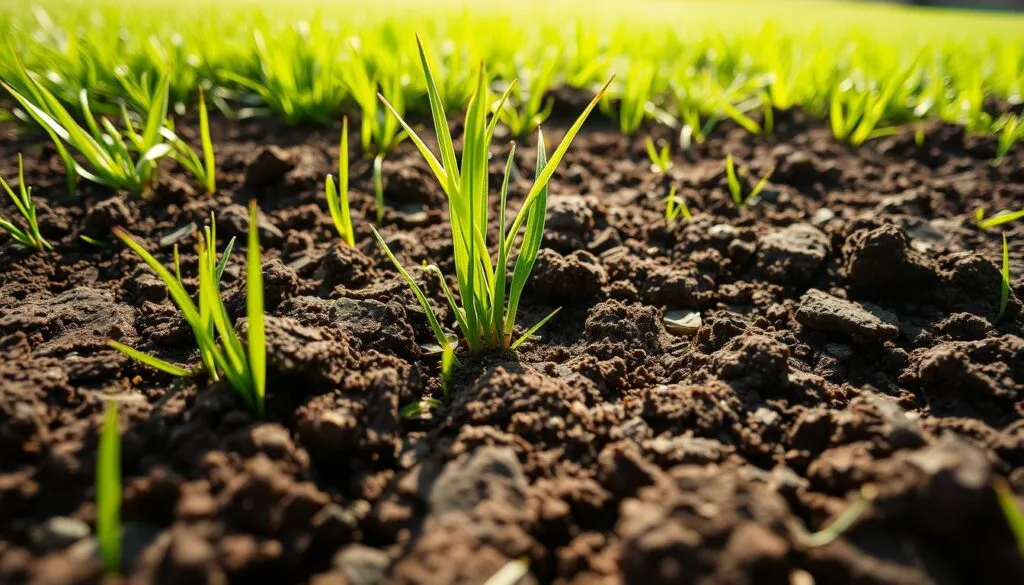
Wheel ruts form as equipment sinks into soft, wet ground. These permanent indentations create uneven surfaces challenging for future maintenance. Deep depressions collect standing water, becoming mosquito breeding sites and safety hazards.
Thatch Buildup from Clumping Clippings
Wet grass clippings clump together instead of dispersing evenly. These dense mats block sunlight, water, and airflow to underlying vegetation. The suffocated grass beneath dies, creating patchy areas.
Slow decomposition of moisture-heavy clippings contributes to thatch accumulation. This dense organic layer builds up on soil surfaces, preventing nutrient absorption. Your lawn requires aeration and extensive recovery efforts to restore proper growing conditions.
Proper timing avoids these structural and organic problems. Waiting for drier conditions preserves your landscape’s long-term vitality and appearance.
Expert Tips for Cutting Wet Grass
Professional landscapers face wet conditions regularly and have developed specific techniques for success. These methods minimize damage when you must cut wet grass despite the challenges.
Lawn care specialists emphasize preparation over rushing into the task. Proper equipment setup makes the difference between a clean job and a messy one.
Importance of a Sharp Blade
Razor-sharp mower blades become critically important for cutting wet grass effectively. Dull equipment tears vegetation rather than creating clean slices.
Moisture adds weight to grass, causing blades to bend instead of standing upright. Sharp blades overcome this resistance with clean cutting action.
University extension services note that even slightly dull blades produce poor results. What works on dry turf fails miserably when cutting wet conditions.
The difference shows immediately in your lawn’s appearance. Clean cuts heal quickly while ragged tears brown at the tips. This vulnerability opens the door to disease and stress.
Wet grass also accelerates blade dulling due to extra resistance. Check sharpness more frequently when maintaining damp turf regularly.
Investing time in proper blade maintenance pays dividends in cut quality. Your equipment experiences less strain, and your property maintains better health.
Alternatives When Conditions Remain Wet
When persistent dampness prevents your regular lawn maintenance schedule, alternative approaches become essential. Sometimes waiting simply isn’t practical due to time constraints or ongoing precipitation.
Using Side-Discharge Mowers or Professional Help
Side-discharge mowers offer superior performance in challenging wet conditions. These machines expel clippings immediately rather than processing them through enclosed chambers.
Mulching mowers struggle significantly with damp vegetation. Wet grass clippings cake up inside the deck and clog the blade area. Bagging systems face similar problems with heavy, saturated turf.
Professional lawn care services provide another excellent solution. These experts possess commercial-grade equipment better suited for difficult conditions. They handle your lawn mowing needs along with weed control and aeration services.
Cordless electric mowers present particular limitations. Manufacturers like Stihl USA and LawnMaster specifically advise against cutting wet grass with their products. Batteries and electrical components risk short circuits and major damage.
Sometimes strategic patience proves the wisest alternative. Postponing maintenance until conditions improve prevents equipment damage and lawn health problems. This approach saves time and money compared to rushed efforts.
Conclusion
Mastering lawn care timing separates amateur results from professional outcomes. Your decision about cutting wet grass impacts everything from equipment longevity to turf vitality.
Evaluate actual conditions rather than following rigid schedules. Proper timing protects your lawn health and ensures personal safety during lawn mowing activities.
Balance practical maintenance needs with environmental awareness. Patience during damp periods combined with proper techniques yields superior results. Wait for grass dry conditions whenever possible.
View mowing decisions as part of comprehensive property care. Your knowledge now helps you assess conditions confidently. Implement best practices that maintain a beautiful, healthy landscape throughout the season.
FAQ
What are the main risks of cutting wet grass?
Mowing wet grass can damage your lawn by tearing the blades instead of cutting them cleanly. This creates an entry point for lawn diseases. Your mower’s performance also suffers, with wet clippings clogging the deck and potentially straining the engine.
How do I know if my lawn is too wet to mow?
A simple test is to walk across the grass. If your footprints remain and the soil feels soggy, it’s best to wait. Proceed only if the surface moisture has dried, even if the soil underneath is still damp, to avoid creating ruts.
Are there safety concerns with mowing on a wet lawn?
Yes, wet conditions significantly increase your risk of slipping on slippery surfaces. There’s also a higher chance of electric shock with corded mowers. Always prioritize safety and wait for drier conditions.
What should I do to prepare my mower for wet grass?
Ensure your mower blades are sharp for a cleaner cut. Set the cutting height higher than usual and make sure the deck is clean to help prevent clumping. A side-discharge setting can also help manage heavy, wet clippings.
How does mowing wet grass affect long-term lawn health?
The weight of the mower can cause soil compaction, which harms root growth. Wet grass clippings clump together, leading to thatch buildup that blocks sunlight and moisture from reaching the soil, increasing the risk of disease.
What is the best alternative if I must cut the grass and it’s wet?
If you cannot wait, using a mower with a side-discharge function can help. For persistent wet conditions, consider hiring a professional lawn care service with equipment better suited for the task to avoid damage.
Why is blade sharpness so important for mowing wet grass?
A sharp blade makes a clean cut, while a dull one shreds the grass blades. Shredded, wet grass is highly susceptible to fungal diseases and takes much longer to recover, stressing your entire lawn.