
Have you ever watched rain clouds gather right before your scheduled lawn mowing day? That sinking feeling hits when your perfect weekend plan gets washed away. Many homeowners face this timing dilemma regularly.
Working with soaked turf creates multiple challenges. Wet grass blades tend to bend rather than cut cleanly. This leads to uneven trimming that can damage your lawn’s health. The moisture also makes clippings clump together, creating messy piles.
Your equipment faces additional strain during these conditions. The mower deck can clog with damp grass clippings. This puts extra stress on the engine and cutting mechanism. Slippery surfaces also increase safety risks for the operator.
Understanding these factors helps you make better decisions about lawn care timing. Proper planning protects both your green space and your investment in equipment.
Key Takeaways
- Wet grass tends to bend rather than cut cleanly, resulting in uneven trimming
- Moisture causes grass clippings to clump together and create messy piles
- Mower decks can clog with damp grass, putting strain on equipment
- Slippery conditions increase safety hazards for the operator
- Proper timing protects both lawn health and mower longevity
- Understanding these factors leads to better lawn care decisions
- Planning around weather conditions ensures optimal results
Understanding the Impact of Wet Grass on Your Lawn
Grass behaves completely differently when moisture weighs down each blade. Water causes individual grass blades to bend over instead of standing upright. This bending action prevents your mower from achieving a clean, even cut across your entire lawn.
Effects on Grass Blades and Appearance
Mowing wet grass results in torn and damaged grass blades rather than clean cuts. The moisture makes blades limp and difficult to cut properly. Your mower tears through them instead of slicing cleanly.
This tearing action leaves brown tips that make your lawn look unhealthy. Once the grass dries and stands up straight, the uneven cutting becomes very noticeable. You often need to mow again to fix the patchy appearance.
Soil Compaction and Clumping Issues
The weight of your mower on water-saturated ground presses down and compacts the soil. Compacted soil makes it difficult for oxygen, water, and nutrients to reach grass roots. This can seriously damage lawn health over time.
Mowers can create deep ruts as they move through soft, wet soil. These ruts not only look unsightly but can hold rainwater. Standing water in ruts creates breeding sites for mosquitoes.
Wet grass clippings clump together rather than dispersing evenly. These clumps block sunlight, water, and airflow to the grass beneath. Left on the lawn, they decompose and kill the grass underneath.
| Condition | Cut Quality | Soil Impact | Clipping Behavior |
|---|---|---|---|
| Wet Grass | Uneven, torn blades | Compaction, ruts | Clumping, matting |
| Dry Grass | Clean, even cut | Minimal compaction | Even dispersal |
| Mixed Conditions | Patchy results | Variable impact | Partial clumping |
The combination of torn grass blades, soil compaction, and clumping issues creates multiple lawn care problems. These issues can take weeks to resolve completely. Understanding these impacts helps you make better decisions about when to cut your grass.
Safety Hazards of Mowing in Wet Conditions
Your personal safety becomes the primary concern when navigating a slick, rain-soaked lawn with a mower. These wet conditions create a hazardous environment that significantly increases the risk of accidents.
Slippery Surfaces and Increased Injury Risk
Damp turf acts like a slip-and-slide, especially on slopes. Maintaining firm footing becomes a real challenge. A simple loss of balance can lead to a serious fall.
Statistics highlight this danger. The U.S. Consumer Product Safety Commission reports thousands of annual emergency room visits from mower accidents. A fall near the machine’s blade can cause devastating injuries.
Riding mowers face additional risk on grass wet with water. They can lose traction and skid unexpectedly, potentially throwing the operator.
Electrical and Mechanical Safety Precautions
Using a corded electric mower in wet conditions introduces a severe electrical risk. Water and electricity are a dangerous combination.
Moisture can seep into connections or contact a frayed cord. This situation creates a serious shock hazard. Even mowers with safety features are not immune.
Many manufacturers, including Stihl USA, explicitly advise against mowing wet grass with cordless models. The practice risks short circuits and major damage to electrical components.
| Hazard Type | Primary Risk | Common Injury | Prevention Tip |
|---|---|---|---|
| Slippery Surface | Falls & Loss of Control | Sprains, Cuts, Impact Injuries | Wait for the lawn to dry completely. |
| Electrical Contact | Electric Shock | Burns, Cardiac Arrest | Avoid using corded mowers; check cordless manufacturer guidelines. |
| Reduced Visibility | Striking Hidden Objects | Lacerations from Projectiles | Walk the area first to clear debris. |
Mower Damage: Risks and Prevention
Your lawn mower faces serious threats when cutting through waterlogged turf. The equipment endures additional stress that can lead to premature wear and costly repairs. Understanding these risks helps protect your investment.
Clogging and Blade Dulling Concerns
Wet grass clippings create stubborn clumps that jam the mower deck. This blockage restricts airflow and forces the blades to work harder. The increased resistance puts significant strain on your engine.
Electric mowers struggle particularly with thick, wet grass due to limited torque. Their engines may overheat when fighting through dense, moisture-heavy turf. Gas-powered models also face challenges with clogged discharge ports.
Moisture accelerates blade deterioration significantly. Damp grass acts like sandpaper on the cutting edges. You’ll need more frequent sharpening or replacement of mower blades.
Engine Strain and Corrosion Issues
Excessive moisture can seep into critical components, including the fuel system. This contamination causes performance issues and potential engine failure. The added weight of wet grass in the bag creates additional mechanical strain.
Metal parts face corrosion risks when grass moisture remains on surfaces. Rust develops quickly on blades, decks, and other components. This deterioration leads to expensive repairs or complete equipment replacement.
Regular cleaning becomes essential after any contact with damp conditions. Proper maintenance prevents long-term damage to your lawn mower. Protecting your equipment saves money and ensures consistent performance.
Is It Okay to Mow After Rain? Guidelines
Proper timing protocols ensure your grass receives the best care possible when moisture has been present. Following expert recommendations prevents the numerous issues discussed in previous sections.
Waiting Periods for Optimal Dryness
Lawn care specialists suggest specific timeframes for optimal conditions. Wait 2 to 5 hours following light precipitation before attempting to cut your lawn. Heavy downpours require approximately 24 hours for sufficient drying.
These guidelines depend on environmental factors like temperature and sunlight exposure. Your specific location’s humidity and air circulation also affect drying time significantly.
Rather than watching the clock, perform simple field tests. Walk across your turf and observe the grass response. Immediate spring-back indicates readiness for cutting.
| Rainfall Type | Minimum Wait Time | Optimal Wait Period | Readiness Indicator |
|---|---|---|---|
| Light Shower | 2 hours | 3-5 hours | Grass springs back quickly |
| Moderate Rain | 6 hours | 8-12 hours | No visible footprints |
| Heavy Downpour | 18 hours | 24+ hours | Dry shoes after walking |
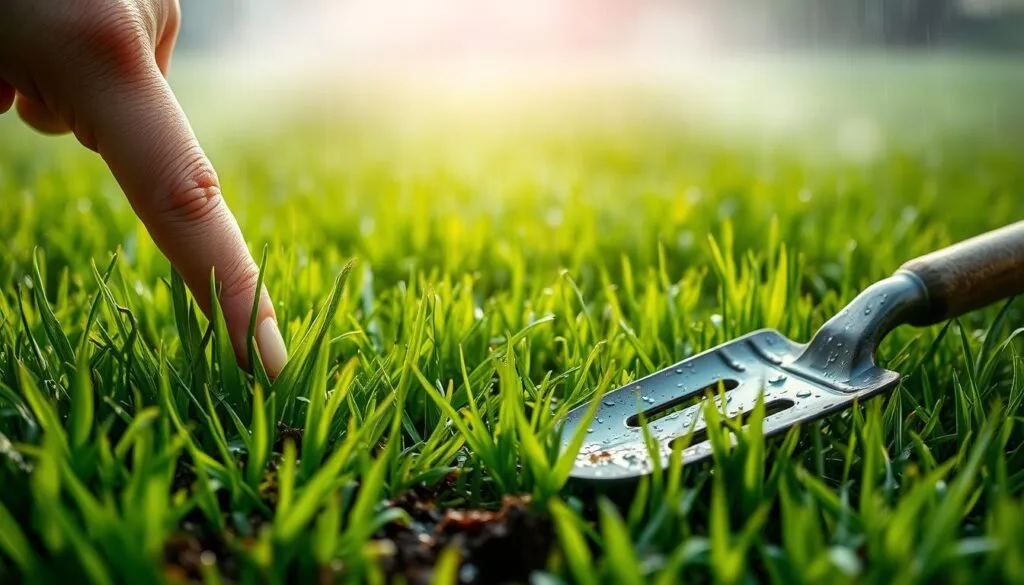
If footsteps remain visible or your shoes become damp, the turf remains too moist. Patience ensures better results and protects your lawn’s health. Always verify conditions before starting your equipment.
These practical tests provide more reliable guidance than strict time estimates. Your lawn’s unique characteristics determine the ideal mowing schedule following precipitation events.
Timing Tips: When to Wait and When to Mow
Your lawn’s moisture content dictates whether you should proceed with cutting or exercise patience. Strategic timing prevents damage to both your turf and equipment.
Mid-morning to early afternoon typically offers the best cutting conditions. Morning dew has evaporated by this time, creating ideal dryness.
Assessing Moisture Levels in Your Lawn
Simple tactile tests reveal your turf’s readiness. Walk across the lawn and observe if footprints remain visible. Dry shoes indicate acceptable moisture levels for mowing.
Dr. Aaron J. Patton, Professor of Horticulture at Purdue University, advises specific protocols. “If you notice active disease in morning hours, wait until afternoon when turf dries completely.” This prevents fungal spread during mowing operations.
Challenging weather patterns require balanced decisions. Extended rainy periods may force cutting slightly damp grass. Purdue University research confirms this approach beats letting turf grow excessively tall.
Your lawn care schedule should prioritize dryness whenever possible. However, sometimes addressing overgrown wet grass becomes necessary for overall lawn health.
Best Practices for a Smooth Mowing Experience
Extended rainy periods occasionally leave homeowners with no choice but to address overgrown turf despite moisture. These expert-recommended approaches minimize potential problems when working with damp conditions.
Adjusting Mower Height and Speed
Begin with sharp blades for cleaner cuts on damp turf. Dull edges tear grass rather than slicing cleanly. This reduces damage to your lawn.
Kansas State University Research and Extension recommends setting your mower at the highest possible setting. Wet grass proves extremely difficult to trim cleanly at lower heights.
Move slowly across your lawn when mowing wet grass. Reduced speed allows blades to cut more effectively. This technique prevents uneven finishes.
Using Side Discharge to Prevent Clumping
Choose side discharge instead of mulching or bagging options. Wet grass clippings quickly clog mulching systems. They also cake up inside collection bags.
Periodically stop to clean the mower deck during your session. This prevents buildup that can jam blades. Regular cleaning maintains cutting efficiency.
While these tips help when you must cut wet grass, they represent damage control measures. Waiting for dry conditions remains the superior choice for lawn health.
Managing Lawn Diseases and Thatch from Wet Grass
The connection between damp conditions and lawn pathogens creates long-term challenges for homeowners. Cutting saturated turf opens pathways for fungal invasions that can devastate your green space.
How Wet Conditions Encourage Fungal Growth
Torn grass blades from improper cutting provide entry points for diseases. Moisture helps pathogens establish themselves quickly. Your lawn becomes vulnerable to multiple fungal threats.
Common diseases include dollar spot, rust disease, brown patch, and red thread. Each shows distinct symptoms like straw-colored circles or orange spots. Early identification prevents widespread damage.
Wet grass clippings stick to mower decks, creating breeding grounds for mold. Fungi growing on equipment spread disease during subsequent sessions. This cycle infects healthy grass areas.
Techniques to Minimize Disease Spread
Waiting for dry conditions remains the best prevention method. Dr. Aaron J. Patton of Purdue University emphasizes timing considerations. “If you notice active disease in morning hours, wait until afternoon when turf dries completely.”
Thorough equipment cleaning after any contact with damp grass breaks the infection cycle. Remove all clippings from blades and decks. Proper maintenance protects your entire lawn from fungal threats.
These practices offer compelling reasons to avoid cutting moist turf. Preventing diseases saves time and money compared to treatment. Your lawn health depends on smart timing decisions.
Mower Maintenance and Its Importance After Rain
Your mower deserves special attention following any contact with moisture. Proper maintenance prevents the long-term damage that wet grass can cause to your equipment. This care extends beyond keeping your machine running smoothly.
Regular upkeep becomes essential for protecting your investment. Moisture from damp conditions accelerates component deterioration significantly. Effective maintenance saves money by preventing major repairs.
Cleaning the Mower Deck Regularly
Never let built-up grass dry on your mower deck. Moisture from that grass seeps into components, causing rust and corrosion. Wet clippings stuck to metal parts create rapid deterioration environments.
Always disconnect the spark plug before cleaning for safety. Remove all grass from blades and deck surfaces after each use. This prevents costly repairs or premature equipment replacement.
Sharpening Blades and Routine Checks
Wet grass dulls blades much faster than dry turf. Check blade sharpness frequently after cutting in damp conditions. Sharp blades maintain cutting performance and reduce strain on your mower.
Consult your owner’s manual before removing bag attachments. The University of Missouri Extension notes these affect mower safety and performance. Regular inspections ensure all components function properly.
Your equipment works harder when cutting wet grass, consuming more fuel with less output. The weight of soaking grass in your bag slows progress significantly. Proper maintenance compensates for this extra strain.
Conclusion
Professional landscapers know that dry conditions create the foundation for superior results. Your lawn deserves this same level of care for optimal health and appearance.
Multiple compelling reasons support waiting for proper dryness. Wet cutting leads to compacted soil, fungal diseases, and uneven trimming. These issues damage lawn health significantly.
Always perform the simple walk test before starting your equipment. Sharp mower blades and proper maintenance protect your investment. Following these guidelines ensures beautiful, healthy grass.
Consider professional lawn mowing services when weather challenges your schedule. This approach guarantees proper care regardless of conditions. Your green space will thrive with smart moisture management.
FAQ
What are the main reasons to avoid cutting wet grass?
Mowing wet grass can damage your lawn and mower. The moisture makes grass blades tear instead of cutting cleanly, leading to a ragged appearance. Wet clippings also clump heavily, blocking sunlight and encouraging lawn diseases. Furthermore, the extra weight and moisture put significant strain on your mower’s engine and can cause premature corrosion.
How long should I wait after rain before mowing my lawn?
For optimal conditions, wait until the grass is completely dry. This typically takes at least 24 hours after a light rain, but could be longer after heavy downpours. You can test moisture levels by walking on the lawn; if your shoes get wet or you leave deep footprints, the soil is still too saturated. Patience ensures a better cut and prevents soil compaction.
What safety risks are involved with mowing on a wet lawn?
Mowing in wet conditions creates serious safety hazards. The ground becomes slippery, increasing your risk of slips and falls, especially on slopes. For electric mowers, there is a heightened danger of electrical shock. The wet grass can also clog the mower deck, potentially causing the machine to stall or throw a clogged clump of wet grass at high speed.
Can mowing wet grass damage my lawn mower?
Yes, mowing wet grass can cause significant damage to your equipment. The wet clippings stick to the underside of the mower deck, leading to clogging and rust. This damp environment promotes corrosion on metal parts. The engine also works much harder to spin the blades through heavy, wet grass, which puts undue strain on the motor and can lead to long-term maintenance issues.
What are the best practices if I absolutely must mow damp grass?
If you have no choice but to mow when the grass is still damp, follow these tips to minimize problems. Raise the cutting height of your mower blades to reduce stress on the grass. Use the side discharge setting instead of bagging to help prevent clumping. Go slower than usual to allow the mower to process the wet grass more effectively. Clean the mower deck thoroughly immediately after use to prevent rust and disease buildup.
How does mowing a wet lawn contribute to lawn diseases?
Wet grass clippings clump together and mat down on the lawn, creating a moist, shaded environment that is ideal for fungal spores to thrive. This can lead to outbreaks of diseases like brown patch or red thread. Torn, wet grass blades are also more susceptible to infection. Mowing when dry helps create fine clippings that decompose quickly without smothering the healthy grass beneath.