
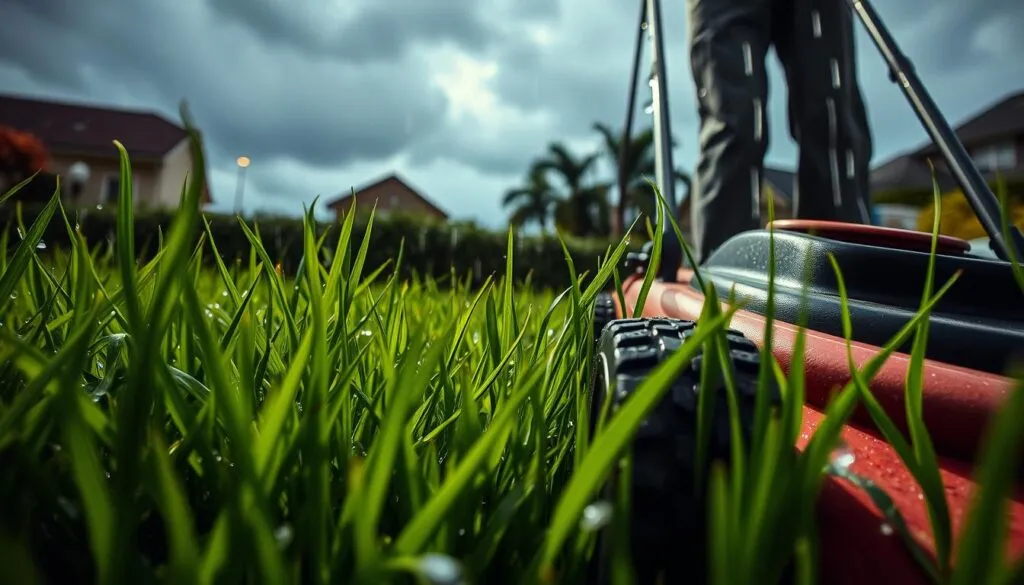
Have you ever looked at your overgrown yard after a storm and wondered if that quick trim might cause more harm than good?
Many homeowners face this exact dilemma when rain disrupts their mowing schedule. I’ve been there too, staring at my soggy lawn with the mower ready to go.
Cutting wet grass creates multiple problems for your lawn and equipment. The moisture makes grass blades limp and difficult to cut evenly. Your mower deck can clog with damp clippings.
This practice also increases disease risk in your turf. Fungal issues like brown patch thrive in these conditions. Your soil structure can suffer from compaction too.
While sometimes unavoidable, mowing in wet conditions requires special care. I’ll share my personal experiences and best practices for those urgent situations.
Key Takeaways
- Mowing wet grass often results in uneven cuts and clumping
- Wet conditions increase the risk of lawn diseases spreading
- Equipment faces additional strain and potential damage
- Safety concerns arise from slippery surfaces and electrical hazards
- Soil compaction can damage grass roots and health
- Waiting for drier conditions typically produces better results
- Special techniques help when mowing cannot be postponed
My Personal Experience with Wet Lawn Mowing
Early morning enthusiasm once led me into a lawn care disaster. I rushed outside with my mower while dew still glistened across the turf. That decision created immediate problems I hadn’t anticipated.
Damp clippings quickly jammed my mower blades. The engine groaned under unexpected strain. I noticed overheating within minutes of starting.
Multiple stops became necessary to clear the deck. Each pause added frustration and extended my chore time. What should have taken thirty minutes dragged on for over an hour.
The Morning Dew Mistake That Taught Me a Lesson
That humid morning revealed how moisture affects cutting performance. My machine struggled with wet grass clinging to every surface. Clumps formed behind me instead of neat rows.
I learned that even dew creates risky conditions. Now I always check moisture levels before starting. A simple touch test prevents most issues.
How Wet Grass Completely Changed My Mowing Routine
This experience transformed my approach to lawn maintenance. I now wait until afternoon when moisture evaporates. My schedule adapts to weather patterns rather than forcing operations.
The results speak for themselves. My equipment lasts longer without constant clogging. The turf looks healthier with cleaner cuts.
| Before My Experience | After My Experience |
|---|---|
| Mowed with morning dew present | Waits for full dryness |
| Frequent mower clogging | Smooth operation |
| Uneven cutting results | Consistent trim quality |
| Engine strain and overheating | Normal performance |
| Extended mowing time | Efficient completion |
Sharing this story helps others avoid similar frustration. Proper timing makes lawn care enjoyable rather than stressful. Your grass and equipment will thank you for waiting.
Why Mowing Wet Grass Damages Your Lawn
Working with moisture-laden turf creates multiple issues that compromise lawn health. The problems extend beyond just appearance concerns. They affect the very structure and vitality of your green space.
Understanding these damage mechanisms helps prevent costly mistakes. I’ve learned through experience how moisture impacts cutting quality. The results often require additional corrective measures.
Uneven Cutting and Torn Grass Blades
Proper cutting requires upright grass blades for clean slicing. Moisture causes blades to bend and clump together. This positioning prevents even trimming across the entire area.
Your mower cannot achieve precise cuts under these conditions. Instead of clean slices, the blades tear through vegetation. This tearing action creates ragged edges that look unhealthy.
Torn blades become entry points for various lawn diseases. They also attract pests seeking weakened vegetation. The overall effect reduces turf resilience and beauty.
How Moisture Affects Grass Standing Position
Water weight dramatically changes how grass stands. Dry blades stand tall and ready for cutting. Wet ones droop under moisture’s heavy burden.
This drooping creates uneven cutting heights across your lawn. Some patches get trimmed while others remain untouched. The result resembles a poorly maintained landscape.
I’ve noticed this effect even with light morning dew. The difference in cutting quality becomes immediately apparent. Waiting for complete dryness always produces superior results.
The Problem With Clumping and Thatch Buildup
Moisture causes cut grass to stick together in clumps. These wet clippings accumulate on your lawn’s surface. They block sunlight from reaching the underlying grass.
Blocked sunlight causes yellowing and eventual death in covered areas. The decomposing material creates a thick thatch layer. This layer prevents water and nutrients from reaching roots.
Thatch accumulation encourages fungal growth like brown patch. It also creates ideal conditions for other lawn diseases. The cycle continues without proper intervention and care.
Regular thatch removal becomes necessary when mowing wet grass. This adds extra work to your lawn maintenance routine. Prevention through proper timing proves much more efficient.
The Real Risk of Lawn Diseases from Wet Mowing
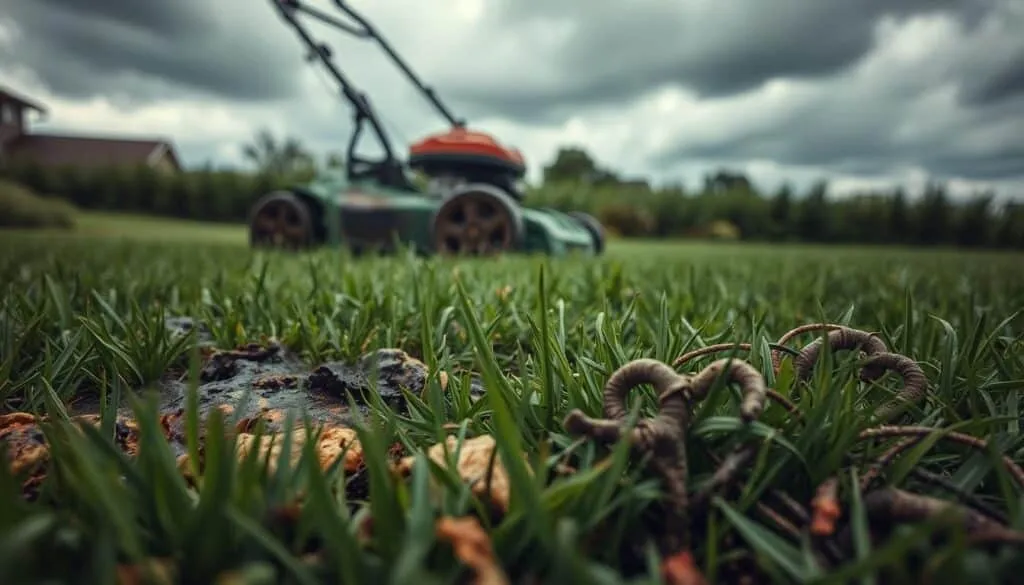
Moisture transforms your green space into a breeding ground for trouble. I discovered this truth through unfortunate experience with fungal outbreaks.
Wet conditions create perfect environments for various turf diseases. These issues spread rapidly across vulnerable grass.
Micro-tears in grass blades serve as entry points for pathogens. This damage invites fungal spores and bacteria into plant tissue.
My lawn once developed strange circular patterns after damp trimming. That incident taught me about disease transmission risks.
Common Fungal Diseases That Thrive in Wet Conditions
Several turf illnesses flourish under moist circumstances. Recognizing them early prevents widespread damage.
Brown patch creates irregular circles of brown grass. This fungus spreads quickly across affected areas.
Dollar spot forms small, straw-colored patches. These silver-dollar-sized spots appear during humid weather.
Rust disease manifests as orange or yellowish spots. It weakens turf and reduces aesthetic appeal.
Anthracnose causes reddish-brown patches in stressed lawns. Wet mowing practices exacerbate this condition.
How Torn Grass Blades Become Infection Points
Clean cutting produces healthy grass with sealed edges. Moisture causes tearing instead of slicing.
These ragged openings allow pathogens easy access. Fungi establish themselves in damaged tissue.
My mower once spread disease across the entire yard. I learned equipment can transfer spores between areas.
Dr. Aaron J. Patton, Turfgrass Specialist at Purdue University, advises caution:
‘A few plant diseases can be spread by equipment when the turf is wet, such as Pythium blight that occurs during hot, humid mornings in the summer. If you see active disease in the morning, wait until the turf dries.’
Brown Patch and Other Diseases to Watch For
Additional turf illnesses demand attention during damp periods. Leaf spot features small brown lesions with darker borders.
This condition leads to thinning and dieback if untreated. Red thread shows pinkish-red filaments on grass tips.
Cool, wet conditions favor this particular fungus. I now monitor for these signs after rainfall.
| Disease Name | Visual Signs | Preferred Conditions |
|---|---|---|
| Brown Patch | Irregular brown circles | Humid, warm weather |
| Dollar Spot | Straw-colored patches | High humidity |
| Rust Disease | Orange/yellow spots | Moist, cool periods |
| Anthracnose | Reddish-brown patches | Stressed turf |
| Leaf Spot | Brown lesions with dark borders | Wet conditions |
| Red Thread | Pinkish-red filaments | Cool, damp weather |
Prevention remains the best strategy against these diseases. Dry mowing reduces risk significantly.
I adjust my schedule based on weather patterns and moisture levels. This practice maintains lawn health throughout the season.
How Wet Grass Can Damage Your Mower Equipment
My expensive lesson came when moisture destroyed a trusted machine. Damp conditions turned routine maintenance into a costly repair nightmare.
Your equipment faces multiple threats when handling wet vegetation. Each component suffers under these challenging circumstances.
Engine Strain and Overheating Risks
Wet clippings create immediate problems for your power source. They clump together inside the cutting chamber.
This mass restricts essential airflow around the blades. Your engine struggles against this unexpected resistance.
Overheating becomes inevitable under these strained conditions. I’ve seen smoke pour from overtaxed motors.
Electric models face even greater challenges here. Their reduced torque cannot handle dense, wet material.
Blade Dulling and Corrosion Issues
Moisture accelerates wear on cutting components. Damp grass acts like abrasive paste on metal surfaces.
Your blades lose their sharp edge much faster. Frequent sharpening becomes necessary for clean cuts.
Rust attacks untreated steel parts after exposure. Corrosion spreads quickly between mowing sessions.
I learned to immediately dry all metal components. This simple habit prevents most corrosion problems.
Clogging Problems in the Mower Deck
The cutting chamber suffers most from wet conditions. Clippings stick to every surface inside this space.
Blockages form in the discharge chute regularly. These obstructions create uneven cutting patterns.
Mechanical failures increase with persistent clogging. Repair costs accumulate faster than expected.
Professional landscapers avoid wet cutting for equipment longevity. Their business depends on reliable performance.
Financial impacts become apparent over time. Consider these common expense categories:
- Blade replacement every season instead of every two
- Engine repairs from overheating damage
- Rust treatment for deck and components
- Increased fuel consumption during operation
- Potential full replacement for severely damaged units
Protect your investment with simple preventive measures. Always check moisture levels before starting.
Clean your equipment thoroughly after any damp operation. Store machines in dry, covered areas.
These practices saved me thousands in repair bills. Your mower will thank you with longer service life.
Safety Hazards: Why Wet Mowing is Dangerous
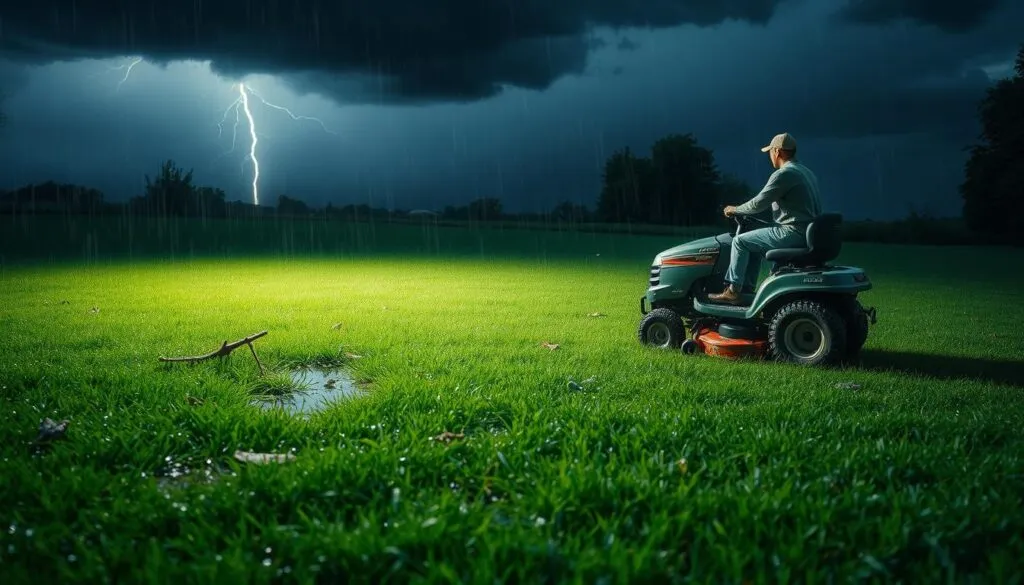
My neighbor’s emergency room visit changed my perspective on lawn care forever. His slip on damp turf while operating machinery revealed hidden dangers I’d never considered.
Working with moisture creates multiple safety concerns beyond equipment issues. These risks affect both push and riding models differently.
Slippery Conditions and Fall Risks
Wet vegetation transforms your yard into a potential accident zone. Footing becomes unpredictable on slick surfaces.
Uneven terrain increases the danger significantly. Hills and slopes become particularly treacherous when damp.
The U.S. Consumer Product Safety Commission reports alarming numbers. Over 250,000 people required treatment for mower-related injuries in one year.
I always wear proper footwear with aggressive tread now. This simple precaution reduces slip potential dramatically.
Electrical Hazards With Corded Mowers
Extension cords and moisture create a deadly combination. Water conducts electricity through unexpected pathways.
Frayed wiring becomes especially dangerous in these conditions. Electrical components can fail when exposed to dampness.
I recommend cordless or gas-powered alternatives for wet work. These options eliminate shocking possibilities entirely.
“Water and electricity remain a dangerous mix under any circumstances. Using corded equipment in damp conditions invites preventable tragedy.”
Reduced Visibility and Projectile Risks
Moisture-heavy vegetation obscures hidden obstacles perfectly. Toys, rocks, and sprinkler heads become invisible threats.
Your machine can transform these items into dangerous projectiles. The discharge chute may propel objects at surprising velocities.
I always survey my work area thoroughly before starting. This practice helps identify potential hazards beforehand.
Consider these essential safety protocols:
- Wait for complete dryness before operating machinery
- Choose cordless or gas-powered equipment for damp conditions
- Wear waterproof boots with deep tread patterns
- Avoid slopes and uneven terrain when moisture is present
- Clear the work area of all potential obstacles
Your personal safety outweighs any lawn maintenance urgency. Proper timing prevents most accidents before they happen.
Soil Compaction and Root Damage Concerns
My riding mower once left permanent scars across my backyard. I learned how equipment weight transforms damp ground into damaged turf.
Soil structure suffers tremendously under these wet conditions. Your lawn’s foundation becomes compromised beneath the surface.
How Mower Weight Affects Wet Soil
Heavy machinery presses down on saturated ground. This compression eliminates essential air pockets.
Riding models create the most severe compaction issues. Their substantial weight crushes soil particles together.
This compression reduces pore space dramatically. Grass roots struggle to breathe without adequate airflow.
The Problem With Rut Creation
Soft ground yields under equipment weight. Deep grooves form where wheels repeatedly pass.
These ruts create multiple maintenance headaches. Uneven terrain makes future cutting difficult.
Tripping hazards emerge across your work area. Standing water collects in these depressions.
Mosquitoes breed happily in these miniature ponds. The problem compounds with each rainfall.
Impact on Nutrient and Water Absorption
Compacted soil prevents proper resource distribution. Vital elements cannot reach hungry root systems.
Your grass shows visible stress signals quickly. Yellowing and thinning appear across affected zones.
Dr. Thomas W. Rufty, Professor of Crop Science at NC State, explains:
“Soil compaction reduces pore space, limiting oxygen diffusion to roots and decreasing water infiltration. This physical stress reduces root growth and nutrient uptake capacity.”
Corrective measures become necessary for recovery. Core aeration helps alleviate compression damage.
Consider these long-term effects on lawn health:
- Reduced root depth and development
- Decreased drought resistance
- Increased fertilizer requirements
- Higher disease susceptibility
- Additional maintenance expenses
Dry conditions provide firm support for equipment. Your soil maintains its structure beautifully.
I now check ground firmness before every mowing session. This simple test preserves my lawn’s foundation.
Healthy soil means thriving grass above ground. Your entire landscape benefits from this awareness.
When You Absolutely Must Mow Wet Grass
Sometimes weather patterns create unavoidable mowing situations. Extended rainy periods leave grass excessively tall and unmanageable. These circumstances demand special handling techniques.
I faced this scenario during a particularly wet spring season. My yard became a jungle after two weeks of constant showers. Waiting for perfect dryness wasn’t an option anymore.
Emergency cutting requires modified approaches for success. Proper preparation minimizes potential damage to your turf and equipment.
Recognizing Unavoidable Situations
Certain conditions justify taking calculated risks with moisture. Prolonged rainfall that prevents normal maintenance schedules creates urgency.
Grass reaching critical height threatens overall lawn health. Overgrown turf becomes difficult to manage even under ideal circumstances.
Special events requiring immediate landscape presentation might force action. Safety hazards from obscured obstacles in tall grass also warrant consideration.
Best Practices for Emergency Wet Mowing
Sharp blades make cleaner cuts on damp vegetation. This reduces tearing and minimizes damage to grass blades.
Raise your cutting height to the highest possible setting. This approach decreases clumping and reduces stress on the turf.
Move slowly across the work area for better cutting efficiency. Reduced speed helps the mower handle wet clippings more effectively.
Use side discharge instead of mulching or bagging attachments. This prevents clogging and distributes clippings more evenly.
Frequently clean the mower deck during operation. Regular stops prevent grass buildup and maintain performance.
Timing Considerations After Rainfall
Wait at least 2-5 hours after light precipitation ends. Allow a full 24 hours following heavy rainfall before attempting to cut.
Test moisture levels by walking across your lawn. Visible footprints indicate conditions remain too wet for mowing.
Spring-back grass signals acceptable dryness for operation. This simple test prevents most problems associated with damp cutting.
| Situation | Waiting Period | Moisture Test |
|---|---|---|
| Light rain shower | 2-5 hours | Footprint visibility |
| Heavy rainfall | 24 hours | Grass spring-back |
| Morning dew | Until afternoon | Blade dryness |
| Extended wet period | First dry window | Soil firmness |
These practices serve emergency situations only. Dry mowing remains the preferred method for maintaining lawn health.
Always prioritize safety and equipment protection during damp operations. Your landscape deserves careful consideration during challenging conditions.
Practical Tips for Mowing in Damp Conditions
Emergency situations sometimes demand immediate action despite wet turf. These special techniques help minimize potential problems when waiting isn’t possible.
Proper preparation makes damp cutting safer for your equipment and landscape. I’ve developed these methods through challenging personal experiences.
Adjusting Mower Height and Speed
Raise your cutting height significantly before starting. Taller grass handles moisture stress much better.
This adjustment creates smaller clippings that resist clumping. Your machine processes them more efficiently.
Reduce your mowing speed dramatically during operation. Slower movement allows blades to handle wet vegetation properly.
Use overlapping patterns for complete coverage. The half-cut method ensures no missed spots remain.
Blade Maintenance for Wet Cutting
Sharp blades become absolutely essential for damp conditions. They slice cleanly through moisture-heavy vegetation.
Dull equipment tears grass blades instead of cutting. This damage invites disease and creates uneven results.
I always check sharpness before any emergency operation. Proper maintenance prevents most cutting problems.
Cleaning and Maintenance After Wet Use
Frequent stops help prevent deck clogging during operation. Always power down before clearing any blockages.
Thorough cleaning becomes mandatory after finishing. Remove all grass residue from the mower deck and discharge chute.
Dry electrical components completely on corded models. Lubricate moving parts to protect against moisture damage.
These practices extend your equipment’s service life significantly. They prevent rust and corrosion between uses.
“Proper cleaning after wet mowing prevents most mechanical issues. Moisture accelerates wear on all components.”
Consider these essential steps for post-mowing care:
- Remove all clippings from the cutting chamber
- Wipe down the entire machine thoroughly
- Check blades for grass buildup and clean
- Inspect electrical connections for moisture
- Apply lubricant to moving parts
- Store equipment in dry, covered location
These measures serve as temporary solutions only. Dry mowing remains the preferred method for lawn health.
Your equipment deserves proper care after challenging conditions. These practices maintain performance and longevity.
Conclusion: Making the Right Decision for Your Lawn
After extensive experience, I learned that cutting wet grass harms your turf and machinery. Moisture leads to uneven trimming, equipment strain, and disease spread.
Always wait for grass dry conditions whenever possible. This protects your lawn’s health and your mower’s longevity.
In unavoidable situations, follow emergency tips. Sharp blades and proper maintenance reduce negative impacts.
Prioritize long-term lawn care over short convenience. Monitor forecasts and schedule around dry periods.
Your green space deserves careful attention. Make informed choices for optimal results every time.
FAQ
Can I mow my lawn right after it rains?
I avoid mowing immediately after rainfall. Wet grass clumps, tears, and can spread disease. I wait until the lawn is dry for a clean, healthy cut.
What happens if I cut grass when it’s wet?
From my experience, mowing wet grass leads to uneven cuts, clumping, and potential disease spread. It also strains the mower and dulls blades faster.
Does mowing wet grass cause lawn diseases?
Yes, it can. Moist conditions and torn blades create perfect entry points for fungi like brown patch. I’ve seen this damage lawns quickly.
How does wet mowing affect my mower?
Wet grass clogs the deck, strains the engine, and promotes rust on blades. I’ve had to clean and maintain my equipment more often after mowing in damp conditions.
Are there safety risks with mowing in the rain?
Absolutely. Slippery surfaces increase fall risks, and wet conditions can cause electrical hazards with corded mowers. I always prioritize safety and wait for dry weather.
Can mowing on wet soil damage my lawn’s roots?
Definitely. The mower’s weight compacts wet soil, harming root systems and reducing nutrient absorption. I avoid mowing when the ground is saturated.
When is it acceptable to mow a wet lawn?
Only in unavoidable situations, like before an extended rainy period. If I must, I raise the cutting height, go slow, and clean the mower thoroughly afterward.
What should I do if I have to mow damp grass?
I adjust the mower to a higher setting, ensure blades are sharp, and make multiple passes if needed. Cleaning the deck immediately after prevents rust and clogs.