
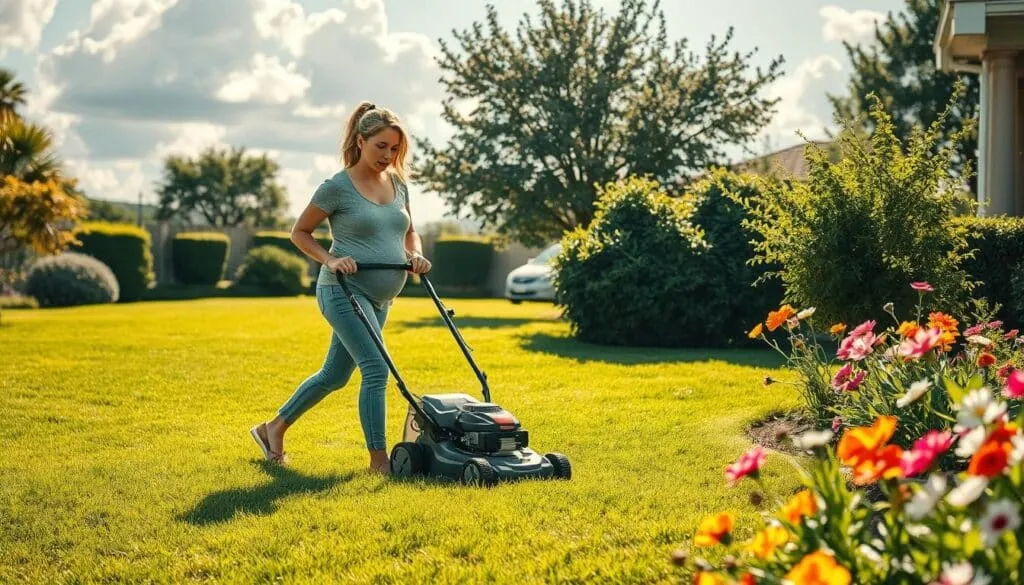
As pregnancy progresses, women often wonder what household chores are safe to continue. One common question is whether it’s safe to mow the lawn during this period. Mowing the lawn can be a physically demanding task, and concerns about its safety during pregnancy are valid.
Generally, mowing the lawn is considered safe for pregnant women if proper precautions are taken. However, it’s crucial to consider individual health and pregnancy complications. We’ll explore the safety aspects, types of lawn mowers, and how safety changes throughout each trimester.
Key Takeaways
- Mowing the lawn is generally considered safe during pregnancy with proper precautions.
- The type of lawn mower used can impact safety for pregnant women.
- Safety precautions and warning signs are crucial to consider.
- Physical activity benefits during pregnancy should be balanced against potential risks.
- Medical experts’ advice on lawn mowing during pregnancy is essential.
- Understanding when to delegate lawn mowing tasks is vital.
Understanding the Safety of Lawn Mowing During Pregnancy
Continuing regular activities during pregnancy, such as lawn mowing, requires careful consideration of safety factors. Pregnant women often need to balance their desire to stay active with the need to protect their health and the health of their baby.
General Safety Considerations
When it comes to lawn mowing, several general safety considerations come into play. Pregnant women should be aware of their physical limitations and avoid overexertion. It’s essential to take regular breaks, stay hydrated, and avoid mowing in extreme temperatures. The table below summarizes key safety tips for pregnant women who mow their lawn.
| Safety Tip | Description |
|---|---|
| Stay Hydrated | Drink plenty of water before, during, and after mowing |
| Avoid Extreme Temperatures | Mow during cooler parts of the day to avoid heat stress |
| Take Regular Breaks | Rest every 20-30 minutes to avoid fatigue |
What Medical Experts Say About Can I Mow While Pregnant
Medical experts generally advise that most pregnant women can continue activities they were comfortable with before pregnancy, including lawn mowing, as long as there are no pregnancy complications. It’s crucial to consult with yourhealthcare providerabout activities that are safe for you during pregnancy. They can providepersonalized advicebased on your individual health and pregnancy conditions. According to medical professionals, moderate physicalactivity, such as mowing the lawn, can be beneficial for pregnant women, promoting overallhealthand well-being.
Types of Lawn Mowers and Their Impact on Pregnancy
When it comes to maintaining your lawn during pregnancy, the type of lawn mower you use can have significant implications for your safety and comfort. The various types of lawn mowers available differ not only in their functionality but also in how they might affect a pregnant woman.
Push Mowers vs. Riding Mowers
Push mowers require physical exertion, which can be beneficial for maintaining strength and mobility during pregnancy, but they also demand more effort and balance. Riding mowers, on the other hand, offer a more comfortable alternative, reducing physical strain. However, they can be heavier and potentially more challenging to maneuver, especially in tight spaces.
| Mower Type | Physical Exertion | Maneuverability |
|---|---|---|
| Push Mowers | High | Easy |
| Riding Mowers | Low | Challenging |
Gas vs. Electric Mowers
Gas mowers are known for their power but come with concerns such as gas fume exposure and noise pollution. Electric mowers, while generally quieter and producing no fumes, may have limitations in terms of power and runtime. According to Dr. Jane Smith, an obstetrician, “Electric mowers are a safer choice for pregnant women due to reduced exposure to harmful fumes and lower noise levels.”
“Electric mowers are a safer choice for pregnant women due to reduced exposure to harmful fumes and lower noise levels.” – Dr. Jane Smith
In conclusion, when choosing a lawn mower during pregnancy, it’s crucial to weigh the pros and cons of each type, considering factors such as physical exertion, fume exposure, and noise levels to ensure a safe and healthy experience.
Trimester-Specific Considerations
As pregnancy progresses through its three trimesters, the safety and feasibility of mowing the lawn change significantly. Pregnant women need to be aware of these changes to make informed decisions about their lawn care.
First Trimester Lawn Mowing
During the first trimester, most women can continue their regular activities, including lawn mowing, unless advised otherwise by their healthcare provider. However, it’s essential to be mindful of the physical demands of mowing and take regular breaks to avoid fatigue. Proper hydration is also crucial. At this stage, the risk of miscarriage is higher, and while there’s no direct evidence linking lawn mowing to miscarriage, being cautious is advisable.
Second Trimester Lawn Mowing
The second trimester often brings a temporary reprieve from the early pregnancy symptoms, making it a relatively easier period for physical activities like lawn mowing. Nonetheless, as the pregnancy advances, balance and coordination might start to be affected. Using a riding lawn mower could be a safer option if available, as it reduces the need for physical exertion and balance. Pregnant women should continue to monitor their body’s response and adjust their activities accordingly.
Third Trimester Lawn Mowing
In the third trimester, the physical demands of lawn mowing can become challenging due to the advanced stage of pregnancy. The size of the belly can affect balance, and the risk of overheating and fatigue increases. Delegating lawn care tasks to others or using alternative, less strenuous methods should be considered. If one must mow, using a riding mower and taking frequent breaks is advisable. It’s also crucial to be aware of the warning signs that necessitate stopping the activity immediately, such as dizziness or vaginal bleeding.
- Be aware of your body’s limitations and adjust activities accordingly.
- Consider delegating lawn care tasks, especially in the third trimester.
- Use riding lawn mowers for less physical exertion.
Essential Safety Precautions for Pregnant Women
To minimize risks associated with lawn mowing during pregnancy, it’s essential to follow some key safety guidelines. Ensuring your safety while mowing the lawn is crucial for both you and your unborn baby.
Proper Hydration and Rest Breaks
Staying hydrated is vital, especially when engaging in physical activities like lawn mowing. Drink plenty of water before, during, and after mowing to prevent dehydration. Take regular breaks to rest and avoid exhaustion.
Appropriate Clothing and Sun Protection
Wear loose, comfortable clothing and a hat to protect yourself from the sun. Apply sunscreen with a high SPF to prevent sunburn. This will help you stay cool and comfortable while mowing.
Proper Technique and Body Mechanics
Using the correct technique when mowing can help prevent strain and injury. Maintain good posture and avoid twisting or bending. When pushing a lawn mower, use your legs rather than your back to minimize strain. Make sure to listen to your body and stop if you experience any discomfort or pain.
By following these safety precautions, pregnant women can minimize the risks associated with lawn mowing and maintain a healthy pregnancy.
Environmental Factors to Consider
When maintaining your lawn during pregnancy, it’s crucial to consider various environmental factors that could impact your health and the well-being of your baby.
Heat and Humidity Concerns
Pregnant women are more susceptible to heat-related illnesses due to changes in their body temperature regulation. When mowing the lawn, it’s essential to avoid working during the hottest part of the day and take regular breaks in shaded or cool areas. Staying hydrated is also vital; consider drinking water before, during, and after the activity.
Avoiding Chemical Exposure
Chemical exposure is a significant concern during pregnancy. When it comes to lawn care, it’s advisable to avoid using weed killers or other chemicals. Instead, opt for manual weeding or other non-chemical methods of weed control. If you must use a lawn mower, be aware of the fumes it emits, as they can be harmful. Consider wearing a mask to minimize exposure to both fumes and allergens.
| Chemical | Potential Risk | Safer Alternative |
|---|---|---|
| Fertilizers | Chemical exposure, potential harm to the fetus | Organic fertilizers or natural alternatives |
| Pesticides | Neurodevelopmental issues, other health concerns | Integrated pest management techniques |
| Herbicides | Chemical exposure, potential link to pregnancy complications | Manual weeding, non-chemical weed control |
When to Avoid Mowing While Pregnant
Understanding when to avoid mowing the lawn is essential for pregnant women to protect their health and their baby’s well-being. While mowing can be a form of exercise, certain conditions and warning signs may indicate it’s not safe to continue.
High-Risk Pregnancy Conditions
Pregnant women with high-risk pregnancy conditions should avoid mowing the lawn. Conditions such as placenta previa, a history of preterm labor, or other complications may require reduced physical activity. It’s crucial to follow your healthcare provider’s advice regarding physical activities during pregnancy.
Warning Signs to Stop Immediately
If you experience any warning signs while mowing, stop immediately. Symptoms like dizziness, shortness of breath, or pain are indicators that you should rest. It’s also important to listen to your body and not overexert yourself. If you’re starting to feel lightheaded or like you’re overdoing it, stop mowing. It’s better to have half-mowed grass than to risk your health or your baby’s health.
Benefits of Lawn Mowing as Physical Activity During Pregnancy
For pregnant women, activities such as lawn mowing can contribute to a healthier pregnancy. It’s essential to understand how to balance the benefits of physical activity with the necessary safety precautions.
Exercise Value of Mowing
Lawn mowing can be considered a moderate form of exercise that helps maintain physical health during pregnancy. It involves walking and pushing or riding a mower, which can aid in keeping the heart rate up and muscles active. Regular physical activity during pregnancy is known to have several benefits, including reduced risk of gestational diabetes and improved mental health.
Balancing Activity with Safety
While engaging in lawn mowing as a form of exercise, it’s crucial to listen to your body and take regular breaks to avoid exhaustion. Ensuring proper hydration and wearing appropriate clothing can also enhance safety. Pregnant women should be cautious and adjust their activity level according to their body’s signals, prioritizing both their health and the baby’s well-being.
- Modify lawn mowing activities as pregnancy progresses.
- Prioritize rest and recovery.
- Communicate needs and limitations to family members.
By being mindful of these factors, pregnant women can safely engage in lawn mowing as a form of physical activity, contributing to a healthier pregnancy.
Conclusion: Making the Right Decision for You and Your Baby
When it comes to mowing the lawn during pregnancy, there’s no one-size-fits-all answer. While lawn mowing is generally considered safe for most pregnant women, individual circumstances vary. It’s crucial to consult with your healthcare provider about specific activities during this time.
Listen to your body and adjust your activities as your pregnancy progresses. Weigh the benefits of lawn mowing as a form of exercise against potential risks, and consider alternatives if needed. With caution and common sense, you can make an informed decision that feels right for your unique journey and your baby.
FAQ
Is it safe to operate a riding lawn mower during pregnancy?
Operating a riding lawn mower is generally considered safe during pregnancy, but we recommend taking frequent breaks and staying hydrated to avoid heat exhaustion.
What type of lawn mower is safer to use while pregnant?
Riding mowers are often considered safer than push mowers as they require less physical exertion. However, it’s essential to consult with your healthcare provider before engaging in any physical activity.
Are there any specific precautions to take when mowing the lawn during the first trimester?
During the first trimester, it’s crucial to listen to your body and take regular breaks to avoid fatigue. We also recommend wearing sunscreen and staying hydrated.
How often should I take breaks while mowing the lawn while pregnant?
We advise taking breaks every 20-30 minutes to rest and rehydrate, especially when operating a push mower or working in high temperatures.
What are the signs that I should stop mowing the lawn immediately while pregnant?
If you experience dizziness, vaginal bleeding, or severe abdominal pain, stop mowing the lawn immediately and seek medical attention.
Should I avoid mowing the lawn if I have a high-risk pregnancy?
If you have a high-risk pregnancy, we strongly recommend consulting with your healthcare provider before engaging in any physical activity, including lawn mowing.
How can I minimize my exposure to chemicals while mowing the lawn during pregnancy?
To minimize chemical exposure, we suggest avoiding the use of pesticides, herbicides, or fertilizers while mowing the lawn. Opt for environmentally friendly alternatives instead.