
Have you ever considered that the most overlooked part of your yard equipment might be the very thing that determines its reliability?
That small box under the hood holds the key to a smooth start and consistent power. Understanding its electrical potential is not just for mechanics. It is essential knowledge for every homeowner.
This guide dives into the world of power cells for your outdoor tools. You will learn why the correct electrical level is crucial. It affects starting power, component operation, and cutting performance.
Whether you operate a riding model with an electric starter or a modern cordless unit, this information applies. A properly maintained unit saves you from frustration. It ensures your machine is ready when you are.
We will explain what your equipment requires. You will gain the confidence to test, maintain, and replace this vital component. This knowledge extends the life of your investment and keeps your property looking great.
Key Takeaways
- Correct voltage is critical for reliable starting and consistent mower performance.
- Different types of mowers require specific battery voltage levels.
- Proper voltage maintenance prevents unexpected breakdowns during mowing season.
- Understanding your battery’s voltage helps you make informed replacement decisions.
- Regular voltage checks are a simple way to extend the life of your equipment.
- A healthy battery ensures all electrical components function correctly.
Understanding Lawn Mower Battery Voltages
Your equipment’s starting reliability depends on matching the correct electrical specifications to its design requirements. The right voltage ensures consistent performance and prevents damage to your machine’s components.
Overview of Battery Voltage Standards
Most riding mowers and tractors use a 12-volt system as the industry standard. This has remained consistent across various equipment models for years.
Not all 12-volt power sources behave identically. Traditional lead-acid units typically measure around 12.6-12.8 volts when fully charged. Modern lithium options can reach 13.2 volts or higher.
Larger commercial equipment may utilize 24-volt systems for increased power delivery. This provides extended runtime for substantial properties.
Differences Between Gas-Powered and Battery-Powered Mowers
Gas-powered equipment with electric start relies on 12V batteries primarily for engine cranking. These units also power additional features like headlights and safety systems.
Battery-powered models operate differently. They use lithium-ion technology with ratings from 20V for small yards to 80V for commercial applications.
Each type serves specific power requirements. Understanding these differences helps you maintain optimal performance for your particular equipment.
How Many Volts is a Lawn Mower Battery
Your equipment’s electrical needs are primarily defined by whether it runs on gasoline or is fully cordless.

For traditional gas-powered units with an electric starter, the industry standard is a 12-volt lead-acid battery. Some older or smaller push mowers might use a 6-volt system.
A healthy, fully charged 12V unit should show a reading between 12.6 and 12.7 volts on a meter. Advanced AGM types can reach up to 12.8 volts.
Selecting the correct electrical capacity is the first step toward reliable performance and long component life.
Cordless electric models utilize lithium-ion technology. These offer a wide spectrum of power levels tailored to your property’s size.
Voltages range from compact 20V options for small yards to heavy-duty 80V systems for large properties.
| Mower Type | Typical Battery Technology | Common Voltage Range | Best For |
|---|---|---|---|
| Gas-Powered (with electric start) | Lead-Acid / AGM | 12V (6V for some older models) | Standard residential riding and push mowers |
| Battery-Powered (Cordless) | Lithium-Ion (Li-ion) | 20V – 80V+ | Small yards to large commercial properties |
| 40V – 60V Models | Lithium-Ion (Li-ion) | 40V, 56V, 60V | Medium to large lawns with thicker grass |
Knowing these ranges helps you choose the right component for your specific needs. It also guides proper maintenance for optimal performance.
Testing Your Lawn Mower Battery Voltage
Regular voltage checks are your first line of defense against unexpected starting problems. This simple diagnostic task gives you a clear picture of your power source’s health.
With the correct tools and a methodical approach, you can obtain an accurate reading in minutes. This knowledge empowers you to take action before your equipment fails.
Gathering Your Tools and Safety Precautions
You will need a digital multimeter for this task. Set the device to measure DC voltage.
If your model has a manual range, select the 20V DC option. This setting is ideal for standard power cells.
Safety is paramount. Always wear protective gloves and eyewear. This is especially important if you notice any corrosion or leakage.
A safe testing environment prevents accidents and ensures accurate results.
Step-by-Step Testing Process Using a Multimeter
First, ensure your equipment is completely off. Let the engine cool for at least one hour. Testing too soon can give a false reading.
Locate the power cell compartment. Find the positive and negative posts. Clean any debris from the contacts with a wire brush.
Turn on your multimeter. Connect the red probe to the positive post. Attach the black probe to the negative post.
Observe the reading on the display. The numbers will tell you the state of charge.
| Voltage Reading | Battery Status | Recommended Action |
|---|---|---|
| 12.6 – 12.7 V | Fully Charged | Ready for use |
| 12.4 V | Half-Charged | Recharge soon |
| 12.2 V | Flat / Discharged | Requires charging |
| Below 12.0 V | Not Functional | Likely needs replacement |
If your reading is low, recharge the unit. A consistent reading below 12 volts typically indicates it is time for a new one.
Interpreting Multimeter Readings and Voltage Ranges
Different power cell technologies show distinct voltage patterns at full capacity. Your reading means something different for lead-acid versus lithium units.
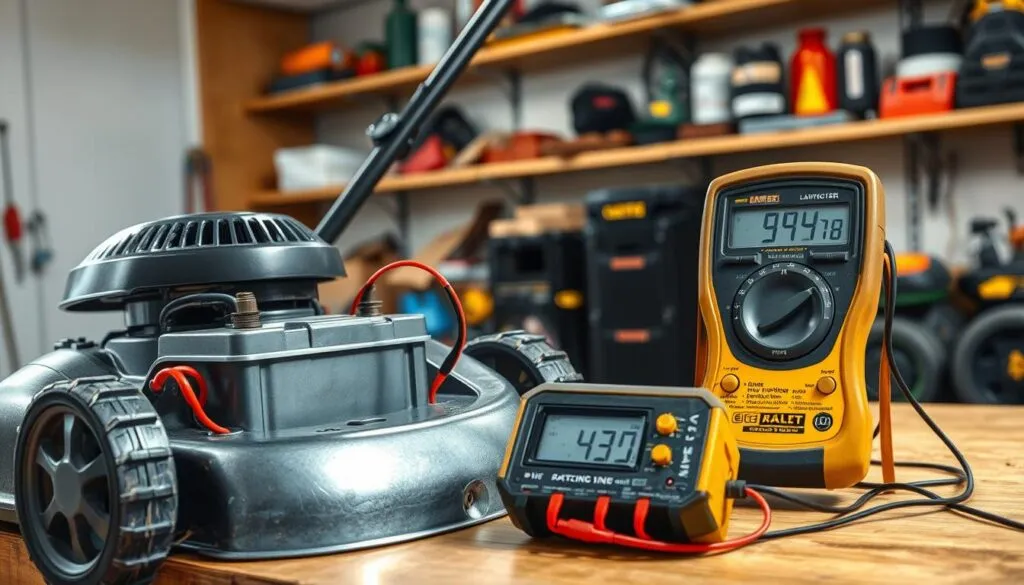
Knowing these ranges helps you diagnose problems accurately. It prevents unnecessary replacements or dangerous overcharging situations.
What Constitutes a Fully Charged Battery
A traditional lead-acid unit shows 12.6-12.8 volts when ready for work. This indicates optimal condition for starting your equipment.
Lithium options operate at higher levels. A reading of 13.2-13.4 volts signals full capacity. These power sources maintain strong performance throughout their charge cycle.
Correct interpretation of voltage readings separates preventive maintenance from emergency repairs.
Signs of Undercharging and Overcharging
Undercharging appears as slow cranking or clicking sounds. Your equipment may start some days but struggle on others.
Overcharging causes overheating and case swelling. Using smart chargers with automatic shutoff prevents this damage.
| Battery Type | Fully Charged | Needs Attention | Critical Level |
|---|---|---|---|
| Lead-Acid (Flooded/AGM) | 12.6-12.8V | 12.2V or lower | Below 11.5V |
| Lithium (LiFePO4) | 13.2-13.4V | 12.0-12.7V | Below 12.0V |
If readings stay low after charging, internal deterioration is likely. Consistent voltage drops indicate replacement time.
Comparing Battery Types: Lead-Acid, Lithium, and More
Choosing the right power source for your equipment involves understanding the fundamental differences between available technologies. Both traditional and modern options serve the same basic function but deliver power in distinct ways.
Your decision impacts performance, maintenance requirements, and long-term costs. Knowing these differences helps you select the best option for your specific needs and budget.
Advantages of Lead-Acid Batteries
Traditional lead-acid units have been the reliable standard for decades. They offer dependable performance at a lower initial cost.
These power sources require regular maintenance like terminal cleaning and fluid checks. They’re considerably heavier than modern alternatives but provide consistent operation.
The true cost of a battery includes not just the purchase price but also maintenance time and replacement frequency.
One important limitation: they shouldn’t be discharged below 50% capacity. Repeated deep discharges dramatically shorten their service life through sulfation.
Benefits and Features of Lithium-Ion Batteries
Modern lithium options offer transformative advantages for your equipment. They maintain steady voltage output until nearly empty, unlike traditional types that experience power drop during discharge.
You’ll appreciate their faster charging capability—typically 3-5 times quicker than lead-acid models. They require zero maintenance and weigh significantly less for easier handling.
These sealed units experience minimal voltage loss during storage. This makes them ideal for seasonal equipment that sits unused for extended periods.
| Feature | Lead-Acid | Lithium-Ion |
|---|---|---|
| Initial Cost | Lower | Higher |
| Weight | Heavier | Lighter |
| Maintenance | Regular required | None |
| Lifespan | Shorter | 3-5x longer |
| Discharge Depth | 50% recommended | Deeper discharge safe |
While lithium options cost more upfront, their extended lifespan and maintenance-free operation often make them the better long-term investment.
Maintaining Optimal Battery Performance
Proper maintenance habits are the cornerstone of extending your equipment’s power source lifespan. Consistent care routines prevent unexpected failures and maximize your investment.
Establishing a regular schedule for upkeep ensures reliable performance throughout the mowing season. Your equipment deserves consistent attention to maintain peak operation.
Regular Charging Routines and Cleaning Methods
Recharge your power source after each use, especially during heavy cutting periods. Avoid letting the voltage drop below 12 volts to prevent deep discharge damage.
Proper storage makes a substantial difference during off-seasons. Keep units in cool, dry locations away from temperature extremes.
Consistent maintenance separates seasonal equipment from year-round reliability.
Terminal cleaning prevents performance issues. Inspect connections frequently for dirt or corrosion buildup. Use a wire brush and apply protector spray.
Check voltage often with a multimeter. Test every few weeks during active periods. Pay special attention before the first seasonal use.
| Maintenance Task | Frequency | Key Benefit |
|---|---|---|
| Voltage Check | Every 2-3 weeks | Early problem detection |
| Terminal Cleaning | Monthly during season | Optimal electrical contact |
| Full Recharge | After each use | Prevents deep discharge |
| Storage Preparation | Before winter storage | Preserves battery life |
Avoid overcharging by using smart chargers with automatic shutoff features. Inspect the case regularly for cracks, leaks, or swelling. Replace immediately if damage appears.
During extended storage, use a trickle charger to maintain safe voltage levels. Lead-acid types should never sit on bare concrete floors—elevate them on shelves or wooden blocks.
Troubleshooting Voltage and Performance Issues
When your equipment begins showing signs of electrical trouble, recognizing the early warnings can prevent complete failure during critical mowing sessions. Addressing these symptoms promptly ensures consistent operation throughout the season.
Common Voltage-Related Problems
Weak starting behavior often indicates underlying electrical problems. Your equipment might crank slowly or produce clicking sounds instead of firing up immediately.
Inconsistent performance serves as a clear red flag. If it starts reliably some days but struggles on others, this points to voltage instability or internal deterioration.
Physical symptoms provide obvious clues. Look for corrosion buildup on terminals, bulging cases, or fluid leaks. These signs signal internal issues, especially in aging lead-acid units.
Safety Tips and Preventative Measures
Always wear protective gloves and goggles when handling electrical components. Ensure the equipment is completely off before testing or servicing.
Never attempt to use a damaged unit showing leaks or swelling. This poses serious safety risks and could damage your equipment’s electrical system.
Establish regular testing schedules and keep terminals clean. Using the correct charger for your specific type prevents overcharging and extends service life.
Replace components at the first signs of failure rather than waiting for complete breakdown. Proactive maintenance saves you from mid-season interruptions and costly repairs.
Battery Voltage’s Impact on Mower Performance
The electrical potential of your equipment’s power source directly influences every aspect of its operation. Proper voltage levels ensure reliable starting and consistent cutting power throughout your work session.
Correct voltage guarantees your engine starts smoothly every time. When levels drop below 12.2 volts, you’ll experience starting difficulties or complete failure. This affects both gas-powered and electric models differently but significantly.
Your power source operates more than just the starting system. Features like headlights, safety controls, and electronic components all depend on stable voltage. Low levels cause these systems to malfunction, creating potential safety hazards.
Maintaining optimal voltage isn’t just about starting reliability—it’s about preserving your entire equipment’s electrical ecosystem.
Consistently low voltage leads to permanent damage through deep discharge. This reduces capacity and shortens lifespan dramatically. For cordless electric mowers, voltage directly determines cutting power and runtime.
Higher-voltage batteries handle tough grass conditions effectively. They prevent bogging down and maintain consistent performance. Proper levels also prevent overburdening charging systems in gas mowers.
Voltage affects heat generation during use and charging. This plays a critical role in overall health and longevity. Understanding this relationship helps you maximize your equipment’s service life.
Conclusion
Mastering your equipment’s power source is the final step toward achieving complete yard care confidence. This guide has equipped you with essential knowledge about electrical specifications and maintenance practices.
You now understand that proper voltage management directly impacts starting reliability and cutting performance. Regular testing with a multimeter helps you catch issues early, preventing frustrating breakdowns.
Following the maintenance routines covered here extends your component’s lifespan significantly. Whether you choose traditional or modern technology, consistent care ensures optimal operation.
The knowledge gained transforms battery upkeep from a guessing game into precise science. Your equipment will remain a dependable partner for many years, keeping your property looking its best.
FAQ
What is the standard voltage for a riding lawn mower battery?
The most common voltage for a riding lawn mower battery is 12 volts. This is the same standard used in most automotive batteries. You’ll find this specification on most models from brands like John Deere, Cub Cadet, and Troy-Bilt.
Can I use a car battery charger for my lawn mower battery?
Yes, you can use a standard automotive charger, but you must ensure it is compatible with your battery’s chemistry. For a standard 12V lead-acid battery, a smart charger that automatically switches to a maintenance or trickle charge is ideal to prevent overcharging and extend its lifespan.
How often should I charge my mower’s battery?
For optimal performance, you should recharge your battery after each use, especially with electric models. During seasonal storage, it’s best to keep a lead-acid battery on a maintenance charger. Lithium-ion models hold a charge much longer and typically only need charging before the next mowing session.
Why won’t my mower start even though the battery has voltage?
A battery might show voltage but lack sufficient cranking amps to start the engine. This is often due to age or internal damage. Corrosion on the terminals can also prevent a proper connection. Cleaning the terminals with a wire brush and ensuring they are tight can often resolve this issue.
What is the typical lifespan of a lawn mower battery?
With proper care, a lead-acid battery typically lasts 3 to 5 years. Lithium-ion batteries often have a longer service life, ranging from 5 to 8 years or more, due to their superior cycle life and resistance to performance degradation.
How do I safely test the voltage of my battery?
Using a digital multimeter is the safest method. Set the multimeter to DC voltage (V– or VDC) on the 20V range. With the mower off, touch the red probe to the positive terminal and the black probe to the negative terminal. A reading of 12.6V to 12.8V indicates a fully charged 12V battery.