
Have you ever wondered if your impatience could be the very thing holding your lawn back from true greatness? That first cut after seeding is a moment filled with both anticipation and anxiety. Getting the timing right is not just about aesthetics; it’s a critical decision for the health of your entire yard.
Overseeding is a powerful technique to revitalize a thin or patchy lawn. It introduces fresh, vigorous grass plants to compete with weeds and fill in bare spots. The success of this entire process, however, hinges on one key period: the establishment phase for the new seedlings.
Rushing the first mow can undo all your hard work. Fragile young grass needs time to develop strong roots that can handle the stress of a mower. The typical waiting period ranges, but it is always guided by the grass’s own growth signals and environmental conditions.
This guide will walk you through the essential factors that determine the perfect moment for that first trim. You’ll learn to read your lawn’s cues, ensuring your new grass thrives and transforms your outdoor space into a lush, resilient carpet.
Key Takeaways
- The first mow after overseeding is a delicate balance crucial for lawn success.
- Patience is essential to allow new grass seedlings to establish strong root systems.
- Mowing too early can severely damage or kill fragile new grass plants.
- The safe mowing time is not a fixed date but depends on grass height and development.
- Weather and soil conditions significantly influence the ideal waiting period.
- Proper timing ensures your overseeding effort results in a thick, healthy lawn.
Understanding Overseeding: What It Is and Why It Matters
The secret to a consistently lush, green yard lies in a process that continuously renews the turf from within. This practice, known as overseeding, involves spreading new grass seed directly over an existing lawn. It is a powerful form of lawn care that boosts density and overall turf health.
Benefits of Overseeding for a Healthy Lawn
Overseeding offers significant advantages for your property. It effectively thickens thin areas and repairs unsightly brown patches. This process introduces improved grass varieties, leading to a more resilient turf.
The constant rejuvenation creates a lawn that better resists weeds and diseases. This strengthens the long-term health and beauty of your outdoor space.
Key Steps to Successfully Overseed Your Lawn
Proper preparation is critical for success. Start by eliminating weeds and unwanted grass that compete with new seeds for resources.
Next, remove the thatch layer. This mat of dead grass can block seeds from reaching the soil. Mowing the existing grass to a shorter height of 1.5 to 2 inches is also essential.
This reduces competition from established plants. Core aeration loosens compacted soil, improving seed-to-soil contact.
Finally, apply a quality topdressing with starter fertilizer. This provides the nutrients needed for strong initial growth and successful establishment.
How Long After Overseeding Can I Mow My Lawn?
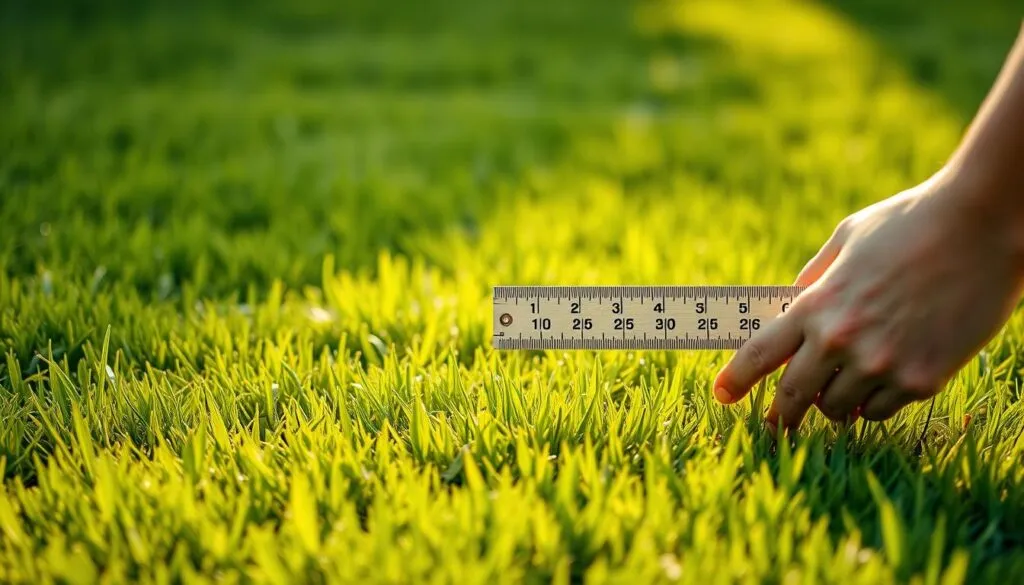
Establishing the perfect window for the first trim ensures your lawn renovation succeeds. This critical timing protects delicate seedlings while allowing proper root establishment.
Recommended Waiting Period and Growth Indicators
Most turf professionals suggest waiting 2 to 4 weeks before that initial cut. Warm-season varieties often need 5 to 6 weeks for solid establishment. The key indicator is grass height rather than calendar days.
New blades should reach at least 3 inches tall before mowing. Waiting until they hit 4 inches provides even better results. This height indicates sufficient root development below the surface.
According to Oregon State University research, grass plants develop 2-3 inches of root before shoots emerge. Roots may reach 6 inches deep within two weeks of germination.
| Grass Type | Germination Time (Days) | Recommended Wait |
|---|---|---|
| Ryegrass | 5-10 | 2-3 weeks |
| Tall Fescue | 10-14 | 3-4 weeks |
| Kentucky Bluegrass | 14-30 | 4-5 weeks |
| Bermudagrass | 10-30 | 5-6 weeks |
Mow only after seedlings reach 3 inches tall to ensure proper establishment.
Perform a simple tug test before mowing. Gently pull on new grass blades. If they resist lifting, roots have properly anchored. Easy removal means more time is needed.
Different varieties have unique germination periods. Understanding your specific grass type helps determine the ideal waiting time for that crucial first cut.
Factors That Influence Mowing Timing
Multiple environmental factors work together to determine the ideal moment for trimming new grass. The waiting period varies significantly based on local conditions and grass characteristics.
Grass Type and Growth Rates
Different grass species have unique development timelines. Fast-growing varieties like ryegrass may be ready in about two weeks. Slow-developing types like Kentucky bluegrass often need a full month.
Each species germinates at its own pace. This directly affects when the turf reaches safe cutting height. Understanding your specific grass type helps predict the timeline accurately.
Weather Conditions and Soil Moisture
Weather plays a crucial role in seedling development. Cool, rainy conditions accelerate growth and may allow earlier cutting. Hot, dry weather slows development and extends the waiting time.
Soil moisture levels significantly impact germination success. Adequate water helps seeds sprout quickly. Drought conditions can delay the entire process by several days or weeks.
Seeding technique also affects timing. Mechanical methods like slice seeding typically produce faster results than surface broadcasting. Monitor your specific conditions rather than relying solely on calendar dates.
Best Practices for Mowing a Newly Overseeded Lawn
Your mower’s settings and operation play a crucial role in protecting delicate new grass plants. The right approach ensures your investment in lawn renovation pays off with healthy, established turf.
Proper Mower Settings and Cutting Techniques
Always follow the one-third rule when trimming your lawn. Never remove more than one-third of the grass blade height in a single session. This prevents stress and promotes faster healing.
Set your mower deck to the highest setting for the first several trims. This protects fragile root systems from being cut too short. Walk slowly and avoid sharp turns that can tear tender blades.
Mow during cooler parts of the day when temperatures are mild. Freshly cut grass loses water rapidly in heat. Avoid cutting wet turf to prevent clumping and fungal issues.
Maintaining Mower Blades for Clean Cuts
Sharp blades are essential for clean cuts that heal quickly. Dull mower blades tear grass instead of slicing it cleanly. This damage weakens plants and can uproot seedlings.
Inspect and sharpen your blades before the first trim on new turf. Clean cuts reduce stress on developing roots. Proper blade maintenance ensures your lawn care efforts succeed.
Caring for Your Lawn After Overseeding
Proper lawn care following seeding determines whether your investment flourishes or fails. The establishment phase requires specific attention to watering, nutrition, and protection.
Watering, Fertilization, and Weed Control
Maintain consistent moisture in the top two inches of soil during germination. Water twice daily for 5-10 minutes each session. Most grass varieties sprout within 10-14 days.
Once seedlings appear across the turf, reduce watering frequency gradually. Transition to deeper, less frequent irrigation sessions. This encourages strong root development.
Wait approximately six weeks before applying additional fertilizer. Use one pound of actual nitrogen per 1,000 square feet. Starter fertilizer applied during seeding provides sufficient initial nutrients.
| Growth Stage | Watering Frequency | Duration |
|---|---|---|
| Germination (Days 1-14) | Twice Daily | 5-10 minutes |
| Seedling Establishment | Once Daily | 15-20 minutes |
| Established Turf | 2-3 times weekly | 30+ minutes |
Protect seeded areas from all foot traffic for at least one month. Keep pets, children, and furniture off the delicate new growth. This prevents soil compaction and seedling damage.
Delay weed control treatments for 2-3 months after seeding. Young grass is highly vulnerable to herbicide damage. Apply postemergence products at half strength after 3-4 mowing sessions.
Common Pitfalls and How to Avoid Them
Even the most carefully planned lawn renovation can fail due to one critical timing error. Rushing the first trim ranks as the top mistake that undermines turf establishment success. Understanding these risks protects your investment in grass seed and weeks of careful lawn care.
Cutting too soon creates multiple problems for new seedlings. The most immediate damage occurs when blades are trimmed too short. This reduces leaf area needed for photosynthesis and carbohydrate production.
According to Dr. James B. Beard of the International Sports Turf Institute, “The higher the cutting height, the greater the leaf area for photosynthetic activity to produce carbohydrates in support of increased root growth.” Premature cutting starves developing root systems of essential energy.
Risks of Mowing Too Early
Mechanical damage presents another serious threat to young plants. Heavy equipment compacts soil, blocking emerging sprouts. Foot traffic and mower wheels can uproot fragile seedlings.
Soil compaction from early lawn mowing prevents oxygen and water from reaching seeds. This undoes the benefits of pre-seeding aeration. It creates barriers to successful establishment in your yard.
Weakened grass becomes more susceptible to diseases and pests. This cascade effect may require additional overseeding to correct. The financial and time costs of damaged lawn overseeding efforts can be significant.
| Damage Type | Primary Cause | Impact on Lawn | Prevention Method |
|---|---|---|---|
| Root Stress | Cutting too short | Reduced carbohydrate production | Wait for 3-4 inch height |
| Soil Compaction | Heavy equipment use | Blocked oxygen and water flow | Limit foot traffic for weeks |
| Seedling Uprooting | Mower wheel pressure | Patchy establishment | Perform tug test first |
| Disease Vulnerability | Weakened plants | Additional treatment needed | Ensure strong root growth |
Practical solutions help avoid these mistakes. Perform the simple tug test before any mowing lawn activity. Gently pull grass blades to check root establishment.
Mark calendar dates for minimum waiting periods based on your grass type. Patience during establishment yields better results than addressing damage later. Your lawn care efforts deserve protection from common timing errors.
Conclusion
Achieving that perfect, thick lawn you envision hinges on a single, patient decision made in the weeks following seeding. The essential rule is to wait until the new grass reaches a safe cutting height of 3 to 4 inches.
This waiting period, typically spanning a few weeks, is not idle time. It is when fragile roots anchor deeply into the soil. Strong roots give your turf the resilience to handle the stress of a mow without damage.
Your patience will be rewarded with a thicker, healthier lawn that naturally resists weeds and disease. Remember to use sharp blades and follow the one-third rule for that first, crucial cut.
For homeowners short on time or unsure of the process, professional lawn care services are a great option. By following these guidelines, you can confidently nurture your grass from seedling to a lush, established carpet.
FAQ
When is the earliest I can mow my yard after overseeding?
I wait at least three to four weeks before the first mow. The new seedlings need enough time to establish strong roots in the soil. I make sure the grass height is about one-third taller than my desired mowing height before starting.
What is the ideal grass height for the first mowing session?
I aim to mow when the turf reaches approximately 3 to 4 inches tall. This height indicates healthy growth and a solid root system. I never remove more than one-third of the grass blade in a single session to avoid stressing the new lawn.
How does weather affect the timing of mowing after overseeding?
Weather plays a huge role. Warm, sunny days promote faster germination and growth, while cool, wet conditions can delay it. I monitor soil moisture closely; soggy ground can be damaged by the mower’s weight, harming delicate roots.
What are the risks of mowing my lawn too soon?
Mowing too early is a major pitfall. It can uproot new seedlings, stunt their growth, and create bare areas. I avoid this by being patient, as premature mowing compromises the entire overseeding effort and the long-term health of my turf.
How should I prepare my mower for the first cut on new grass?
I always ensure my lawn mower blades are freshly sharpened for a clean cut. Dull blades tear the grass, making seedlings vulnerable to disease. I also set the mower to its highest setting for that initial, gentle pass over the yard.
What lawn care steps are crucial after the first mow?
After mowing, I maintain a consistent watering schedule to support the young grass. I hold off on fertilization for a few more weeks and carefully monitor for weeds, hand-pulling them to avoid disturbing the new growth with chemicals.