
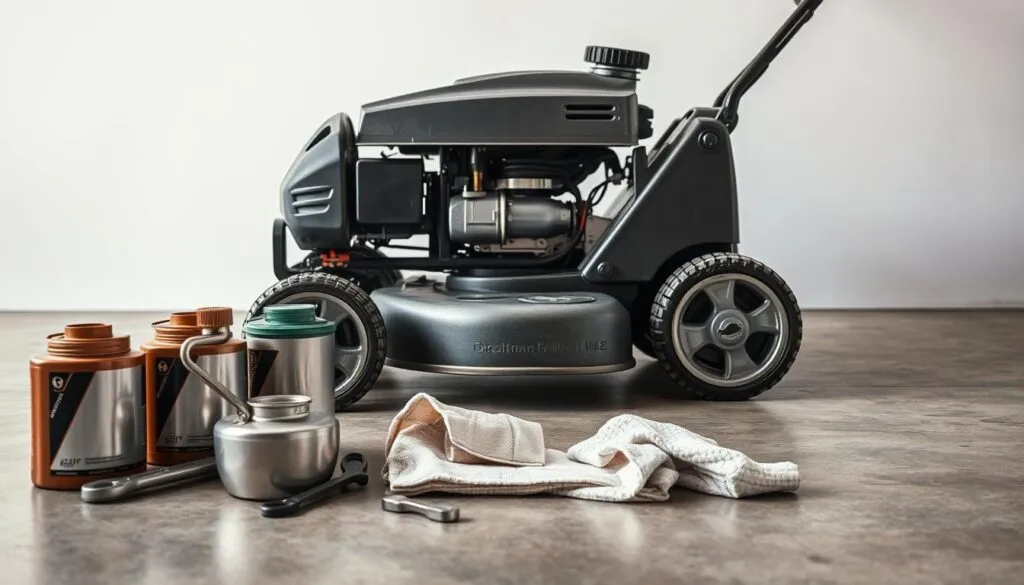
Your trusty outdoor power tool deserves the best care to keep it running strong season after season. Many homeowners unknowingly compromise their equipment’s performance by using improper maintenance products.
The heart of your grass-cutting machine relies on proper lubrication to function efficiently. Choosing the correct fluid isn’t just about keeping the engine running—it’s about maximizing longevity and preventing costly repairs.
Temperature changes throughout the year significantly impact which lubricant works best for your equipment. Using manufacturer-recommended products ensures optimal performance regardless of weather conditions.
This guide walks you through everything needed to maintain peak operation. You’ll learn how proper selection affects starting reliability, fuel efficiency, and overall equipment lifespan.
Key Takeaways
- Selecting the correct lubricant is essential for optimal engine performance
- Equipment requires specific types based on engine design and climate
- Temperature ranges directly affect viscosity selection
- Manufacturer recommendations prevent costly damage and repairs
- Proper choice impacts fuel efficiency and starting reliability
- Correct maintenance extends your equipment’s service life
- Seasonal changes require adjustments in lubricant selection
Understanding Your Craftsman Lawn Mower’s Engine and Maintenance Needs
Effective equipment care requires knowledge of the engine’s working parts and adherence to specific service intervals. Your outdoor power tool contains precision components that demand proper attention.
Key Engine Components and Manufacturer Guidelines
Critical internal parts like pistons, cylinders, and valves rely on correct lubrication. These components work together to power your equipment efficiently.
Following Briggs & Stratton guidelines ensures optimal performance. Manufacturer specifications provide the exact formulation needed for your engine configuration.
Different models have varying capacity requirements. Walk-behind units typically hold 15 to 18 ounces, while riding versions need 48 to 64 ounces.
Importance of Regular Oil Checks and Maintenance
Service intervals depend on usage hours and time. Change fluid in walk-behind models every 50 hours or annually. Riding equipment requires replacement every 100 hours or once per year.
Using high-quality detergent lubricant classified “For Service SF, SG, SH, SJ” or higher maintains engine health. This formulation meets modern design requirements.
Regular inspections prevent catastrophic failure and reduce repair costs. Consistent maintenance ensures reliable starting throughout the mowing season.
What Oil Does Craftsman Lawn Mower Use
Selecting the correct engine fluid for your outdoor power equipment ensures smooth operation and longevity. The proper lubricant protects internal components from wear and tear.
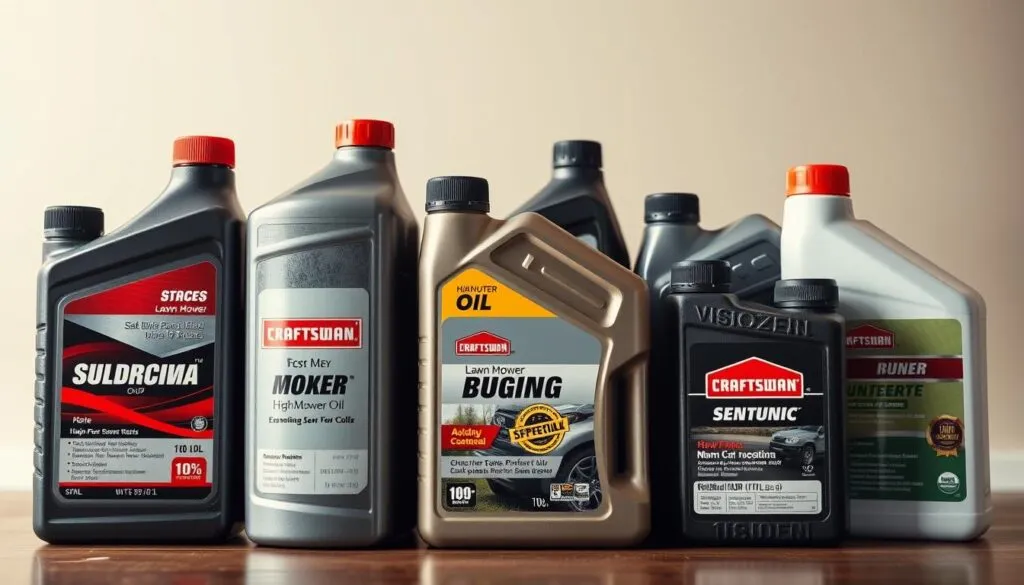
Your equipment typically performs best with SAE 30-grade lubricant. This common choice works exceptionally well in warmer climates above 40°F.
Overview of Recommended Oil Types
Multi-viscosity options provide flexibility for changing weather conditions. SAE 10W-30 improves cold-weather starting but may increase consumption in hotter temperatures.
Synthetic SAE 5W-30 offers superior protection across all temperature ranges. This formulation reduces consumption while improving starting performance.
For commercial applications, Vanguard 15W-50 handles continuous operation demands. Always verify specifications in your operator’s manual for exact requirements.
| Oil Type | Best Temperature Range | Key Benefits | Recommended Use |
|---|---|---|---|
| SAE 30 | Above 40°F | Optimal warm weather performance | Residential mowing in consistent climates |
| SAE 10W-30 | 20°F to 80°F | Improved cold starting | Areas with seasonal temperature changes |
| Synthetic 5W-30 | All temperatures | Reduced consumption, superior protection | High-performance and extreme conditions |
| Vanguard 15W-50 | 10°F to 100°F | Continuous operation durability | Commercial and heavy-use applications |
Consult your equipment’s manual for specific API classification requirements. Some models with Honda engines specify 30-weight fluid meeting SG standards.
Choosing the Right Oil for Varying Temperatures and Conditions
Your engine’s ability to start easily and run smoothly hinges on choosing a lubricant suited to the weather. The wrong viscosity can lead to hard starting or increased consumption.
Oil Type Recommendations: SAE 30, 10W-30, Synthetic 5W-30, and More
SAE 30 works best in consistently warm climates above 40°F. Below this temperature, it thickens and creates hard starting.
10W-30 offers versatility for areas with seasonal changes. Monitor levels more frequently during hot weather above 80°F, as consumption may rise.
Synthetic 5W-30 provides superior protection across all temperatures. It flows easily in cold weather and maintains strength in summer heat.
Climate Considerations and Optimal Temperature Ranges
Temperature dictates the ideal viscosity for engine protection. Single-grade fluids like SAE 30 are not suitable for cold climates.
Multi-grade options adapt to broader temperature swings. Synthetic formulations deliver consistent performance in extreme conditions.
You should check your equipment’s fluid level more often during extended operation in high heat. This ensures proper lubrication and prevents damage.
| Lubricant Type | Optimal Temp. Range | Primary Consideration |
|---|---|---|
| SAE 30 | Above 40°F (4°C) | Avoid use in cold weather |
| 10W-30 | 20°F to 80°F (-7°C to 27°C) | Check levels frequently in heat |
| Synthetic 5W-30 | All Temperatures | Best for fluctuating climates |
Steps for Checking and Changing Your Lawn Mower Oil
Proper fluid maintenance involves two essential procedures: checking levels and performing complete replacements. Both tasks require specific preparation and technique to ensure accurate results.
Following correct methods prevents overfilling or underfilling your engine. This protects internal components from unnecessary wear.
Preparing Your Mower for an Oil Change
Begin by running the engine for a few minutes to warm the lubricant. Warm fluid flows more easily during drainage.
This ensures more complete removal of old, contaminated product. Always work on a completely level surface for accurate measurements.
Your equipment requires changes every 50 hours of operation for walk-behind models. Annual replacement is necessary if you don’t accumulate those hours.
How to Use the Dipstick and Check Oil Levels
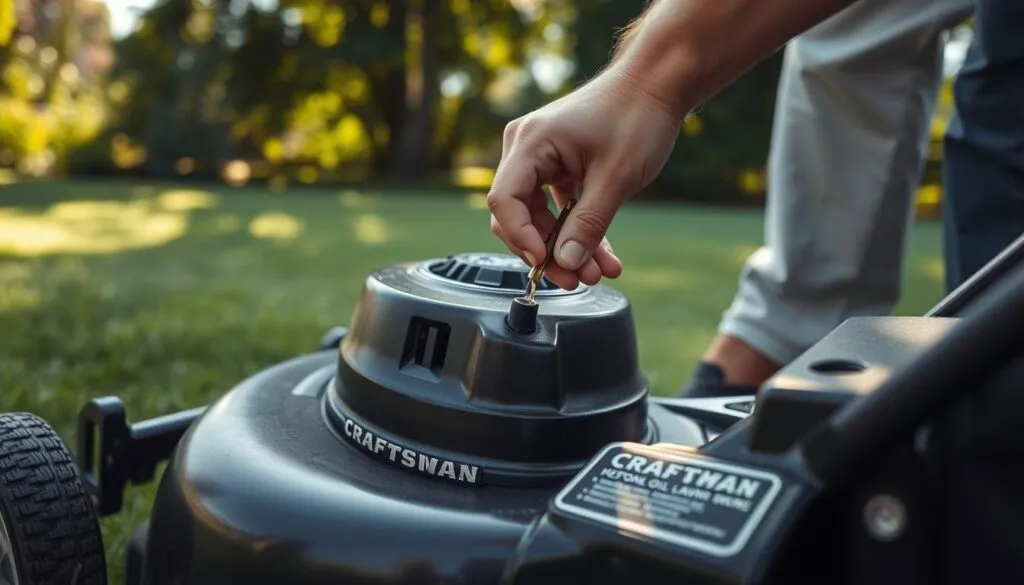
Park your machine on level ground before checking. Remove the dipstick cap carefully and wipe the blade thoroughly with a clean rag.
Ensure the teeth on the cap align with the grooves on the tube before reinserting. Improper seating causes false readings.
Reinstall the cap completely, then remove it again to view the level. The fluid should be between the “full” and “add” marks.
Add small increments of just a few ounces if low. Wait between additions for proper settling before rechecking.
Briggs Stratton Engine Oil and Compatibility Tips
Updated guidelines from Briggs & Stratton expand the acceptable lubricant choices for your equipment. The manufacturer now approves synthetic 5W-30 or 15W-50 formulations for all temperature ranges.
This flexibility allows you to select the optimal product for your climate and usage patterns. Genuine Briggs & Stratton synthetic formulations meet warranty requirements while providing superior protection.
Understanding Briggs Stratton Oil Requirements
Your equipment with a Briggs & Stratton engine benefits from these updated recommendations. The approval of synthetic options across all temperatures simplifies maintenance decisions.
Break-in procedures remain unchanged when using synthetic formulations. This ensures proper engine conditioning regardless of your lubricant choice.
Benefits of Using Briggs & Stratton Synthetic Oil
Choosing genuine Briggs & Stratton synthetic oil delivers significant advantages. You get better high-temperature stability and improved low-temperature flow.
Reduced friction extends engine life compared to conventional petroleum-based products. Warranty compliance is guaranteed when using manufacturer-recommended formulations.
| Feature | Synthetic Oil | Conventional Oil |
|---|---|---|
| Temperature Range | All climates | Limited ranges |
| Engine Protection | Superior | Standard |
| Warranty Compliance | Guaranteed | Variable |
| Service Intervals | Regular schedule | Regular schedule |
Maintain your regular lawn mower service schedule even with synthetic formulations. Purchase authentic products from shop.briggsandstratton.com for optimal performance.
Troubleshooting Common Oil and Maintenance Issues
Even with the best intentions, maintenance problems can arise. Recognizing early warning signs helps you address them before they lead to major repairs.
Your equipment communicates its needs through sounds, performance, and visual cues. Paying attention to these signals is crucial for preventative care.
Identifying Signs of Low or Poor Quality Oil
Unusual engine noise or knocking sounds often indicate insufficient lubrication. Increased operating temperature or smoke from the exhaust are also red flags.
Difficulty starting your machine can point to lubricant issues. Check the dipstick for dark, thick, or gritty fluid, which signals contamination.
Deteriorating quality harms internal components. Immediate action protects your engine from significant damage.
Tips for Preventing Overfilling and Other Maintenance Mistakes
Avoid overfilling your engine, as excess fluid causes foaming and pressure problems. This can damage seals and lead to leaks.
Contamination of air filter parts and spark plugs may also occur. Always consult your operator’s manual for the exact capacity.
New equipment typically arrives without lubricant pre-added. Filling it to the proper level before first use is essential to prevent startup damage.
Add small amounts gradually when topping off. Allow time for settling and never exceed the “full” mark on the dipstick.
| Common Issue | Key Signs | Preventive Action |
|---|---|---|
| Low Lubricant Level | Excessive noise, smoke, hard starting | Check levels before each use |
| Poor Quality Fluid | Dark, gritty residue on dipstick | Change at recommended intervals |
| Overfilling | Foaming, leaks, contaminated parts | Consult manual for exact capacity |
| New Engine Setup | Engine arrives dry | Fill to proper level before first start |
Proper care and maintenance are proven to be the key to long engine life. A preventive approach ensures your machine runs reliably for years.
Conclusion
Consistent maintenance practices transform your outdoor power tool into a long-term investment. You’ve gained essential knowledge about proper lubricant selection for optimal equipment performance.
Your attention to manufacturer specifications and climate considerations directly impacts engine reliability. Following recommended service intervals with quality detergent products prevents component wear. Regular monitoring ensures your machine operates at peak efficiency throughout each season.
This investment in proper care prevents expensive repairs and maintains warranty compliance. You can now confidently maintain your Craftsman equipment for years of trouble-free service. Your grass-cutting machine will deliver reliable performance when you apply these maintenance principles consistently.
FAQ
What type of oil is best for my Craftsman mower with a Briggs & Stratton engine?
For most conditions, a high-quality detergent oil classified as API Service SJ or higher works well. Common viscosities include SAE 30 for warmer weather and 10W-30 for varying temperatures. Always consult your owner’s manual for the manufacturer’s specific recommendation.
How often should I check and change the oil in my lawn mower?
You should check the oil level before each use. For a standard change, plan to replace the fluid after every 25-50 hours of operation or at least once per mowing season. Frequent checks help ensure optimal engine performance.
Can I use synthetic oil in my Briggs & Stratton engine?
Yes, using a synthetic oil like Briggs & Stratton Synthetic 5W-30 is an excellent choice. It offers superior protection, especially in extreme temperatures, and can extend the time between changes. It is fully compatible with these engines.
What happens if I use the wrong oil viscosity?
Using an incorrect viscosity can lead to poor lubrication, increased engine wear, and difficulty starting. In cold weather, thick oil won’t flow properly. In heat, thin oil may not protect vital components. Matching the grade to your climate is crucial.
How do I check the oil level correctly?
A> Ensure the machine is on a level surface and the engine is cool. Remove the dipstick, wipe it clean, reinsert it fully, and then remove it again to check the level. The oil should be between the “Full” and “Add” marks on the dipstick.
What are the signs that my mower’s oil needs changing?
Look for oil that appears very dark, gritty, or has a burnt smell. You might also notice increased engine smoke, reduced power, or unusual noises. These are clear indicators that the lubricant is degraded and should be replaced.