
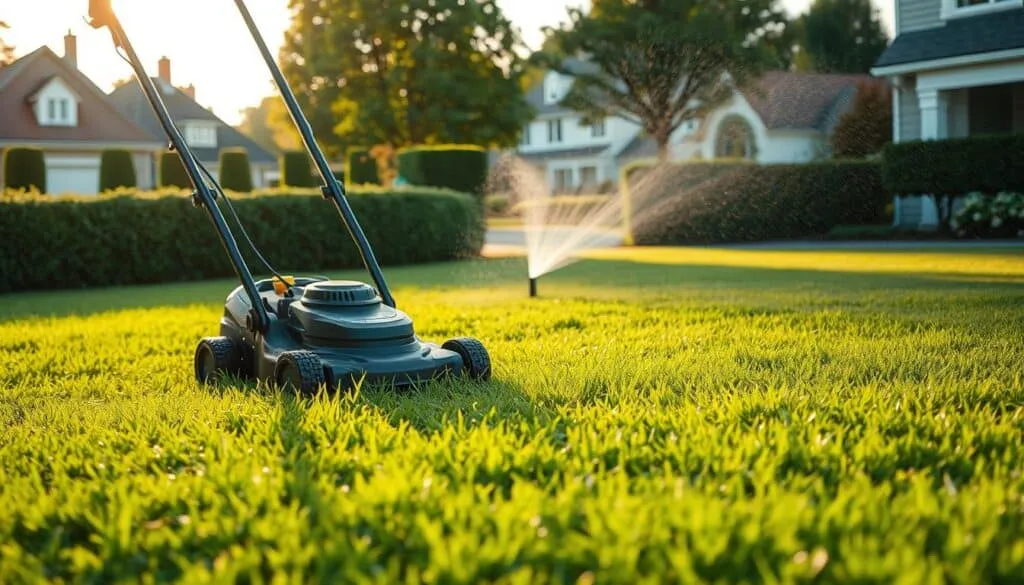
Have you ever wondered if the simple order of your lawn care tasks makes a real difference? Many homeowners perform mowing and watering on the same day, but few consider how timing affects their turf’s health.
Proper lawn maintenance combines two essential practices. Regular mowing keeps grass at an ideal height. It encourages thick growth and helps prevent weeds. Adequate watering provides the hydration needed for strong roots and vibrant color.
These tasks work together to create a thriving landscape. The sequence in which you complete them, however, can significantly impact your results. This guide explores that critical timing question with expert insights.
You will discover the effects of mowing on grass blades. We will cover the best timing for hydration. The guide also includes benefits, potential drawbacks, and methods to assess your lawn’s specific needs.
Understanding these lawn care tips leads to informed decisions. The goal is long-term lawn vitality and a beautiful, healthy yard that enhances your home’s curb appeal.
Key Takeaways
- Mowing and watering are both critical for a healthy, lush lawn.
- The timing of these tasks significantly impacts grass health and growth.
- Understanding how mowing affects grass helps determine the best watering schedule.
- Expert recommendations provide actionable guidance for optimal results.
- Proper lawn maintenance focuses on the “when” and “how” of care routines.
- Assessing your lawn’s specific condition is key to personalized care.
- Eco-friendly practices can be integrated into your mowing and watering routine.
Understanding the Impact of Mowing on Your Lawn
The simple act of cutting your turf has profound effects on its physiological processes. Regular mowing removes portions of leaf blades, changing how the plant functions. This mechanical action influences water requirements and overall health.
Mowing Effects on Grass Health
Each cut alters the grass plant’s structure. Removing blade sections reduces the surface area available for vital processes. Sharp mower blades create clean cuts that heal quickly.
Dull equipment tears and shreds grass tissue. This damage increases vulnerability to diseases. Proper cutting practices minimize stress on the lawn.
Reducing Transpiration for Improved Resilience
Transpiration is the process where grass loses water through its leaves. Mowing decreases this evaporation by reducing leaf surface area. The lawn may need less immediate hydration after cutting.
Maintaining the correct mowing height for your grass species is crucial. Optimal height promotes healthy growth patterns. It also improves resilience against environmental challenges.
Understanding these effects helps create effective lawn care routines. Knowledge of mowing impacts supports better watering decisions for sustained turf vitality.
The Importance of Timing in Lawn Watering
The clock plays a crucial role in how effectively your turf absorbs moisture. Proper timing maximizes hydration benefits while minimizing potential risks to grass health.
Selecting the right moment for irrigation is a cornerstone of efficient lawn care. It directly impacts water efficiency and disease prevention.
Benefits of Early Morning Watering
Hydrating your lawn in the early morning offers significant advantages. Cooler temperatures and lower wind speeds mean less evaporation occurs.
This allows grass blades to absorb maximum moisture before the heat of the day arrives. Completing this task before 10 a.m. ensures the turf dries fully before nightfall.
This drying period is vital for preventing fungal diseases that thrive in damp conditions.
Evening Considerations and Risk Factors
Watering late in the day poses distinct challenges. While convenient, evening irrigation leaves grass damp overnight.
This creates an ideal environment for fungus growth. Midday hydration is also inefficient, as high evaporation rates can lead to water waste and potential scorching.
Sticking to a morning schedule is the most reliable strategy for a healthy, resilient lawn.
Should I Water After Mowing? Expert Insights
Lawn care experts offer clear guidance on the sequence of mowing and irrigation. Their consensus points to a specific approach that maximizes turf health and hydration efficiency.
When and Why to Water Post-Mowing
Professional landscapers recommend completing your cutting routine first. Then allow approximately 30-60 minutes before beginning irrigation. This brief recovery period serves an important physiological purpose.
Freshly cut blades experience microscopic stress points. These tiny openings need time to naturally seal before introducing moisture. The waiting period helps prevent potential disease entry while improving water absorption.
One leading turf specialist notes:
That hour between cutting and watering allows grass plants to transition from stress to recovery mode. Proper timing supports healthier growth patterns.
This approach doesn’t mean every cutting session requires immediate hydration. Assess your lawn’s actual moisture needs rather than following rigid routines. Dry conditions might necessitate post-mowing irrigation, while adequate soil moisture may not.
Ideal timing involves mowing when turf is dry, waiting the recommended minutes, then hydrating during optimal periods. Late afternoon or early morning the next day often works well. This balanced approach supports recovery without encouraging fungal issues.
Understanding these principles helps create informed care decisions. The result is a resilient, vibrant landscape that thrives through proper timing.
Benefits: Rehydration and Soil Moisture Enhancement
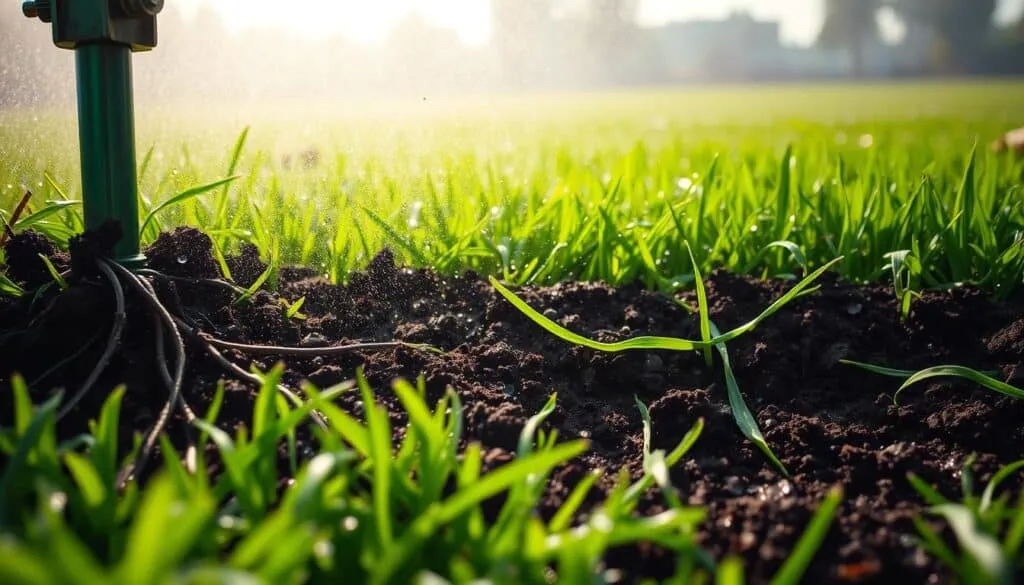
Post-cutting irrigation offers significant rewards that extend beyond simple moisture replacement. This practice delivers multiple advantages for turf vitality and long-term lawn health.
The combination of watering and mowing creates optimal conditions for recovery. Freshly cut grass benefits greatly from immediate hydration support.
Cooling Effects for Grass Recovery
Irrigation provides a natural cooling effect on grass blades. This is particularly valuable during hot summer days when heat stress can cause wilting.
The cooling action helps maintain vibrant green color and supports faster recovery. It reduces stress on the lawn after cutting operations.
Enhanced Nutrient Absorption
Proper hydration improves nutrient delivery to grass roots. Water acts as a carrier, transporting essential elements deeper into the soil.
This enhanced absorption promotes healthier growth and stronger root development. The lawn receives maximum benefit from available nutrients.
These combined benefits work together to create superior lawn conditions. Strategic hydration supports overall turf quality and resilience.
Possible Drawbacks of Watering Immediately After Mowing
While proper hydration is essential for lawn health, the timing of irrigation relative to mowing presents specific challenges. Immediate watering creates excess moisture on grass blades and the thatch layer. This damp environment significantly increases the risk of fungal diseases that thrive in wet conditions.
Risk of Fungal Diseases
Freshly cut grass blades have microscopic openings that need time to heal. Introducing moisture too soon creates ideal breeding grounds for fungus. The combination of cut tissue and persistent dampness invites disease development.
Mowing damp turf compounds these problems. Wet blades bend instead of standing upright for clean cuts. This results in ragged edges that are more susceptible to disease entry. The mower also struggles with resistance, potentially dulling blades faster.
Damp clippings form dense mats on the lawn surface. These mats block sunlight and airflow to the underlying turf. They create perfect environments for mold and fungus while suffocating healthy grass.
Equipment faces additional stress when working with moist turf. Wet clippings clog the mower deck more easily. The increased resistance can strain the engine and cutting mechanism.
Understanding these potential drawbacks helps make informed decisions about irrigation timing. Balancing hydration benefits against disease risk leads to healthier lawn conditions overall.
How to Assess Your Lawn’s Watering Needs
Effective lawn care involves learning to read the subtle signals your grass provides about its moisture requirements. Rather than following fixed schedules, this diagnostic approach conserves resources while promoting turf health.
Measuring Soil Moisture Levels
Simple tools provide accurate soil moisture readings. A screwdriver test offers immediate feedback about hydration levels below the surface.
When the tool penetrates easily and emerges damp, the lawn has sufficient moisture. This indicates irrigation may not be necessary following cutting activities.
Observing Grass Resilience and Recovery
Visual signs reveal much about a lawn’s hydration status. Dull gray-blue coloring suggests dehydration, while vibrant green indicates adequate moisture.
Footprints that remain visible or blades that curl at the edges serve as clear indicators. These signs help determine when the grass truly needs hydration.
Different grass types have unique water requirements. Understanding your specific variety ensures appropriate care decisions for optimal lawn health.
Eco-Friendly Watering Practices for Lawns
Adopting eco-friendly watering practices transforms lawn maintenance into a sustainable activity. These methods conserve vital resources while promoting a healthy, resilient landscape.
Conscious hydration strategies benefit both the environment and your wallet. They are especially crucial during periods of drought or water restrictions.
Water Conservation Tips and Techniques
Timing is a powerful tool for conservation. Hydrating in the early morning maximizes efficiency.
Cooler temperatures and calm winds significantly reduce evaporation. This allows moisture to penetrate deeply into the soil.
Selecting the right equipment is equally important. The table below compares common irrigation methods for a lawn watering schedule.
| Irrigation System | Best For | Water Efficiency | Initial Cost |
|---|---|---|---|
| Oscillating Sprinkler | Large, rectangular area | Medium | Low |
| Rotary sprinkler | Large, circular area | High | Medium |
| Drip Irrigation | Garden beds, specific zones | Very High | High |
Creating distinct watering zones tailors care to your landscape’s needs. Sunny spots often require more frequent attention than shaded ones.
Rain barrels offer a superb solution for sustainable lawn watering. They collect rainwater, providing a free supply for your water lawn routine.
This approach reduces dependence on municipal supplies. It also leads to noticeable savings on utility bills.
Recommended Watering Techniques for Optimal Lawn Health
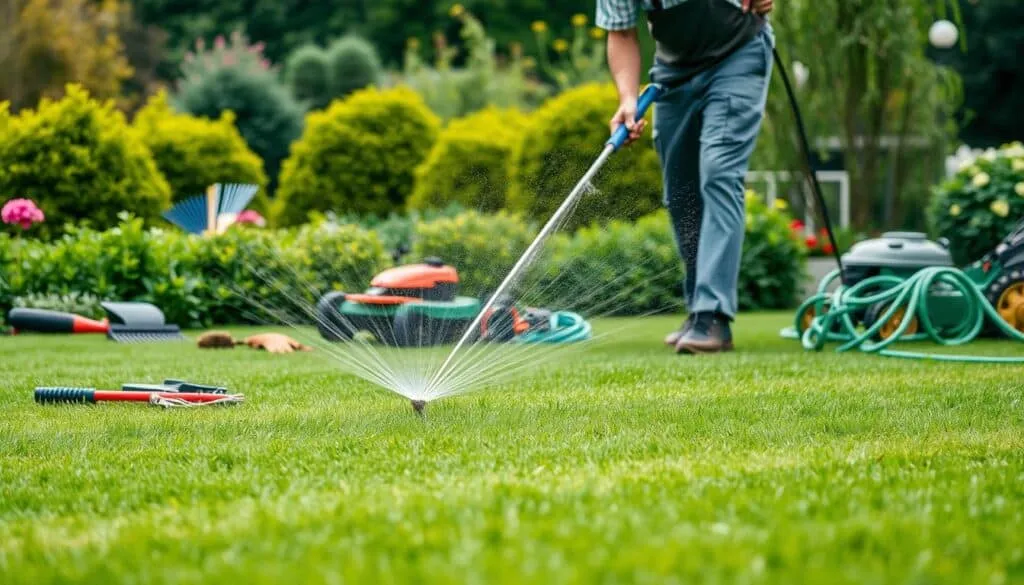
Choosing the right watering techniques makes a significant difference in lawn health. Proper methods ensure moisture reaches deep into the soil where roots thrive.
Effective techniques prevent waste and promote strong turf development. They create resilient grass that withstands environmental challenges.
Using Sprinklers and Drip Irrigation Effectively
Adjustable sprinkler systems deliver even coverage across the lawn. They can be calibrated to apply the precise amount needed for each area.
This customization minimizes runoff and maximizes absorption. Drip irrigation offers superior efficiency for specific zones.
It delivers moisture directly to the root zone with minimal evaporation. Both systems help maintain consistent soil moisture levels.
Deep Watering vs. Light Sprinkling
Deep watering encourages roots to grow downward into the soil. This creates stronger, more drought-tolerant grass.
Most lawns thrive with one to two inches of water per week. This amount should be applied in fewer, longer sessions.
Frequent light sprinkling keeps roots near the surface. Shallow roots make grass vulnerable to pests and drought conditions.
Check water penetration depth after irrigation sessions. Moisture should reach several inches below the surface.
Quality watering sessions produce healthier lawns than frequent shallow applications. The goal is deep root development for long-term vitality.
Creating a Balanced Lawn Care Routine
Establishing a balanced approach to turf management prevents common maintenance pitfalls. This strategy combines cutting and hydration in a thoughtful sequence.
A consistent schedule forms the foundation for vibrant turf health. It supports strong root development and lush growth patterns.
Integrating Mowing and Watering Schedules
Coordinating these activities requires understanding their optimal sequence. The ideal routine involves cutting first, followed by hydration after a brief waiting period.
Deep irrigation every three to four days works well for most lawns. This frequency adjusts based on temperature and rainfall conditions.
Cutting sessions occur once weekly during active growth periods. Always ensure grass is completely dry before operating equipment.
When both tasks happen on the same day, maintain the proper order. Mow first, wait 30-60 minutes, then hydrate during morning hours.
Maintenance Tips for Long-Term Lawn Vitality
Regular cutting at appropriate heights promotes dense turf growth. This practice helps eliminate weeds and maintains pristine appearance.
Keep mower blades sharp for clean cuts that heal quickly. Monitor for signs of stress or disease during routine inspections.
Adapt the schedule based on weather conditions and grass growth rates. Flexibility ensures the lawn receives appropriate care throughout changing seasons.
Conclusion
Optimal lawn vitality emerges from the thoughtful coordination of cutting and irrigation practices. The answer to whether to hydrate following cutting is affirmative, with success hinging on proper timing and method.
Experts consistently recommend mowing dry turf first, allowing a brief recovery period, then providing hydration during optimal morning hours. This sequence supports grass health while minimizing disease risks.
The relationship between mowing and watering order fundamentally defines turf quality. Smart, mindful practices yield greener, stronger landscapes rather than rigid routines.
Successful lawn care balances multiple factors—timing, grass type, soil conditions, and conservation efforts. Apply the comprehensive knowledge from this guide to assess actual needs and use proper techniques.
Implementing these expert tips leads to informed decisions about when to water grass. The result is lasting curb appeal and a thriving outdoor space that enhances property value.
FAQ
What is the best time of day to water my lawn?
I find that watering early in the morning, typically before 10 a.m., is most effective. This timing reduces water loss from evaporation and allows the grass blades to dry before evening, which helps prevent fungal diseases.
Is it okay to mow the lawn when the grass is wet?
Mowing wet grass is generally not recommended. Wet blades can clump together, clog the mower, and result in an uneven cut. It can also stress the grass and increase the risk of spreading lawn diseases.
How does mowing affect my lawn’s need for water?
Mowing creates minor stress for the grass, as it removes a portion of the leaf blade. This can increase moisture loss. I adjust my watering schedule based on recent mowing activity, especially during hot or dry conditions, to support recovery.
What are the signs that my lawn needs water?
I look for clear indicators like grass blades that have a bluish-gray tint, footprints that remain visible on the lawn, or leaves that begin to curl or wilt. These are reliable signs of dehydration.
How long should I run my sprinkler to ensure deep watering?
The duration depends on your soil type and sprinkler output. My goal is to apply enough moisture to soak the soil to a depth of about 6 inches. I often perform a simple test by probing the soil with a screwdriver to check the penetration depth.
Can watering right after mowing harm my lawn?
There is a potential risk. Watering immediately can wash away grass clippings that would otherwise return valuable nutrients to the soil. More importantly, it can create a damp environment that encourages fungal growth on the fresh cuts.
What is the benefit of deep watering versus frequent light sprinkling?
Deep watering encourages the grass roots to grow deeper into the soil, which makes the lawn more drought-tolerant and resilient. Light sprinkling, in contrast, promotes shallow root systems that are more vulnerable to heat and dryness.