
Have you ever wondered if it’s safe to mow your lawn after a spring rain or morning dew? The sight of wet grass can be tempting to cut, but is it advisable?
Mowing a wet lawn can pose significant risks to both your lawn’s health and your mower. Wet conditions make the grass more susceptible to damage, and the risk of spreading diseases increases.
Most lawn care professionals and equipment manufacturers advise against cutting grass in wet conditions due to the potential for damage and risk to the mower. Understanding the science behind grass growth and mowing is crucial for making informed decisions about your lawn care schedule.
Key Takeaways
- Mowing a wet lawn can cause significant damage to the lawn and the mower.
- Wet conditions increase the risk of spreading lawn diseases.
- Most professionals advise against mowing in wet conditions.
- Understanding grass growth is key to a healthy lawn maintenance schedule.
- Waiting for drier conditions can save you from potential risks.
The Risks of Mowing Wet Grass
The risks associated with mowing a wet lawn are numerous and varied. Mowing wet grass can lead to several issues, including damage to the lawn, the mower, and potentially, the person operating it.
Understanding Wet Lawn Conditions
Wet lawn conditions can arise from various factors, including heavy rainfall, morning dew, or irrigation. It’s essential to differentiate between surface moisture and soil saturation, as this distinction significantly impacts mowing decisions. Surface moisture typically refers to the water on the grass blades, while soil saturation refers to the water content in the soil.
- Heavy rainfall can saturate both the grass and the soil.
- Morning dew may only wet the surface of the grass.
Why Most Experts Advise Against It
Lawn care professionals and equipment manufacturers consistently advise against mowing wet grass due to the associated risks. Mowing wet grass can tear the grass, lead to uneven cuts, compact the soil, and spread lawn diseases. Additionally, wet grass can clog the mower, and the slippery surface poses a safety hazard.
Experts recommend waiting until the lawn dries before mowing to avoid these issues. By doing so, you can maintain your lawn’s health and ensure a safe mowing experience.
Damage to Your Lawn’s Health
Mowing a wet lawn can lead to significant damage to its health. When grass is wet, it becomes vulnerable to tearing and uneven cutting, which can stress the lawn and make it more susceptible to disease.
Uneven Cuts and Torn Grass Blades
Wet grass blades tend to bend and fold rather than standing upright, resulting in uneven cuts that can damage your lawn’s appearance and health. Torn grass blades create entry points for pathogens, increasing stress on your lawn and making recovery more difficult.
Increased Risk of Lawn Diseases
The moisture from wet conditions combined with torn grass tissue creates an ideal environment for fungal diseases to establish and spread. Mowing wet grass can also spread disease spores across your lawn, turning a localized problem into a widespread infection.
Common Lawn Diseases That Thrive in Wet Conditions
Several lawn diseases thrive in wet conditions, including:
- Dollar Spot: Creates small, silver-dollar-sized spots of bleached, straw-colored grass.
- Rust Disease: Causes orange or yellowish spots on individual blades of grass.
- Brown Patch: Results in irregular circles of brown grass.
- Red Thread: Causes reddish-pink patches of dead grass.
Understanding these risks can help you take preventive measures to protect your lawn’s health.
Impact on Your Lawn Mower
When you mow wet grass, you’re not just risking your lawn’s health; you’re also putting your mower at risk. Mowing wet grass can cause significant strain on your lawn mower, leading to various mechanical issues.
Engine Strain and Performance Issues
The moisture from wet grass can seep into the engine, causing it to malfunction or even stop working. Wet grass clippings clump together, blocking the vacuum or blade, which forces your mower to work harder. This increased resistance against the mower blades can lead to overheating and potentially damage the engine.
- The increased strain on your mower’s engine can significantly reduce its lifespan.
- Wet grass clippings can cause the engine to work harder, potentially leading to costly repairs.
Blade Damage and Deck Clogging
Wet grass clippings can stick to the underside of the mower deck, creating clogs that restrict airflow and further strain the engine. The moisture can also cause the blades and other metal components to rust or corrode, leading to expensive repairs or the need to replace your mower altogether.
- Clogged mower decks can lead to immediate mechanical failures.
- Moisture from wet clippings accelerates rust and corrosion on metal parts.
By understanding these risks, you can take steps to protect your lawn mower and maintain its performance.
Safety Hazards When Mowing Wet Grass
Mowing wet grass poses significant safety risks that can lead to serious injuries. The U.S. Consumer Product Safety Commission reports that approximately 80,000 people are treated in emergency rooms each year due to lawn mower-related injuries. Wet grass conditions exacerbate these risks, making it crucial for homeowners to understand the hazards involved.
Slip and Fall Risks
One of the primary concerns when mowing wet grass is the increased risk of slip and fall accidents, particularly on slopes or uneven terrain. The slippery surface can cause loss of footing, leading to potential injuries from falls or accidents involving the lawn mower. The combination of reduced traction and the momentum of pushing or riding a mower creates dangerous conditions.
Electrical Hazards with Electric Mowers
Using electric mowers on wet grass introduces additional safety hazards, including the risk of electrical shock or short circuits. Water can infiltrate electrical connections or come into contact with a frayed cord, posing a significant risk to the operator. It’s essential to be cautious when operating electric mowers in wet conditions to avoid such hazards.
Soil Compaction and Lawn Damage
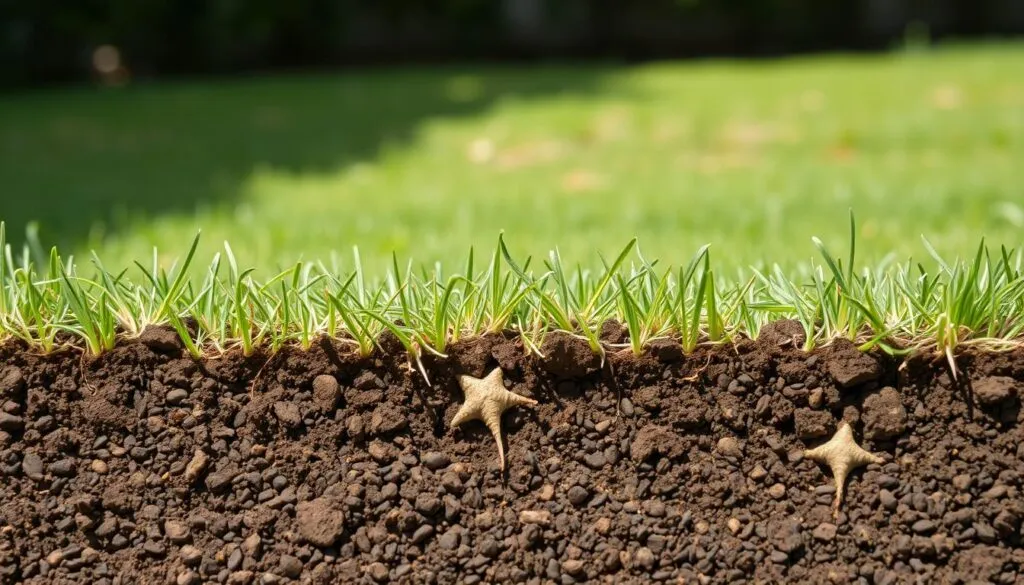
The weight of a lawn mower on wet soil can cause compaction, restricting the flow of air, water, and nutrients to the roots of your grass. This compaction can have severe consequences on the health and appearance of your lawn.
How Wet Mowing Creates Ruts and Compaction
Running a lawn mower over water-saturated ground presses down and compacts the soil, making it difficult for air, water, and nutrients to reach grass roots. The mower can also create ruts as it moves through the soft soil, leading to uneven ground that’s difficult to mow and potentially hazardous to walk on. Key issues include:
- Significant compaction due to the weight of lawn mowers on wet soil, restricting resource availability to grass roots.
- Particularly problematic in clay soils, which already suffer from poor drainage and limited oxygen exchange.
Long-term Effects on Grass Health
The long-term effects of soil compaction include reduced root growth, decreased drought tolerance, and increased susceptibility to stress and disease. Compacted soil can also lead to the formation of ruts that collect water, creating micro-environments for moss growth, mosquito breeding, and localized disease development. To mitigate these effects, it’s essential to avoid mowing wet grass whenever possible.
Should You Mow a Wet Lawn? The Expert Consensus
The consensus among experts is clear: mowing a wet lawn should be avoided whenever possible. Lawn care professionals emphasize that mowing wet grass can lead to various issues, including damage to the lawn and safety hazards.
When to Definitely Avoid Mowing
There are specific conditions when mowing should be avoided at all costs. For instance, immediately after heavy rainfall, when standing water is present, or when the soil is saturated, it’s best to postpone mowing. These conditions not only make it difficult to achieve an even cut but also increase the risk of damaging the lawn.
Signs Your Lawn Is Too Wet to Mow
To determine if your lawn is too wet to mow, you can perform a simple test. Walk across the lawn; if your steps leave visible footprints, it’s still too wet. Additionally, check for water droplets on grass blades. If the grass springs back up after being compressed, it’s ready to be mowed. A good rule of thumb is to wait at least 24 hours after rain before mowing.
| Condition | Recommended Waiting Time |
|---|---|
| Light Rain | 2 to 5 hours |
| Heavy Rainfall | 24 hours or more |
By understanding these guidelines and being mindful of the conditions, you can make informed decisions about when to mow your lawn, ensuring it remains healthy and well-maintained.
When You Must Mow Wet Grass: Best Practices
Sometimes, due to weather conditions, you have to mow wet grass. While it’s generally advised against mowing wet lawns, there are situations where it’s unavoidable, such as during prolonged rainy periods. In such cases, following best practices can minimize damage to your lawn and mower.
Adjusting Your Mower Settings
To mow wet grass effectively, you need to adjust your mower settings. Raising the mower height is crucial as it reduces strain on the mower and minimizes damage to the grass blades. A higher cutting height prevents cutting too much of the wet grass at once, reducing the risk of severe tearing and clumping.
Proper Mowing Techniques for Wet Conditions
When mowing wet grass, it’s essential to go slow to reduce clumping and allow the mower to cut more evenly. Using a side-discharge mower is recommended as it prevents clogging and improves cutting performance in wet conditions. Additionally, ensuring the mower blade is sharp is vital for a clean cut.
Post-Mowing Lawn Care
After mowing wet grass, post-mowing care is crucial. Remove any clumps of cut grass that can smother the lawn, and clean your equipment thoroughly to prevent rust and corrosion. Regular maintenance will keep your lawn healthy and your mower in good condition.
Different Types of Mowers and Wet Grass Performance
Choosing the right lawn mower is crucial for maintaining a healthy lawn, especially when dealing with wet grass. The performance of various mowers in wet conditions can significantly impact both the mower’s efficiency and the lawn’s overall health.
Gas vs. Electric Mowers
Gas-powered mowers generally offer more power and torque, making them better suited for handling wet grass compared to electric mowers. However, they still face challenges such as clumping and deck clogging. Electric mowers, including both corded and battery-powered options, present unique considerations in wet conditions, including safety concerns and reduced cutting efficiency. For instance, cordless mowers, while convenient, risk damaging their electrical components if used on wet grass.
Self-Propelled and Robotic Options
Self-propelled mowers ease the physical burden of mowing and provide steady cutting, even on wet grass. However, heavier models risk causing soil compaction and wheel ruts, especially in wetter conditions. Robotic mowers, equipped with rain sensors, often automatically return to their charging stations during wet conditions, mitigating the risks associated with mowing wet grass.
| Mower Type | Performance on Wet Grass | Key Considerations |
|---|---|---|
| Gas-Powered | Better handling due to more power | Clogging, deck maintenance |
| Electric (Corded/Cordless) | Reduced efficiency, safety risks | Electrical component protection |
| Self-Propelled | Steady cutting, easier to use | Soil compaction, weight |
| Robotic | Automatic avoidance of wet conditions | Sensor reliability, programming |
Conclusion: Making the Right Decision for Your Lawn
To maintain a healthy lawn, it’s crucial to weigh the necessity of mowing against the potential risks associated with wet conditions. We’ve explored the comprehensive reasons why mowing wet grass is generally not recommended. The decision to mow should balance immediate aesthetic concerns with long-term lawn health and safety considerations. Patience is often the best approach, waiting for proper drying conditions to minimize damage and risks.
By understanding your specific lawn conditions and soil composition, you can make better decisions about when to mow, ensuring a healthier lawn and extended mower life.
FAQ
What are the risks of mowing wet grass?
Mowing wet grass can lead to uneven cuts, torn grass blades, and increased risk of lawn diseases. It can also cause engine strain and performance issues with our lawn mower, as well as blade damage and deck clogging.
How does mowing wet grass affect soil health?
Mowing wet grass can cause soil compaction, creating ruts and damaging the soil structure. This can have long-term effects on grass health, making it more susceptible to disease and pests.
Are there any safety hazards associated with mowing wet grass?
Yes, mowing wet grass can be hazardous, especially on slopes. The risk of slipping and falling is higher, and electric mowers can pose electrical hazards. We must be cautious when mowing in wet conditions.
Can mowing wet grass damage our lawn mower?
Yes, mowing wet grass can cause damage to our lawn mower, particularly the blades and deck. Clogging and strain on the engine can lead to performance issues and costly repairs.
How can we minimize damage when mowing wet grass is unavoidable?
To minimize damage, we can adjust our mower settings, use proper mowing techniques, and provide post-mowing care. This includes maintaining our mower, cutting at a higher height, and removing clippings.
What type of mower is best suited for mowing wet grass?
Gas mowers are generally better suited for mowing wet grass than electric mowers. Self-propelled and robotic mowers can also be effective options, depending on our lawn’s specific needs and conditions.
How can we determine if our lawn is too wet to mow?
We can check if our lawn is too wet by looking for signs such as water pooling on the surface, soft and spongy soil, or if the grass blades are bent or torn easily. If we notice these signs, it’s best to wait until the lawn dries out.