
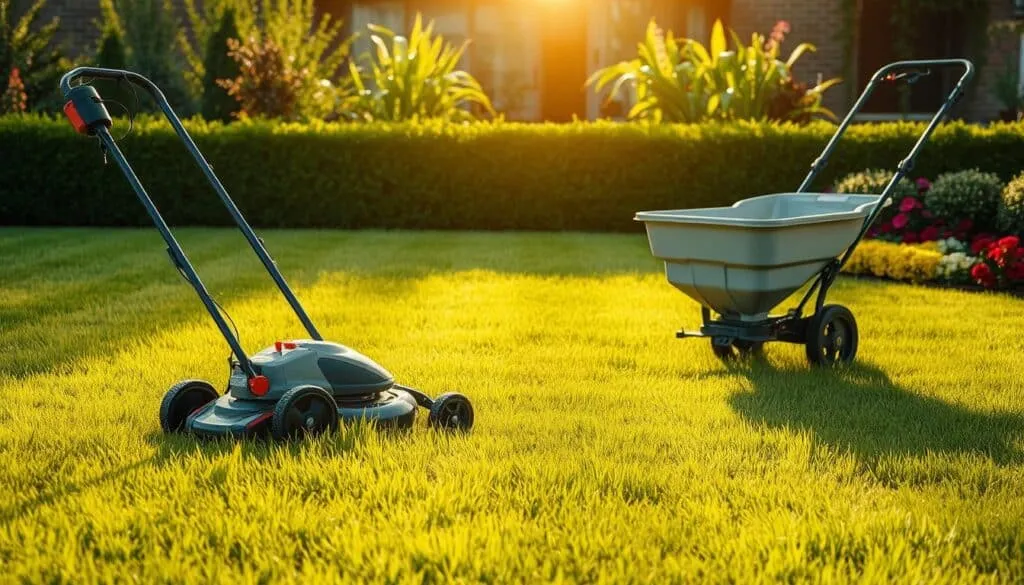
Many homeowners face a common dilemma when the growing season arrives. Coordinating lawn maintenance tasks like cutting the grass and applying nutrients can be tricky. The timing between these two essential jobs makes a huge difference.
It’s tempting to tackle everything in one day to save time. However, rushing these steps often leads to poor results. The effectiveness of your lawn care efforts depends heavily on proper scheduling.
This article explores the best sequence for a healthier, greener lawn. I’ll explain why mowing a few days prior to applying fertilizer is the optimal approach. We will dive into the science behind timing for better absorption.
My guide covers step-by-step instructions and seasonal considerations. It addresses not just the “when” but also the “why” and “how.” Patience and proper planning yield far superior outcomes for your turf.
Key Takeaways
- Proper timing between mowing and fertilizing is critical for lawn health.
- Mowing a few days before applying fertilizer is the recommended best practice.
- This timing allows for more even application and better nutrient absorption.
- Avoid the temptation to perform both tasks on the same day for optimal results.
- This guide will explain the science and provide clear, actionable steps.
Lawn Care Basics: The Role of Mowing and Fertilizing
The foundation of vibrant turf health lies in understanding how cutting and feeding interact. These two practices form a complementary system that maintains yard vitality throughout the growing season.
Understanding Your Lawn’s Nutrient Needs
Turfgrasses require sixteen essential nutrients for optimal development. Macronutrients like nitrogen, phosphorus, and potassium drive fundamental growth processes. Micronutrients such as iron and manganese support overall plant health.
A soil test reveals specific nutrient deficiencies affecting your lawn. This analysis guides fertilizer selection to address particular shortcomings. Proper nutrient delivery through the soil fuels the root system.
How Mowing Affects Fertilizer Absorption
Cutting grass before applying fertilizer creates mechanical advantages for nutrient uptake. Shorter blades allow granules to reach the soil surface more effectively. This prevents fertilizer from clinging to tall grass where roots cannot access it.
Mowing also clears debris like leaves and excess growth that block nutrient pathways. Clean turf ensures fertilizer contacts the soil directly. This mechanical preparation significantly enhances nutrient absorption efficiency.
Proper lawn care establishes optimal conditions for sustained growth. The timing between these practices determines how well grass utilizes available nutrients.
Time Sensitivity Matters: Should You Mow Before Fertilizing
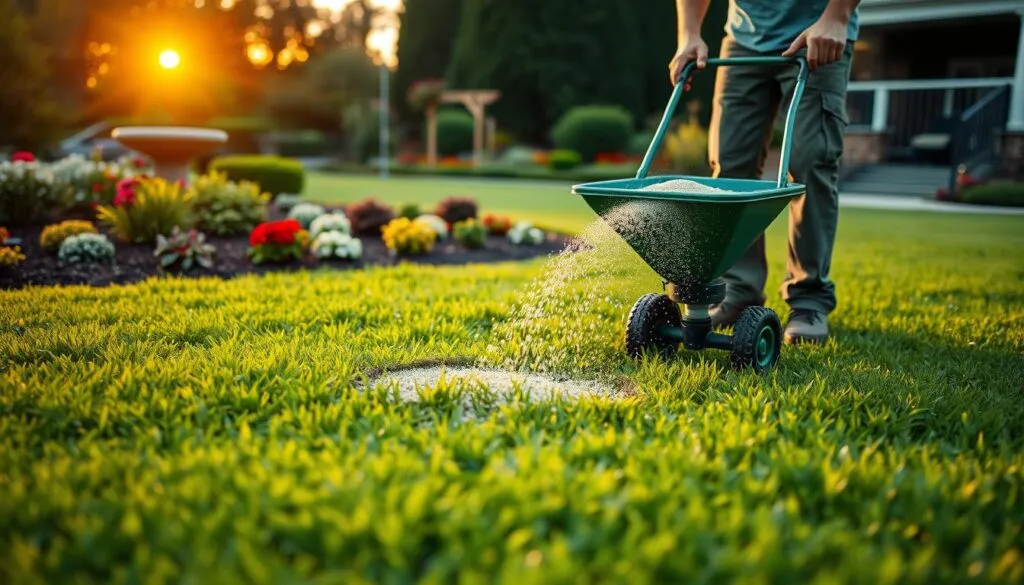
Proper scheduling between grass cutting and nutrient application determines fertilization success. Research reveals specific time windows that maximize nutrient absorption and lawn health.
The Science Behind Fertilizer Application Timing
University of Kentucky studies demonstrate a 30-40% increase in treatment effectiveness when delaying mowing by 48 hours. This time frame allows grass to recover from cutting stress.
During this recovery period, plants redirect energy toward nutrient uptake rather than healing. The fertilizer application works more efficiently when timed after this brief healing phase.
How Mowing Prior Improves Nutrient Spread
Cutting grass 1 to 2 days before fertilization creates optimal conditions for nutrient spread. Shorter blades allow granules to reach soil directly without obstruction.
This mechanical preparation ensures even distribution across the lawn surface. Debris removal during cutting further enhances soil contact for improved absorption.
| Timing Scenario | Soil Contact | Nutrient Absorption | Overall Effectiveness |
|---|---|---|---|
| Mow 2 days before | Excellent | High | Optimal |
| Same day | Good | Moderate | Average |
| After fertilization | Poor | Low | Suboptimal |
The physical science behind nutrient spread relies on direct soil contact. Proper timing ensures fertilizers activate efficiently with soil moisture for maximum lawn health benefits.
Step-by-Step Guide to Mowing and Fertilizing
Executing lawn care tasks in the proper sequence transforms ordinary maintenance into a strategic health program for your turf. This process ensures every action supports the next for optimal nutrient absorption and vigorous growth.
Preparing Your Lawn and Clearing Debris
Always check the forecast first. Heavy rain can wash away valuable lawn fertilizer, while extreme heat stresses grass. Clear all debris like leaves and twigs from the lawn surface.
This step allows the fertilizer to reach the soil directly. It prevents granules from getting trapped and becoming ineffective.
Recommended Mowing Techniques and Heights
Mow the lawn when the grass is dry for an even cut. The correct mowing height is critical for turf health. Most grasses thrive at a height of 2 to 3 inches.
Cutting too low stresses the plant and exposes soil. This table shows common grass types and their ideal cutting heights.
| Grass Type | Recommended Height | Mowing Frequency |
|---|---|---|
| Kentucky Bluegrass | 2.5 – 3.5 inches | Weekly |
| Perennial Ryegrass | 2 – 3 inches | 5-7 days |
| Tall Fescue | 3 – 4 inches | 7-10 days |
After mowing, rake any clumps of grass clippings to spread them evenly. Thick clumps block fertilizer from contacting the soil.
Applying the Right Type of Fertilizer
Wait a few hours after mowing before applying fertilizer. This pause lets grass blades recover and reduces burn risk. Choose a fertilizer type suited to your specific grass and season.
Following this methodical way produces the best results for a lush, healthy lawn. Each step prepares the turf for maximum benefit from the next.
Balancing the Pros and Cons of Simultaneous Tasks
Making the right choice between lawn care timing options requires careful consideration. Each approach offers distinct benefits and potential drawbacks for turf health.
Advantages of Mowing Before Fertilizing
Cutting grass prior to nutrient application creates optimal conditions. Shorter blades allow fertilizer to reach soil directly without obstruction.
This timing removes debris that blocks nutrient contact. Grass clippings can serve as supplemental organic matter when spread evenly.
The lawn gains uninterrupted absorption time after fertilization. This prevents disturbance during the critical nutrient uptake period.
Potential Risks of Mowing Too Soon After Fertilizing
Mowing immediately after application presents significant risks. Freshly cut grass tips become vulnerable to nitrogen burn.
This timing can redistribute or remove fertilizer before absorption occurs. The result wastes money, time, and effort invested in lawn care.
| Timing Approach | Fertilizer Contact | Grass Stress Level | Overall Effectiveness |
|---|---|---|---|
| Mow first, wait 4+ hours | Excellent | Low | Optimal |
| Same day, no waiting | Moderate | High | Risky |
| Mow after fertilization | Poor | Critical | Wasteful |
Wait at least 24 to 48 hours after applying granular fertilizer. Liquid formulations may dry within four hours, allowing earlier cutting.
Proper timing prevents compounded stress from mechanical cutting and chemical application. This careful balance maintains lawn health throughout the growing season.
Optimizing Fertilizer Application and Grass Health
The effectiveness of your fertilizer application depends significantly on choosing the right formulation for your lawn’s specific conditions. Different types interact with soil and grass in distinct ways that affect nutrient availability.
Choosing Between Liquid and Granular Fertilizers
Liquid fertilizer offers easier application and uniform coverage. This type can be combined with other treatments like herbicides. However, liquid formulations typically release nutrients quickly, increasing burn risk.
Granular fertilizer provides sustained nutrient delivery over time. This economical option requires a spreader and watering-in. The slow-release properties support steady growth with less frequent application.
Weather Conditions and Timing Considerations
Weather patterns critically influence fertilizer application success. Avoid treatment before heavy rain that washes away nutrients. Extreme heat increases burn risk for both fertilizer types.
The best time for initial spring application occurs after lawn green-up from winter dormancy. Cool-season grasses benefit from early spring and fall feeding when actively growing. Warm-season varieties need early summer nutrient support.
Proper timing ensures nutrients are available during peak growth cycles. This approach leads to optimal results for lawn health and vitality.
Advanced Tips for a Lush, Healthy Lawn
Advanced turf care strategies merge herbicide treatments with fertilization schedules for superior results. This integrated approach addresses multiple lawn health factors simultaneously.
Integrating Weed Control with Fertilization
Research indicates cutting grass 2 to 3 days prior to weed and feed application boosts effectiveness significantly. Studies demonstrate a 30-40% increase in weed control potency with proper timing.
This timing works because mowing stimulates weed recovery growth. New leaves provide more surface area for herbicide absorption. The approach ensures better product distribution through shorter grass blades.
Wait at least 48 hours after application before cutting again. This allows herbicides to translocate to weed root systems. Proper timing prevents turf stress and maximizes treatment benefits.
| Product Type | Best Use Case | Application Timing | Duration |
|---|---|---|---|
| Granular Weed & Feed | Long-term maintenance | Early spring | 8-12 weeks |
| Liquid Herbicide | Quick weed elimination | As needed | 2-4 weeks |
| Pre-emergent | Weed prevention | Late winter | 3-6 months |
| Post-emergent | Existing weed control | Active growth periods | 4-8 weeks |
Spring applications target early-season weeds before establishment. Fall treatments prepare turf for winter dormancy. This seasonal strategy prevents weed emergence the following year.
Maintaining proper grass height throughout the year naturally suppresses weed growth. Complex situations may benefit from professional lawn care service. Multiple treatment times throughout the year produce optimal results.
Conclusion
The path to a resilient, vibrant lawn becomes clear when we prioritize strategic timing over convenience. This article demonstrates that cutting grass 1-2 days prior to nutrient application creates optimal conditions for absorption.
Proper spacing between these tasks prevents fertilizer burn and ensures nutrients reach the soil effectively. Waiting 24-48 hours after application before cutting again protects grass blades from stress.
These timing principles apply throughout the entire year, from spring green-up to winter preparation. Understanding your specific turf type and seasonal patterns allows for customized care.
While dedicating separate days to lawn maintenance requires planning, the results justify the effort. Healthier root systems, reduced stress, and professional-quality growth emerge from this disciplined approach.
By implementing these strategies, your fertilizer investment delivers maximum value. Your lawn will maintain its vitality and resilience across all seasons.
FAQ
Is it better to mow the lawn before applying fertilizer?
Yes, mowing before a fertilizer application is generally recommended. This practice removes excess grass blade length, allowing the granules or liquid to reach the soil more effectively. Shorter turf ensures nutrients make direct contact with the root zone for optimal absorption.
How long should I wait to mow after I fertilize my lawn?
I advise waiting at least 24 to 48 hours after fertilization before mowing again. This gives the product enough time to be absorbed into the soil and begin working. Mowing too soon can disrupt the process and potentially remove some of the valuable nutrients from the grass blades.
Can leaving grass clippings on the lawn after mowing help?
Absolutely. Leaving the clippings, a practice known as grasscycling, returns natural nutrients like nitrogen back to the soil. These clippings decompose quickly, acting as a mild, organic fertilizer that complements your main lawn care regimen.
What is the best time of year for fertilization?
The ideal times are during the peak growth seasons of spring and fall. Cool-season grasses benefit most from fall feeding, while warm-season types respond best to late spring or early summer applications. This timing supports strong root development and overall turf health.
Does the type of fertilizer (liquid vs. granular) change the mowing schedule?
It can. Liquid fertilizers are often absorbed more quickly through the grass blades, potentially shortening the waiting period before mowing. Granular types need water to dissolve and move into the soil, usually requiring a slightly longer wait. Always check the specific product label for instructions.
Should I water the lawn before or after fertilizing?
Watering after applying fertilizer is crucial, especially for granular products. It helps move the nutrients down to the root system and prevents potential burn on the grass blades. The soil should be moist but not overly saturated before application for the best results.