
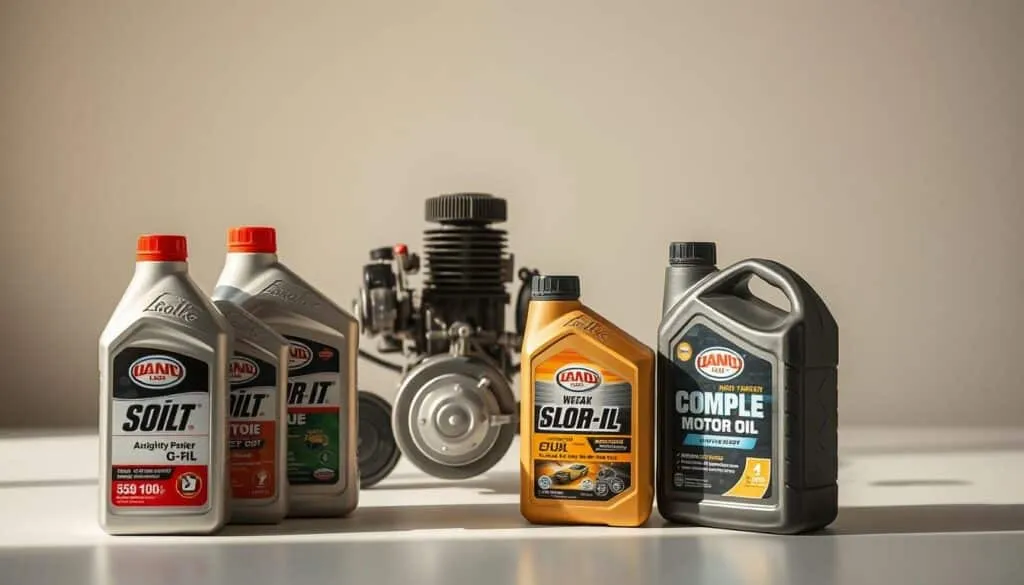
What if that leftover automotive lubricant sitting in your garage could solve your lawn equipment needs? Many homeowners face this tempting scenario when maintaining their outdoor power tools.
The straightforward answer is clear: automotive lubricants are generally not recommended for lawn equipment. This practice can lead to premature wear, overheating, or even catastrophic failure requiring expensive repairs.
While both products are technically engine lubricants, lawn equipment operates under fundamentally different conditions than automobiles. These machines face extreme environments that demand specially formulated protection.
Your outdoor power tools encounter excessive heat, heavy contamination from grass and debris, frequent start-stop cycles, and limited cooling capabilities. Automobiles benefit from advanced cooling systems, robust air filtration, and sustained steady operation.
This guide will help you understand the specific requirements for lawn equipment lubrication. Making an informed decision could save hundreds in repair costs and extend your machine’s lifespan significantly.
Key Takeaways
- Automotive lubricants are not recommended for lawn equipment due to different operating requirements
- Lawn mower engines face extreme heat and contamination that demand specialized formulas
- Using the wrong lubricant can cause premature wear and potential engine failure
- Manufacturer recommendations provide the safest approach for equipment maintenance
- Proper lubrication extends equipment lifespan and prevents costly repairs
- Understanding the science behind lubricant choices helps make informed decisions
Understanding Lawn Mower Engine Oil Requirements
Small engine maintenance begins with understanding specific lubrication needs. Proper protection prevents costly repairs and extends equipment lifespan significantly.
Importance of Proper Lubrication in Small Engines
Quality lubrication creates a protective film between moving metal parts. This prevents friction and heat buildup in engines lacking sophisticated cooling systems.
Small engines have tighter tolerances than automotive powerplants. Even slight lubrication failures cause rapid damage like scoring and complete seizure.
Differences Between Two-Stroke and Four-Stroke Engines
Two-stroke engines burn oil mixed with gasoline at specific ratios. Four-stroke designs feature dedicated oil reservoirs where lubricant circulates continuously.
Two-stroke oil must burn cleanly during combustion. Four-stroke formulations resist breakdown under heat and pressure while circulating repeatedly.
Key Features of Quality Lawn Mower Oil
High-quality oils meet API specifications of SJ or higher. They contain high-temperature detergents to combat varnish and sludge from stale fuel.
Anti-oxidants slow oil breakdown in hot, oxygen-rich environments. Mild anti-wear agents protect without causing deposits in small oil passages.
Proper formulations handle contamination from grass clippings and intermittent operation. They maintain stability during frequent temperature fluctuations and extended storage periods.
Differences Between Lawn Mower Oil and Car Oil
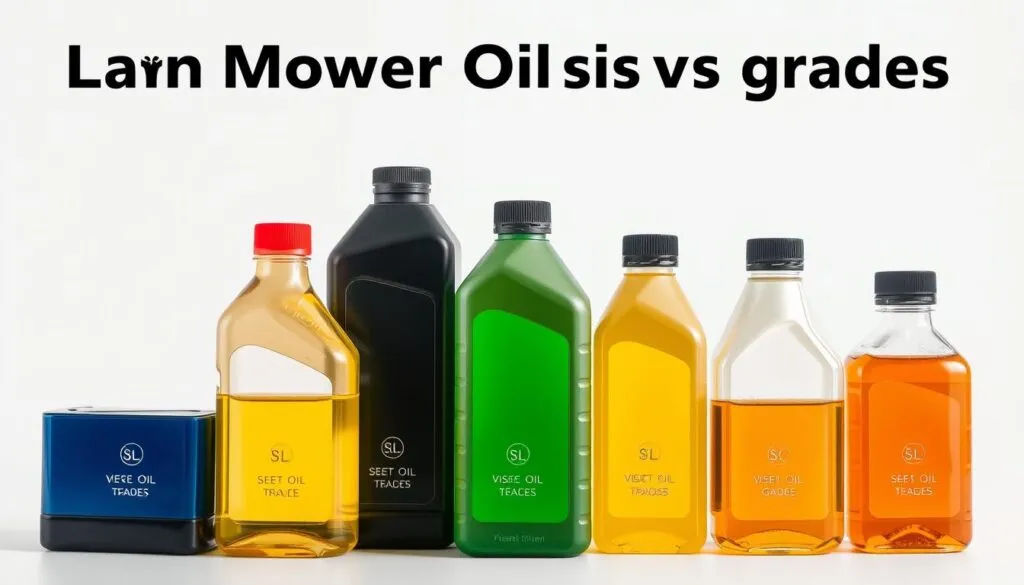
SAE classification numbers reveal critical differences in how oils perform across temperature ranges for various engine types. The viscosity rating system provides essential information about lubrication properties.
Viscosity Grades and SAE Classifications
The “W” in SAE ratings stands for winter, indicating cold-temperature flow characteristics. Lower numbers before the W mean better fluidity in chilly conditions.
Higher numbers after the hyphen show thickness at operating temperature. This determines film strength under heat stress.
| SAE Grade | Temperature Range | Best Use | Notes |
|---|---|---|---|
| SAE 30 | Warm weather | General residential | Most common recommendation |
| SAE 10W-30 | -18°C to +38°C | Variable climates | Improved cold starting |
| SAE 5W-30 Synthetic | -30°C to +40°C | All-season protection | Superior cold performance |
| SAE 15W-50 Synthetic | -6°C to +55°C | High-temperature commercial | Reduced fuel consumption |
The Role of Additives in Protecting Small Engines
Additive packages differ significantly between automotive and outdoor power equipment formulations. Each serves distinct operational requirements.
Automotive lubricants contain detergents for cleaner-burning fuel. Lawn equipment oils need stronger detergents to combat varnish from stale gasoline.
Anti-wear compounds also vary substantially. Zinc-based additives in car oils can clog small passages in mower engines. Equipment-specific formulations use milder agents suited to high-speed operation.
Friction modifiers designed for vehicle fuel economy may reduce protective film strength in outdoor power tools. Proper additive balance ensures optimal small engine protection.
Can You Use Car Oil in a Lawn Mower
Despite seeming similar, the operational demands on a small engine make automotive lubricants a poor choice. While the motor might run initially, long-term damage is almost guaranteed.
The specific formulation required for outdoor power equipment differs significantly from automotive grades. Using the wrong type accelerates wear and risks premature failure.
Risks of Using Automotive Oils in Lawn Mowers
Automotive formulas lack the necessary additives for high-temperature, high-RPM small engines. This inadequacy leads to several critical problems.
Insufficient protection causes microscopic scoring on pistons and bearings. Over time, this damage results in blue smoke, power loss, and potential seizure.
Heat breakdown is another major concern. Automotive lubricants thin out quickly under sustained mower operation.
This leads to poor heat dissipation and sludge formation. Clogged oil passages then cause catastrophic lubrication failure.
Strong detergent additives in car oil can degrade lightweight mower components. Aluminum crankcases and plastic parts are particularly vulnerable.
Finer additive particles may also clog the smaller filters found in this equipment.
| Primary Risk | Effect on Engine | Visible Symptom |
|---|---|---|
| Accelerated Wear | Metal-on-metal contact scores critical parts | Blue exhaust smoke, loss of power |
| Overheating & Breakdown | Oil thins, sludge clogs passages | Engine runs hot, may seize |
| Component Damage | Additives degrade lightweight materials | Oil leaks, unusual noises |
Rare exceptions exist if your owner’s manual explicitly approves a multigrade oil. Some premium synthetic blends are designed for both automotive and small engine applications.
Always verify compatibility with your specific model’s manual. Using non-approved lubricants typically voids the manufacturer’s warranty.
Major brands like Briggs & Stratton and Honda specifically recommend against standard automotive formulas. Opting for certified small engine oil ensures optimal performance and longevity.
Proper Techniques for Checking and Changing Lawn Mower Oil
Following correct oil maintenance protocols prevents costly engine repairs down the line. Regular fluid monitoring ensures optimal performance throughout the cutting season.
How to Accurately Check Your Oil Level Using a Dipstick
Always verify fluid levels before starting the motor. Cold engines provide the most accurate readings since all lubricant settles in the crankcase.
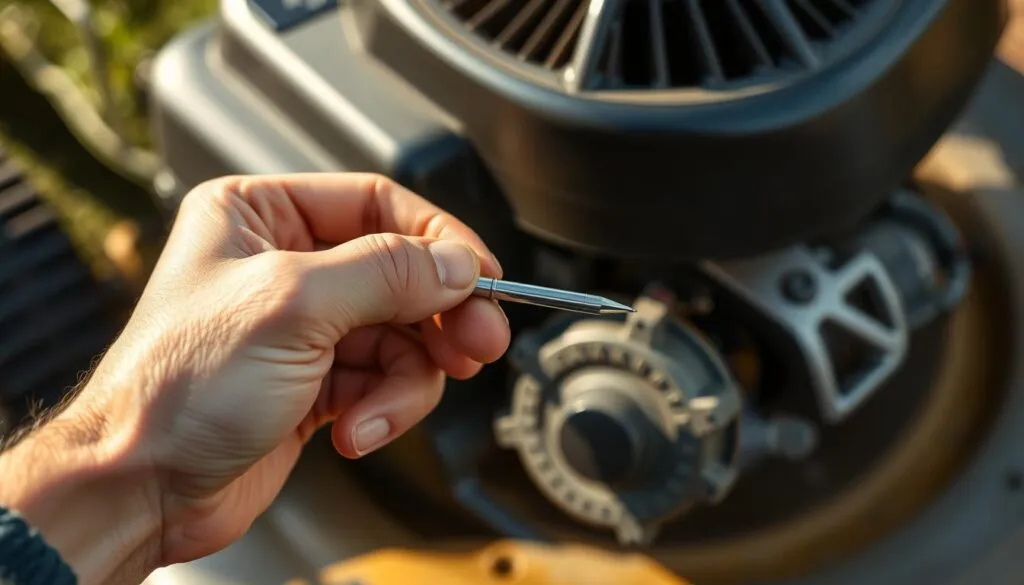
Park the equipment on completely level ground to avoid false measurements. Remove the dipstick cap and wipe the blade clean with a lint-free cloth.
Reinsert the dipstick fully, ensuring proper engagement with any threads or teeth. Remove it again to read the oil level against the markings.
Step-by-Step Oil Change Procedures and Maintenance Tips
Warm the engine for 2-3 minutes to improve oil flow. This helps carry more contaminants out during drainage.
Disconnect the spark plug wire for safety before beginning maintenance. Position an oil collection pan beneath the drain plug.
Allow complete drainage for 5-10 minutes before reinstalling the plug. Refill with the manufacturer-specified type and quantity.
| Equipment Type | Capacity (ounces) | Change Interval | First Change |
|---|---|---|---|
| Walk-Behind Mowers | 15-18 | 50 hours or annually | 5-8 hours |
| Riding Mowers | 48-64 | 100 hours or annually | 5-8 hours |
| Classic Models | Varies | 25 hours | Immediate |
Briggs & Stratton recommends high-quality detergent oils with API classifications of SF, SG, SH, or higher. Synthetic formulations like their branded product offer superior temperature protection.
Proper disposal is essential for environmental safety. Take used lubricant to authorized recycling centers rather than pouring it improperly.
Conclusion
Your equipment’s longevity hinges on using formulations designed for its unique demands. While automotive lubricants might seem like a convenient substitute, they significantly accelerate wear in small engines.
Lawn mowers operate under extreme stress, facing high temperature swings and contamination. This requires specially formulated oils with the correct viscosity and additives.
Always consult your owner’s manual for the recommended type of fluid. Using products labeled for small engines protects your investment and maintains the manufacturer’s warranty.
Establishing a regular maintenance routine for your lawn mower ensures reliable performance. This simple practice pays dividends in extended service life for all your outdoor power tools.
FAQ
What happens if I put car oil in my lawn mower?
Using automotive oil in a small engine like a lawn mower can cause damage. Car oils often contain friction modifiers and detergents that are not suitable for small engines. These additives can lead to inadequate lubrication, increased wear on engine parts, and potentially cause the engine to smoke or fail prematurely.
How do I know what type of oil my mower engine needs?
Always check your owner’s manual first. The manufacturer provides the exact specifications, including the correct viscosity grade like SAE 10W-30 and whether to use conventional or synthetic oil. For most four-stroke engines in common brands like Briggs & Stratton, a detergent oil classified as SJ or higher is typically recommended.
How often should I change the oil in my lawn mower?
You should change the oil after the first five hours of operation for a new mower. After that, perform an oil change every 50 hours of use or at least once per mowing season. Regular changes are crucial for removing contaminants and maintaining proper lubrication to protect your engine’s internal parts.
What is the difference between oil for two-stroke and four-stroke engines?
Two-stroke engines require a special oil that mixes directly with gasoline to lubricate the engine. Four-stroke engines have a separate oil reservoir, like a car, and use oil that does not mix with fuel. Using the wrong type can result in severe engine damage and poor performance.
Can I use synthetic oil in my lawn mower?
Yes, synthetic oil is an excellent choice for lawn mowers. It provides superior lubrication, performs better in extreme temperatures, and can extend the time between oil changes. Just ensure the viscosity grade matches your manufacturer’s recommendation for optimal engine protection.
What’s the proper way to check the oil level?
Park your mower on a level surface and wipe the dipstick clean. Insert the dipstick fully back into its tube without screwing it in, then pull it out again to check the level. The oil should be between the “Full” and “Add” marks. Never overfill, as this can also harm the engine.