
What if the most common step in your lawn care routine is actually costing you money and weakening your results? Many homeowners face this exact dilemma when planning their yard maintenance.
The sequence of mowing and applying weed feed treatments matters greatly for the health of your turf. Getting the order wrong can waste expensive products, stress the grass, and reduce the effectiveness of both the herbicide and fertilizer.
Research from the University of Kentucky provides a clear answer. Delaying mowing by 48 hours before application can increase the potency of weed controls by 30-40%. This timing allows for better absorption and distribution while reducing the risk of fertilizer burn.
This guide will walk you through the specific timing windows, application techniques, and best practices. You will learn how to make confident decisions for a healthier, weed-free yard.
Key Takeaways
- Proper timing between mowing and applying weed and feed significantly impacts product effectiveness.
- Mowing a few days prior to application enhances herbicide absorption into weeds.
- This sequence helps fertilizer reach the soil and grass roots more efficiently.
- Correct timing minimizes the risk of damaging your turf with fertilizer burn.
- University research confirms a substantial increase in weed control potency with the right schedule.
- Following these steps ensures you get the full value from your lawn care products.
Why Mowing Before Weed and Feed Matters
The order of your lawn care steps unlocks the full potential of your products. Getting this sequence right is not just a suggestion—it’s a science that directly impacts your yard’s health.
This preparation creates the ideal environment for both the herbicide and fertilizer components to work effectively.
Improved Herbicide Absorption
Cutting the grass a few days prior to application also trims unwanted plants. As these weeds recover, they produce fresh, tender growth.
This new foliage has a larger surface area. It acts like a sponge, readily capturing and absorbing the post-emergent herbicide.
Waiting 48 to 72 hours allows weeds to generate optimal contact points for the treatment to penetrate their vascular system.
Applying the control too soon after cutting leaves insufficient leaf area. The herbicide cannot be absorbed effectively, leading to poor results.
Enhanced Fertilizer Distribution
Shorter grass blades allow granular or liquid fertilizer to reach the soil surface easily. It avoids getting trapped in tall, dense turf.
Mowing also clears away debris. This ensures an even coverage of nutrients across the entire lawn.
Even distribution prevents patchy growth and unsightly brown spots. More importantly, it significantly reduces the risk of fertilizer burn.
Freshly cut grass has less leaf tissue to accumulate concentrated salts from the fertilizer. This prevents stress and dehydration of your turf.
| Timing Scenario | Herbicide Effectiveness | Fertilizer Impact | Overall Lawn Health |
|---|---|---|---|
| Mow 2-3 days before | High absorption into recovering weeds | Even nutrient distribution, low burn risk | Optimal for vigorous growth |
| Mow immediately before ( | Poor absorption due to limited leaf area | Uneven coverage, higher burn risk | Stressed grass, weak weed control |
| No mowing before application | Product trapped on tall grass/weeds | Nutrients may not reach soil effectively | Inefficient product use, wasted effort |
Ultimately, this careful timing ensures that valuable nutrients reach the root zone where they are needed most. Your lawn gets the full benefit without the drawbacks.
Timing Your Mowing and Lawn Treatments
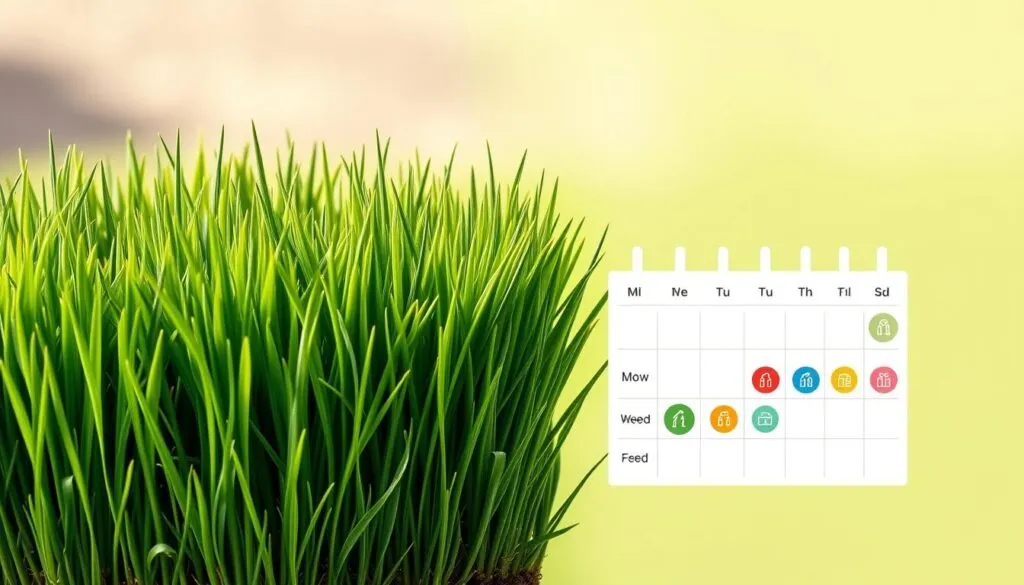
The exact timing between cutting your grass and treating it can make or break your entire lawn care strategy. Proper scheduling ensures every product works as intended.
Ideal Mowing Window Before Application
Plan your cutting for two to three days prior to applying weed feed. This timeframe is crucial.
It allows the turf to recover from the stress of cutting. Meanwhile, unwanted plants generate fresh, tender leaves.
This new growth presents a larger surface area. The herbicide clings to these leaves more effectively.
Appropriate Waiting Period After Treatment
After application, a patient approach is vital. Wait a full 24 to 48 hours before mowing again.
This time allows the treatment to move through the plant. It travels from the leaves down to the root system.
Cutting too soon interrupts this process. The weed may not be eliminated completely.
Avoid watering or cutting damp grass immediately after treatment. This can wash away the product or cause uneven cuts.
| Action | Recommended Timing | Key Benefit |
|---|---|---|
| Final Mow Before Treatment | 2-3 days prior | Allows weed leaf regeneration for better herbicide contact |
| Weed and Feed Application | On a dry, calm day | Ensures product stays on target and is not diluted |
| First Mow After Treatment | 24-48 hours after | Gives herbicide time to translocate to roots for full effect |
Following this simple schedule maximizes your efforts. Your yard gets the full benefit of every treatment.
Deciding: should i mow the lawn before weed and feed
Strategic planning around mowing schedules significantly influences how well your turf absorbs vital nutrients. This careful approach maximizes treatment effectiveness while protecting grass health.
Do’s and Don’ts of Mowing Around Weed and Feed
Proper preparation makes all the difference. Cut grass two to three days prior to application for optimal results.
Follow the one-third rule when trimming blade height. Clear away debris and clippings before spreading products.
Avoid cutting immediately after treatment. Wait at least 48 hours for products to work effectively.
Never scalp the turf or mow damp grass. These practices stress plants and reduce treatment potency.
How Timing Affects Lawn Health and Nutrient Uptake
Correct scheduling minimizes stress on turf while maximizing nutrient absorption. Fertilizer needs time to reach root zones.
Premature cutting disrupts this vital process. Proper intervals allow treatments to penetrate deeply.
Leaving clippings after post-treatment mowing provides natural benefits. This mulch layer retains moisture and adds organic matter.
Consistent timing practices create lush, healthy turf that resists weeds naturally. Your investment in quality products pays off fully.
Understanding Different Weed and Feed Products
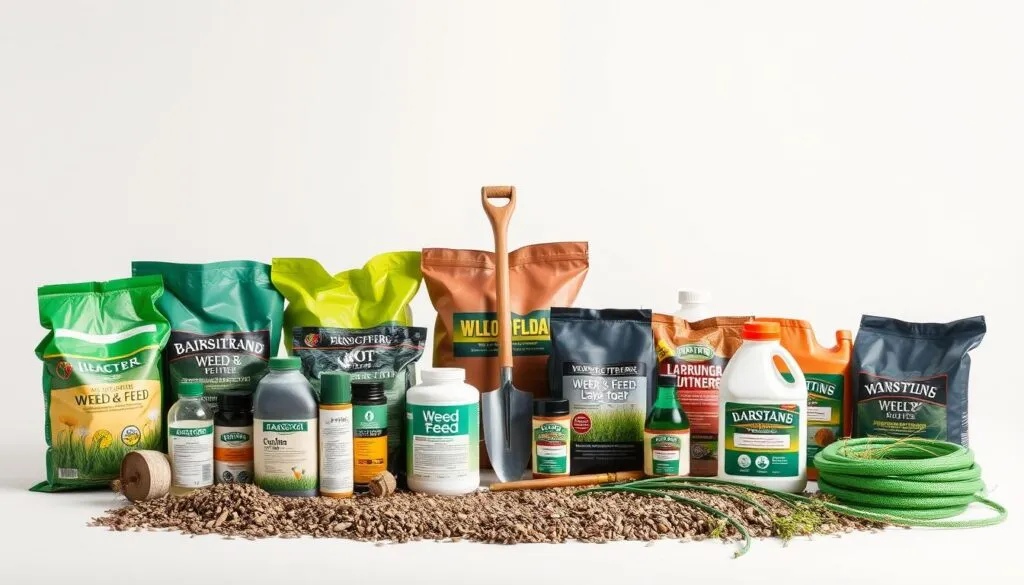
Choosing the right weed feed products is a critical step that directly impacts turf health and treatment effectiveness. These combination feed products deliver herbicide for control and fertilizer for nutrition in one application.
Selecting a formula tailored to your specific needs ensures optimal results. It prevents wasted effort and protects your grass investment.
Types of Weed and Feed Formulations
Two primary types of these products exist: granular and liquid. Granular options offer slow-release feeding, ideal for large areas.
Liquid formulations provide fast-acting results, perfect for spot treatments. Each type has distinct advantages for various situations.
The herbicide component also varies. Pre-emergent formulas prevent weed seeds from sprouting, best applied in early spring.
Post-emergent versions target actively growing weeds during the season. They contain ingredients like 2,4-D to control broadleaf plants.
Fertilizers within these products can be slow or quick-release. Slow-release supports consistent growth with lower burn risk.
Organic vs. Synthetic Options
Another major choice involves organic versus synthetic feed. Organic products nourish soil microbes and support long-term health.
Synthetic options provide concentrated nutrients for fast greening. Always check the label for your specific grass type like Kentucky Bluegrass.
Successful fertilization depends on matching the product to your lawn’s unique requirements. This careful selection maximizes the benefits of every application.
| Product Type | Best Use Case | Key Advantage | Consideration |
|---|---|---|---|
| Granular Slow-Release | Large lawns, long-term feeding | Consistent nutrient delivery | Requires a damp lawn for application |
| Liquid Quick-Release | Spot treatments, quick results | Fast absorption and action | Effects may be short-lived |
| Pre-Emergent | Early spring prevention | Stops weeds before they start | Timing is critical for effectiveness |
| Post-Emergent | Growing season control | Eliminates visible weeds | Targets specific weed types |
| Organic | Long-term soil health | Eco-friendly, improves soil | Results appear more slowly |
Mowing Techniques to Optimize Lawn Care
Proper mowing practices serve as the foundation for a healthy, resilient turf that responds well to treatments. These techniques create optimal conditions for every lawn care product to work effectively.
Best Practices for Mowing Height and Frequency
Maintain grass blades at 3 to 4 inches after cutting. This height promotes deep root growth and naturally shades out weed seeds.
Follow the one-third rule during each cutting session. Removing more than one-third of blade height stresses plants and weakens their defenses.
During peak growing seasons, schedule weekly mowing sessions. Adjust frequency based on growth rates and weather conditions.
Prepare equipment before the season begins. Sharp blades create clean cuts, while proper tire inflation ensures even cutting height.
When applying weed feed products, use a broadcast spreader with crosshatch patterns. Make two perpendicular passes at half-strength for uniform coverage.
Always follow manufacturer instructions for application rates. Over-application causes fertilizer burn, while under-application wastes money.
Use drop spreaders near garden beds and lawn perimeters. This prevents granules from reaching ornamental plants that herbicides could damage.
Wait 2 to 4 days after application before watering. Limit treatments to twice annually to prevent chemical buildup and environmental impact.
Conclusion
Achieving a vibrant, healthy yard requires a strategic approach where each step supports the next. The clear answer is to cut the grass two to three days prior to applying treatment. This timing maximizes herbicide absorption and ensures even fertilizer distribution.
Understanding different product types, from granular to liquid, allows for precise selection. Proper mowing height and technique create the ideal foundation for any application.
Following these research-backed guidelines protects your investment. It leads to a resilient turf that naturally resists pests and disease.
This integrated system of care, with correct timing and method, simplifies lawn maintenance over time. You are now equipped to make informed decisions for outstanding results.
FAQ
How soon can I mow my grass after applying a weed and feed product?
I typically wait at least 24 to 48 hours after application. This gives the herbicide enough time to be absorbed by the weeds and the fertilizer granules to settle into the soil. Always check the specific instructions on the product label from brands like Scotts for precise timing.
What is the best time of year to apply weed and feed for effective control?
In my experience, early spring and early fall are the optimal seasons. Applying during these periods targets weeds like dandelions and clover when they are actively growing, which improves the herbicide’s effectiveness. The moderate temperatures also help the lawn fertilizer nutrients get established.
Can I apply weed and feed to a wet lawn?
I avoid applying most granular products to wet grass. A dry lawn allows the granules to fall directly to the soil surface instead of sticking to grass blades. This ensures better contact with the soil for the fertilizer and improves broadleaf weed control. Some liquid herbicides may have different requirements.
Does the type of grass in my lawn affect which weed and feed I should use?
Absolutely. Using the correct product for your grass type is crucial for lawn health. For example, some herbicides in weed and feed formulas can harm cool-season grasses like Kentucky bluegrass or warm-season types like St. Augustine. I always check the label to ensure compatibility.
Is it necessary to water the lawn after applying a weed and feed treatment?
Yes, watering is a critical step for most granular fertilizers and herbicides. I usually water my lawn lightly after application to wash the product off the grass blades and activate it in the soil. This helps the nutrients and weed control ingredients begin working effectively.