
Have you ever wondered if that leftover automotive oil in your garage could work just as well in your lawn equipment? Many homeowners make this costly assumption, not realizing that their mower engine has very specific lubrication needs.
Your lawn mower requires precise oil formulations to operate efficiently. The correct lubricant protects against engine wear and ensures smooth performance throughout the mowing season. Choosing the proper oil depends on several factors including your equipment’s design and local climate conditions.
Using the right oil type prevents premature engine failure and reduces maintenance costs. Different manufacturers specify various oil requirements for their equipment. Understanding these specifications helps extend your machine’s lifespan significantly.
This guide covers everything from oil viscosity ratings to proper change procedures. Whether you operate a walk-behind or riding mower, knowing the correct oil specifications protects your investment. Following manufacturer recommendations keeps your equipment running reliably for years.
Key Takeaways
- Lawn mower engines require specific oil types based on manufacturer specifications
- Using incorrect oil can lead to premature engine wear and costly repairs
- Climate conditions and engine design influence the proper oil selection
- Regular oil maintenance extends your equipment’s operational lifespan
- Different mower types (walk-behind, riding, commercial) have unique oil requirements
- Understanding oil viscosity ratings ensures optimal engine performance
- Following manufacturer guidelines prevents most common maintenance issues
Understanding Your Lawn Mower’s Engine and Oil Requirements
Your mower’s engine design dictates specific lubrication needs that vary significantly from automotive engines. Internal components like pistons and crankshafts operate under extreme heat and friction. Proper lubrication protects these parts from premature wear.
https://www.youtube.com/watch?v=jo3EzddSuI8
Key Engine Components Impacting Oil Use
Your equipment relies on oil to create protective barriers between moving parts. The crankshaft, camshaft, and valve train all require consistent lubrication. Without proper oil flow, these components can suffer irreversible damage.
Different engine designs have unique requirements. Air-cooled engines generate more heat than liquid-cooled systems. This affects which oil formulations work best for your specific equipment.
Climate and Temperature Considerations
Local climate directly influences your oil selection. Various formulations perform differently across temperature ranges. Choosing the right viscosity ensures optimal equipment performance.
In warmer conditions, thicker oils maintain better lubrication. Colder climates require lighter oils for easier starting. Multi-grade options offer versatility for seasonal changes.
| Temperature Range | Recommended Oil | Benefits | Considerations |
|---|---|---|---|
| Below 40°F (4°C) | SAE 5W-30 | Easy cold starting | Avoid SAE 30 |
| 40°F to 80°F (4°C to 27°C) | 10W-30 | Versatile performance | Moderate consumption |
| Above 80°F (27°C) | SAE 30 | Stable viscosity | Best for hot climates |
| All temperatures | Synthetic 5W-30 | Superior protection | Reduced consumption |
Always maintain the correct oil level in your equipment. Even the best formulation cannot protect your engine if the level is too low. Regular checks prevent catastrophic failures.
What Type of Oil Does Lawn Mower Use
Engine lubrication requirements vary considerably between different lawn mower models and brands. Understanding viscosity ratings and manufacturer specifications ensures optimal performance for your equipment.
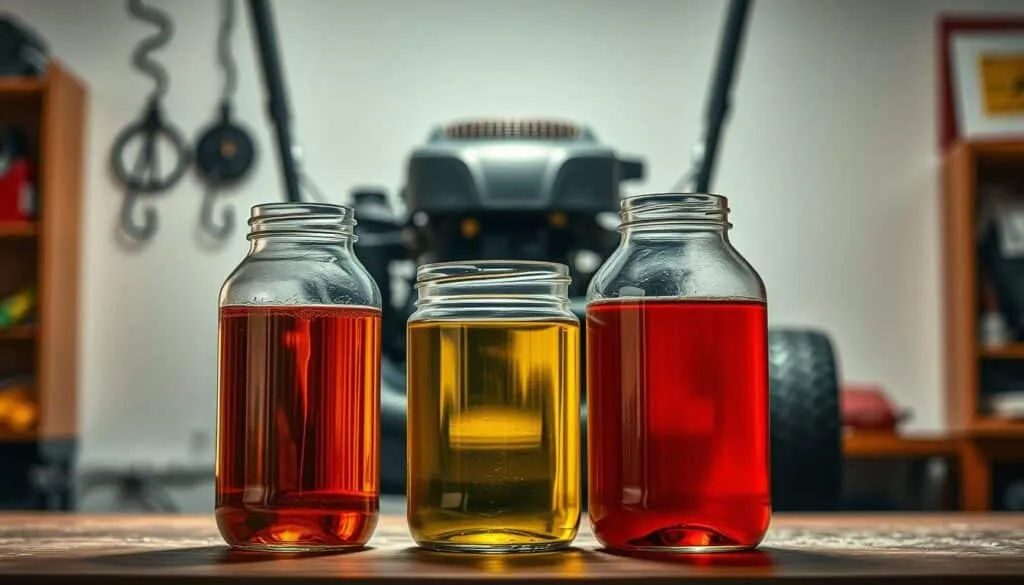
Comparison of Oil Grades: SAE 30, 10W30, and Synthetics
SAE 30 works best in warm conditions above 40°F. This single-grade lubricant maintains consistent thickness at operating temperatures.
Multi-grade 10W-30 offers versatility across seasonal changes. The “10W” indicates winter performance while “30” represents viscosity at normal engine temperatures.
Synthetic formulations like 5W-30 provide superior protection across all climate conditions. These advanced lubricants reduce consumption and improve cold-weather starting.
Understanding Oil Specifications Based on Engine Types
Different manufacturers specify unique requirements. Kawasaki engines typically need 20W50, while Kohler and Toro equipment often uses SAE 30 or 10W-30.
John Deere gas engines require 10W30, with diesel models needing 15W40. Larger displacement engines like Kohler’s 980 CC Big Blocks demand thicker 20W50 lubricants.
Always choose high-quality detergent oils classified “For Service SF, SG, SH, SJ” or higher. These formulations prevent sludge buildup without special additives.
Step-by-Step Guide to Changing Your Lawn Mower Oil
Following the correct procedure for replacing engine lubricant prevents costly repairs down the road. This maintenance task ensures your equipment runs smoothly throughout the mowing season. Proper preparation makes the process efficient and safe.
Preparation: Tools and Safety Measures
Gather all necessary parts before starting your oil change. You’ll need a drain pan, fresh lubricant, a new filter if applicable, and clean rags. Having the right tools saves time and prevents messes.
Safety comes first during this maintenance task. Always disconnect the spark plug wire to prevent accidental starting. Work on a level surface for accurate readings. Ensure the engine is warm but not hot for optimal drainage.
Detailed Process for Draining and Replacing Oil
Begin by locating the drain plug on your equipment’s underside. Position your drain pan beneath it and carefully remove the plug. Allow complete drainage, which may take several minutes.
Replace the filter while the old lubricant drains. Apply a thin layer of fresh oil to the new filter’s gasket. This ensures a proper seal when installing.
Reinstall the drain plug securely after drainage completes. Use a funnel to add the correct amount of fresh lubricant. Walk-behind models typically need 15-18 ounces, while riding equipment requires 48-64 ounces.
Check the fluid level using the dipstick after allowing time for settling. The reading should fall between the full and add marks. Manufacturer video instructions provide excellent visual guidance for first-time users.
Proper disposal is crucial for environmental protection. Never pour used lubricant down drains. Auto parts stores typically accept it for free recycling.
Maintenance Tips for Prolonging Engine Life
Establishing a regular maintenance calendar ensures your machine operates reliably season after season. Consistent care prevents unexpected breakdowns and extends your equipment’s operational lifespan significantly.

Scheduled Oil Changes and Recommended Intervals
Proper maintenance intervals vary by equipment type. Walk-behind models typically need fresh lubricant every 50 hours or annually. Riding equipment requires changes every 100 hours or once per year.
Always consult your service sticker under the hood for specific recommendations. Manufacturer guidelines account for your particular engine design and operating conditions.
Regularly checking oil levels between changes is crucial. Consumption occurs naturally during operation. Running low can cause excessive wear and permanent damage.
Performance monitoring provides valuable maintenance tips. Increased engine noise or reduced power often indicates immediate service needs. These symptoms signal it’s time for fresh lubricant.
Keep a maintenance log recording hours of operation and change dates. This helps you stay on schedule and provides documentation for warranty claims. Proper care protects your investment for years.
Additional Considerations for Different Mower Models
Your equipment’s engine specifications vary significantly between manufacturers. Each brand designs their engines with unique requirements that affect performance and longevity.
Following manufacturer guidelines ensures you maintain warranty coverage. Proper care protects your investment for years of reliable service.
Engine-Specific Recommendations
Briggs & Stratton engines need high-quality detergent oils rated SF, SG, SH, or higher. Choose viscosity based on your operating temperatures.
Kawasaki engines require 20W50 lubricant (part number 99969-6298). This thicker formulation addresses valve issues in older models.
Kohler engines perform best with SAE 30 oil (part number 99969-6281). This “yellow cap” formulation suits air-cooled engines in hot weather.
Toro equipment works well with SAE 30 or 10W30 depending on climate. Always use genuine Toro parts to avoid common issues.
Selecting the Best Oil Filters
Oil filters play a crucial role in maintaining engine oil cleanliness. While aftermarket options may seem economical, OEM filters provide superior performance.
| Filter Type | Fit & Sealing | Filtration Quality | Cost Consideration |
|---|---|---|---|
| OEM Filters | Perfect fit guaranteed | Manufacturer standards | Higher initial cost |
| Aftermarket Filters | Frequent leakage issues | Variable quality | Lower purchase price |
Kawasaki offers two filter sizes (part number 49065-0724) for different engine compartments. Kohler transitioned to black filters (12 050 01-S/52 050 02-S) with equal protection.
Always consult your owner’s manual for model-specific recommendations. Your engine label contains the model number for accurate parts selection.
Conclusion
Your investment in quality lawn care equipment deserves the protection that comes from using the correct lubricants. Selecting the proper formulation for your mower engine ensures optimal performance and prevents premature wear. Understanding how local climate and operating temperatures affect lubrication needs empowers you to make smart maintenance decisions.
Following manufacturer recommendations for mower oil selection and change intervals protects your equipment investment. Regular maintenance routines represent the most cost-effective strategy for avoiding expensive repairs. Video resources from manufacturers provide valuable guidance that makes maintenance accessible.
Taking time to understand your specific lawn mower requirements rewards you with years of trouble-free operation. Consistent cutting performance comes from proper lubrication practices. These simple tips ensure your equipment serves you well through every season.
FAQ
What kind of oil should I put in my lawn mower?
Most small engines perform best with a high-quality detergent oil classified as SJ or higher. Common grades are SAE 30 for warmer climates and 10W-30 for variable temperatures. Always check your owner’s manual for the manufacturer’s specific recommendations based on your engine model and local climate.
How often should I change the oil in my mower?
You should perform an oil change after the first five hours of operation on a new engine. After that, change it every 50 hours or at least once per mowing season. For heavy use or dusty conditions, more frequent changes are recommended to maintain optimal engine performance.
Can I use synthetic oil in my lawn mower engine?
A> Yes, synthetic oils are an excellent choice for many mowers. They offer superior protection against heat and wear, which can extend your engine’s life. Just ensure the synthetic oil meets the viscosity grade and service classification specified in your equipment’s manual.
What is the difference between SAE 30 and 10W-30 oil?
SAE 30 is a single-grade oil ideal for consistent, warm temperatures. 10W-30 is a multi-viscosity oil; the “10W” means it flows better in cold weather for easier starting, while the “30” provides protection once the engine is warm. This makes 10W-30 a versatile option for regions with seasonal temperature swings.
How do I check the oil level in my mower?
Ensure the engine is on a level surface and cool. Locate the dipstick, remove it, and wipe it clean. Reinsert it fully without screwing it in, then pull it out again to check the level. The oil should be between the “Full” and “Add” marks on the dipstick. Top it off if it’s low.
Are there specific oil recommendations for brands like Briggs & Stratton or Kohler?
While many brands have similar requirements, it’s always best to follow the guidelines in your specific owner’s manual. Briggs & Stratton, for example, often recommends using SAE 30 for temperatures above 40°F. Kawasaki and Kohler engines might have different specifications, so consulting your manual is the safest approach.
What tools do I need for an oil change?
You will typically need a drain pan, a funnel, a wrench or socket to remove the drain plug, and fresh oil. Some models require an oil filter wrench if they have a replaceable filter. Always have rags on hand for cleanup and wear gloves to protect your hands.