
Have you ever wondered why some lawn equipment lasts for decades while others fail after just a few seasons? The secret often lies in one simple but critical choice: the lubricant that protects your machine’s heart.
Your Craftsman equipment deserves the best care to deliver peak performance season after season. Selecting the correct lubricant is not just about following instructions—it’s about understanding how different formulations protect your engine under various conditions.
The right choice directly impacts how smoothly your machine starts, runs, and lasts. Proper lubrication prevents friction, reduces heat buildup, and protects vital components from premature wear. This protection becomes especially important during extreme weather conditions when your equipment works hardest.
This comprehensive guide walks you through everything needed to make informed decisions about your equipment care. You’ll learn how viscosity ratings, temperature ranges, and capacity requirements work together to keep your investment running strong.
Whether you maintain a walk-behind model or a riding machine, understanding these fundamentals helps prevent costly repairs. Proper care ensures compliance with warranty requirements and maximizes your equipment’s service life.
Key Takeaways
- Correct lubricant selection protects your engine from friction and heat damage
- Manufacturer recommendations consider your specific engine model and operating conditions
- Proper maintenance prevents costly repairs and extends equipment lifespan
- Seasonal temperature changes affect lubricant performance and protection levels
- Regular checks and changes maintain optimal engine performance
- Understanding viscosity ratings helps you choose the right product for your climate
- Following maintenance schedules ensures warranty compliance and investment protection
Introduction to Your Craftsman Lawn Mower Maintenance
Regular maintenance forms the foundation of reliable equipment performance season after season. Your investment deserves protection through consistent care routines that prevent premature wear.
Understanding the Role of Oil in Engine Longevity
Proper lubrication serves as your engine’s lifeblood. It creates a protective barrier between moving metal components.
This barrier prevents friction and reduces heat buildup during operation. Regular monitoring ensures adequate protection for internal parts.
| Oil Function | Benefit | Impact on Engine |
|---|---|---|
| Lubrication | Reduces friction | Extended component life |
| Cooling | Dissipates heat | Prevents overheating damage |
| Cleaning | Removes contaminants | Maintains optimal performance |
| Protection | Shields against wear | Reduces repair frequency |
Why Choosing the Right Oil Matters for Optimal Performance
Selecting appropriate lubricant affects starting reliability and fuel efficiency. Incorrect viscosity can lead to hard starting in cold conditions.
Your equipment’s service life depends on proper lubricant selection. Always check the dipstick before each use to maintain correct levels.
This simple habit ensures your machine receives adequate protection during operation. Consistent maintenance prevents costly repairs and extends equipment lifespan significantly.
Exploring Different Oil Types and Their Benefits
The viscosity rating on lubricant containers reveals critical performance characteristics. These numbers indicate how the fluid flows at different temperatures, directly affecting your machine’s operation.
Choosing the right formulation ensures proper lubrication across seasonal changes. Your selection should match both climate conditions and equipment usage patterns.
Comparing SAE 30, SAE 10W-30, and Synthetic Oil Options
SAE 30 works well in warmer conditions above 40°F. This single-grade option provides reliable protection during typical mowing seasons.
SAE 10W-30 handles a varying temperature range from 0°F to 100°F. It offers easier cold-weather starting but may increase consumption in heat.
Synthetic SAE 5W-30 delivers superior performance across all conditions. This advanced formulation provides excellent cold starting and reduced consumption.
| Oil Type | Temperature Range | Best For | Considerations |
|---|---|---|---|
| SAE 30 | Above 40°F | Warm season mowing | Hard starting in cold |
| SAE 10W-30 | 0°F to 100°F | Seasonal temperature changes | Increased consumption in heat |
| Synthetic 5W-30 | All temperatures | Year-round protection | Higher initial cost |
| Vanguard 15W-50 | Varying temperature range | Commercial use | Heavy-duty applications |
How Temperature Affects Oil Viscosity and Engine Performance
Cold temperatures thicken conventional oils, making starting difficult. Synthetic oils maintain better flow characteristics in freezing conditions.
High temperatures can thin some oils, reducing protection. Synthetic formulations offer better heat resistance for sustained operation.
The use of synthetic oil provides consistent performance across a varying temperature range. However, it doesn’t change your required maintenance intervals.
Step-by-Step Lawn Mower Oil Maintenance
Following a systematic approach to oil maintenance ensures your machine receives the protection it needs. Consistent routines prevent engine damage and maintain optimal performance throughout the season.
How to Check Your Oil Level Correctly
Begin by parking your equipment on level ground. This ensures an accurate reading when you check oil level. Remove the dipstick cap and wipe the blade clean with a lint-free rag.
Reinsert the dipstick fully, then remove it again to view the fluid level. The mark should fall between the full and add indicators. If low, add small amounts gradually to avoid overfilling.
Wait a few minutes for the lubricant to settle before rechecking. Regular monitoring helps maintain proper engine lubrication between scheduled changes.
Step-by-Step Instructions for an Oil Change
Different models have specific capacity requirements. Walk-behind units typically hold 15-18 ounces, while riding mowers need 48-64 ounces. Always consult your owner’s manual for exact specifications.
Change engine lubricant every 50 hours for walk-behind models or annually. Riding equipment requires fresh oil every 100 hours or yearly. These intervals remove contaminants and maintain protection.
Following proper change oil instructions extends your equipment’s lifespan. Fresh lubricant reduces friction and prevents premature wear on internal components. Your investment deserves this simple but crucial care.
What type of oil for a craftsman lawn mower: Making the Best Choice
Your final decision combines technical specifications with practical operating conditions for optimal protection. Consult your engine operator’s manual first for model-specific guidance.
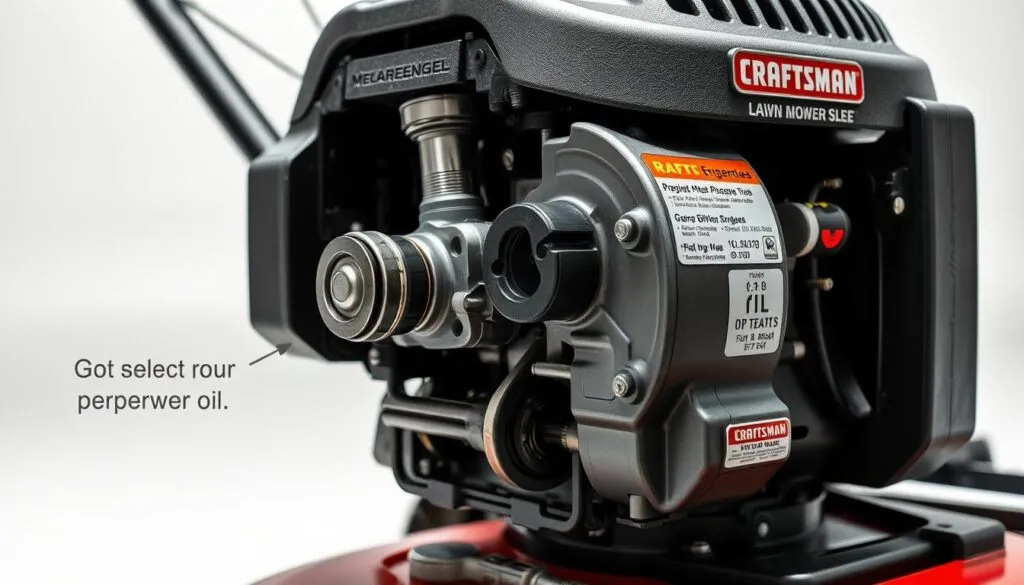
Most Craftsman equipment uses Briggs & Stratton engines. The manufacturer recommends their synthetic formulations for superior performance.
Reviewing Manufacturer and Engine Specifications
Select high-quality detergent oil classified “For Service SF, SG, SH, SJ” or higher. This ensures proper cleaning and protection for modern small engines.
Avoid special additives that could interfere with the lubricant’s chemistry. Using approved products maintains your Briggs & Stratton warranty coverage.
| Specification Factor | Recommendation | Warranty Impact |
|---|---|---|
| Service Classification | SF, SG, SH, SJ or higher | Required for compliance |
| Additive Usage | Avoid aftermarket products | Potential voidance |
| Brand Preference | Briggs & Stratton oils | Optimal protection |
| Quality Standard | High-quality detergent | Engine longevity |
Considering External Conditions and Engine Requirements
Use the Briggs & Stratton Oil Finder tool for personalized recommendations. Input your equipment type, engine name, and local temperature range.
Consider your engine’s cylinder configuration when determining capacity. Riding mowers with twin-cylinder engines need different amounts than single-cylinder models.
External factors like dust levels and usage frequency influence your ideal selection. Synthetic options provide superior protection across varying conditions.
Conclusion
Your investment in quality lubricant pays dividends through seasons of dependable service. Choosing the correct product for your equipment ensures optimal performance and extends its operational life significantly.
Regular maintenance forms the foundation of reliable operation. Checking levels before each use and following change intervals protects your engine from unnecessary wear. This simple routine prevents costly repairs down the line.
Whether you select conventional or synthetic formulations, consistency matters most. Your lawn care equipment deserves proper care to deliver peak performance when needed. Establish a regular schedule and stick to it for best results.
The knowledge you’ve gained empowers you to maintain your machine like a professional. Proper lubrication ensures easier starts, smoother operation, and better fuel efficiency. Your diligence today guarantees reliable service for years to come.
FAQ
What is the recommended oil for my Craftsman mower?
Most Craftsman mowers with Briggs & Stratton engines recommend using SAE 30 for warmer temperatures or SAE 10W-30 for a varying temperature range. Check your owner’s manual for the specific oil type and capacity for your model.
Can I use synthetic oil in my small engine?
Yes, you can use synthetic oil. Many modern engines benefit from its superior protection and performance, especially under extreme conditions. Always confirm that the product meets the required API service classification listed in your manual.
How do I check the oil level in my riding mower?
A> Ensure the engine is cool and on a level surface. Locate the dipstick, remove it, and wipe it clean. Reinsert it fully, then pull it out again to check the level. The oil should be between the “Full” and “Add” marks on the dipstick.
How often should I perform an oil change?
A good rule is to change the oil after the first five hours of use on a new mower, and then every 50 hours or at least once per mowing season. Always follow the maintenance schedule in your equipment’s manual for the best engine longevity.
Where can I find my engine’s model number?
The model number is typically stamped on a metal tag or sticker directly on the engine. Common locations include the blower housing, above the spark plug, or near the oil fill cap. This number is essential for using an oil finder tool or ordering parts.