

Have you ever wondered if that first cut could make or break your entire lawn renovation project? It’s a question that creates a real dilemma for many homeowners. You’ve invested time and effort into overseeding, and now you’re faced with a critical decision.
I understand the mix of anticipation and concern. You want a lush, thick lawn, but you’re also worried about harming those tender new shoots. The timing of that first mow is one of the most common concerns I encounter.
This guide will walk you through the delicate balance. I’ll share my insights on the crucial factors that determine the right moment. Mowing too soon can undo all your hard work, while waiting too long can leave your turf looking unkempt.
My goal is to provide practical advice based on proven lawn care practices. You’ll learn how to protect fragile seedlings while maintaining your yard’s overall appearance. By following these recommendations, you’ll set your grass up for long-term success.
Key Takeaways
- The first mow after overseeding is a critical step for lawn health.
- Proper timing protects delicate new grass seedlings from damage.
- Waiting too long to mow can negatively impact your lawn’s appearance.
- Several factors determine the ideal time for that initial cut.
- Correct mowing technique is just as important as timing.
- Following best practices ensures the success of your overseeding project.
- A balanced approach leads to a thicker, healthier lawn.
Understanding Overseeding: What It Is and Its Benefits
The secret to a thicker, healthier lawn often lies in a simple technique that complements your current grass. This approach revitalizes your yard without the disruption of complete renovation.
I find this method particularly effective for maintaining turf quality throughout the seasons. It’s a strategic way to enhance what nature has already started.
Defining Overseeding and Its Purpose
This practice involves spreading fresh seeds across established turf. The goal is to fill thin areas and introduce robust grass varieties.
My primary objective is always to improve lawn density and resilience. This process strengthens the entire yard ecosystem.
Improving Lawn Density and Weed Control
A thicker turf naturally suppresses weed growth by limiting sunlight and space. The new grass varieties I introduce often have better disease resistance.
This investment in lawn health pays long-term dividends. The results include reduced maintenance and improved appearance.
| Benefit Type | Short-Term Impact | Long-Term Advantage |
|---|---|---|
| Improved Density | Fills bare spots quickly | Creates durable, thick turf |
| Weed Suppression | Reduces weed visibility | Establishes natural barrier |
| Enhanced Resilience | Better stress tolerance | Reduces pest problems |
| Visual Appeal | Brighter green color | Consistent, uniform appearance |
The transformation in lawn quality becomes evident within weeks. Proper execution ensures lasting benefits for your outdoor space.
Preparing Your Lawn for Overseeding Success
I consider the preparation phase to be the most critical part of the entire lawn improvement process. A strong foundation is essential for nurturing new life.
My initial step involves a strategic cut. I lower my mower to trim the existing turf to a height of about 1.5 to 2 inches.
This shorter length is vital. It prevents mature grass from shading and overwhelming the delicate new seedlings struggling to emerge.
Next, I address the thatch layer. This mat of dead organic matter can block seeds from reaching the soil, hindering germination.
Essential Pre-Overseeding Steps
Clearing weeds is a non-negotiable task. It eliminates competition for resources, giving fresh grass the best start.
For compacted earth, core aeration is my go-to solution. It loosens the ground, allowing air, water, and nutrients to penetrate deeply.
I then apply a starter fertilizer and sometimes a light topdressing. This creates an optimal growing environment for rapid root development.
Finally, I spread seeds evenly and gently rake them in. This ensures good soil contact, which is crucial for successful sprouting.
| Preparation Step | Primary Action | Direct Benefit |
|---|---|---|
| Initial Mowing | Cut grass to 1.5-2 inches | Reduces light competition for seedlings |
| Thatch Removal | Dethatch the lawn surface | Ensures seed-to-soil contact |
| Weed Control | Eliminate existing weeds | Prevents resource competition |
| Soil Aeration | Loosen compacted ground | Improves water and nutrient uptake |
Each action contributes to a supportive bed for new growth. This careful groundwork makes the difference between a mediocre result and a thick, resilient lawn.
Understanding when mow after overseeding: Timing and Key Factors
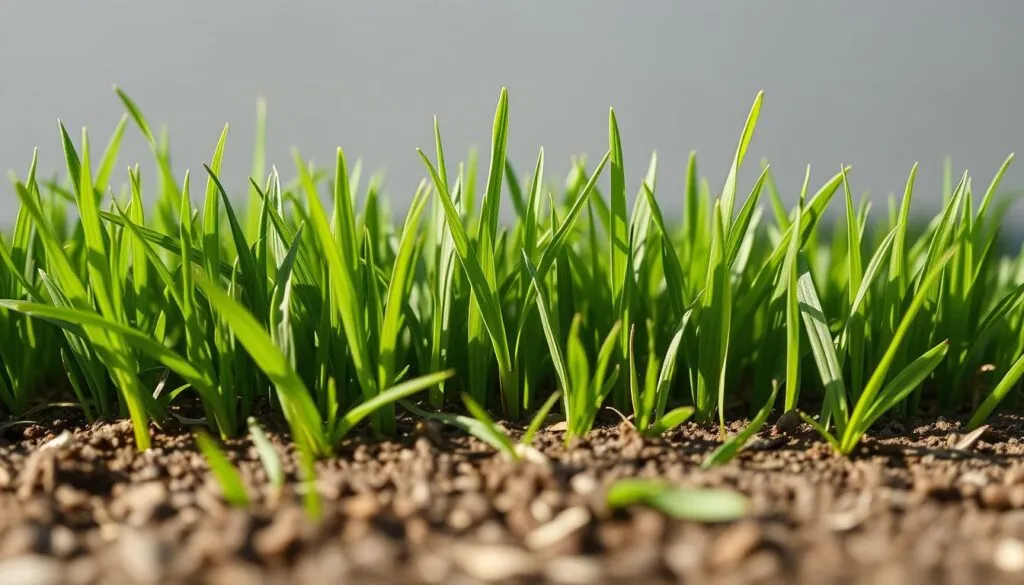
Determining the right moment for that initial trim is a judgment call based on careful observation. I rely on specific signs of health and establishment.
Patience during this period is my greatest tool. Rushing can undo all the progress made during the lawn renovation.
Growth Stages and the 3-Inch Rule
My primary guideline is the 3-inch rule. I wait for new blades to reach this height before even considering the lawn mower.
This specific measurement indicates strong root development below the surface. Seedlings need sufficient energy stored to recover from cutting.
Roots actually develop before shoots emerge. I’ve seen roots grow two to three inches deep before a blade appears above the soil.
Within two weeks, roots can reach an impressive six inches. This underground strength is what protects the grass during its first cut.
Weather, Soil Conditions, and Seed Types
Environmental factors greatly influence the timeline. Cool, mild weather with regular rain accelerates germination and growth.
Heat and drought slow everything down by drying out the earth. I monitor soil temperature and moisture constantly.
Different grass seeds have unique schedules. Ryegrass sprouts quickly, often ready in about two weeks.
Slow-growing varieties like Kentucky bluegrass need more time. They may require several weeks to reach the ideal mowing height.
The total waiting period typically falls between two and four weeks. This gives the turf time to anchor firmly and establish resilience.
Mowing Best Practices After Overseeding
Your mowing method can either strengthen or undermine the entire overseeding process. I approach this task with deliberate care, prioritizing protection over speed.
Each movement and setting contributes to the success of your lawn renovation. The right techniques ensure healthy establishment.
Proper Mower Settings and Blade Sharpening
I begin by sharpening my lawn mower blades before any cutting. Dull blades tear grass instead of slicing cleanly.
This tearing creates open wounds that invite disease. Sharp mower blades make precise cuts that heal quickly.
My deck height setting always starts at the highest position. This prevents cutting too much length from developing seedlings.
The one-third rule guides my cutting strategy. Removing more than this stresses both new and established turf.
Techniques to Protect New Grass Seedlings
I move deliberately during the initial mowing sessions. Slow, straight passes minimize disruption to fragile roots.
Complex patterns require excessive turning that can damage young plants. Simple back-and-forth movements work best.
I schedule cutting for cooler morning or evening hours. Freshly trimmed blades lose moisture rapidly in heat.
Wet conditions present additional risks. Moist grass clings to equipment, increasing pulling and tearing.
| Practice | Proper Technique | Risk of Improper Approach |
|---|---|---|
| Blade Maintenance | Sharp blades for clean cuts | Torn grass, disease entry points |
| Cutting Height | Highest setting, 1/3 rule | Stressed plants, root damage |
| Movement Pattern | Straight, slow passes | Uprooted seedlings, soil disruption |
| Timing Conditions | Cool, dry periods | Moisture loss, grass clinging |
These careful practices create the foundation for robust turf development. Your patience during these initial sessions pays long-term dividends.
Post-Mowing Lawn Care and Maintenance
The work continues even after that initial trim, with ongoing maintenance determining your lawn’s long-term health. Proper follow-up care ensures your investment in lawn renovation pays lasting dividends.
I maintain a careful balance between supporting new growth and protecting established turf. This phase requires consistent attention to detail.
Watering Protocols and Fertilization Timing
My watering strategy focuses on the top two inches of soil. I irrigate twice daily in short sessions until germination completes.
This approach keeps the earth moist without washing away seeds. Once seedlings appear, I gradually reduce frequency.
Fertilization timing is equally crucial. I wait about six weeks before applying nutrients to avoid stressing young plants.
Preventing Soil Compaction and Weed Growth
I keep foot traffic off the area for at least a month. This prevents soil compaction and protects fragile grass.
Weed control requires patience. I delay herbicides for two to three months to allow turf to establish strength.
When necessary, I use half-strength solutions after several mowing sessions. This careful approach supports healthy growth while preventing competition.
Additional Tips for Achieving a Vibrant, Weed-Free Lawn
Strategic movement across your lawn during establishment makes a significant difference in final results. I approach each cutting session with deliberate planning to protect developing turf.
My walking pattern and equipment handling directly impact seedling survival. Careful navigation prevents soil compaction and root disturbance.
Optimizing Mower Movements and Walking Patterns
I create straight, deliberate passes with my equipment rather than rushing. This method prevents ruts in soft earth and protects tender blades.
High-traffic zones receive special attention during initial sessions. Sometimes I skip sections that haven’t reached adequate height for cutting.
Varying my route each week encourages upright growth. This practice helps new grass develop stronger stems and deeper roots.
I allow five to seven days between sessions during establishment. This gives plants enough time to recover from cutting stress.
Wet conditions require complete avoidance of the yard. Moist soil compacts easily, and damp grass tears rather than cuts cleanly.
Mapping heavily seeded areas helps me minimize foot traffic. I adjust my path to avoid these vulnerable spots for several weeks.
Different sections of the yard often mature at varying rates. I spot-trim areas as they reach proper height rather than cutting uniformly.
The way I care for developing turf determines its long-term vitality. These careful practices lead to that thick, weed-resistant lawn I desire.
Conclusion
The journey from scattered seeds to a resilient lawn culminates in one decisive action. Proper timing protects your investment and ensures lasting turf health. I’ve found this final step makes the difference between adequate results and outstanding success.
Waiting for adequate growth and using correct techniques safeguards developing grass. Factors like weather conditions and seed variety influence the ideal schedule. My approach balances patience with necessary maintenance.
Following these guidelines leads to thick, vibrant turf that resists weeds naturally. The care you provide during establishment determines long-term lawn quality. These practices create sustainable beauty for seasons to come.
Your dedication to proper lawn care techniques rewards you with lasting results. The effort invested in understanding growth patterns pays continuous dividends. A healthy, dense lawn becomes your outdoor sanctuary.
FAQ
How long should I wait before cutting new grass after overseeding?
I wait until the fresh turf reaches about 3 to 4 inches in height. This usually takes 2 to 4 weeks. Giving the seedlings enough time ensures their root systems are strong enough to handle the stress from my lawn mower.
What is the ideal mowing height for the first cut on a newly overseeded lawn?
For the initial mow, I never remove more than the top third of the grass blade. I set my mower blades high, aiming to cut the lawn down to approximately 2.5 inches. This protects the young plants and encourages deeper root growth.
Why is sharpening my mower blades so important after seeding?
Dull blades tear and shred the tender grass instead of making a clean cut. This damage can stress the new seedlings, making them vulnerable to disease. I always sharpen my blades before that first crucial maintenance session.
How does watering my yard affect when I can mow?
Proper watering keeps the soil moist for germination, but the ground can be soft. I make sure the soil is firm enough to walk on without leaving deep footprints before I bring out the mower. This prevents soil compaction that can harm the new roots.
Can the type of grass seed I use change the mowing timeline?
Absolutely. Different seeds have different germination rates. For example, Kentucky bluegrass takes longer to establish than perennial ryegrass. I always check the seed bag’s instructions and adjust my care schedule, including the first mow, accordingly.
What is the best way to protect new seedlings during mowing?
I use a sharp blade and mow when the lawn is dry. I also vary my walking patterns each time to avoid repeatedly compacting the same soil areas. This careful technique minimizes damage to the fragile young plants.