
What if that bulky machine sitting in your garage could actually benefit your community or even put some cash back in your pocket?
I know the feeling. A non-working lawn mower takes up valuable space. It can be a real headache for homeowners upgrading their equipment.
Many people face this challenge. They are unsure about the right way to handle the situation. They want a method that is both convenient and environmentally responsible.
I have explored numerous paths for getting rid of this equipment. The good news is there are several practical disposal options available across the country.
This guide will walk you through my top recommendations. I will cover everything from preparing your equipment for removal to choosing the best solution for your specific case.
My goal is to help you make an informed decision. You can clear out your space, minimize environmental impact, and potentially save money.
I will provide actionable information on costs, safety, and local services. You can confidently navigate the process from start to finish.
Key Takeaways
- Several convenient and eco-friendly disposal methods exist for your used equipment.
- Proper preparation of your machine is a crucial first step for most options.
- Your specific situation, like a working versus broken mower, determines the best path.
- Some disposal choices can save you money or even provide a financial return.
- Understanding local regulations and services ensures a smooth, hassle-free process.
- Donation is a powerful option for functional equipment, benefiting your community.
- This guide provides a clear, step-by-step plan to tackle this common homeowner task.
Understanding the Importance of Proper Lawn Mower Disposal
Responsible handling of yard maintenance equipment at the end of its life cycle protects both people and the planet. Many homeowners don’t realize the significant consequences of improper handling.
Environmental Impact and Safety Considerations
Gas-powered machines contain hazardous materials that can seriously harm our ecosystem. Leaking fluids contaminate soil and groundwater, creating long-term environmental damage.
These units also present serious safety risks when stored improperly. Exposed blades and deteriorating parts can cause injuries to family members and pets.
An Overview of Available Disposal Methods
Several responsible pathways exist for handling unwanted yard equipment. Municipal recycling programs often accept these items during special collection events.
Scrap metal facilities may pay for the recyclable components in non-working machines. Professional junk removal services provide convenient pickup options for busy homeowners.
| Disposal Method | Environmental Benefit | Cost Consideration | Convenience Level |
|---|---|---|---|
| Municipal Recycling | High – Proper waste handling | Often free or low cost | Moderate – May require transport |
| Scrap Metal Yard | High – Material recovery | Potential payment received | Moderate – Transport required |
| Junk Removal Service | Medium – Professional disposal | Service fee applies | High – Pickup included |
| Donation Center | High – Reuse extends life | Free – Possible tax deduction | Moderate – Transport needed |
Choosing the right approach depends on your specific situation and local regulations. Each method offers different benefits for handling your equipment responsibly.
Preparing Your Old Lawn Mower for Disposal
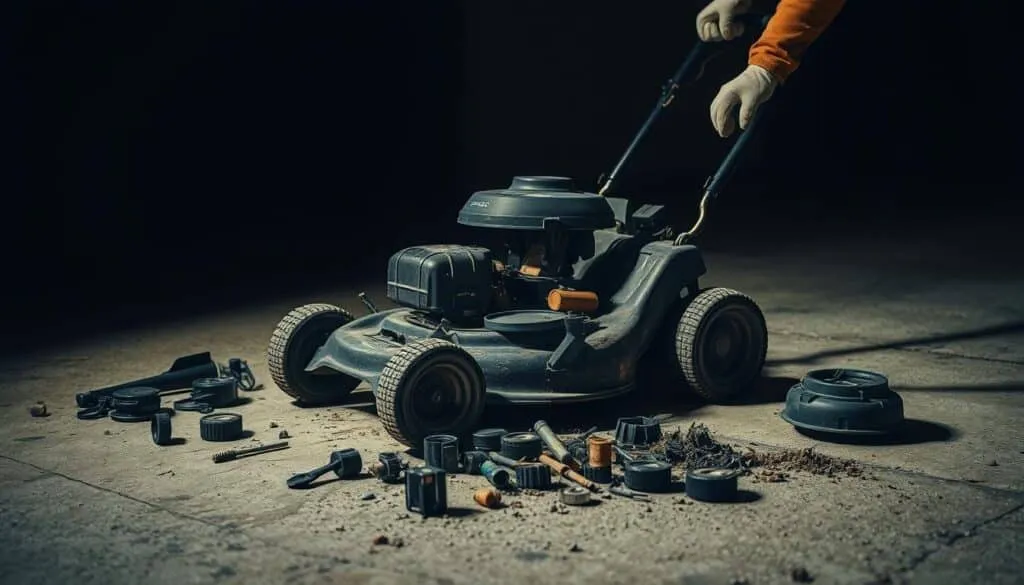
The journey toward responsible equipment handling starts with thorough preparation and safety measures. Properly getting your machine ready ensures a smooth transition and protects both people and the environment.
Safety Precautions and Hazardous Material Removal
I always begin by wearing heavy-duty gloves and safety glasses. Metal edges and plastic components can be surprisingly sharp after years of use.
The most critical step involves removing all hazardous materials. According to expert Jeffrey Tung from Tools Official, “First, you want to disconnect the spark plug and drain the oil and fuel so it’s safe to work with.” I carefully drain gasoline and engine lubricant into approved containers.
Step-by-Step Preparation Process
My systematic approach begins with checking local regulations. Different areas have specific rules for handling these materials.
Next, I thoroughly clean the equipment, removing grass clippings and debris. This prevents spreading lawn diseases and makes the machine more presentable.
I inspect for valuable components that might be salvaged. Batteries, filters, and other parts often require separate handling at specialized facilities.
| Preparation Step | Gas-Powered Mower | Electric/Battery Mower | Importance Level |
|---|---|---|---|
| Fluid Drainage | Essential – Remove fuel and oil | Not applicable | High |
| Battery Removal | If applicable | Critical – Separate handling | High |
| Spark Plug Disconnect | Safety priority | Not applicable | High |
| Cleaning | Recommended | Recommended | Medium |
| Part Inspection | Optional for salvage | Optional for salvage | Medium |
This preparation process significantly expands your disposal options. It can even turn removal costs into potential revenue through part sales.
Expert Tips on Where to Dispose of Old Lawn Mower
Your community likely offers several structured pathways for handling end-of-life yard maintenance machinery. I explore these local solutions to help you find the most convenient approach.
Local Recycling Centers and Municipal Services
Recycling centers present excellent opportunities for responsible equipment handling. These facilities accept metal, aluminum, and plastic components, often at minimal cost.
Municipal services provide scheduled pickup days for large items. This eliminates transportation needs by allowing curbside placement.
I always contact facilities beforehand to confirm acceptance policies. Requirements for fluid drainage and material separation vary significantly.
Online tools like Earth911’s locator help identify nearby options quickly. These resources provide fee information and specific guidelines.
| Service Type | Cost Range | Preparation Required | Best For |
|---|---|---|---|
| County Recycling Center | Free – $10 | Fluid drainage essential | Budget-conscious homeowners |
| Municipal Pickup | Free – $25 | Basic cleaning recommended | Convenience seekers |
| Professional Service | $109+ | Minimal preparation | Time-sensitive situations |
Seasonal drop-off events sometimes offer free disposal during community cleanups. Check local government announcements for these valuable opportunities.
Weighing costs against convenience helps determine your ideal solution. Free options work well when you have transportation available.
Exploring Eco-Friendly Options and Professional Services
Professional removal services transform the chore of equipment handling into a simple, scheduled task. I appreciate companies like LoadUp that manage the entire process from scheduling pickup to proper recycling at certified facilities.
Their contactless curbside option is perfect for busy homeowners. I simply place my equipment at the curb before the scheduled service time and save $5 while they handle the heavy lifting.
Utilizing Junk Removal and Curbside Pickup Services
These disposal services specialize in large items like lawn mowers. The fee typically ranges from $109-150 based on location and equipment size.
I maximize value by bundling multiple yard items together. This approach reduces per-item cost when the truck space minimum applies.
Benefits of Recycling and Donation Programs
Eco-friendly companies track their environmental impact through metrics like mower recycling rates and charitable donations. LoadUp has completed over 377,000 pickups while donating $44,000 to charity.
Donating functional equipment to organizations like Habitat for Humanity ReStore provides community benefits. Proper preparation ensures safe transportation and potential tax deductions.
These options represent responsible waste disposal that minimizes environmental harm. They save time while supporting sustainability goals.
Disposal Strategies for Both Functional and Non-Functional Mowers
Whether your machine still cuts grass efficiently or has reached the end of its useful life determines your best approach. I evaluate the equipment’s current state before choosing my removal method.
Selling, Donating, and Repurposing Options
For equipment in good working condition, I pursue a sale through online platforms. Facebook Marketplace and Craigslist connect me with local buyers seeking affordable lawn care tools.
Clear photos and honest descriptions help me get rid of functional equipment quickly. Spring garage sales attract buyers actively shopping for yard maintenance items.
Donation provides a rewarding alternative when I want to avoid the hassle of a sale. Local organizations appreciate receiving working equipment that supports their community programs.
Creative repurposing extends the life of specific parts. I’ve transformed engines for other projects and used wheels for garden carts.
Recycling Versus Scrapping: Key Differences
Recycling requires complete disassembly to separate materials properly. This sustainable approach demands significant time but maximizes environmental benefits.
Scrap metal facilities accept equipment with minimal preparation. They typically pay for the metal content based on weight and type.
| Method | Preparation Level | Environmental Impact | Potential Return |
|---|---|---|---|
| Comprehensive Recycling | High – Full disassembly | Maximum sustainability | None – Often has fees |
| Scrap yard Processing | Low – Basic preparation | Moderate recovery | $20-40 for metal content |
| Electric mower Recycling | Special handling required | Proper battery disposal | Typically no payment |
| Gas Equipment Scrapping | Fuel drainage essential | Metal recovery only | Payment for clean metal |
I choose recycling for complete material recovery when time allows. Scrap yards work better for quick removal with potential payment.
Conclusion
The process of parting ways with outdoor maintenance gear involves balancing convenience, cost, and environmental responsibility. I’ve found that evaluating your specific circumstances leads to the best choice among available options.
Proper preparation remains essential for any removal method. Draining fuel oil and following safety protocols ensures compliance with city regulations. This careful approach protects both people and the planet.
Whether through recycling metal components or arranging pickup services, each pathway offers distinct advantages. Taking time to explore these options can transform removal from an expense into an opportunity.
I encourage you to approach this task with confidence, knowing that responsible handling benefits your community and environment alike.
FAQ
What should I do with the fuel and oil in my lawn mower before disposal?
I always recommend safely draining all gasoline and engine oil first. These fluids are hazardous materials. Take them to a local auto parts store or a household hazardous waste facility for proper handling. Never pour them on the ground or down a drain.
Can I just put my old lawn equipment out with my regular trash?
In many areas, you cannot. Most municipal trash services have specific rules for large items. You often need to schedule a special bulk pickup. Always check with your city’s waste management department first to avoid a fine.
Where can I find a scrap metal yard or recycling center near me?
I usually start with a quick online search for “metal recycling near me” or “scrap yard.” Your city’s official website often has a directory of approved recycling centers that accept lawn care equipment and other metal items.
My mower still works. What are my best options?
If your equipment is in good condition, consider selling it online through platforms like Facebook Marketplace or Craigslist. You could also donate it to a local community garden, charity, or a neighbor in need. This gives the machine a second life.
What’s the difference between scrapping and recycling a mower?
Scrapping typically means taking it to a scrap yard for its raw metal value, often for cash. Recycling is a broader process where parts are properly broken down and reused. Many recycling centers focus on environmental benefits rather than payment.
Are there junk removal services that handle old lawn mowers?
Yes, professional services like 1-800-GOT-JUNK? specialize in removing bulky items, including lawn mowers. They handle the heavy lifting and ensure responsible disposal, often recycling the metal components. This is a convenient, though sometimes costly, option.