
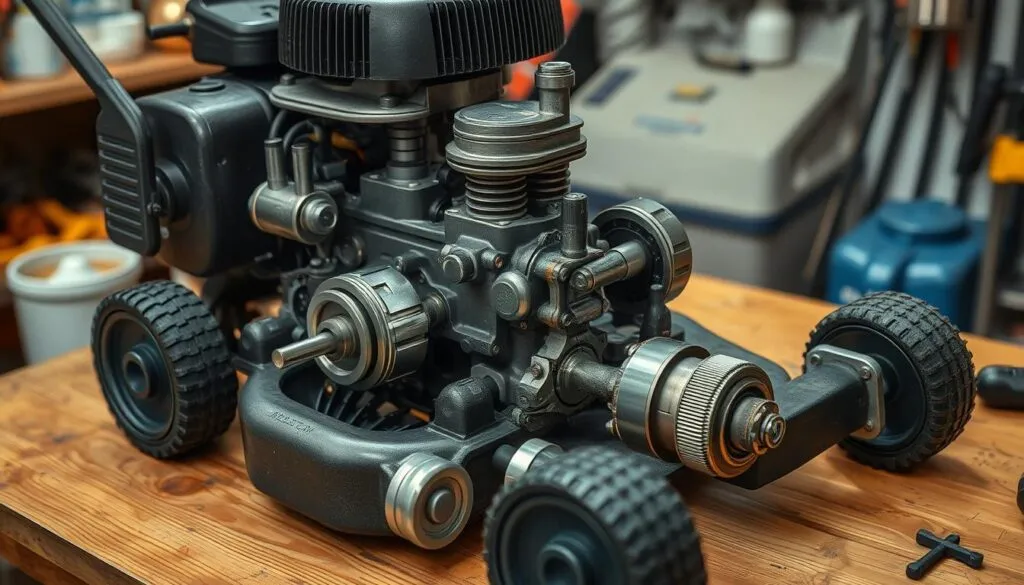
What if the secret to a longer-lasting, better-performing machine is already sitting on the auto parts store shelf? Many equipment owners wonder if premium lubricants are truly worth the investment for their yard work.
The answer is a clear yes. Modern engine designs are fully compatible with advanced formulations. This choice can significantly impact your equipment’s health.
Using the right oil is crucial for protecting your mower‘s internal parts. It reduces wear from friction and heat. This leads to smoother operation and a longer lifespan for your machine.
Proper lubrication is vital for any lawn equipment engine. It ensures reliable starts and consistent power. This guide provides the essential information you need to make an informed decision about which lubricant to use.
Key Takeaways
- Synthetic oil is a safe and effective option for most modern lawn mower engines.
- Using synthetic oil does not change your required maintenance schedule or break-in procedures.
- Major manufacturers like Briggs & Stratton approve specific synthetic grades for their engines.
- Benefits include superior protection in extreme temperatures and potentially reduced engine wear.
- The best oil choice depends on your climate, mower type, and manufacturer guidelines.
- Proper oil selection is critical for protecting your engine from friction and heat damage.
- Understanding oil specifications helps you make a smart maintenance decision for your equipment.
Understanding Lawn Mower Oil Basics
Understanding the fundamentals of lawn mower lubrication helps you make informed maintenance decisions. The right fluid protects your equipment from premature wear.
Why Engine Oil is Vital for Your Mower
Your equipment’s engine oil serves as a critical protective barrier. It creates a thin film between moving metal parts inside the engine.
This lubrication reduces friction and absorbs operational heat. Without proper lawn mower oil, components would grind together causing rapid damage.
Most modern mowers feature four-stroke engines that circulate oil from a dedicated reservoir. This system differs from two-stroke designs where oil mixes with fuel.
Overview of Conventional vs. Synthetic Oils
Conventional mineral oils offer basic protection for standard operating conditions. They have been the traditional choice for many lawn equipment owners.
Synthetic formulas provide enhanced performance through advanced manufacturing. Their uniform molecular structure delivers superior lubrication properties.
Both oil types can effectively protect your mower‘s engine when selected correctly. The choice depends on your specific equipment and operating requirements.
Why Choose Synthetic Oil for Your Lawn Mower?
Advanced formulations provide distinct benefits that make them worth considering for your outdoor power equipment. These premium lubricants deliver enhanced performance across various operating conditions.
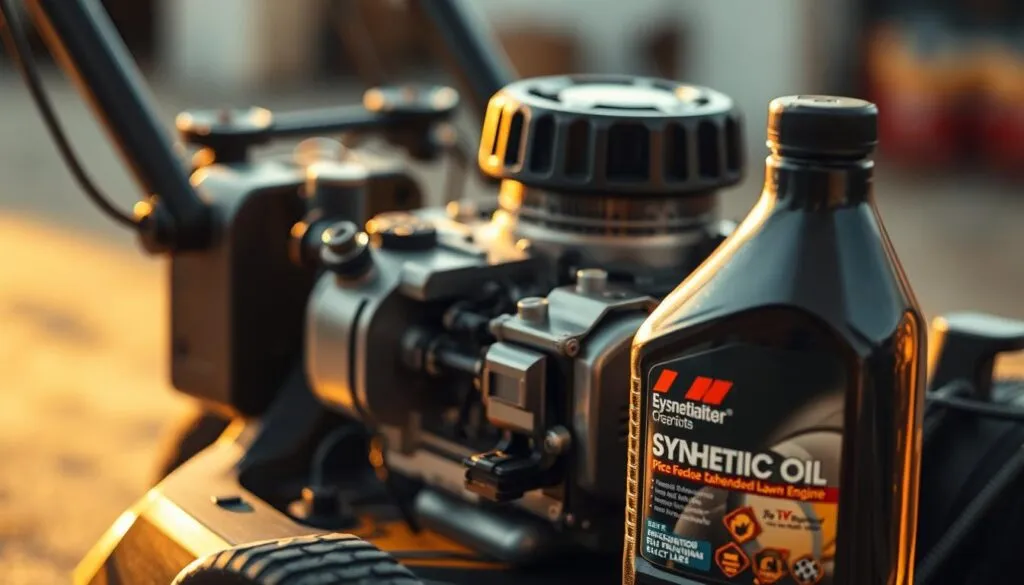
Benefits of a Synthetic Formula
Synthetic lubricants maintain consistent viscosity in extreme weather. They flow easily during cold starts, providing immediate protection to your engine components.
These oils resist thermal breakdown at high temperatures. Your mower receives stable lubrication during extended operation in summer heat.
| Feature | Synthetic Oil | Conventional Oil |
|---|---|---|
| Cold Weather Flow | Excellent | Good |
| High Temperature Stability | Superior | Standard |
| Oil Consumption | Reduced | Normal |
| Engine Cleanliness | Enhanced | Basic |
Comparative Advantages Over Conventional Oil
The uniform molecular structure of synthetic formulas creates a more durable lubricating film. This resists breakdown from engine contaminants and stress.
You’ll notice reduced oil consumption between changes. This saves maintenance time and provides better value for your equipment investment.
Many manufacturers now approve specific synthetic grades for their engines. Briggs & Stratton recommends formulations like SAE 5W-30 for comprehensive temperature coverage.
Essential Oil Specifications and Guidelines
Proper oil selection hinges on understanding viscosity ratings and temperature compatibility. The numbers on oil containers provide crucial information about performance characteristics.
These specifications ensure your equipment receives optimal protection. Matching the right formulation to your climate prevents potential damage.
SAE Ratings and Temperature Ranges
SAE ratings indicate oil viscosity at different temperatures. The number before the “W” shows cold-weather flow properties.
Lower numbers like 5W or 10W mean better cold-start performance. Higher numbers after the W indicate viscosity at operating temperature.
Single-grade oils like SAE 30 work best in consistently warm conditions above 40°F. Multi-grade formulations like SAE 10W-30 offer versatility across varying temperature ranges.
Synthetic SAE 5W-30 provides the broadest protection from -22°F to 104°F. This makes it ideal for year-round use in changing climates.
Engine Type and Manufacturer Recommendations
Always consult your equipment’s manual for specific requirements. Different engine designs may need particular oil types.
Look for API service classifications like SG, SH, or higher. These indicate quality levels suitable for small engines.
Using oil outside recommended temperature ranges can cause hard starting. It may also lead to increased consumption or inadequate protection.
Follow manufacturer guidelines for optimal performance and longevity. Proper specification matching ensures reliable operation season after season.
How to Check and Maintain Your Mower’s Oil Level
Proper oil level monitoring prevents costly engine repairs and extends your machine’s lifespan. Regular maintenance ensures optimal performance during every cutting session.
Step-by-Step Oil Level Inspection
Always position your mower on flat ground before checking. Tilted surfaces give false readings that lead to incorrect oil levels.
Remove the dipstick and wipe it clean with a rag. Reinsert it fully, then pull it out to read the actual oil level. The mark should sit between the full and add indicators.
Add small amounts if the level appears low. Wait a few minutes for oil to settle before rechecking. This prevents overfilling that can damage your engine.
Proper Maintenance and Change Intervals
Fresh oil has a clear amber color. Dark oil indicates contamination from engine wear. This signals the need for an oil change.
Walk-behind models require fresh oil every 50 hours or annually. Riding mowers need changes every 100 hours. New machines benefit from more frequent initial maintenance.
Clean around the fill cap before opening. This prevents dirt from entering the engine. Always check oil before starting your lawn equipment.
can i use synthetic oil in my lawn mower
Modern engine technology has evolved to fully accommodate advanced lubricant formulations for optimal performance. Major manufacturers like Briggs & Stratton now explicitly approve synthetic grades for their equipment.

Engine Protection and Efficiency
Premium lubricants deliver superior engine protection across extreme temperature ranges. Their advanced formulation maintains stable viscosity from cold morning starts to hot afternoon sessions.
These specialized oils reduce internal friction significantly. This translates to smoother operation and potentially improved fuel economy for your equipment.
| Characteristic | Synthetic Formulation | Conventional Option |
|---|---|---|
| Cold Start Performance | Excellent flow below freezing | Moderate flow in cold conditions |
| High Temperature Stability | Maintains protection above 100°F | May thin out at extreme heat |
| Engine Cleanliness | Resists sludge formation effectively | Standard deposit control |
| Longevity Between Changes | Reduced consumption rate | Normal consumption pattern |
Addressing Common Concerns
Using advanced lubricants does not alter your required maintenance schedule. You still need to change fluid every 50 hours for walk-behind models.
Break-in procedures remain identical regardless of lubricant choice. High-quality detergent oils ensure compliance with all warranty requirements.
Always consult your specific equipment manual for manufacturer recommendations. Proper selection guarantees optimal performance and longevity.
Oil Change Best Practices for Optimal Performance
Regular oil changes form the foundation of reliable lawn equipment performance. Proper service intervals protect your investment and maintain cutting efficiency throughout the season.
Following manufacturer guidelines ensures your machine receives optimal care. This maintenance prevents premature wear and costly repairs.
Pre-Change Preparations and Equipment
Gather your supplies before starting the service procedure. You need a drain pan, fresh lubricant, funnel, rags, and appropriate tools.
Consult your operator’s manual for specific capacity requirements. Walk-behind models typically hold 15-18 ounces, while riding units need 48-64 ounces.
Choose the correct viscosity grade for your climate and equipment. Multi-grade formulas like 10W-30 offer broad temperature range protection.
Guidelines for Correct Oil Quantity and Dispensing
Position your equipment on level ground before draining. Place the collection pan beneath the drain plug and remove it completely.
Allow the fluid to drain fully before replacing the plug. Add new lubricant slowly through the fill opening using a funnel.
Check the level frequently with the dipstick during filling. Never exceed the maximum mark to avoid overfill complications.
New machines may require more frequent initial changes. Service within the first 5-10 hours removes break-in debris effectively.
Dispose of used fluid responsibly at recycling centers. Proper handling protects the environment and complies with local regulations.
Conclusion
The investment you make in quality lubricants pays dividends through extended equipment service life. Your lawn mower deserves the right oil selection based on operating conditions and manufacturer guidance.
Consider your local climate’s temperature ranges and how frequently you use your equipment. Advanced oils offer superior protection across various conditions for different engine types found in modern mowers.
Regular maintenance remains essential regardless of your lawn mower oil choice. Check the fluid level with your dipstick before each operation. Follow recommended change intervals for optimal engine protection.
This information empowers you to make confident decisions about your lawn equipment care. Proper mower oil selection and maintenance ensure reliable performance season after season.
FAQ
Is synthetic oil safe for my lawn mower’s engine?
Yes, modern synthetic oils are generally safe and provide excellent protection for your mower’s engine. They offer superior performance in extreme temperature ranges and better resistance to breakdown compared to conventional grades.
What are the main benefits of using a synthetic formula?
The primary advantages include enhanced lubrication, reduced engine wear, and improved startup in cold weather. Synthetic oils also maintain their viscosity longer, which can extend the time between service intervals.
How do I know which oil type and viscosity to use?
Always consult your owner’s manual for the manufacturer’s specific recommendation. Common grades include SAE 10W-30 for variable temperatures or SAE 30 for consistent warm weather. Using the right oil is crucial for engine longevity.
Does using synthetic oil allow for longer change intervals?
A> While synthetic oil offers better durability, you should still adhere to the service schedule recommended for your model, typically based on operating hours. Sticking to prescribed maintenance ensures optimal performance and protection.
What is the correct way to check the oil level?
Ensure the engine is cool and on a level surface. Remove the dipstick, wipe it clean, reinsert it fully, and then remove it again to check the level. The oil should be between the high and low marks on the dipstick.
Can I switch from conventional to synthetic oil?
Absolutely. You can make the switch at your next scheduled maintenance. There is no need for a special flushing procedure. Just drain the old oil completely and refill with the new synthetic formula to the proper capacity.