
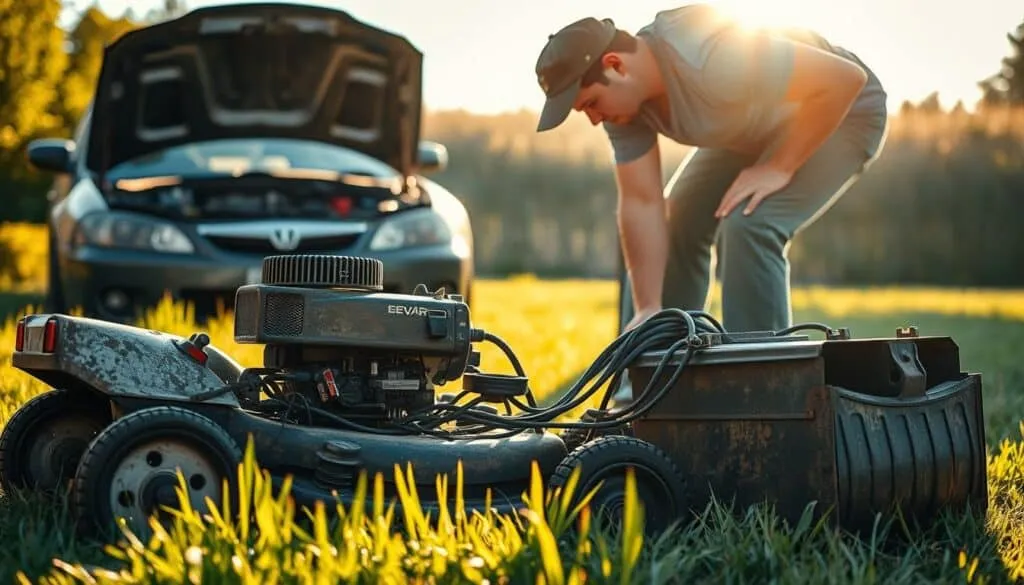
That frustrating moment arrives. You’re ready to tackle the overgrown grass, but your trusty machine refuses to start. The culprit is often a powerless battery. Before you consider an expensive replacement, a surprising solution might be sitting in your driveway.
Many modern outdoor power equipment units utilize a 12-volt electrical system. This is the same voltage standard found in most automobiles. This compatibility opens up a practical emergency option for homeowners.
However, connecting these two systems requires careful attention. Proper technique and critical safety measures are non-negotiable. A simple mistake could lead to equipment damage or personal harm.
This guide will walk you through the entire process. You will learn about voltage checks, secure connection methods, and step-by-step instructions. Understanding these details ensures you can attempt this fix with confidence.
Key Takeaways
- Many riding mowers and some push mowers share a 12V battery system with cars, making jump-starting a feasible option.
- Voltage compatibility is the most critical factor to check before attempting any connection.
- Following a precise, safe procedure is essential to prevent damage to the mower’s electrical system.
- This method is intended as a temporary solution for a dead battery, not a fix for underlying charging issues.
- Repeated battery failures often indicate that a replacement is necessary for reliable operation.
- Safety precautions, like wearing protective gear and ensuring a stable connection, are paramount.
Understanding Battery Types and Voltage Compatibility
The foundation of any successful jump-start begins with understanding battery specifications. Both automotive and outdoor power equipment rely on similar electrical principles but feature important distinctions.
Differences Between Car and Lawn Mower Batteries
Automotive batteries typically deliver 12.6V to 12.9V when fully charged. These power sources possess larger capacities and higher cold cranking amps designed for vehicle engines.
Lawn equipment requires significantly less starting power. Most modern mower batteries need between 145 to 300 CCA. The physical size difference reflects this power variance.
Two main battery types exist for both applications. Wet cell varieties contain liquid electrolytes requiring periodic maintenance. Sealed maintenance-free options offer convenience without regular checking.
Importance of Voltage Matching
Voltage compatibility represents the most critical safety consideration. Most contemporary lawn equipment operates on 12V systems matching automotive standards.
However, significant voltage differences create hazards. Mower electrical systems generally tolerate up to 13V safely. Exceeding this threshold risks permanent damage.
Special caution applies to older equipment. Models manufactured before 1980 may use 6V batteries. Connecting these to 12V automotive power causes overheating and irreversible harm.
Always verify your specific battery rating before proceeding. The sticker on each unit clearly displays this essential voltage information.
Essential Safety Precautions for Jump-Starting
Safety measures take precedence over all other considerations when bridging power between automotive and lawn equipment systems. Implementing comprehensive protective protocols minimizes risks associated with electrical connections.

Personal Safety Gear and Protective Measures
Proper eye protection represents the first line of defense. Quality safety goggles shield against potential sparks and battery acid splashes.
Your hands require substantial insulation during this procedure. Rubber-coated or leather work gloves provide essential protection against electrical shock and heat exposure.
Remove all metal jewelry before beginning. Rings, watches, and bracelets could accidentally contact battery terminals causing dangerous short circuits.
| Safety Item | Protection Provided | Importance Level |
|---|---|---|
| Safety Goggles | Eye protection from sparks/acid | Critical |
| Rubber Gloves | Electrical insulation | Essential |
| Long Sleeves/Pants | Skin protection | Recommended |
| Closed-toe Shoes | Foot safety | Required |
Environmental Safety and Workspace Preparation
Clear the immediate area of all flammable materials. Dry grass, cloth, or gasoline containers pose significant fire hazards during electrical work.
Ensure adequate ventilation surrounds your workspace. Battery charging emits potentially harmful fumes that require proper air circulation.
Lead-acid batteries contain highly corrosive liquids that demand respectful handling at all times.
Keep all metal tools away from battery terminals throughout the process. This simple precaution prevents accidental short circuits that could cause equipment damage.
Preparing Your Mower and Car for the Jump-Start
The initial setup phase requires careful attention to positioning and component inspection. Proper workspace preparation prevents accidents and ensures efficient power transfer between the two vehicles.
Inspection and Cleaning of Battery Terminals
Begin by moving the outdoor equipment onto a hard, level surface like a driveway. Position your automobile nearby so jumper cables reach comfortably between both power sources.
Locate the mower’s energy storage unit first. Riding models typically house this component under the seat or front hood. Push mowers keep their power cells near the handles or engine compartment.
Examine the battery terminals for white or green corrosive buildup. Clean affected areas using a wire brush and baking soda solution. This ensures optimal electrical connection during the procedure.
Check the entire battery for physical damage indicators. Cracks, swelling, or acid leaks suggest replacement is necessary rather than attempting a temporary fix.
Ensuring Engine Shutdown and Vehicle Stability
Completely shut down both engines before beginning any work. Engage the parking brake on your automobile to prevent accidental movement.
Allow adequate cooling time if the car engine was recently running. Working with hot components poses serious burn risks. Thirty minutes typically provides sufficient cooling.
Verify that the mower’s blade control lever is disengaged. This safety step prevents unexpected activation during the power transfer process.
Proper terminal cleaning often makes the difference between successful power transfer and continued starting problems.
These preparatory steps create the foundation for safe and effective battery assistance. Thorough inspection minimizes risks of equipment damage.
Can you jump a lawn mower with a car
Mastering the correct sequence for connecting jumper cables represents the most critical step in this emergency procedure. Voltage compatibility establishes the foundation, but precise cable attachment ensures safe power transfer between systems.
The definitive answer depends entirely on executing proper connection methodology. Following the exact sequence transforms a potential hazard into successful emergency starting.
Proper Cable Connection Sequence
Begin with the red jumper cable attached to the positive terminal of the outdoor equipment’s battery. This connection point is clearly marked with a “+” symbol. Secure the clamp firmly to ensure optimal contact.
Next, connect the opposite end of the red cable to the positive terminal of the automotive battery. This completes the positive circuit between both power sources.
For the black cable, attach one clamp to the negative terminal of the vehicle battery first. The final connection goes to an unpainted metal surface on the equipment frame.
| Connection Step | Cable Color | Attachment Point | Safety Importance |
|---|---|---|---|
| 1 | Red | Mower positive terminal | Establishes primary circuit |
| 2 | Red | Car positive terminal | Completes positive path |
| 3 | Black | Car negative terminal | Provides power source ground |
| 4 | Black | Mower metal frame | Prevents spark hazards |
Grounding the final black cable connection to unpainted metal significantly reduces explosion risks. Appropriate grounding locations include engine block bolts or frame components away from fuel systems.
Keep all cable clamps separated during the process. Accidental contact between clamps can cause dangerous sparks and permanent equipment damage.
Step-by-Step Guide to Jump-Starting a Lawn Mower
With cables properly connected, the actual starting procedure requires careful timing and observation. This phase determines whether your emergency power transfer succeeds or reveals underlying issues.
Connecting Jumper Cables Correctly
Begin by turning the ignition key in your automobile while keeping the outdoor equipment switched off. This allows electrical current to flow into the depleted power cell without overloading it.
Leave the vehicle running as you approach the machinery. Exercise caution to avoid disturbing the connected cables during movement. The charging process needs several minutes to build sufficient energy.
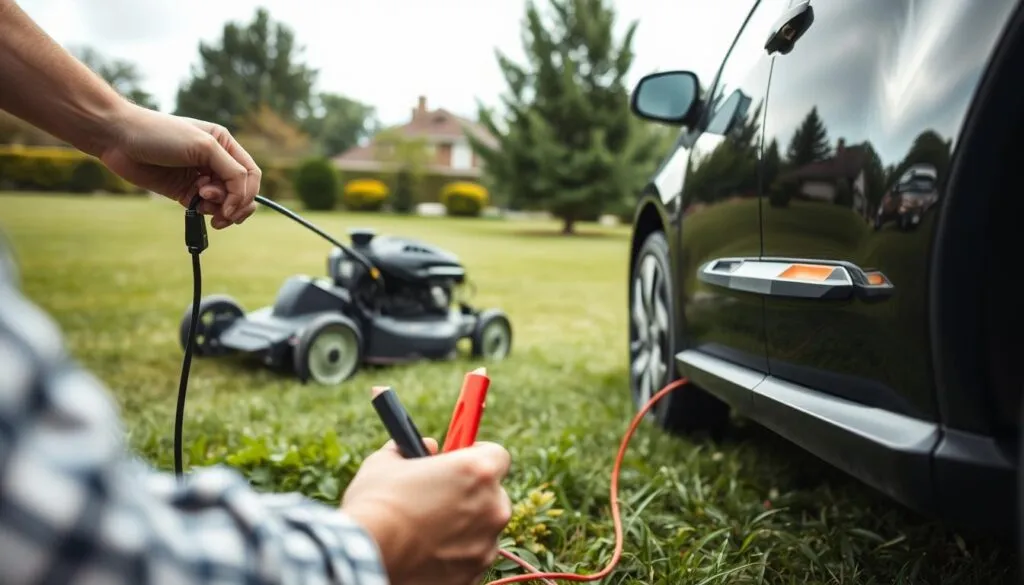
Initiating the Jump-Start Process Safely
After approximately five minutes, attempt to start the engine. Turn the ignition switch and listen for the characteristic rumble indicating successful activation. A full charge typically requires thirty minutes.
If the initial attempt fails, wait briefly before trying again. Minor sparking during startup is normal and harmless. However, continuous excessive sparks demand immediate shutdown of both engines.
Maintain distance from the battery during starting procedures. If unsuccessful, verify cable attachments and fuel supply before additional attempts. This systematic approach ensures safe power restoration.
Post Jump-Start Procedures and Battery Maintenance
With the engine now running, systematic cable removal and proper charging procedures maintain the restored electrical system. These final steps ensure long-term reliability after emergency assistance.
Safe Disconnection of Cables
Cable removal follows the exact reverse sequence of connection. Begin by detaching the black clamp from the equipment frame. Next, remove the black cable from the automotive power source.
The red cable comes off the outdoor equipment battery third. Finally, disconnect the red clamp from the vehicle terminal. Keep both engines running during this process to maintain charging.
Avoid letting clamps touch during removal. This prevents dangerous sparking incidents. Verify each connection point before proceeding to the next step.
Charging and Maintaining the Mower Battery
Operate the equipment for at least thirty minutes after disconnection. This allows the alternator to restore adequate charge to the battery. Extended operation prevents immediate power loss.
Use a dedicated charger set at six amps for optimal results. Smart chargers around two amps also work effectively. Full charging typically requires three to ten hours.
Regular maintenance includes voltage checks with a multimeter. Clean terminals using baking soda solution to prevent corrosion. Proper storage during off-season extends battery life significantly.
Alternative Methods: Battery Chargers and Portable Jump Starters
Alternative power solutions offer reliable starting assistance without requiring a second vehicle. These methods provide safer, more convenient options for restoring your equipment’s electrical system.
Using a Battery Charger Effectively
Trickle chargers maintain charge during storage periods, preventing battery discharge. Select a 10-amp charger matching your equipment’s voltage requirements.
Modern chargers feature automatic shut-off protection against overcharging. Connect the red clamp to the positive terminal and black to negative. A one-hour minimum charging period typically restores sufficient power.
| Method | Best For | Charging Time | Safety Features |
|---|---|---|---|
| Trickle Charger | Seasonal maintenance | 3-10 hours | Auto shut-off |
| Smart Charger | Regular use | 1-3 hours | Voltage monitoring |
| 10-Amp Charger | Quick recovery | 1-2 hours | Overload protection |
Benefits of Portable Jump Starters in Emergencies
Portable units provide completely independent power sources for emergency situations. These compact devices eliminate cable connections between vehicles.
Ensure your jump starter contains adequate power capacity before reliance. Fully charged units deliver instant starting capability in remote locations.
These alternatives simplify lawn care by providing reliable power without complex procedures. They represent superior safety compared to traditional jump-starting methods.
Conclusion
Successfully reviving a powerless lawn mower requires careful attention to detail and a commitment to safety. This guide has demonstrated that the procedure is a viable emergency solution when executed correctly.
The most critical factors are verifying voltage compatibility and wearing appropriate protective gear. Following the precise connection sequence—positive clamps first, with proper grounding to a metal frame—is non-negotiable for preventing damage.
Remember that this method provides a temporary fix. Implementing regular battery maintenance, like cleaning terminals and checking voltage, is the best strategy for long-term reliability. For greater convenience, consider dedicated battery chargers or portable jump starters.
Proper preparation ensures the entire process is both safer and more effective. You now possess the knowledge to handle this situation with confidence, understanding when professional service or a new battery might be the wiser choice.
FAQ
Is it safe to use my car to jump a lawn mower battery?
Yes, it is generally safe if you follow strict safety precautions. The key is ensuring the car engine is off before connecting the jumper cables. This prevents a damaging voltage surge to the mower’s electrical system. Always wear safety glasses and gloves for protection.
What is the correct order for connecting the jumper cables?
The proper sequence is critical. First, connect the red cable clamp to the positive terminal on the mower battery. Then, attach the other red clamp to the positive terminal car battery. Next, connect the black cable to the car battery’s negative terminal. Finally, attach the last black clamp to an unpainted metal frame on the mower, away from the battery.
Can using jumper cables incorrectly damage my equipment?
Absolutely. Reversing the cable connections is the most common cause of damage. Connecting positive to negative can short-circuit the system, potentially ruining the mower battery and the car’s alternator. Always double-check each connection before proceeding.
Why shouldn’t I connect the final black cable directly to the mower battery?
Attaching the negative cable to the mower’s battery terminal can cause a spark near the battery, which might ignite hydrogen gas emitted from the battery. Connecting it to the mower’s metal frame provides a safer ground, minimizing this risk.
What should I do after the lawn mower engine starts?
Once the mower is running, disconnect the cables in reverse order. Start by removing the black clamp from the mower frame, then from the car battery. Next, disconnect the red cable from the car battery, and finally from the mower battery. Allow the mower to run to help recharge its battery.
Are there better alternatives to using a car for a jump-start?
For safety and convenience, a dedicated battery charger or a portable jump starter is often a superior choice. These devices are designed for small engine batteries and eliminate the risk of voltage mismatch. A trickle charger is excellent for regular battery maintenance.