

Have you ever wondered why some lawn mower batteries seem to give out after just a season or two, while others keep going strong for years? The answer isn’t as simple as you might think.
Your mower battery is the heart of your lawn care equipment. Its performance directly impacts your ability to maintain a beautiful lawn. Understanding its expected lifespan is crucial for planning and avoiding mid-season breakdowns.
This guide dives deep into the factors that determine the durability of your power source. You will learn that the type of battery, how you use your machine, and your maintenance habits all play a significant role.
Whether you operate a riding mower or a push model, this information helps you maximize your investment. You can budget for replacements and keep your yard looking its best without unexpected interruptions.
Key Takeaways
- Battery longevity varies greatly and is not a fixed number.
- Usage patterns and maintenance are critical to performance.
- Knowing the expected lifespan helps with financial planning.
- Proactive care can significantly extend your battery’s life.
- Recognizing early signs of failure prevents mowing day frustrations.
- This guide applies to all types of modern mowers.
Overview of Lawn Mower Battery Life
A dependable lawn mower battery is the cornerstone of consistent lawn maintenance. Knowing what to expect from your power source helps you plan effectively and avoid disruptions.
Why Battery Lifespan Matters for Your Mower
Your battery’s durability directly affects your equipment’s reliability. Unexpected failure during peak season leaves your yard unfinished. This creates frustration and can harm your lawn’s health.
The financial impact is significant too. Understanding replacement timing helps you budget wisely. You avoid emergency purchases at premium prices when power suddenly fails.
Average Lifespan Across Different Battery Types
Most lawn mower batteries provide about three years of service with regular use. With ideal conditions and careful maintenance, this can extend to five years.
Battery life is measured in charge cycles, not just calendar time. Each complete discharge and recharge counts as one cycle. Most units are rated for approximately 500 cycles.
Your mowing frequency and local climate greatly influence cycle consumption. Homeowners in warm regions with year-round growth use cycles faster. Those in four-season areas often see longer service from their batteries.
Proper winter storage helps seasonal lawn mowers exceed the three-year average. Year-round use typically means replacement closer to that mark. Understanding these basics helps you recognize normal performance versus premature decline.
How Long Does a Mower Battery Last
Chemical composition plays the biggest role in determining your cutting equipment’s power duration. Electric mower batteries typically provide three to five years of service with proper care. Your maintenance habits significantly influence whether you reach the upper end of this range.
Understanding Performance and Charge Cycles
Battery longevity is measured in charge cycles rather than calendar time. Each complete discharge and recharge counts as one cycle. Lithium-ion units can handle up to 3,000 cycles when maintained at 80% depth of discharge.
Keeping your power cell between 20% and 80% charge reduces stress on its components. This practice extends the overall service period dramatically. Avoid frequent full discharges to maximize cycle count.
| Battery Type | Average Lifespan | Charge Cycles | Maintenance Demand |
|---|---|---|---|
| Lead-Acid | 2-3 years | 200-300 | High |
| Lithium-Ion | 5-10 years | 2,000-3,000 | Low |
Insights from Real-World Mowing Conditions
After four years of use, a well-maintained power source should retain about 75% of its original capacity. Your actual experience depends on lawn size, mowing frequency, and storage practices.
Lead-acid varieties may fail within one season without proper care. Lithium options often outlast them by four to six times. Seasonal storage conditions greatly impact performance consistency.
Factors Influencing Your Battery’s Lifespan
Several key elements work together to determine how many seasons of reliable service your equipment will provide. These factors interact in complex ways that affect overall battery performance.
Impact of Temperature and Storage Conditions
Extreme temperatures rank among the most damaging factors for power cell health. Both scorching heat and freezing cold accelerate internal chemical degradation.
Ideal storage conditions maintain temperatures between 40°F and 80°F. This range minimizes stress on internal components.

Moisture exposure during storage creates additional risks. Corrosion on terminals and casing damage can significantly shorten service life.
“Proper storage is not just about convenience—it’s a fundamental aspect of preserving battery integrity and maximizing operational lifespan.”
Usage Patterns and Charging Habits
Your charging routines profoundly impact battery lifespan. Overcharging generates excessive heat that damages internal structures.
Frequent deep discharges before recharging also reduce cycle count. Usage intensity matters greatly for lawn mower power cells.
Larger properties requiring extended use drain more energy per session. This increases the strain on your power source.
| Stress Factor | Impact Level | Prevention Method |
|---|---|---|
| High Temperatures | Severe | Climate-controlled storage |
| Overcharging | High | Automatic shutoff chargers |
| Deep Discharge | Moderate-High | Regular partial charging |
| Moisture Exposure | Moderate | Dry storage location |
Regular maintenance checks help identify small issues before they cause major damage. Clean terminals and secure connections extend your investment.
Battery Types and Their Lifespan Characteristics
Choosing the right power source for your lawn equipment requires understanding the distinct characteristics of available battery types. Each technology offers different benefits for various mowing applications.
Lead-acid batteries remain the most common choice for riding lawn mowers. These affordable units use lead plates and sulfuric acid, similar to automotive batteries. They typically provide about three years of service but demand regular maintenance.
Lead-Acid vs Lithium-Ion: Key Differences
Lithium-ion batteries represent modern power technology with superior energy density. These units are lighter, charge faster, and require almost no maintenance compared to traditional options.
You can expect lithium-ion batteries to last 3-5 years minimum, with many reaching 5-10 years. Their higher initial cost is often justified by extended lifespan and better performance.
| Battery Type | Typical Lifespan | Maintenance Level | Best For |
|---|---|---|---|
| Lead-Acid | 2-3 years | High (water, cleaning) | Budget riding mowers |
| Lithium-Ion | 5-10 years | Low (maintenance-free) | Push mowers, premium models |
| AGM | 3-5 years | Medium (sealed) | Rough terrain, vibration |
| Nickel-Cadmium | 1-2 years | High (memory effect) | Legacy equipment only |
Overview of AGM and Nickel-Cadmium Options
AGM (Absorbent Glass Mat) batteries offer a maintenance-free lead-acid alternative. These sealed units are spill-proof and vibration-resistant, ideal for challenging mowing conditions.
Nickel-Cadmium batteries have largely been phased out of modern lawn mowers. Their low energy density and environmental concerns make them unsuitable for current equipment.
Understanding these battery types helps you select the optimal power source for your specific lawn care needs and expectations.
Smart Charging and Maintenance Best Practices
Smart charging represents the most effective way to preserve battery health. Your charging habits significantly impact your power source’s long-term performance and overall service period.
Modern technology offers sophisticated protection through intelligent charger systems. These devices automatically manage energy flow to prevent common issues.
Tips for Safe, Effective Charging
Smart chargers detect full capacity and switch to maintenance mode. This prevents overcharging that causes heat damage to internal components.
Always allow your battery to cool after mowing before beginning the charge process. Waiting a few hours prevents thermal stress.
For lithium-ion units, maintain levels between 20% and 80% rather than full cycles. This practice reduces cell stress and extends overall battery life significantly.
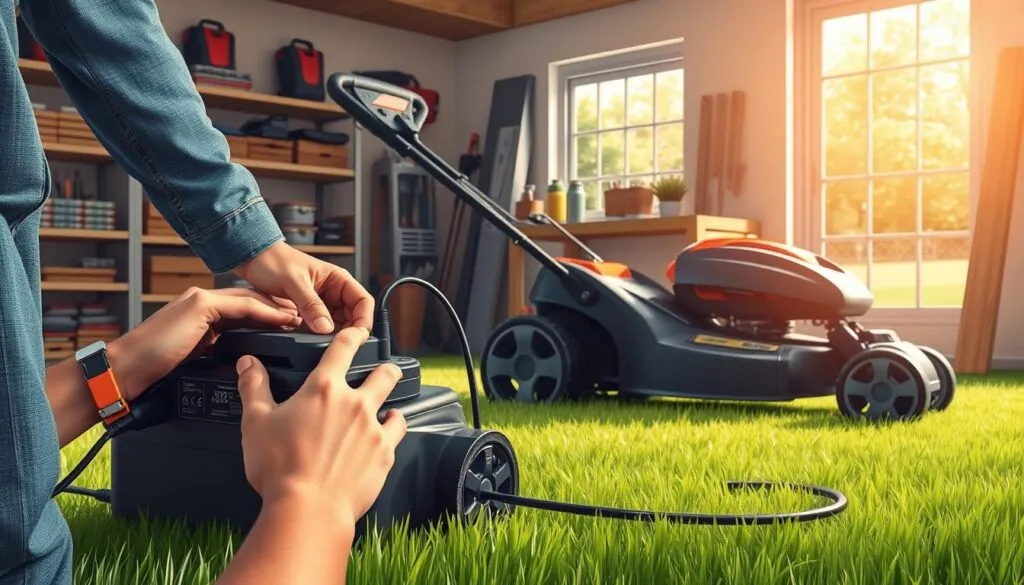
Regular voltage checks help monitor your power source’s condition. A healthy 12-volt lawn mower battery reads at least 12.6 volts when fully charged.
During off-seasons, charge battery units every few weeks or use trickle chargers. These provide slow, steady energy delivery ideal for storage periods.
| Charging Practice | Benefit | Risk Avoided |
|---|---|---|
| Smart Charger Use | Automatic protection | Overcharging damage |
| Cool-Down Period | Heat reduction | Thermal stress |
| Partial Charging (Li-ion) | Extended lifespan | Cell degradation |
| Regular Voltage Checks | Health monitoring | Unexpected failure |
Keeping Your Battery Terminals Clean and Corrosion-Free
Clean battery terminals ensure efficient power transfer to your mower. Dirty or corroded terminals create resistance that forces your power source to work harder.
Monthly inspections should include checking for corrosion buildup. Use a brush or cloth to clean terminals as needed for optimal conductivity.
Loose connections create electrical resistance and heat buildup. Always ensure terminals are snug and properly secured during your maintenance routine.
Proper care of connection points prevents power loss and extends your equipment’s reliable operation. This simple maintenance task takes minutes but provides seasons of benefits.
Extending Your Lawn Mower Battery Life During Use
Seasonal transitions present critical opportunities to preserve your equipment’s electrical heart. Proper handling during storage periods directly determines how many productive seasons you’ll enjoy.
Proper Storage and Seasonal Maintenance
Remove your power source from the machine during winter or extended inactivity. This simple action slows charge loss dramatically. It also protects against environmental factors affecting stored equipment.
Always store units separately in cool, dry locations. Ideal temperatures range between 40°F and 80°F. Moderate conditions prevent damage from extreme heat or cold.
Never put away a depleted unit. Always provide a full charge before storage. Discharged cells can suffer permanent damage preventing successful recharging.
For seasonal storage, consider using maintenance chargers. These devices keep optimal levels without overcharging risks. Your equipment will be ready when mowing time returns.
Regular checks identify wear before failures occur. For lead-acid types, monitor water levels. Sealed varieties need voltage range verification.
Sharp blades reduce power demands on your system. Dull cutting edges force motors to work harder. This strains your power source unnecessarily.
Consistent usage patterns maintain health better than sporadic operation. Disconnecting during extended non-use prevents parasitic drain. These practices combine with smart charging for maximum service years.
Conclusion
Maximizing your investment in lawn care equipment requires understanding battery maintenance fundamentals. Your mower battery’s performance directly impacts your ability to maintain a beautiful lawn throughout the season.
Different batteries offer varying service periods. Lithium-ion options typically provide longer lifespan than traditional alternatives. Your actual experience depends on the specific battery chemistry in your mower.
Consistent maintenance practices significantly extend your power source’s operational time. Smart charging, proper storage, and regular cleaning preserve battery health. These habits help your lawn mower battery exceed typical expectations.
Monitoring your equipment’s electrical system prevents unexpected failures. Regular checks identify when replacement becomes necessary. This proactive approach ensures reliable performance from your mower’s power source.
Understanding these principles transforms your maintenance routine. Your batteries will deliver consistent power season after season. This knowledge makes lawn care more predictable and cost-effective.
FAQ
What is the typical lifespan of a lawn mower battery?
The typical lifespan for a lawn mower battery is between three and five years. This duration depends heavily on the battery type, with lithium-ion batteries often lasting longer than traditional lead-acid batteries. Your charging habits and how you store the unit also play a major role in its overall health.
How can I make my mower battery last longer?
You can extend your battery life by following a few key steps. Always keep the battery terminals clean and free of corrosion. Store your mower in a cool, dry place, especially during the off-season. Avoid leaving the battery in a discharged state and use a smart charger designed for your specific battery type to maintain optimal voltage.
Does frequent charging damage the battery?
For modern lithium-ion batteries, frequent charging does not cause damage. However, for older lead-acid batteries, it’s best to avoid shallow discharges. Letting these batteries drain completely before a charge can shorten their lifespan. Using the correct charger is crucial for all battery types to ensure a proper, healthy charge cycle.
What is the difference between lead-acid and lithium-ion mower batteries?
The main differences are weight, lifespan, and power density. Lead-acid batteries are heavier, have a shorter life expectancy, and require more maintenance. Lithium-ion batteries are lighter, last more years, and hold a charge better, especially in varying temperatures. They generally provide more power and require less care.
How should I store my lawn mower battery for the winter?
For long-term storage, you should remove the battery from the mower. Ensure it is fully charged before storing it in a cool, dry location, safe from freezing temperatures. It’s a good practice to check the charge every few months and top it off if needed. This maintenance helps preserve battery capacity and health.