
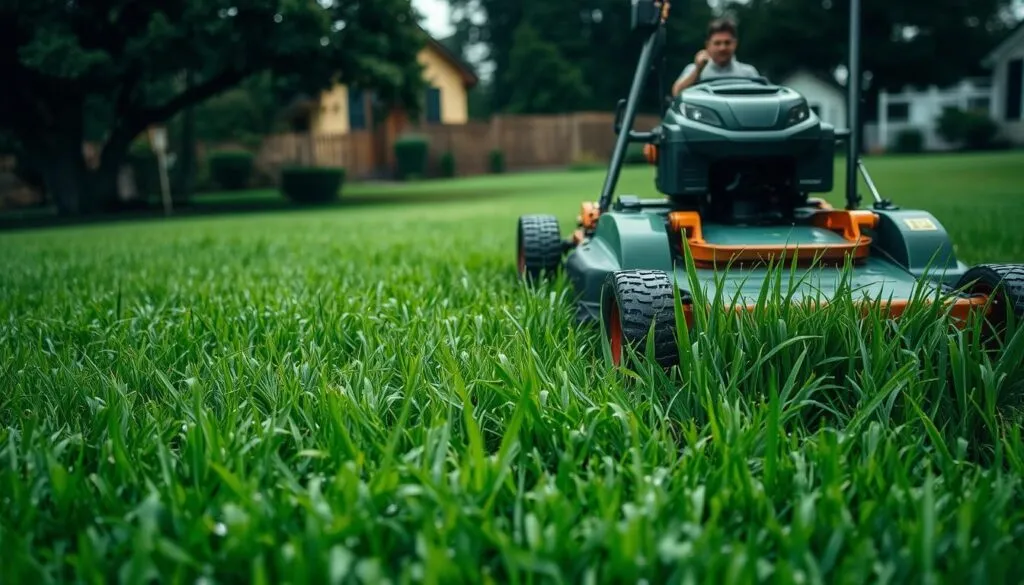
What happens when your lawn maintenance schedule clashes with unexpected rainfall? This common dilemma leaves many homeowners wondering about the best approach for their turf care.
Working with damp turf presents unique challenges that demand careful consideration. The moisture affects how your equipment performs and impacts the final appearance of your landscape.
Understanding the proper techniques for handling these situations can save you from potential headaches. This guide explores the critical factors involved in maintaining your green spaces during less-than-ideal weather.
You’ll discover how to assess soil saturation, adjust your cutting strategy, and protect your investment in outdoor equipment. The information helps you make informed decisions regardless of what nature delivers.
Key Takeaways
- Damp turf requires different handling techniques than dry lawns
- Equipment performance changes significantly in moist conditions
- Soil saturation level determines the safety of proceeding with cutting
- Proper preparation minimizes risks to your landscape’s health
- Alternative approaches exist for periods of persistent rainfall
- Understanding your mower’s capabilities is crucial for success
- Balancing maintenance needs with protection ensures long-term beauty
Understanding the Risks of Mowing Wet Grass
The decision to cut your lawn after a rainstorm carries with it a set of distinct risks that every homeowner should carefully weigh. These hazards impact your turf’s health, your personal safety, and the condition of your soil.
Your lawn’s appearance suffers first. Moisture causes grass blades to tear instead of receiving a clean cut. This results in ragged, brown tips that weaken the turf.
The water’s weight presses blades flat against the ground. Your mower cannot achieve an even trim, leading to a patchy look. You often need a second pass days later, doubling your effort.
Potential Lawn Damage and Uneven Cuts
Uneven cuts are just the beginning. Torn blades create entry points for disease. Your landscape becomes more vulnerable to pest infestations and fungal growth.
Safety Hazards and Soil Compaction Concerns
Personal safety is a major concern. Slippery conditions significantly increase the risk of accidents, especially on slopes. Statistics show thousands are injured by mowers annually.
The ground itself is at risk. Your mower’s wheels compress saturated soil severely. This compaction suffocates roots by cutting off their oxygen supply.
This pressure creates depressions and ruts in your lawn. These low spots collect water, worsening drainage. The damage may require professional aeration to repair.
| Risk Category | Immediate Effect | Long-Term Consequence |
|---|---|---|
| Lawn Health | Torn grass blades, uneven cut | Disease vulnerability, brown patches |
| Personal Safety | Slippery footing, loss of control | Increased risk of serious injury |
| Soil Structure | Soil compaction, wheel ruts | Poor root health, drainage issues |
Understanding these fundamental risks helps you make an informed choice. Balancing immediate needs against potential long-term damage is crucial for maintaining a beautiful, healthy landscape.
Can Wet Grass Be Mowed: Evaluating the Conditions
Evaluating your yard’s readiness following rainfall involves more than just waiting for the sun to reappear. Proper assessment requires understanding how different moisture levels affect your cutting results.
Weather and Moisture Considerations
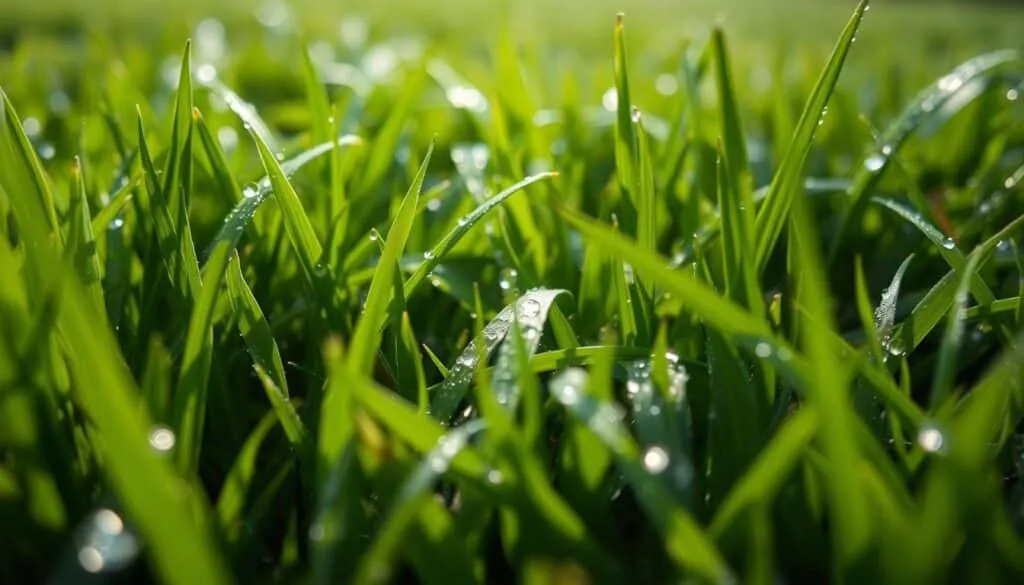
Timing proves critical when dealing with damp turf. After light precipitation, waiting 2-5 hours typically provides sufficient drying time. Heavy downpours demand a full 24-hour waiting period.
Simple tests help determine if conditions are suitable. Walk across your landscape—if your shoes collect moisture, postpone your cutting schedule. The touch test offers another reliable method.
Feel the blades with your hand. Moisture transferring to your skin indicates excessive dampness. Morning dew creates deceptive conditions that appear manageable but cause equipment issues.
Visual inspection reveals important clues. Look for standing blades versus flattened ones. Check for puddles and assess soil saturation. Mid-morning through afternoon typically offers optimal cutting conditions.
Regional weather patterns influence your schedule. Areas with persistent rainfall require different approaches than locations with occasional showers. Understanding these factors helps maintain landscape health.
Preparing Your Lawn and Mower for Wet Conditions
Your mower’s configuration determines how well it handles damp turf conditions. Proper preparation minimizes potential damage to both your equipment and landscape.
Adjusting Mower Height and Blade Sharpness
Sharp mower blades create clean cuts that reduce stress on your lawn. Dull blades tear vegetation instead of slicing it cleanly.
Raise your cutting height one or two settings above normal levels. This approach follows the one-third rule for healthier turf maintenance.
Kansas State University Research and Extension recommends maximum height settings for optimal performance. Higher cutting reduces clumping and engine strain.
Cleaning the Mower Deck and Ensuring Safety
Thoroughly clean your mower deck before starting. Remove all dried residue from previous sessions to prevent additional buildup.
Apply specialized deck spray or silicone coating to create a non-stick surface. This treatment helps clippings slide through efficiently.
Always consult your owner’s manual for specific safety guidelines. Corded electric models present serious electrical hazards in moist environments.
| Preparation Area | Action Required | Expected Benefit |
|---|---|---|
| Blade Maintenance | Professional sharpening or replacement | Cleaner cuts, reduced turf damage |
| Height Adjustment | Raise 1-2 settings above normal | Less stress, better clippings management |
| Deck Preparation | Thorough cleaning and coating application | Reduced clogging, smoother operation |
Proper equipment preparation significantly improves your results when dealing with challenging conditions. These steps protect your investment while maintaining your landscape’s appearance.
Effective Techniques for Mowing Wet Grass Safely
Proper execution during less-than-ideal weather conditions protects your investment and appearance. Implementing strategic approaches ensures your landscape maintains its health despite challenging circumstances.
These fundamental tips transform a difficult task into a manageable routine. You achieve better results while minimizing potential damage to your equipment and turf.
Employing a Slow and Steady Approach
Reducing your walking speed to approximately half your normal pace proves essential. This technique allows mower blades more time to process each section effectively.
Operating at reduced speed prevents overwhelming accumulation under the deck. You maintain consistent cutting performance throughout your entire session.
Selecting the side discharge setting becomes crucial when dealing with damp conditions. This configuration immediately expels clippings away from the deck rather than processing them further.
Heavy, sticky clippings clump together and adhere to mower components. Side discharge offers the only practical option for maintaining consistent operation.
Plan regular stops every few minutes during your mowing session. Inspect and clean the deck to remove accumulated vegetation that builds up despite careful technique.
These proactive cleaning breaks prevent complete deck blockage. They eliminate the frustration of re-cutting sections where clogged blades failed to perform properly.
Patience and attention to technique yield significantly better lawn maintenance results. This careful approach saves time by reducing corrective work and equipment damage.
Managing Mower Performance and Avoiding Damage
Your mower’s operational efficiency depends heavily on proactive maintenance practices during damp weather conditions. Proper equipment management prevents costly repairs and extends your investment’s lifespan.
Preventing Clogged Mower Blades and Deck
Moisture-laden vegetation creates dense clumps that obstruct normal cutting operations. These heavy accumulations block the blade rotation area and disrupt vacuum flow.
Regular cleaning breaks every few minutes prevent complete deck blockage. This practice maintains consistent cutting performance throughout your session.

Reducing Engine Strain Through Smart Practices
Resistance from accumulated vegetation places extraordinary strain on your engine. This pressure can cause overheating and premature wear.
Electric models face particular challenges due to lower torque output. Gas-powered equipment generally handles heavy conditions more effectively.
Maintaining Fuel Efficiency in Wet Conditions
Your equipment consumes more fuel with less output when processing saturated vegetation. The substantial weight of water-logged clippings increases physical effort.
Emptying collection containers frequently reduces burden on your mower. This simple step improves maneuverability and minimizes soil compaction.
| Performance Aspect | Challenge | Solution |
|---|---|---|
| Blade Function | Clogging from dense clumps | Frequent cleaning breaks |
| Engine Health | Increased resistance strain | Reduced operating speed |
| Fuel Consumption | Higher usage for same area | Lightened load management |
Implementing these management practices protects your equipment investment. Proper care prevents accelerated wear and component damage during challenging operations.
Minimizing Lawn Damage and Disease Spread
Your landscape’s vulnerability to fungal invasion increases dramatically when cutting occurs under moist conditions. Pathogens easily transfer between plants when vegetation contains excess water.
Torn blades create perfect entry points for microscopic organisms. These openings allow diseases to establish themselves rapidly.
Reducing the Risk of Fungal Infections
Fungal spores travel efficiently on damp equipment surfaces. Your mower becomes a disease distribution system when not properly cleaned.
Common turf diseases include red thread and dollar spot. These conditions manifest as discolored patches across your lawn.
Moisture retention in clumped material creates ideal breeding environments. Fungi multiply quickly in these warm, humid microclimates.
Strategies to Prevent Grass Clumping
Proper technique significantly reduces clumping issues. Use side discharge settings to distribute clippings evenly.
Frequent cleaning breaks prevent material buildup under the deck. This practice maintains cutting efficiency throughout your session.
Thorough equipment cleaning after each use eliminates pathogen reservoirs. This simple step protects your landscape from future contamination.
The long-term health benefits outweigh temporary scheduling convenience. Waiting for drier conditions prevents widespread disease establishment.
Mowing Wet Grass on Uneven or Sloped Terrain
Landscape topography introduces critical safety considerations when dealing with damp turf conditions. Your property’s physical layout significantly impacts operational safety during moist weather maintenance.
Steep inclines present amplified hazards when vegetation contains excess moisture. Slippery surfaces compromise footing and equipment control dramatically.
Safety Tips for Steep Slopes
Reduced traction affects both personal stability and machine grip on challenging terrain. The potential for losing control increases substantially on saturated slopes.
Evaluate your specific landscape characteristics before attempting any cutting. Safety concerns should override scheduling urgency on steep, moist terrain.
Techniques for Handling Uneven Ground
Bumps, depressions, and exposed roots become significantly more treacherous when damp. These irregularities increase tripping hazards and produce inconsistent cutting results.
Vegetation clumps more readily on uneven surfaces, creating additional equipment clogging problems. This leads to patchy appearances requiring corrective work.
Mowing diagonally across slopes provides superior stability compared to straight patterns. This technique distributes gravitational forces more evenly for better control.
| Terrain Type | Primary Hazard | Recommended Approach |
|---|---|---|
| Steep Slopes | Loss of footing and equipment control | Diagonal mowing pattern, self-propelled equipment |
| Uneven Ground | Tripping hazards and uneven cuts | Reduced speed, frequent cleaning breaks |
| Soft Soil Areas | Rut formation and compaction | Lightened equipment, postponed scheduling |
Self-propelled models offer significant advantages on challenging terrain. Their powered motion reduces physical effort while enhancing stability during operation.
Creating ruts in soft, saturated earth compounds drainage problems long-term. These depressions collect water and worsen future maintenance challenges.
Alternative Approaches and Expert Recommendations
Modern technology provides practical alternatives to traditional mowing challenges in damp weather. These solutions help maintain your landscape’s health when conditions prove difficult.
Exploring different equipment options expands your maintenance possibilities. You gain flexibility in handling various weather situations effectively.
Exploring Self-Propelled and Robotic Mowers
Self-propelled mowers reduce physical effort during challenging sessions. They maintain consistent speed for more uniform cutting results.
These powered lawn mower models handle resistance better than push versions. However, heavier units may compact soil in saturated conditions.
Robotic systems like Husqvarna Automower® operate on programmed schedules. They can maintain your lawn during optimal dry windows between rainfall.
When to Consider Professional Lawn Care
Professional services offer expertise in timing activities appropriately. They possess specialized equipment for difficult conditions.
During prolonged rainy periods, hiring experts becomes particularly valuable. Their experience minimizes potential damage to your landscape.
The investment often proves worthwhile when considering repair costs and time savings. Professionals ensure proper care regardless of weather patterns.
| Approach | Best For | Considerations |
|---|---|---|
| Self-Propelled Mowers | Medium lawns, moderate slopes | Risk of soil compaction in wet conditions |
| Robotic Mowers | Consistent maintenance schedules | Higher initial investment, programming required |
| Professional Services | Challenging weather periods | Expert timing, specialized equipment |
These alternatives provide practical solutions beyond simple yes/no decisions. They protect your landscape’s health while accommodating real-world weather challenges.
Conclusion
Navigating lawn maintenance during rainy periods requires careful judgment and strategic planning. Your decisions impact both immediate results and long-term landscape health.
While mowing damp turf is possible, waiting for drier conditions yields superior outcomes. The risks to your lawn, personal safety, and equipment often outweigh scheduling urgency.
When you must proceed, proper preparation transforms a challenging task into a manageable one. Sharp blades, raised cutting height, and reduced speed minimize potential damage.
Remember that professional services offer valuable alternatives during persistent rainfall. Their expertise protects your investment when conditions prove difficult.
By applying these principles, you maintain beautiful green spaces regardless of weather challenges. Your mower performs better, and your property remains healthy through seasonal changes.
FAQ
Is it ever okay to cut my lawn after rain?
You should avoid it whenever possible. If you absolutely must mow wet grass, wait for the sun to dry the surface moisture and ensure your equipment is properly prepared to handle the added strain and moisture.
What are the main dangers of cutting wet grass?
The primary risks include an uneven cut, soil compaction that can harm roots, and significant safety hazards like slipping. Wet clippings also clump, smothering the turf and promoting fungal diseases.
How can I prepare my mower for damp conditions?
A> Sharpen your blades for a cleaner cut and adjust the cutting height to a higher setting. Thoroughly clean the mower deck before you start to prevent old debris from worsening new clogs.
What is the best technique for mowing when the grass is damp?
Use a slow, steady pace. Overlapping your cutting passes less than usual can help manage the heavy, wet clippings and reduce the chance of clogging the deck.
How do I prevent my mower from getting clogged?
Mow in smaller sections and stop frequently to clear accumulated clippings from underneath the deck. This reduces strain on the engine and helps maintain a consistent cut.
Can mowing a wet lawn spread disease?
Yes. Fungal spores travel easily on wet blades and clippings. Mowing under these conditions can quickly spread infections like brown patch or red thread across your property.
Is it safe to mow wet slopes?
Mowing on slopes when the ground is saturated is highly dangerous. The risk of losing traction and slipping is greatly increased. It is strongly advised to wait until the terrain is completely dry.
Are some types of mowers better for this task?
Self-propelled mowers can reduce the physical effort required. However, even the best residential mowers struggle with saturated turf. In persistently wet weather, hiring a professional service may be the most effective solution.