
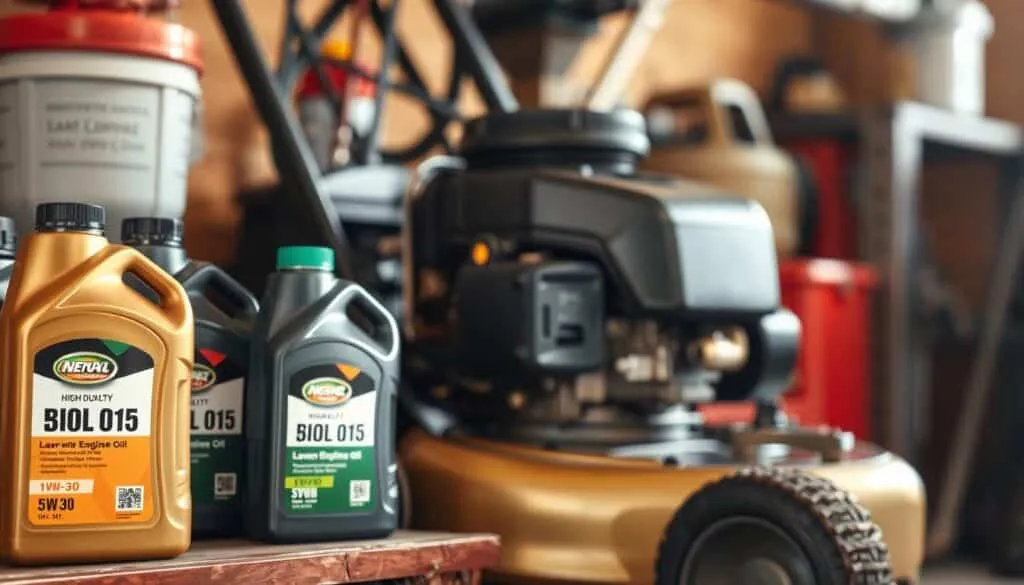
Have you ever wondered if the motor oil in your garage is secretly harming your lawn mower? Many people assume all engine lubricants are the same, but that simple mistake can lead to costly repairs.
Your mower’s engine relies on specific lubrication to run smoothly and last for years. Using the correct product is not just a suggestion—it’s essential for optimal performance.
This guide will clear up the confusion. You will learn how to select the perfect lubricant for your equipment based on your engine type and local climate.
We cover everything from viscosity grades to simple maintenance steps. Our goal is to help you protect your investment and ensure reliable operation every time you mow.
Key Takeaways
- Choosing the correct lubricant is critical for your mower’s engine health and longevity.
- Lawn mower engines require specific oil types that differ from standard automotive oils.
- The right oil ensures proper lubrication, reduces wear, and prevents engine damage.
- Your choice depends on factors like engine type, outdoor temperature, and mower usage frequency.
- Quality oil is vital for smooth operation, whether you have a walk-behind or riding mower.
- Understanding oil classifications and viscosity helps you make an informed decision.
- Regular maintenance with the appropriate oil extends your equipment’s life.
Understanding Your Lawn Mower’s Engine and Oil Needs
Before selecting any lubricant, you must identify whether your cutting equipment uses a two-stroke or four-stroke design. This fundamental distinction determines the proper lubrication approach for your specific model.
Differentiating Between Two-Stroke and Four-Stroke Engines
Two-stroke engines operate differently than their four-stroke counterparts. These engines burn lubricant together with gasoline during combustion. Your equipment may use mixed lubrication, requiring you to add lubricant directly to the fuel tank in a specific ratio.
Alternatively, some models feature separate lubrication systems with dedicated tanks. Four-stroke engines, common in modern equipment, circulate lubricant without burning it. This provides continuous protection to moving components.
Why Proper Lubrication is Essential for Engine Life
Your engine’s longevity depends heavily on adequate lubrication. Proper lubrication reduces friction between metal surfaces and dissipates heat effectively. It also prevents corrosion and removes contaminants that accumulate during operation.
Using specialized lubricants formulated for small engines is crucial. Standard automotive products lack the specific properties needed for your equipment’s optimal performance. Neglecting proper lubrication leads to increased wear and potential engine failure.
Adequate lubrication creates a protective barrier between moving parts. This minimizes metal-to-metal contact that causes excessive wear. Your equipment’s reliability and performance depend on this fundamental maintenance practice.
What Oil Does a Lawn Mower Use: Choosing the Right Oil
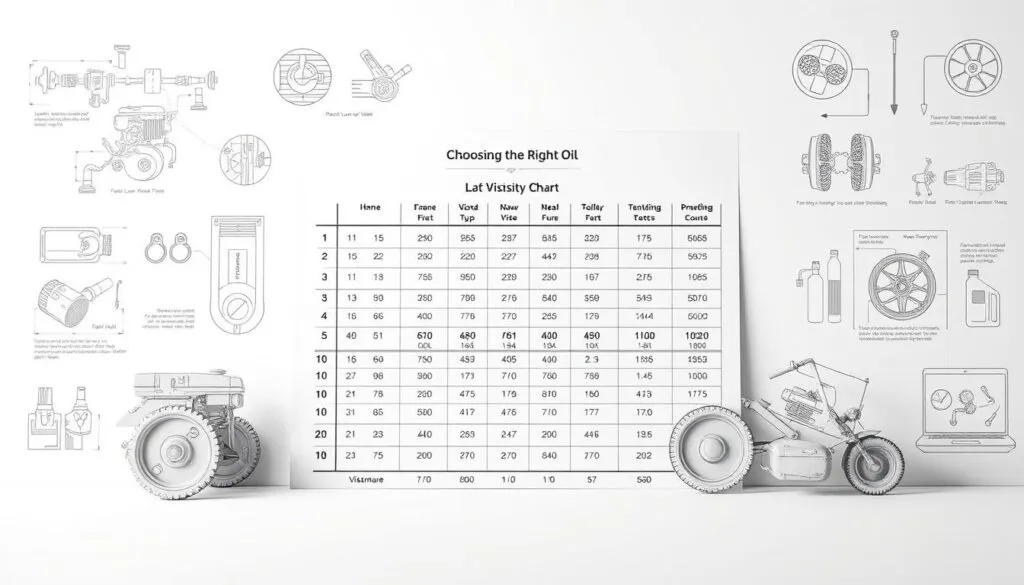
The secret to selecting the perfect lubricant lies in understanding the SAE classification system. This standardized rating from the Society of Automotive Engineers guides your choice for optimal engine protection.
Understanding SAE Classifications and Viscosity
SAE numbers reveal critical information about lubricant performance. The digit before the “W” indicates cold-weather flow properties. Lower numbers mean better performance in chilly conditions.
The number after the “W” shows thickness under heat. Higher values indicate stronger load capacity at elevated temperatures. Your climate determines which SAE grade works best.
Common options include SAE 30 for warm weather and SAE 10W-30 for variable conditions. Synthetic SAE 5W-30 offers excellent all-temperature protection.
Synthetic vs. Mineral: Which is Best for Your Mower?
Synthetic lubricants provide superior performance despite higher cost. They maintain consistent viscosity across wider temperature ranges. This means better protection during cold starts and hot operation.
Mineral-based products offer budget-friendly alternatives. However, they lack the advanced formulation of synthetic varieties. Your decision depends on performance needs versus budget considerations.
Always choose high-quality detergent lubricants meeting SF, SG, SH, or higher classifications. These contain necessary protective compounds without requiring additional additives.
Selecting Oil Based on Temperature and Performance
Your local climate plays a crucial role in determining the ideal lubricant for your equipment’s engine. Different viscosity grades perform optimally within specific temperature ranges. Matching the right product to your weather conditions ensures smooth operation and proper protection.
Oil Viscosity and Temperature Ranges
SAE 30 works best when temperatures stay above 40°F. Below this threshold, it becomes too thick for easy starting. This can strain your engine during cold weather operation.
SAE 10W-30 handles variable conditions from 0°F to 100°F effectively. However, above 80°F, you should monitor levels more frequently due to increased consumption. Synthetic SAE 5W-30 offers the widest protection range.
It performs well from -22°F to 104°F. This makes it ideal for regions with significant seasonal fluctuations. Vanguard 15W-50 suits hot climates and frequent commercial use.
Tips for Cold Weather and Hot Climate Conditions
Cold temperatures demand lower viscosity lubricants that flow easily. This prevents dry starts that cause excessive wear. Proper cold-weather selection improves starting performance significantly.
Hot climate operation requires higher viscosity products. These maintain protective films at elevated temperatures. They prevent breakdown during extended use in warm conditions.
Synthetic 5W-30 provides excellent all-season protection for most residential applications. It adapts well to temperature changes throughout the year. This choice minimizes consumption while maximizing engine life.
Maintenance Tips for Prolonged Engine Efficiency
Consistent care practices significantly extend your cutting equipment’s operational lifespan and performance reliability. Proper maintenance prevents unexpected breakdowns and ensures smooth operation throughout each mowing season.
Establishing a regular service routine protects your investment. This approach minimizes wear and maintains optimal engine performance year after year.
How to Check Your Mower’s Oil Level
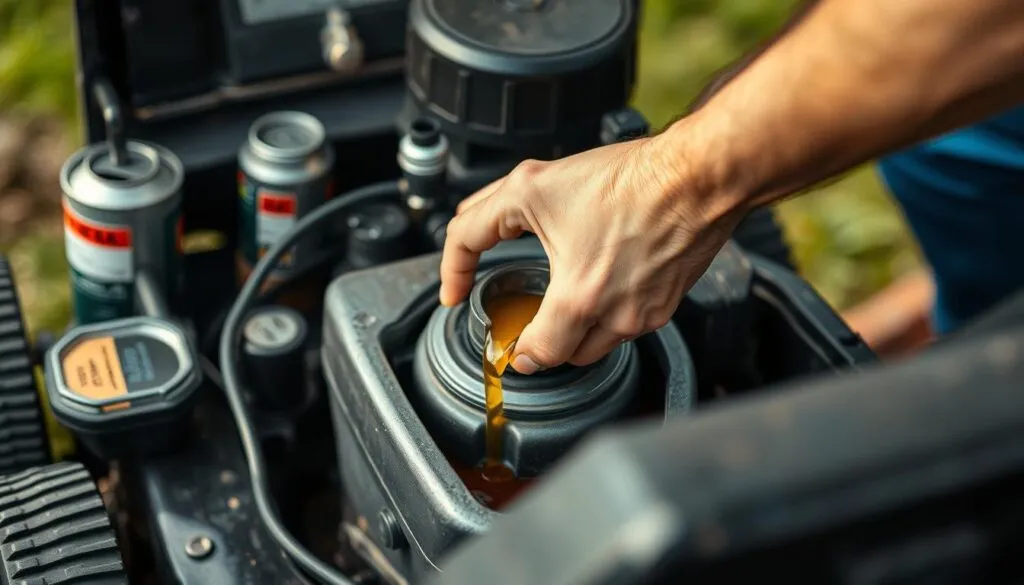
Always verify your lubricant level before starting the engine. This simple check takes only minutes but prevents serious damage.
Park your equipment on a flat surface for accurate measurement. Remove the dipstick cap and wipe the blade clean with a rag.
Reinsert the dipstick properly, aligning the teeth with the tube grooves. Remove it again to read the level between the full and add marks.
Add lubricant a few ounces at a time if the level is low. Allow enough time for it to settle before rechecking. Never overfill the reservoir.
Recommended Oil Change Intervals and Capacity Guidelines
Different equipment types require specific oil capacity amounts. Walk-behind mowers typically hold 15-18 ounces. Riding models need 48-64 ounces.
Consult your operator’s manual for exact specifications. Following manufacturer instructions ensures proper lubrication.
Change intervals depend on usage patterns. Walk-behind equipment needs fresh lubricant every 50 hours or annually. Riding mowers require service every 100 hours or yearly.
New equipment needs more frequent changes during break-in periods. Monitor lubricant color – fresh product appears amber but darkens with use.
Step-by-Step Guide to Changing Your Mower Oil
Giving your cutting equipment fresh lubrication is a straightforward maintenance task that protects your investment. Following proper procedures ensures your engine receives the protection it needs for reliable operation.
This practical walkthrough covers everything from preparation to completion. You will learn the correct sequence for a successful lubrication replacement.
Preparing Your Equipment and Tools
Begin by gathering all necessary supplies before starting your oil change. You need a drain pan, appropriate wrench, fresh lubricant, funnel, and clean rags.
Run your equipment briefly to warm the lubricant for easier draining. Always disconnect the spark plug wire for safety before beginning any maintenance work.
Park on level ground to ensure accurate fluid level readings throughout the process. This preparation sets the stage for a smooth procedure.
Executing the Oil Change: A Practical Walkthrough
Position your drain pan beneath the engine’s drain plug. Carefully remove the plug using your wrench and allow complete drainage.
This process may take several minutes. Ensure all used lubricant empties from the crankcase before reinstalling the drain plug securely.
Refill with fresh lawn mower oil using a funnel in the fill tube. Add lubricant gradually while checking the dipstick level frequently.
Avoid overfilling by monitoring the level between the “add” and “full” marks. Proper disposal of used lubricant is essential for environmental protection.
Take it to a recycling center or automotive facility. Document your service time for tracking future maintenance intervals.
Remember that using synthetic oil doesn’t change required change intervals. Regular checks maintain optimal performance regardless of lubricant type.
Conclusion
Your investment in proper maintenance will pay dividends through years of reliable service. You now possess the knowledge to select the correct lubricant for your specific equipment needs.
Regular checks and timely changes are essential for engine longevity. Different engine types require specific products that match your climate conditions.
Applying this information establishes a consistent care routine. Your commitment to quality maintenance ensures smooth operation season after season.
The right choices prevent costly repairs and extend equipment life significantly. Your diligence today guarantees dependable performance for years to come.
FAQ
What type of oil should I put in my lawn mower?
Most modern mowers with four-stroke engines use SAE 30 detergent oil for standard temperatures. For colder climates, a multi-viscosity grade like 10W-30 is often recommended. Always check your owner’s manual for the specific type and viscosity grade required for your model.
Can I use synthetic oil in my mower’s engine?
Yes, you can use synthetic oil. It offers superior protection, especially under extreme temperatures and heavy loads, and can extend the time between changes. High-quality synthetic options from brands like Mobil 1 or Pennzoil are excellent for enhancing engine performance and longevity.
How often should I change the oil in my lawn equipment?
A good rule is to perform an oil change every spring or after every 25-50 hours of operation. For new equipment, the first service is often recommended after the first 5 hours of use. Consistent maintenance according to these intervals is key to preventing excessive consumption and wear.
How do I check the oil level in my mower?
Ensure the engine is cool and on a level surface. Locate the dipstick, remove it, and wipe it clean. Reinsert it fully, then pull it out again to check the level. The oil should be between the “Full” and “Add” marks on the dipstick. Never overfill.
What is the difference between two-stroke and four-stroke engine oil?
Two-stroke engines require a special oil that is mixed directly with the gasoline. Four-stroke engines use motor oil that is poured into a separate crankcase, just like a car. Using the wrong type can cause severe engine damage.
What happens if I use the wrong viscosity oil?
Using oil that is too thick can make the engine hard to start, especially in cold weather, and reduce lubrication. Oil that is too thin may not provide adequate protection, leading to increased friction and potential engine failure. Always follow the manufacturer’s viscosity guidelines.