
What if your regular lawn maintenance routine could actually be harming your beautiful turf? Many homeowners face this dilemma after rainfall or heavy morning dew.
Understanding proper cutting techniques for damp conditions is crucial for maintaining a healthy, vibrant yard. Your lawn’s appearance and long-term health depend on making informed decisions about timing.
Rushing to trim your property after precipitation might seem convenient. However, this approach can lead to significant problems. Your equipment’s performance and personal safety are also important factors to consider.
This guide explores the essential considerations for dealing with moist turf conditions. You’ll discover expert techniques that protect your investment while keeping your outdoor space looking its best.
Making smart choices about lawn maintenance saves time and prevents costly damage. Proper care ensures your green space remains the envy of the neighborhood throughout the growing season.
Key Takeaways
- Mowing damp turf can cause uneven cuts and damage to grass blades
- Wet conditions increase the risk of slipping and equipment-related accidents
- Clumping of clippings is more likely when the lawn has moisture
- Soil compaction becomes a serious concern under these circumstances
- Certain mower types handle moist conditions better than others
- Timing your cutting schedule around weather patterns is essential
- Proper techniques can minimize risks when mowing is unavoidable
Understanding the Risks of Mowing Wet Grass
Operating your lawn equipment on a damp lawn introduces a host of hidden dangers that threaten both your property and personal well-being. The immediate inconvenience of a rescheduled chore pales in comparison to the potential long-term damage.
Recognizing these hazards is the first step toward protecting your yard and yourself.
Lawn Health and Equipment Risks
Cutting damp turf leads to ragged tears in grass blades instead of clean cuts. These torn openings create entry points for fungal spores. Moisture-laden clippings clump together, smothering the lawn beneath and fostering disease.
Your mower also suffers. Wet grass sticks to the deck and blades, promoting rust and mold growth. This contamination then spreads pathogens across your property during the next use.
Common lawn diseases that thrive in these conditions include:
| Disease Name | Primary Symptom | Appearance |
|---|---|---|
| Red Thread | Reddish-pink patches | Dead grass with thread-like growth |
| Dollar Spot | Small, bleached spots | Silver-dollar-sized straw-colored areas |
| Brown Patch | Irregular circles | Large brownish zones in the turf |
Personal Safety Considerations
Slippery conditions present a significant hazard. Wet grass reduces traction dramatically, especially on slopes. A loss of footing while handling powerful equipment can lead to serious injury.
The U.S. Consumer Product Safety Commission estimates approximately 80,000 people visit emergency rooms annually with lawn mower-related injuries.
Electric mowers add another layer of risk. Using them in moist conditions increases the chance of electric shock, particularly with extension cords. Your safety should always be the top priority.
can i mow when the grass is wet: Expert Guidelines
Expert lawn care professionals emphasize specific waiting periods following precipitation for optimal results. Your timing decisions directly impact turf health and equipment performance.
Proper scheduling prevents common problems associated with cutting damp vegetation. Following established guidelines protects your investment in landscape maintenance.
Determining the Right Timing
Wait 2-5 hours after light showers before cutting your property. Heavy downpours require approximately 24 hours of drying time.
Conduct a simple moisture test by walking across your property. If footprints remain visible or shoes become damp, postpone your maintenance.
Lawn experts at Purdue University note that slightly moist turf is preferable to overgrown vegetation. In certain climates, perfect drying conditions may not occur frequently.
Balance recent rainfall amounts with current grass height when making decisions. Sometimes proceeding with caution becomes necessary despite less-than-ideal circumstances.
The vegetation should spring back after walking without leaving impressions. This indicates sufficient dryness for safe cutting operations.
Preparing Your Mower for Wet Conditions
Your mower requires specific adjustments to handle the unique challenges presented by moisture-laden vegetation. Proper preparation minimizes damage to your lawn and equipment when cutting becomes necessary despite damp conditions.
Two critical modifications ensure better performance. These steps protect your investment while achieving acceptable results.
Inspect and Sharpen Your Mower Blades
Sharp mower blades are non-negotiable for cutting wet grass effectively. Dull blades tear and shred vegetation instead of creating clean cuts.
This tearing increases disease risk and creates an unsightly lawn appearance. Inspect your blades before each use for nicks or dullness.
Regular sharpening maintains optimal cutting performance. Sharp blades reduce strain on your mower’s engine during difficult cuts.
Adjusting the Cutting Height for Wet Grass
Raise your mower’s cutting height significantly for damp conditions. Kansas State University Research and Extension recommends the highest possible setting.
This adjustment prevents removing too much vegetation at once. Cutting wet grass too short leads to severe tearing and excessive clumping.
A higher height reduces strain on your equipment. It also minimizes the messy clumps that can smother your lawn underneath.
Techniques for Mowing Wet Grass Safely
Sometimes waiting for perfect conditions isn’t practical, so knowing proper cutting techniques becomes essential. These methods help you achieve acceptable results while minimizing potential damage to your property.
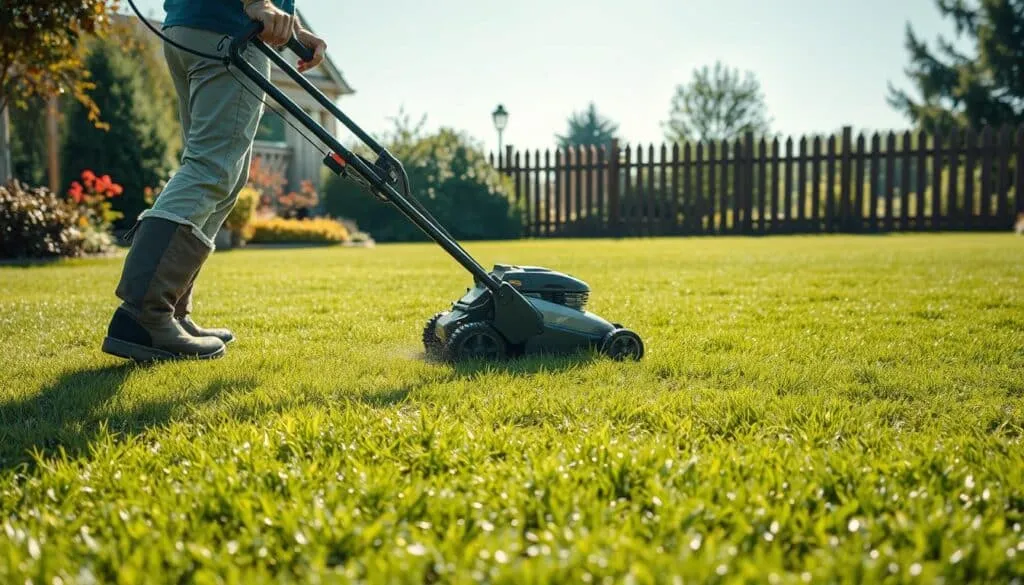
Your approach should focus on three key elements: pace, discharge method, and equipment maintenance. Mastering these aspects makes the difference between a successful cut and a messy outcome.
Mow Slowly to Prevent Clumping
Reduce your walking speed significantly when dealing with damp vegetation. A slower pace allows blades to cut more effectively through heavy, water-laden growth.
Rushing creates uneven cuts and excessive clumping. Patience ensures your equipment handles the challenging conditions properly.
Moving deliberately produces cleaner results that require less follow-up work. This careful approach protects your lawn’s health during difficult mowing sessions.
Choose the side discharge setting instead of mulching or bagging attachments. Wet clippings tend to clog enclosed systems quickly.
The discharge method prevents buildup that can stall your equipment. It also avoids the caked-on mess inside collection bags.
Stop periodically to clear accumulated vegetation from the mower deck. This maintenance break keeps blades cutting efficiently throughout your session.
Frequent cleaning prevents grass from wrapping around moving parts. Your equipment maintains better performance when kept free of debris.
Choosing the Right Mower for Wet Conditions
Your equipment selection significantly impacts how your property handles damp cutting situations. Different machines offer varying levels of performance and safety in moist environments.
Understanding these differences helps you make informed decisions about your lawn care equipment.
Self-Propelled vs. Electric Mowers
Self-propelled models reduce physical effort during challenging cuts. They provide steady movement and consistent cutting action.
Heavier versions may cause soil compaction in saturated conditions. Wheel ruts can damage your lawn’s surface.
Electric and cordless options present specific hazards. Major manufacturers like Stihl USA explicitly warn against using their products on damp vegetation.
Batteries and electrical components aren’t waterproof. Using them risks short circuits and permanent damage.
Considering Robotic Options
Robotic mowers like Husqvarna Automower® handle various conditions effectively. They operate with minimal soil disturbance.
Always check manufacturer guidelines regarding moisture limitations. These automated systems require specific programming for damp operation.
Your final choice should balance cutting performance with moisture handling capabilities. Consider weight distribution and manufacturer recommendations for optimal results.
Lawn and Soil Care After Mowing Wet Grass
The aftermath of cutting damp vegetation requires immediate attention to prevent lasting damage to your property. Your follow-up actions determine how quickly your landscape recovers from the stress.
Proper post-mowing care addresses both surface issues and underlying soil problems. This comprehensive approach ensures your green space remains healthy.
Reducing Soil Compaction
Heavy equipment compacts damp earth, creating deep ruts that harm root systems. This compression removes essential air pockets from the soil structure.
Your lawn’s roots struggle to access oxygen, water, and nutrients in compressed ground. The resulting patchy appearance signals underlying health issues.
Deep ruts present tripping hazards and collect standing water. These depressions become mosquito breeding sites if not addressed promptly.
Managing Clumped Grass Clippings
Wet clippings form dense mats that block sunlight and airflow to the turf below. This suffocation creates dead patches across your lawn.
Unmanaged clumps decompose into problematic thatch layers. This material buildup prevents proper nutrient absorption by grass roots.
Purdue University experts recommend double-cutting the affected area to distribute clippings evenly. For excessive accumulation, bag the material for compost or mulch use.
Aeration may become necessary to relieve severe soil compaction. This process restores proper air and water movement to root zones.
Tips for Minimizing Risks When Mowing Wet Grass
Proper equipment inspection and personal gear selection form your first line of defense against wet lawn hazards. These preparatory steps create safer working conditions when cutting becomes unavoidable.
Consult your owner’s manual for specific maintenance requirements. Always wear recommended personal protective equipment before starting your lawn mower.
Enhancing Personal Safety
Slick surfaces transform your property into a potential slip zone. Hilly terrain increases falling risks significantly during cutting wet grass operations.
Hidden objects become dangerous projectiles in damp vegetation. Your blades might strike unseen dog toys or sprinkler heads.
Different mower types present unique hazards in these conditions:
- Riding models lose traction easily on slippery surfaces
- Corded electric units risk electrical shock from moisture contact
- Frayed cords create additional burn and shock dangers
Dr. Aaron J. Patton, Professor of Horticulture at Purdue University, emphasizes disease prevention timing:
“A few plant diseases can be spread by equipment when the turf is wet, such as Pythium blight that occurs during hot, humid mornings in the summer. If you see active disease in the morning, wait until the turf dries and mow your grass in the afternoon.”
Postponing cutting until afternoon prevents spreading infections across your property. This timing strategy protects against brown patch and other turf diseases.
Thorough preparation reduces accident potential during challenging mowing sessions. Your vigilance ensures both personal safety and lawn health.
Conclusion
Proper turf management balances immediate needs with long-term health considerations. Your landscape deserves careful attention to cutting conditions.
Waiting for dry weather remains the safest approach for your property. This protects your lawn mower and prevents personal injury risks.
Understanding potential damage helps you make smart choices. Follow expert tips when you must cut vegetation in moist conditions.
Adapt your routine based on your specific area and circumstances. Patience with cutting schedules rewards you with healthier turf.
Investing in proper techniques ensures lasting beauty with reduced maintenance. Your outdoor space will thrive with informed care decisions.
FAQ
Is it ever okay to cut wet grass?
While it’s best to avoid it, sometimes you must mow wet grass due to time constraints. If you proceed, take extra precautions like mowing slowly and ensuring your mower blades are sharp to minimize damage to your lawn and equipment.
What are the main risks of cutting wet grass?
Mowing wet grass poses several risks. It can tear grass blades instead of cutting them cleanly, leading to brown, ragged tips. It also promotes soil compaction, increases the chance of spreading lawn diseases like brown patch, and creates slippery, unsafe conditions.
How can I prepare my mower for wet conditions?
Proper preparation is key. Sharpen your mower blades for a clean cut. Raise the cutting height to reduce stress on the grass. For safety, always check the area for debris and ensure the mower’s discharge chute is clear to prevent dangerous clogs.
What is the best technique for mowing a wet lawn?
The most important technique is to mow slowly. This helps prevent the heavy, wet clippings from clumping and smothering the grass. Using a mulching setting or a bag attachment can also help manage the clippings more effectively.
Are some types of mowers better for wet grass?
Self-propelled mowers can be easier to handle on slippery terrain. Electric mowers require extra caution to keep water away from cords and components. Robotic mowers should never operate on wet grass due to significant traction and safety issues.
What should I do with the clumped grass clippings after mowing wet?
It’s crucial to manage clumped grass clippings promptly. You can rake them up to prevent them from blocking sunlight and moisture, which can kill the grass underneath. Alternatively, you can use a leaf blower to disperse smaller clumps.
How can I stay safe while mowing in wet conditions?
Your safety is paramount. Wear sturdy, non-slip boots for traction. Be extra vigilant for slipping hazards. Never touch the mower’s blades or engine while they are wet, and always disconnect the spark plug before performing any maintenance.