
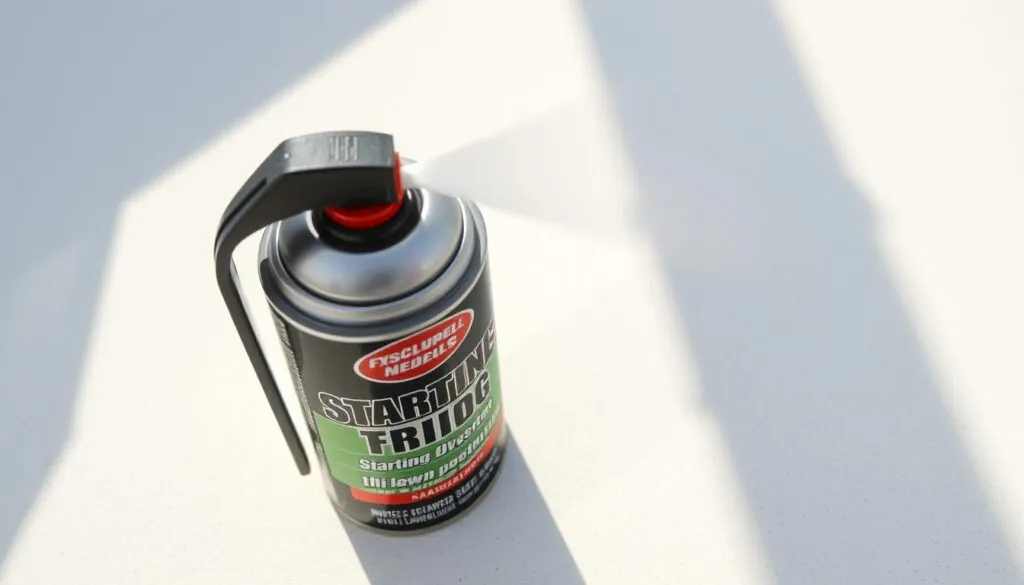
Have you ever wondered why your equipment refuses to start after countless pulls on the cord? It’s a common source of frustration for many homeowners. The problem might not be as complex as you think. A quick solution exists that can bring your machine back to life.
That solution involves using starting fluid. This powerful aid can ignite a stubborn mower engine almost instantly. However, the key to success lies in correct application. Applying it incorrectly can cause more harm than good.
This guide provides clear instructions for different types of equipment. You will learn the specific steps for various models. Understanding the proper technique prevents damage and saves you money. It gets you back to yard work quickly and safely.
Key Takeaways
- Starting fluid is a powerful tool for igniting a stubborn mower engine.
- Correct application is critical to avoid damaging the engine.
- Different types of mowers require slightly different approaches.
- Using starting fluid improperly can lead to costly repairs.
- This guide provides step-by-step instructions for safe use.
- Knowing when to seek professional help is also important.
Understanding Starting Fluid and Its Role in Your Lawn Mower
Equipment that won’t start presents a common challenge that requires specific knowledge about ignition aids. Understanding these specialized products helps you make informed decisions about their use.
What is Starting Fluid?
Starting fluid, often called ether, contains highly volatile chemicals. These substances evaporate quickly and ignite easily. They create combustible vapor that helps stubborn engines turn over.
This specialized fluid works with both gasoline and diesel engines. It’s particularly useful when equipment sits unused for extended periods. The fuel in the carburetor may evaporate or become stale during storage.
Benefits and Precautions
The primary advantage of using starting fluid is its immediate ignition capability. It bypasses fuel delivery problems that prevent normal starting. This makes it especially valuable in cold weather conditions.
However, you must exercise extreme caution. Overuse can damage your carburetor and engine components. Consider this product a temporary diagnostic tool rather than a permanent solution.
Always handle ether-based fluids with respect. Keep them away from open flames and ensure proper ventilation. This prevents dangerous situations while maintaining safety.
Where to Spray Starter Fluid on a Lawn Mower

Different engine configurations require distinct approaches when applying combustion assistance. The correct entry point ensures the volatile compound reaches the combustion chamber effectively.
Your equipment type determines the specific procedure. Always begin by locating the air filtration system.
For Push Lawn Mowers
Four-cycle engines typically feature the carburetor on the side near the air filter. Remove the air filter cover and filter to expose the opening.
Apply a brief burst directly into the air intake port. Immediately reassemble components before attempting ignition.
For Riding Lawn Mowers
These larger machines often position the carburetor under the seat or near the engine front. The process mirrors push mower procedures.
After successful starting, run the engine for several minutes. This burns off excess compound and stabilizes operation.
For Trimmers with Two-Cycle Engines
Two-cycle engines have different fuel delivery systems. The carburetor sits near the fuel tank on the engine side.
Follow similar steps for access and application. Allow extended running time after starting for optimal performance.
| Engine Type | Carburetor Location | Application Method | Post-Start Procedure |
|---|---|---|---|
| Four-Cycle (Push Mower) | Engine side near air filter | Direct into air intake port | Standard operation |
| Four-Cycle (Riding Mower) | Under seat or engine front | Direct into air intake port | Extended running time |
| Two-Cycle (Trimmer) | Engine side near fuel tank | Direct into air intake port | Extended running time |
If the engine doesn’t start on the first attempt, wait several minutes before retrying. Persistent failure may indicate need for professional service.
Tips for Safe Use and Engine Care
Mastering the safe application of starting fluid is essential for protecting your equipment’s engine. Correct practices ensure this powerful aid solves your problem without creating new ones.
Following a few key guidelines makes the process secure and effective. This protects your investment and keeps your mower running smoothly for years.
Proper Application Techniques
Always treat this product as a last resort. Check fuel levels, spark plugs, and the air filter first. These simple checks often resolve the issue.
Use short, controlled bursts into the correct air intake. This prevents over-saturation. Excessive fluid can strip lubrication from cylinder walls.
Work in a well-ventilated area away from flames. The vapors are highly flammable. Safety is the most important part of using starting fluid.
Common Mistakes to Avoid
Never apply this product directly into the spark plug hole. This can cause severe internal damage. Always use the designated intake channel.
Avoid using starting aids on a warm engine. It is unnecessary and increases the risk of a dangerous backfire.
Do not forget to reinstall the air filter. Running the machine without it invites dirt and debris inside. This leads to long-term wear.
| Action | Proper Technique | Common Mistake |
|---|---|---|
| Application Amount | Short, controlled burst | Continuous stream |
| Engine Temperature | Cold engine only | Warm or hot engine |
| Post-Use Step | Reinstall air filter | Run without filter |
| Frequency of Use | Diagnostic tool | Regular crutch |
Frequent reliance indicates a deeper issue. Seek professional help for persistent starting problems. Proper storage in a cool, dry place maintains the product’s effectiveness.
Conclusion
Proper starting fluid use represents a bridge between equipment failure and reliable operation. This knowledge transforms frustrating moments into manageable solutions for your outdoor power equipment.
The fundamental principle applies across all equipment types. Apply a small amount directly into the air intake system. Remember this is a diagnostic tool, not a permanent solution for your mower engine.
Regular maintenance of your lawn equipment prevents most starting issues. Keep fresh fuel and clean filters in your mower. If problems persist after correct application, seek professional help for your engine.
You now possess the confidence to handle common starting challenges safely. This temporary fluid solution gets you back to maintaining your beautiful lawn quickly. Proper care ensures your mower engine runs smoothly season after season.
FAQ
What is starting fluid, and when should I use it on my lawn mower?
Starting fluid is a highly flammable aerosol, often containing ether, designed to help an engine start. You should only use it when your gasoline-powered mower engine is having trouble turning over, typically due to old fuel, a weak spark, or carburetor issues. It’s not a fix for underlying mechanical problems.
Where exactly do I spray the starting fluid on a push mower?
On most push mowers, you spray a small amount directly into the carburetor’s air intake. First, remove the air filter cover and take out the filter. You’ll see the opening to the carburetor. Give a 1-2 second spray into that port, then reinstall the air filter and its cover before attempting to start the engine.
Can I use starting fluid on any type of small engine?
No, you must be cautious. Starting fluid is generally safe for standard four-cycle gasoline engines found in most lawn mowers. However, you should never use it on a diesel engine or on a two-cycle engine that requires an oil-gas mixture, as it can cause severe damage by washing away essential lubrication.
What are the biggest mistakes to avoid when using starting fluid?
The most common errors are using too much fluid and ignoring safety. Over-spraying can lead to engine “hydrolock” or dangerous backfires. Always use short bursts, never spray near a flame or spark, and do not use the product as a substitute for proper maintenance like cleaning the carburetor or using fresh gasoline.
My mower still won’t start after using starting fluid. What’s next?
If the engine starts with the fluid but dies immediately, the issue is likely a clogged carburetor or a fuel delivery problem. If it doesn’t start at all, you may have an ignition issue, like a faulty spark plug. After a few unsuccessful attempts, it’s best to stop and consider a professional tune-up to diagnose the root cause.