
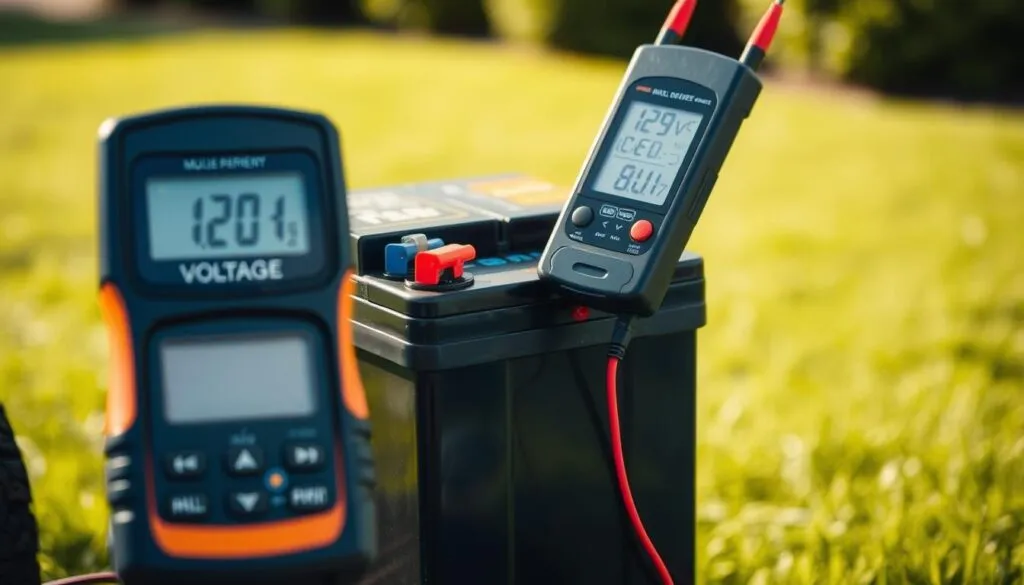
Have you ever assumed all power sources for your yard equipment are basically the same? This common belief can lead to costly mistakes and frustrating performance issues.
Knowing the correct electrical specifications for your machine is not just a technical detail. It is critical for reliable starts, smooth operation, and protecting your investment from damage.
The vast majority of residential riding mowers and tractors rely on a 12-volt system. This standard provides ample energy for starting the engine and running accessories. However, a fully charged reading can vary between traditional lead-acid and modern lithium types.
Using an incorrect power source can result in weak cranking or even harm your machine’s electrical components. This guide will empower you with the knowledge to test, maintain, and choose the right component for your needs.
Key Takeaways
- Most residential lawn mowers operate on a 12-volt system.
- Understanding your equipment’s voltage is essential for reliable performance.
- A fully charged battery’s reading depends on its chemistry (lead-acid vs. lithium).
- Using the wrong voltage can lead to starting problems or equipment damage.
- This knowledge helps you troubleshoot issues and shop for replacements confidently.
Understanding 12 Volt Lawn Mower Batteries
Understanding the electrical foundation of your yard tools can transform how you maintain them. This knowledge helps you make informed decisions about replacements and troubleshooting.
What Defines a 12V Battery?
A 12-volt system refers to the nominal voltage that powers most residential equipment. It consists of multiple cells connected in series. Lead-acid types contain six 2-volt cells, while lithium configurations vary based on chemistry.
The actual measured voltage differs from the nominal rating. It changes depending on charge state and battery type. This standard provides sufficient energy to crank engines without unnecessary complexity.
Key Advantages and Common Applications
These power sources offer significant benefits for residential use. They deliver quiet operation and smooth power transfer. Their environmental friendliness comes from eliminating gasoline emissions.
Common applications include riding equipment and electric-start push models. The system balances adequate starting power with manageable size. This makes it ideal for various yard care tasks, including fescue lawn maintenance.
You gain mobility and flexibility with home charging capabilities. This eliminates dependency on gas stations while providing reliable performance season after season.
Are Lawn Mower Batteries 12V and How They Impact Your Mower
Choosing the correct electrical system for your cutting machine ensures optimal performance and prevents potential damage. The voltage specification directly affects how your equipment operates.
Exploring Voltage Requirements
Most residential equipment operates on 12-volt systems. This standard provides sufficient power for starting engines and running accessories.
Larger commercial units sometimes require 24 volts for additional energy. Always check your owner’s manual for specific requirements.
Performance Implications on Mower Operation
Proper voltage ensures consistent starting and smooth cutting power. It affects runtime and how your machine handles thick grass.
Incorrect specifications can cause weak cranking and reduced efficiency. This puts extra strain on electrical components.
Safety and Compatibility Considerations
Matching voltage to manufacturer specifications prevents equipment damage. A healthy 12-volt power source should read between 12.6 and 12.7 volts when fully charged.
Operating within the correct range ensures safe operation and protects your investment. Always verify compatibility before purchasing replacements.
Testing and Maintaining Battery Voltage for Peak Performance
Simple voltage checks provide early warning signs before your equipment stops working. Regular monitoring helps you catch electrical issues before they lead to frustrating starting problems or component damage.
How to Check Your Battery Voltage with a Multimeter
Gather your digital multimeter and safety gear. Wait about an hour after using your equipment to avoid false readings from surface charge.
Set the multimeter to the 20V DC setting. Connect the red probe to the positive terminal and the black probe to the negative terminal. The reading reveals your power source’s true condition.
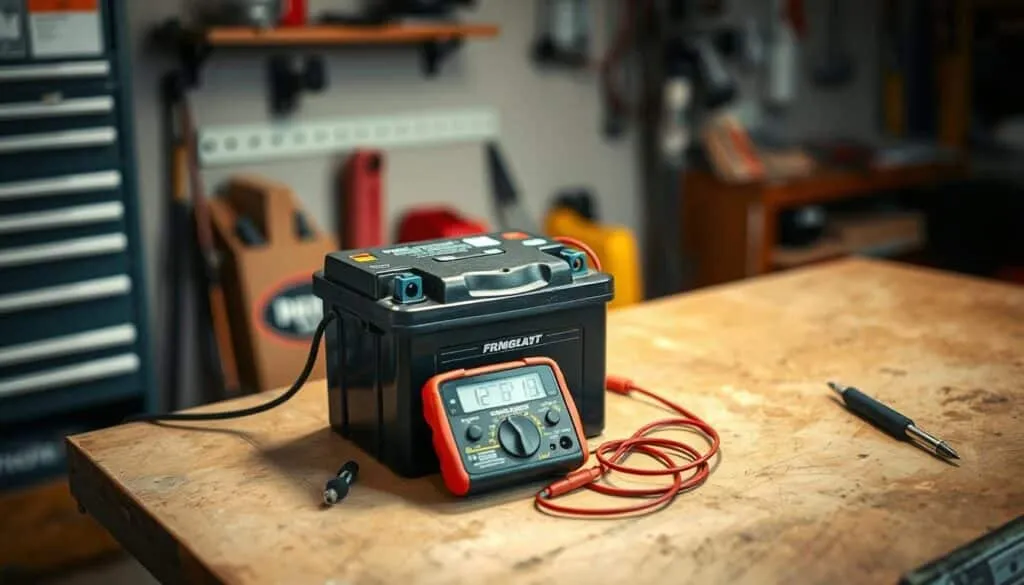
For lead-acid types, 12.6-12.8V indicates full charge. Lithium units show 13.2-13.4V when fully powered. Lower readings signal the need for charging or replacement.
Routine Maintenance to Prevent Performance Issues
Test voltage every few weeks during active seasons. Keep terminals clean and free from corrosion. Proper care extends component lifespan significantly.
Store your power unit in temperature-controlled areas. Avoid deep discharge cycles that shorten its useful life. Use appropriate chargers designed for your specific technology.
Consistent maintenance prevents mid-season failures and ensures reliable operation. These simple habits protect your investment and keep your equipment running smoothly.
Choosing Between Lead-Acid and Lithium-Ion for Your Lawn Mower
When your equipment’s power source needs replacement, you face a critical decision between traditional and modern technologies. This choice affects cost, maintenance, and long-term performance.
Pros and Cons of Lead-Acid Batteries
Traditional lead-acid units offer lower initial cost and proven reliability. They have dominated the market for many years due to widespread availability.
However, these components require regular upkeep. You must check water levels in flooded types and clean corroded terminals. They also deliver diminishing voltage as they discharge.
Benefits of Upgrading to Lithium-Ion Technology
Modern lithium-ion solutions provide significant advantages. They charge three to five times faster than traditional types. Their sealed construction eliminates maintenance concerns.
These advanced units maintain steady power output throughout their discharge cycle. This ensures consistent equipment performance. While costing more upfront, their extended lifespan offers better long-term value.
Lithium technology handles deeper discharges safely. It also reduces weight significantly. This makes handling and installation much easier for homeowners.
The Role of Voltage in Enhancing Lawn Mower Performance
Many owners overlook how electrical specifications directly influence their machine’s cutting capabilities. Proper voltage levels ensure your equipment operates at peak efficiency throughout each session.

Impact on Starting Power and Runtime
Voltage provides the electrical pressure needed for strong engine cranking. Higher readings deliver more reliable starts, especially in cooler weather.
Cold Cranking Amps (CCA) ratings matter significantly here. Most standard units require 130-150 CCA for dependable operation.
Runtime depends on both voltage and capacity. Amp-hours (Ah) measure how long your power source lasts. A typical 35Ah unit provides substantial cutting time before recharging.
Optimizing Performance with Correct Voltage Levels
Maintaining proper voltage ensures consistent cutting power. This prevents performance fade when tackling thick grass or hilly terrain.
Correct levels also reduce heat generation. Excessive heat damages internal components and shortens overall lifespan.
Optimization involves using quality chargers and avoiding deep discharges. Follow manufacturer specifications for balanced performance and longevity.
Your equipment’s electrical system deserves careful attention. Proper voltage management transforms ordinary cutting into exceptional performance.
Battery Storage, Charging, and Longevity Tips
Your maintenance routine directly influences how many seasons your power component will reliably serve you. Proper care extends typical service life to 3-5 years.
Best Practices for Safe Battery Storage
Store your unit in temperature-controlled areas around 25°C. Avoid extreme heat, cold, and humidity. Keep it disconnected from equipment during off-season storage.
Protect components from direct sunlight and moisture. Traditional lead-acid types should not rest on bare concrete floors. This prevents potential discharge through the base.
Choosing the Right Charger for Your Battery
Match your charger voltage to your component’s specifications. A 12V unit requires a 12V charger. Smart chargers automatically reduce output when full.
Consider trickle chargers for extended storage of lead-acid types. Modern lithium units hold charge well, losing only 2-3% monthly. They rarely need trickle charging.
Strategies to Extend Battery Lifespan
Never discharge lead-acid components below 50% capacity. Regular voltage testing helps catch issues early. Keep terminals clean and corrosion-free.
Charge at appropriate temperatures for maximum efficiency. Proper practices significantly extend service life while poor habits shorten it dramatically.
Advanced Features and Upgrading Options for Modern Mowers
Modern technology brings exciting innovations to yard maintenance equipment that go beyond basic power storage. These advancements offer enhanced convenience and performance for today’s homeowners.
Integrating Bluetooth and Smart Monitoring Systems
Smart power units now connect to your smartphone via Bluetooth. You can check voltage, temperature, and charge cycles through dedicated apps.
This eliminates the need for multimeters. Some systems include emergency start features for critical low-power situations.
Considering Higher Voltage Upgrades for Enhanced Power
Higher voltage systems deliver superior performance for demanding conditions. Options include 24V, 40V, 48V, and 56V configurations.
These provide longer runtime and more cutting power. However, they come with increased cost and larger physical size.
Exploring Innovative Charging Solutions
Fast-charging technologies reduce waiting times to 30-60 minutes. Solar charging options offer eco-friendly alternatives.
Dual-battery systems allow continuous operation through swapping. Modern lithium-ion units include comprehensive safety protections.
Conclusion
Your equipment’s electrical heart beats to the rhythm of proper voltage levels. Understanding this fundamental specification ensures reliable starts and consistent cutting power throughout each session.
Regular voltage testing with a multimeter provides early warnings before problems arise. Simple maintenance practices extend component lifespan significantly. Proper storage during off-seasons preserves your investment.
Traditional lead-acid batteries offer budget-friendly options, while modern lithium-ion technology delivers superior performance with zero maintenance. Upgrading to lithium provides faster charging and longer service life.
Apply this knowledge to assess your current setup. Implement these practices for trouble-free operation season after season. Your informed choices lead to better cutting experiences and fewer frustrating breakdowns.
FAQ
What voltage do most riding lawn mowers use?
The vast majority of riding mowers operate on a 12-volt electrical system. This standard voltage provides the necessary power to start the engine reliably and run any additional electrical components on your machine.
Can I use a car battery in my lawn mower?
While a car battery is also 12 volts, it is generally not recommended. Car batteries are designed for a high initial burst of power to start an engine and then be recharged by the alternator. Mower batteries are built for deep-cycle use, meaning they can handle being discharged and recharged more regularly. Using a car battery can lead to a shorter lifespan and potential damage.
How long does a typical lawn mower battery last?
With proper care, you can expect a lead-acid battery to last between 3 to 5 years. Lithium-ion batteries often have a longer lifespan, typically lasting 5 to 8 years or more, due to their advanced technology and resistance to common issues like sulfation.
How can I check the voltage of my mower’s battery?
You can easily check the battery voltage using a multimeter. Set the multimeter to DC voltage, connect the red probe to the positive terminal and the black probe to the negative terminal. A fully charged 12V battery should read between 12.6 and 12.8 volts. A reading below 12.4 volts indicates it needs charging.
What is the difference between lead-acid and lithium-ion mower batteries?
Lead-acid batteries are a traditional, cost-effective option but are heavier and require more maintenance, like checking water levels. Lithium-ion batteries are lighter, charge faster, hold their charge longer in storage, and are virtually maintenance-free, though they come at a higher initial cost.
What is the best way to store a mower battery during the off-season?
For long-term storage, fully charge the battery first. For lead-acid types, store it in a cool, dry place and consider using a maintenance charger to keep it topped up. Lithium-ion batteries should be stored at around a 50% charge in a climate-controlled environment to maximize their life.
Is it worth upgrading my mower to a lithium-ion battery?
Upgrading to a lithium-ion battery can be a great investment. You’ll benefit from a significant reduction in weight, faster charging times, and a longer overall lifespan. This upgrade can greatly enhance the performance and convenience of your riding or push mower.