
Have you ever wondered if you could save time and money by grabbing any replacement blade off the shelf? It’s a tempting thought, but the answer holds serious consequences for your safety and your machine.
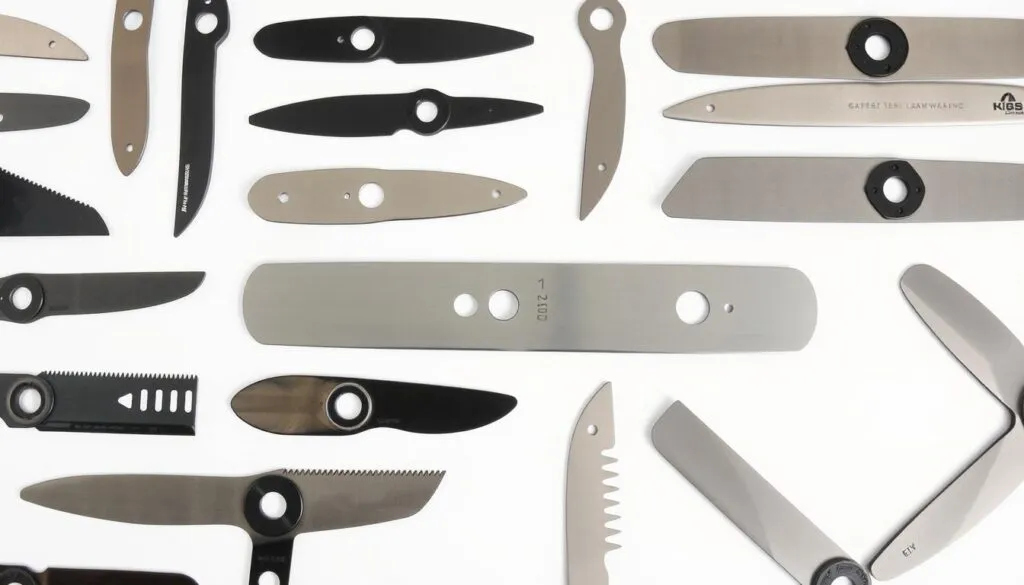
Lawn mower blades are not universal. Each cutting component is precisely engineered for a specific brand and model. The design ensures a perfect fit on the mower’s spindle. Correct length and shape are vital for a clean cut.
Using the wrong part is extremely hazardous. These tools spin at incredible speeds, often exceeding 200 miles per hour. An improper fit creates massive stress. This can damage your equipment, ruin your turf, or lead to a dangerous failure.
While some products are marketed as “one-size-fits-all,” professionals strongly discourage their use. Your machine’s performance and your personal well-being depend on using the exact replacement part. This guide will help you navigate the selection process safely.
Key Takeaways
- Lawn mower blades are specifically designed for particular brands and models, not as universal parts.
- Using an incorrect blade is a major safety risk due to the extreme rotational speeds involved.
- The wrong blade can cause significant damage to your mower and result in an uneven, unhealthy lawn.
- Proper attachment to the spindle, along with correct length and shape, is non-negotiable for safe operation.
- Always consult your mower’s manual or manufacturer to find the exact replacement part you need.
Understanding Why Lawn Mower Blades Are Not Universal
Behind every clean cut lies a meticulously engineered relationship between your machine’s deck, spindle, and the cutting tool itself. This precision ensures optimal performance and safety.
Design Specifics and Compatibility Factors
Manufacturers design each cutting tool for a specific model. The center hole diameter and shape must match the spindle perfectly. Even the blade’s thickness and curvature are calculated for your machine’s deck.
Correct length is vital for effective grass discharge. The wrong size creates drag. This strains the engine and reduces cutting quality.
- Spindle Attachment: The center hole must fit snugly without any play.
- Deck Clearance: The tool must swing freely inside the housing.
- Engine Power: Heavier components require more power to spin efficiently.
Risks of Using the Wrong Blade
An incorrect fit causes dangerous vibrations at high speeds. This puts excessive stress on spindle bearings. The component could detach, becoming a projectile.
Your machine’s deck, belts, and clutch system can suffer costly damage. The repair bill will far exceed the price of the correct part.
Your turf health is also at risk. A poor cut tears grass instead of slicing it. This leads to an uneven, brown appearance and potential scalping.
Are Lawn Mower Blades Universal? Debunking Common Myths
When shopping for replacement parts, you’ll encounter bold claims about one-size-fits-all solutions. These products promise convenience and savings. However, the reality differs significantly from the marketing.
Debunking the Universal Fit Myth
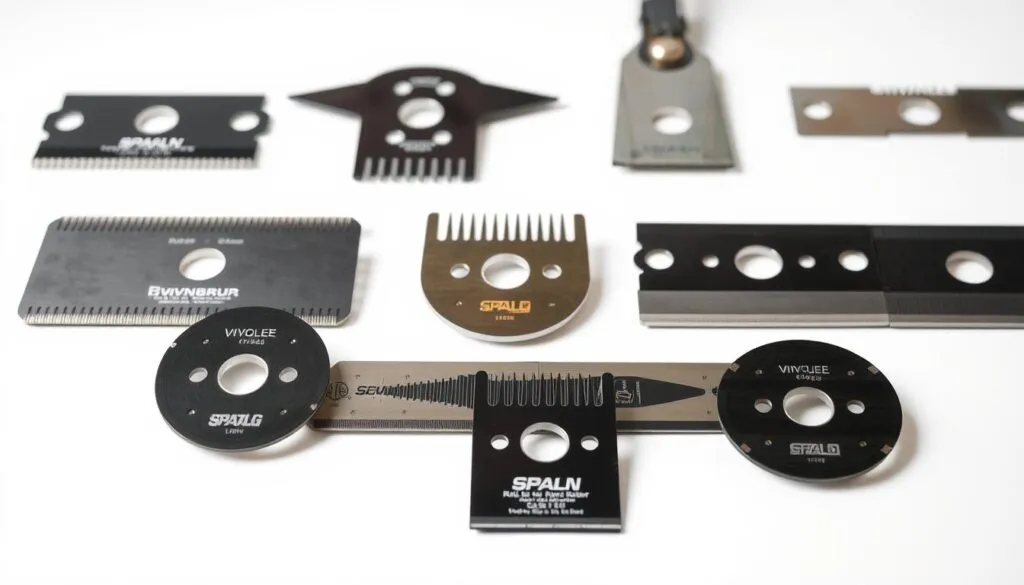
Generic cutting tools marketed as universal pose serious risks. They may physically attach to your spindle. But proper fit requires precise engineering.
Vibration issues emerge with improper components. This strains your machine’s engine and deck. Safety becomes compromised at high rotational speeds.
| Feature | OEM Blades | Aftermarket Options |
|---|---|---|
| Cost | Higher price point | Approximately 33% less |
| Quality Control | Manufacturer specifications | Varies by brand reputation |
| Safety Assurance | Guaranteed compatibility | Requires careful verification |
| Performance | Optimized for your model | May affect cutting quality |
OEM vs. Aftermarket Blade Considerations
Quality aftermarket products from reputable sources offer savings. They maintain safety standards when chosen carefully. Always verify specifications match your original component.
Local shops provide expert guidance for selection. Staff can physically compare the replacement to your original. This ensures proper fit and function.
Regular maintenance of your correct cutting tool proves most cost-effective. Sharpening and timely replacement prevent larger issues. Your machine’s longevity depends on using proper components.
Identifying the Right Blade for Your Mower
The search for the correct cutting component begins with your equipment’s identification details. Proper selection ensures safety and optimal performance.
Verifying Mower Model and OEM Numbers
Locate the metal plate on your machine’s deck or frame. This contains the model and serial numbers. Use these to reference manufacturer parts diagrams.
Original Equipment Manufacturer (OEM) numbers provide the exact match for your specific equipment. They guarantee compatibility and proper function.
Importance of Matching Blade Dimensions
Critical measurements include overall length and center hole diameter. The center hole shape must match your spindle perfectly. Common shapes include circle, star, and square patterns.
Proper dimensions ensure secure installation and efficient cutting. Incorrect measurements cause vibration and potential damage.
“Taking time to verify specifications prevents costly mistakes and ensures your first purchase is correct.”
| Measurement Type | Why It Matters | How to Verify |
|---|---|---|
| Overall Length | Affects cutting width and deck clearance | Measure tip to tip diagonally |
| Center Hole Diameter | Ensures secure spindle attachment | Use calipers for precise measurement |
| Blade Thickness | Impacts durability and cutting performance | Check manufacturer specifications |
Online filter systems help narrow options using your equipment’s brand and deck width. This modern approach saves time while ensuring accuracy.
Comparing Different Types of Lawn Mower Blades
Different cutting situations demand specialized tools designed for optimal performance in each environment. Your choice impacts everything from grass health to equipment efficiency.
Standard, Mulching, and Lifting Blades Overview
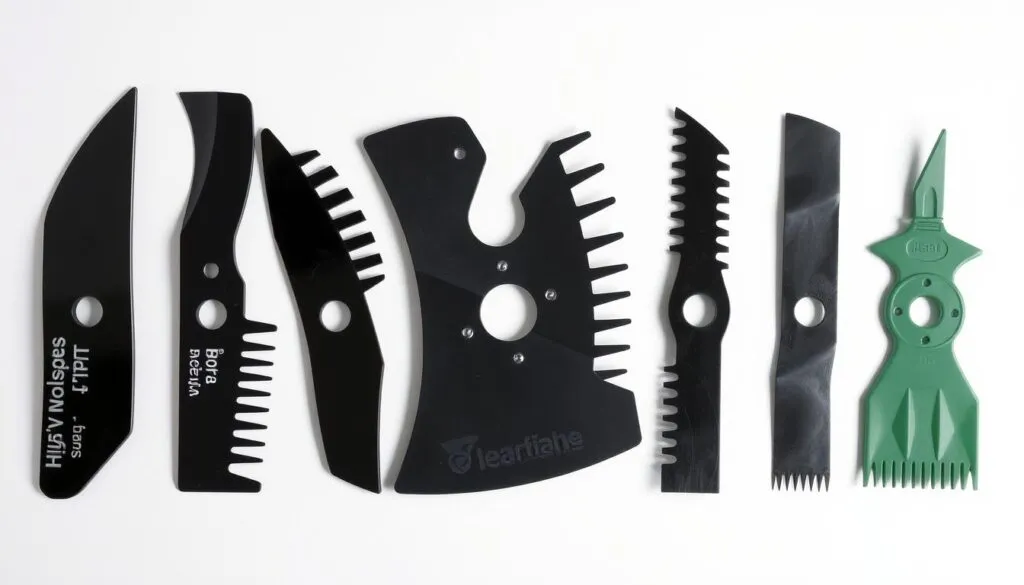
Standard cutting tools feature a slight curve that lifts turf before slicing. They deliver clean results for routine maintenance.
Mulching components have distinctive wavy edges. These designs chop grass clippings repeatedly into fine particles. Nutrients return directly to the soil.
Lifting varieties create airflow through their curvature. High-lift options generate strong suction for wet conditions. Low-lift types work well in sandy soil with minimal dust.
Specialty Blades: High-Lift, Low-Lift, and Gator Options
Specialty tools address specific challenges. High-lift versions excel with tall grass and bagging systems. Their powerful suction stands up to thick growth.
Low-lift designs reduce engine strain in dry climates. They’re perfect for short, warm-season grasses.
Gator tools feature serrated teeth that shred leaves and grass efficiently. Professionals often choose them for heavy-duty mulching applications.
| Blade Type | Best For | Key Feature |
|---|---|---|
| Standard | Regular maintenance | Balanced lift and cut |
| Mulching | Nutrient recycling | Multiple cutting edges |
| High-Lift | Wet/thick grass | Powerful suction |
| Low-Lift | Sandy/dry conditions | Minimal dust creation |
| Gator | Heavy mulching | Serrated teeth design |
“Matching your cutting tool to local conditions ensures superior performance and turf health year-round.”
Material composition matters too. Carbon steel handles residential stress well. High alloy options resist corrosion in commercial use. Choose based on your specific needs.
Measuring and Fitting Your Replacement Blade
Getting the precise measurements for your replacement blade ensures safety and optimal cutting performance. Proper fitting prevents vibration issues and maintains your equipment’s efficiency.
Step-by-Step Guide to Measuring Diagonally
Measure diagonally from cutting tip to cutting tip for accurate length. Straight-across measurement gives incorrect results that lead to ordering mistakes.
Account for material removal if measuring a worn component. Repeated sharpening reduces the cutting edge length. Your new part may be slightly longer than the worn one.
Understanding the Center Hole and Additional Specifications
The center hole diameter requires measurement straight across. Identify the exact shape—circle, star, square, or S-pattern. This ensures proper spindle attachment.
Some cutting tools feature outer holes for multi-blade systems. Measure these hole diameters and center-to-center distances. Commercial models like the Exmark Commercial 30 use this design to prevent blade collision.
Additional specifications include width at the widest section and thickness from top to bottom. Most components feature right-hand cutting, but some brands use left-hand designs.
Taking extra time to verify all measurements prevents ordering errors. Careful attention to detail ensures first-time compatibility with your equipment.
Conclusion
Achieving that perfect cut requires more than just sharp edges—it demands precise compatibility. Your equipment’s safety and cutting quality depend on selecting the exact component designed for your specific model. Never compromise on proper fit.
Always verify your machine’s model number and measure dimensions carefully. Check the center hole shape and blade length against manufacturer specifications. This prevents dangerous vibration and ensures optimal performance.
Regular inspection helps maintain cutting excellence. Replace components showing significant wear or damage rather than attempting repairs. Follow manufacturer guidelines for replacement timing to avoid failure risks.
Choosing the right cutting tool transforms your maintenance routine. It protects your investment while delivering superior results season after season. Your equipment deserves nothing less than perfect compatibility.
FAQ
Are blades from one brand interchangeable with mowers from another?
No, they are generally not interchangeable. Cutting tools are designed for specific models. Using an incorrect one can damage your equipment and create unsafe conditions.
What are the main risks of installing the wrong cutting tool?
The primary dangers include poor cutting performance, excessive vibration that harms the engine, and potential damage to the deck. It can also throw debris dangerously.
Is it better to buy an OEM or an aftermarket replacement?
OEM parts guarantee a perfect fit and performance. High-quality aftermarket options can be excellent and cost-effective, but you must verify compatibility carefully.
How do I find the correct replacement for my machine?
The best method is to use your equipment’s model number. This information is usually on a sticker or plate on the deck. You can then search for the manufacturer’s recommended part.
What is the difference between a standard blade and a mulching blade?
A standard blade is designed to discharge clippings. A mulching blade has a unique curvature to recut grass into fine pieces that decompose quickly, nourishing the soil.
How do I accurately measure my current blade for replacement?
A> Measure diagonally from tip to tip. Also, note the length, width, and the exact size and shape of the center hole. This ensures you get the proper fit.
What are high-lift and low-lift blades used for?
High-lift blades have curved wings that create strong suction, ideal for bagging and mowing tall grass. Low-lift blades offer less suction, making them suitable for flat terrains and side discharge.