
Have you ever wondered if the quest for the perfectly sharp cutting edge is actually harming your lawn? Many believe a razor’s edge is the ultimate goal for their mower blade, but this common belief might be leading your turf care in the wrong direction.
The truth is, an overly sharp edge can be fragile and chip easily when it hits unseen debris. The ideal level of sharpness for a healthy lawn is surprisingly similar to that of a common butter knife. This level provides a clean, scissor-like cut that seals the tip of each grass blade.
A clean cut is the foundation of excellent lawn care. When your equipment delivers this, your turf can heal quickly and maintain its vibrant green color. Dull blades, on the other hand, tear and shred the grass. This creates a ragged, brown appearance and opens the door to disease.
Proper maintenance of your cutting tools is not just about aesthetics. It protects your investment in your mowers by reducing vibration and stress on the machine. This guide will give you the knowledge to achieve a beautiful, resilient yard with less effort.
Key Takeaways
- A butter knife level of sharpness is ideal for a mower blade, not a razor edge.
- Clean cuts promote faster healing and better overall grass health.
- Dull blades tear grass, leading to brown tips and increased disease risk.
- Properly sharpened blades reduce wear and tear on your mowers.
- Sharp blades are essential for a professional-looking, healthy lawn.
- Regular blade maintenance is a core part of effective lawn care.
Importance of Sharp and Balanced Mower Blades
The condition of your cutting equipment directly influences your turf’s resilience. Properly maintained cutting edges ensure your lawn receives the care it deserves.
Impact on Turf Health and Nutrient Uptake
Dull cutting edges tear at grass rather than delivering clean cuts. This damage creates ragged edges that turn brown within days.
Torn grass tissue reduces the plant’s ability to absorb nutrients and water. Weakened root systems make your lawn vulnerable to weeds and disease.
Clean cuts from properly conditioned blades allow quick healing. Your turf maintains vigorous health and achieves that manicured appearance.
Mower Performance and Longevity
Imbalanced blades create excessive vibration during operation. This stress wears down the mower deck, frame, and internal components.
Sharp blades cut through grass with ease, reducing mowing time and fuel consumption. You complete jobs faster with less engine strain.
Regular maintenance protects your equipment investment. It extends operational life and reduces costly repairs.
The time spent on blade care delivers significant returns. You enjoy better cut quality, healthier grass, and improved mowing efficiency.
How Sharp Should Mower Blades Be: Understanding the Optimal Edge
The secret to effective grass cutting lies not in extreme sharpness but in balanced edge strength. Many people believe a razor-like edge delivers superior performance. This approach often leads to frustration and frequent maintenance.
Razor Sharp vs. Butter Knife Edge
A razor sharp cutting surface is surprisingly fragile. It requires minimal force to become nicked or chipped when contacting hidden yard debris.
This delicate sharp edge damages easily against stones and sticks. You would need to perform sharpening much more often.
The practical solution follows the butter knife rule. This level provides enough keenness for a clean cut without sacrificing durability.
Your blade maintains its edge through multiple mowing sessions. It strikes the perfect balance between cutting performance and longevity.
Focus your work only on the angled portion of the blade. Move from the tip back to where the bevel stops. This preserves the original design.
Most factory blades feature a 30-degree angle. Matching this original edge during maintenance ensures consistent performance.
Check effectiveness by feeling the edge carefully. Observe how it slices through grass for practical verification.
Essential Tools and Preparation for Sharpening Mower Blades
Having the correct gear assembled makes the difference between a frustrating experience and professional results. Proper preparation ensures your work proceeds smoothly and safely.
Safety Gear and Preventative Measures
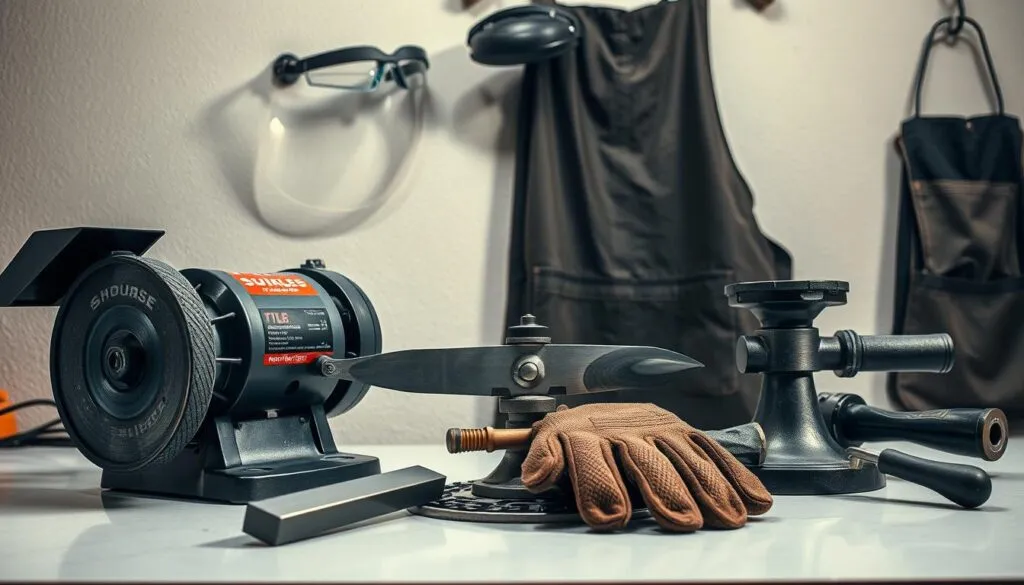
Your first priority should be personal protection. Heavy-duty gloves shield your hands from sharp edges during handling.
Safety glasses or goggles are non-negotiable. They protect your eyes from metal particles during the sharpening process.
Always disconnect power before starting. Remove spark plug wires from gas models or batteries from electric mower units. This prevents accidental activation.
Choosing the Right Tools: Files, Angle Grinders, and More
Several tool options exist for home sharpening. Each offers different benefits for various skill levels.
A basic metal file provides excellent control. It’s affordable and perfect for minor touch-ups between seasons.
Drill-based sharpeners offer guided angle consistency. They’re faster than manual filing while maintaining precision.
An angle grinder with a 60-grit flap disk delivers speed. This equipment requires practice but removes material quickly.
| Tool Type | Skill Level | Time Required | Cost Range |
|---|---|---|---|
| Metal File | Beginner | 15-20 minutes | $10-20 |
| Drill Sharpener | Intermediate | 10-15 minutes | $25-50 |
| Angle Grinder | Advanced | 5-10 minutes | $40-100+ |
For blade removal, you’ll need a socket wrench and penetrating lubricant. A wood block stabilizes the cutting blade during bolt removal.
Balance checking is the final point. Simple nail balancers or commercial options verify your mower blade equilibrium.
These tips prepare you for efficient maintenance. The right approach saves time and ensures quality results.
Step-by-Step Guide to Sharpening and Balancing Mower Blades
Proper blade preparation sets the foundation for successful sharpening and balanced performance. Begin by gathering your safety equipment and creating a clean, well-lit workspace.
Prepping Your Blade and Workspace
Start with thorough cleaning to remove grass buildup and debris. Use a stiff brush or file to clean both sides of the cutting surface.
Check straightness before beginning any work. Place the equipment on a balancer and spin gently. Replace any warped cutting tools immediately.
Sharpening Techniques and Angle Consistency
Maintain the original factory angle during your work. Most cutting tools feature a 30-degree design that optimizes performance.
Make smooth, even passes from tip to center. Apply consistent pressure while moving in one direction only. This approach preserves the cutting edge integrity.
| Method | Skill Level | Time Investment | Result Consistency |
|---|---|---|---|
| Manual Filing | Beginner | 15-20 minutes | High |
| Drill Attachment | Intermediate | 10-15 minutes | Medium-High |
| Angle Grinder | Advanced | 5-10 minutes | Medium |
Balancing the Blade for Even Performance
Balance checking is the final critical step. Place the sharpened cutting tool on your balancer through the center hole.
If one side dips lower, that heavier edge requires additional work. Continue alternating between sharpening and checking until perfect equilibrium is achieved.
The entire maintenance job typically takes 10-20 minutes. Regular care every 8-12 hours of operation keeps your equipment performing optimally.
Maintenance Tips to Extend Blade Life and Enhance Lawn Care
The difference between mediocre and exceptional lawn results often comes down to simple maintenance routines. Consistent care transforms your cutting equipment’s performance and extends its operational lifespan significantly.
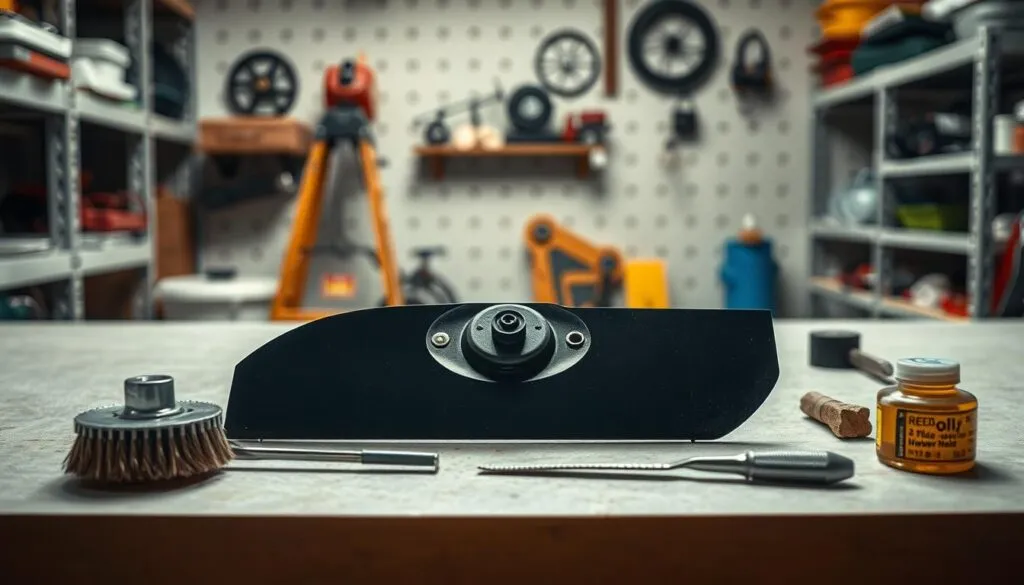
Watch for clear indicators that your cutting tools need attention. Torn grass clippings scattered across your turf signal immediate maintenance requirements. Uneven cutting patterns and missed strips also reveal equipment needing service.
Routine Cleaning and Inspection Best Practices
Develop the habit of cleaning after each mowing session. Use a stiff brush to remove grass buildup from the cutting surface and spindle area. This prevents corrosive materials from damaging the metal.
Certain conditions accelerate wear on your equipment. Sandy soil, overgrown yards, and frequent debris contact demand more frequent inspection. Professionals often implement rotation systems for optimal performance.
Regular inspection catches problems before they escalate. Look for bends, cracks, or deep damage beyond normal wear. Damaged cutting tools require replacement rather than repair for safety reasons.
Establishing a consistent maintenance schedule pays dividends. Your equipment lasts longer, performs better, and delivers professional-looking results every time. This approach reduces overall costs and ensures beautiful turf health.
Advanced Techniques and Innovations in Mower Blade Sharpening
Elevating your lawn maintenance involves exploring advanced blade technology and precision equipment. Moving beyond basic sharpening methods opens new possibilities for superior results.
Professional-grade tools deliver consistency that basic equipment cannot match. These innovations transform your maintenance routine.
Exploring Innovative Sharpening Tools and Equipment
Vertical belt grinders provide professional-level sharpening capabilities. They create uniform edges that resist dulling longer than rough finishes.
Specialized sharpening kits with pre-set angles ensure precision every time. This equipment maintains the original factory edge geometry perfectly.
Sophisticated balancing tools go beyond simple nail tests. Wall-mounted magnetic balancers with gauge rods verify both balance and straightness simultaneously.
Understanding Blade Materials and Their Durability
Blade composition significantly affects edge retention. Premium materials like MARBAIN steel hold their cutting performance substantially longer.
Manufacturers develop proprietary systems for optimal performance. GrassMax blades engineered for specific deck designs deliver superior results.
Investing in quality blades saves time and money over the years. Advanced heat-treating processes work with proper techniques to maximize longevity.
These innovations create durable edges that maintain consistent cutting throughout their life. Your equipment performs better with less frequent maintenance.
Conclusion
With the knowledge you’ve gained, you’re now prepared to maintain cutting equipment that delivers professional results season after season. The proper butter knife edge level ensures clean cuts without sacrificing durability.
Regular maintenance every 8-12 hours of operation keeps your lawn looking its best. This routine protects your investment in mowers while promoting healthy grass growth.
You understand the essential tools and techniques for effective blade care. From basic files to advanced equipment, you can choose the right approach for your home setup.
Implementing these practices transforms your lawn care routine. Your turf will show the difference with cleaner cuts and better overall health. Consistent attention to your cutting blades pays dividends in appearance and equipment longevity.
FAQ
How often should I sharpen my lawn mower blades?
You should check the edge after every 20-25 hours of mowing. For most homeowners, this means sharpening the cutting edge at least once or twice during the growing season. If you hit rocks or other debris, inspect and sharpen immediately to prevent damage to your turf and equipment.
What is the correct angle for sharpening a mower blade?
Most manufacturers recommend maintaining the original factory bevel, which is typically between 30 and 45 degrees. Using a sharpening guide can help you consistently achieve this angle, ensuring a clean cut that promotes healthy grass.
Why is balancing my blade so important after sharpening?
An unbalanced blade causes excessive vibration, which can damage your mower’s spindle bearings and deck. This vibration leads to uneven cuts and puts stress on the entire machine. Always use a blade balancer to check your work for smooth, safe operation.
Can I sharpen my blades with a regular metal file?
A> Yes, a high-quality mill bastard file is an effective and safe tool for this job. It offers great control and is perfect for routine maintenance. For blades with significant nicks or damage, an angle grinder may be faster but requires more skill to avoid overheating the metal.
What are the signs that my blades need sharpening?
Look for a ragged, torn appearance on your grass tips instead of a clean slice. You might also see a brownish hue on the lawn a day or two after mowing, indicating stress. Reduced cutting performance and increased vibration are also clear signals from your equipment.
Is it possible to make a blade too sharp?
While a razor-sharp edge is ideal, an extremely fine, wire-like edge can dull quickly. The goal is a durable, sharp bevel that can withstand cutting grass and minor debris. A properly sharpened edge should easily slice through a piece of paper.