
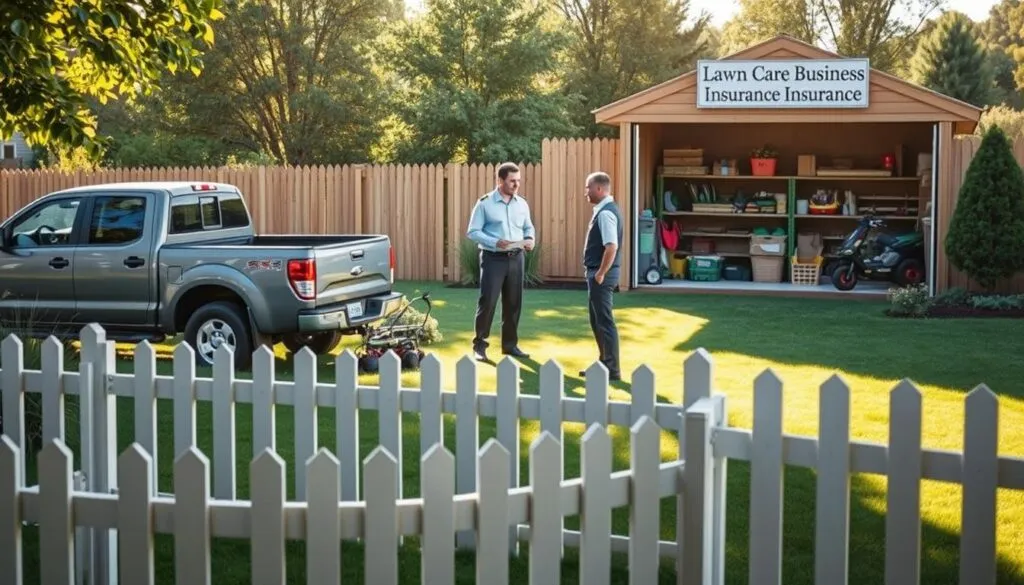
What if one simple mistake could erase your entire month’s income? For many in the landscaping industry, this is a real and constant worry. Accidents happen, even to the most careful professionals.
Operating a lawn care business without proper coverage is a significant gamble. A damaged sprinkler head, an injured pet, or stolen equipment can lead to expensive claims. These events threaten your financial security and the future of your operation.
Protection is not just about reacting to problems. It’s about building a resilient company. Having a safety net allows you to pursue larger contracts with confidence. Clients often prefer to hire insured businesses, seeing it as a mark of professionalism.
This coverage acts as your comeback plan. It ensures that a single incident doesn’t halt your growth. For any business owner, this peace of mind is invaluable. It lets you focus on what you do best: providing excellent service.
Key Takeaways
- Operating without coverage exposes your business to significant financial risk from accidents or theft.
- Many municipalities require specific insurance for landscaping operations to be legal.
- Clients are more likely to trust and hire an insured lawn care company.
- Proper protection safeguards your equipment, vehicle, and personal assets from liability claims.
- Insurance provides a critical safety net, allowing you to recover quickly from unexpected events.
- It is a fundamental step for scaling your business and bidding on larger, more profitable jobs.
Understanding Lawn Care Business Risks
Operating a landscaping service means facing real-world dangers that can quickly turn profitable work into costly liabilities. Every job site presents unique challenges that require careful attention to safety protocols.
Common Property and Equipment Hazards
Property damage incidents occur frequently in this industry. A simple rock from your trimmer can shatter a client’s window, costing $600-$1,700 to replace. Underground sprinkler systems are particularly vulnerable, with repair bills reaching $500-$2,000.
Your equipment faces constant risk too. Theft is a serious concern—losing a $3,000 mower and $1,200 in handheld tools during a lunch break can halt operations completely. Proper storage and security measures are essential for protecting your valuable tools.
https://www.youtube.com/watch?v=qz21fZTylp4
Bodily Injury and Liability Concerns
Bodily injury claims represent the most severe financial risk. If a client trips over your extension cord and breaks their wrist, medical expenses alone can exceed $5,000. Legal fees often push total costs much higher.
Even minor employee injuries create significant liability. A simple slip that twists a knee could result in $2,500 in medical bills. These accidents aren’t rare occurrences but common industry realities that demand proper protection.
Beyond immediate costs, such incidents can damage your reputation through negative reviews and complaints. Managing these risks proactively ensures your business remains stable and trustworthy.
Insurance Options Tailored for Lawn Care Businesses
Choosing the right insurance coverage is like selecting the proper tools for a job. Each policy serves a specific purpose in protecting your operation.
General Liability Insurance Benefits
General liability insurance forms your primary defense against common risks. This essential business insurance covers property damage claims and third-party injuries.
Your policy handles client window breaks, sprinkler system damage, and slip-and-fall incidents. It also protects against advertising-related claims. This liability coverage does not extend to employee injuries or vehicle accidents.
Workers Compensation and Commercial Auto Coverage
Workers compensation becomes mandatory when you hire employees in most states. This care insurance covers medical costs and lost wages for work-related injuries.
Commercial auto insurance provides specialized protection for business vehicles. It covers liability and property damage during work-related driving. Personal auto policies typically exclude commercial use.
Additional options include equipment insurance for theft protection and cyber liability for digital payments. Many commercial contracts require adding clients as additional insureds on your policy.
Do I Need Insurance to Mow Lawns? Essential Coverage Insights
For those starting out in the green industry, the topic of financial safeguards frequently surfaces. The answer is unequivocal: protection is essential regardless of your operation’s scale.
Many believe their small size exempts them from coverage requirements. This misconception can prove costly. Even weekend operators face significant exposure when working on client properties.
Policy Requirements for Small vs. Large Businesses
Your operation’s scale directly influences protection needs. Solo entrepreneurs typically require basic liability coverage. This safeguards against property damage and third-party injuries.
Larger operations with multiple crews need comprehensive packages. These include workers’ compensation and commercial auto coverage. Municipalities often mandate minimum protection levels for licensing.
Insurance providers tailor policies to match your specific risk profile. They assess equipment value, employee count, and service scope. This ensures adequate protection without unnecessary expenses.
Remember: personal assets remain vulnerable without proper business safeguards. A single incident could jeopardize your financial stability. Smart operators prioritize this fundamental protection.
Evaluating Insurance Costs and Payment Structures
Understanding your financial commitment for protection is a crucial step in business planning. Many operators worry about expensive premiums, but basic coverage can start around $31 monthly.
Your final cost depends on several factors. Equipment value, team size, and location all influence pricing. Claims history and service scope also affect your premium.
Monthly, Quarterly, and Annual Payment Plans
Most providers offer flexible payment options. You can choose monthly, quarterly, or annual schedules. Each plan has distinct advantages for cash flow management.
Monthly payments help with budgeting for new operations. Quarterly plans offer a middle ground for growing companies. Annual payments typically provide the best value with significant discounts.
| Payment Plan | Upfront Cost | Discount Potential | Best For |
|---|---|---|---|
| Monthly | Lowest | 0-5% | Startups, tight budgets |
| Quarterly | Moderate | 5-10% | Growing businesses |
| Annual | Highest | 10-20% | Established operations |
Compare quotes from multiple providers before deciding. Look at coverage limits alongside premium costs. Bundling policies often reduces your overall expense.
Selecting a Trustworthy Insurance Agent for Your Business
Finding the right insurance partner can make all the difference in protecting your landscaping operation. A knowledgeable agent acts as your guide through complex policy details.
They help you understand exactly what your liability coverage includes. This expert advice ensures your protection matches your specific risk profile.

Expert Guidance and Trust in Coverage Recommendations
Look for an agent with experience in the green industry. They should offer transparent communication about costs and options.
A good agent provides a detailed quote quickly. They explain coverage limits and identify potential gaps in your protection.
Your agent should also manage your certificate insurance efficiently. Fast delivery of these documents helps you secure commercial contracts without delay.
This professional relationship is an ongoing partnership. Your agent will review your policy as your business grows and your equipment changes.
This ensures your coverage always meets your evolving needs. The right support gives you confidence to focus on your work.
Best Practices for Managing Insurance and Minimizing Risks
Building a culture of safety and regular policy assessment protects your operation’s future. These practices work together to reduce claims and maintain affordable coverage.
Implementing Safety Protocols on Job Sites
Proper training for your workers prevents most injuries and property damage. Teach safe operation of all tools and equipment like mowers and trimmers.
Establish clear safety zones around active work areas. Conduct pre-job inspections to identify potential hazards. This proactive approach significantly reduces your risk exposure.
Reviewing and Updating Your Policy Regularly
Annual policy reviews ensure your coverage matches your evolving lawn care business needs. Assess changes in equipment, services, or workforce size.
Create an incident response plan for handling accidents professionally. Document everything thoroughly and notify your carrier promptly when issues arise.
Monitor your insurance company’s financial stability and compare offerings periodically. This ensures you receive competitive value for your small business protection.
Conclusion
Securing proper protection transforms your lawn care operation from a vulnerable side job into a resilient business. This coverage serves as your foundation for sustainable growth and professional credibility.
Essential safeguards include general liability for property damage, workers compensation for employee safety, and equipment protection for your valuable tools. These policies work together to create comprehensive security.
View this protection as a strategic investment rather than an expense. It opens doors to commercial contracts and establishes trust with discerning clients. This professional approach sets you apart from competitors and builds your reputation.
The peace of mind gained allows you to focus on expanding your services and upgrading your equipment. Take the next step today by consulting with a knowledgeable agent who understands landscaping businesses.
Proper coverage is the smartest decision for long-term success in the lawn care industry. It protects everything you’ve worked hard to build.
FAQ
What types of accidents are covered under a general liability policy?
A general liability policy typically covers third-party bodily injury, like a client tripping over your equipment, and property damage, such as accidentally damaging a client’s sprinkler system. It’s fundamental protection for common mishaps in the lawn care industry.
How much does insurance for a landscaping business usually cost?
Insurance costs vary based on your business size, services offered, and location. For a small operation, a general liability policy might start around a few hundred dollars annually. Getting quotes from providers like Next Insurance or Thimble can give you a precise estimate.
Is commercial auto insurance necessary if I use my personal truck for work?
Yes, it’s highly recommended. Personal auto policies often exclude coverage when the vehicle is used for business purposes. Commercial auto insurance protects you, your vehicle, and your tools in case of an accident while on the job.
When should a lawn care business consider workers’ compensation coverage?
You should secure workers’ comp as soon as you hire your first employee. In many states, it’s legally required. This coverage provides benefits to employees who suffer a work-related injury or illness.
What is a certificate of insurance, and why do clients ask for it?
A certificate of insurance (COI) is a document from your insurer that proves you have active coverage. Many commercial clients, property managers, and homeowners’ associations require it before hiring you to mitigate their own risk.
Can I get insurance that covers my expensive mowers and trimmers?
Absolutely. Inland marine insurance or a separate tools and equipment policy can cover your commercial-grade mowers, trimmers, and blowers against theft, damage, or loss, whether at a job site or in transit.