
Have you ever wondered why the price for engine lubrication varies so dramatically between different brands and formulations?
The cost of maintaining your outdoor equipment doesn’t have to be a mystery. Quality lubrication plays a crucial role in protecting your machinery’s heart. Choosing the right product ensures optimal performance and longevity.
Prices range significantly based on several factors. Conventional blends start around $12 per quart, while premium synthetic options can exceed $17. The type you select depends on your specific engine requirements and local climate conditions.
This comprehensive guide will help you navigate the pricing landscape. You’ll learn what influences costs and how to calculate your exact needs. Making informed decisions saves money and protects your investment in the long run.
Key Takeaways
- Engine lubrication costs vary widely based on type and quality
- Conventional blends start around $12 per quart
- Premium synthetic formulations can exceed $17 per quart
- Different equipment requires specific oil types and quantities
- Climate conditions influence which formulation works best
- Proper lubrication extends equipment lifespan significantly
- Understanding pricing helps budget for regular maintenance
Getting Started with Lawn Mower Oil Pricing and Selection
Before comparing prices, you must identify the precise formulation your machinery requires for optimal performance. Your equipment’s specifications determine which products will work best and prevent costly mistakes.
Understanding Oil Requirements for Your Mower
Check your operator’s manual or engine label for the recommended viscosity grade and capacity. This information is essential for calculating your purchasing needs accurately.
Different equipment types require varying oil volumes. Walk-behind units typically need 15-18 ounces per change. Riding mowers may require 48-64 ounces.
Your engine’s design and local climate conditions influence the ideal formulation. Proper matching ensures better protection and longer equipment life.
Selecting the Right Oil Type
Temperature plays a crucial role in oil performance. SAE 30 works well in warmer conditions, while SAE 10W-30 handles varying temperatures effectively.
Synthetic SAE 5W-30 offers superior protection across all conditions. It provides easier starting and reduced consumption.
Always choose high-quality detergent oil classified as “For Service SF, SG, SH, SJ” or higher. Avoid special additives not recommended by manufacturers.
Understanding these fundamentals helps you compare appropriate products. You’ll avoid selecting cheap options that may damage your equipment.
Factors that Influence Your Lawn Mower Oil Costs
Your local weather patterns play a surprising role in determining which engine lubricant works best for your equipment. Several elements affect what you’ll pay at checkout.
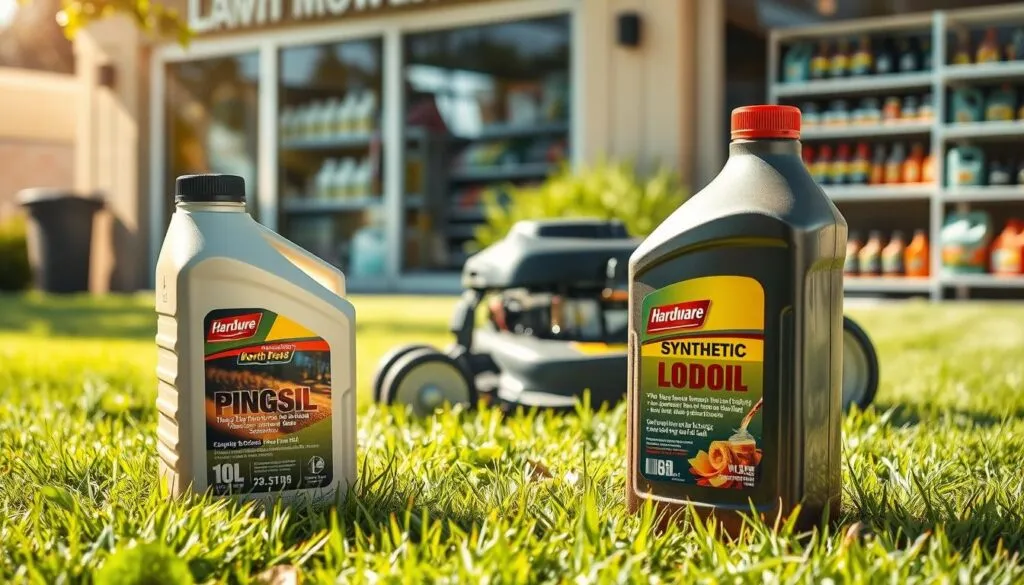
Impact of Climate and Temperature on Oil Performance
Temperature extremes dictate formulation requirements. In regions where temperatures drop below 40°F, single-grade products can cause hard starting.
Warmer climates above 80°F create different challenges. Multi-grade formulations might lead to increased consumption in these conditions.
Synthetic options provide superior protection across all temperature ranges. They ensure reliable performance whether you’re dealing with summer heat or spring chill.
Comparing Engine Oil Types and Prices
Conventional SAE 30 represents the most economical choice for consistent warm weather. Premium synthetic formulations typically cost around $17 per quart.
Multi-grade products usually add 10-20% to the baseline price. Full synthetic options can be 30-50% more expensive than conventional alternatives.
Purchasing by the case often reduces your per-unit cost significantly. This approach offers better value if you maintain multiple pieces of equipment.
Brand reputation and formulation quality also affect pricing. Manufacturer-specific products may cost more but provide assured compatibility.
How Much Is Lawn Mower Oil: Calculating Your Needs
Accurate budgeting for your equipment maintenance starts with understanding precise capacity requirements. Different machinery types demand specific fluid volumes that directly impact your purchasing decisions.
Knowing your equipment’s exact specifications prevents wasteful spending. Proper measurement ensures you buy exactly what you need without excess.
Assessing Mower Engine Capacity and Oil Volume
Walk-behind units typically require 15-18 ounces per service. This translates to slightly more than one pint per change.
A single quart container provides enough fluid for one complete service. You’ll have a small amount remaining for occasional top-ups between changes.
Riding equipment demands significantly more volume. These engines need 48-64 ounces, requiring 1.5-2 quarts per service.
Service intervals vary based on usage patterns. Most residential equipment needs annual changes or every 50 hours of operation.
Commercial applications may require more frequent servicing. Riding units used extensively might need 2-3 changes per season.
Regularly check your fluid level during the mowing season. Maintain proper levels between scheduled changes for optimal performance.
Never exceed the maximum fill line on your dipstick. Overfilling can cause operational issues and potential damage.
Steps to Change and Maintain Your Mower Oil>
Learning to perform routine maintenance yourself gives you complete control over your equipment’s care. Proper fluid management protects your engine from premature wear. Regular attention ensures optimal performance throughout the cutting season.
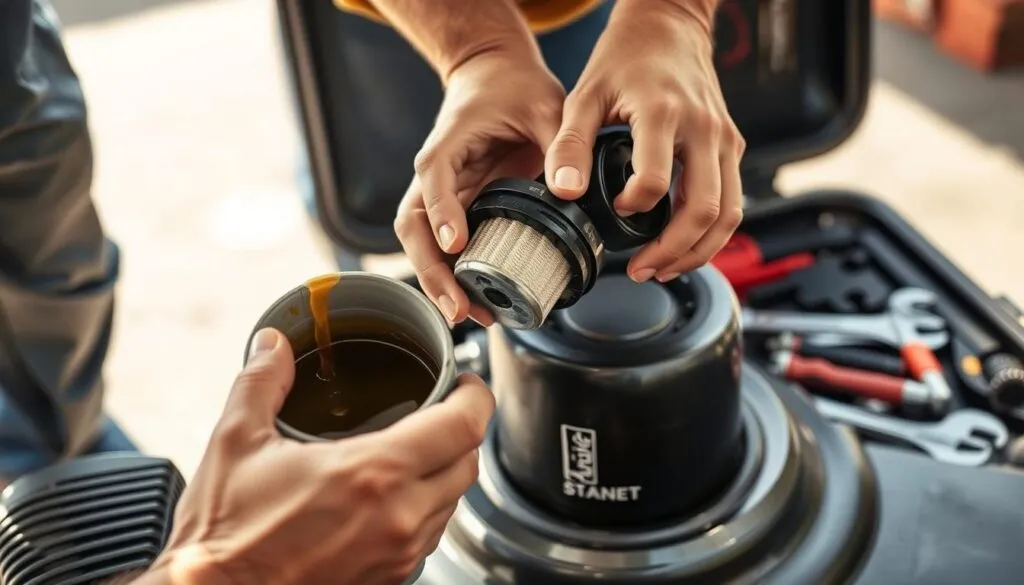
Step-by-Step Oil Change Process
Begin by running your engine briefly to warm the fluid. This helps it drain completely while carrying away contaminants. Always work on a level surface for safety and accuracy.
Position a collection container beneath the drain plug. Remove the plug and allow the old fluid to drain fully. Proper disposal at a recycling center is essential for environmental protection.
Replace the drain plug securely before adding fresh fluid. Use a funnel to prevent spills and add small amounts at a time. Check your equipment’s manual for the exact capacity.
Some models include a filter that requires replacement during each service. This component traps harmful particles that can cause engine damage over time.
| Maintenance Task | Frequency | Time Required | Key Benefit |
|---|---|---|---|
| Complete Oil Change | Every 50 hours or annually | 15-20 minutes | Removes contaminants |
| Filter Replacement | With each oil change | Additional 5 minutes | Engine protection |
| Level Check | Before each use | 1 minute | Prevents damage |
Tips for Regular Oil Level Checks and Maintenance
Always park on level ground when checking your fluid level. Remove the dipstick and wipe it clean with a rag for an accurate reading. Reinsert it fully before removing again to check.
The fluid level should appear between the “full” and “add” marks. If low, add small amounts gradually. Allow time for the fluid to settle before rechecking to avoid overfilling.
Establishing a quick check routine before each use takes minimal time. This habit helps identify potential issues like leaks or excessive consumption early.
Navigating Product Options and Purchasing Decisions
Selecting the right engine fluid involves weighing immediate costs against long-term protection benefits for your outdoor power equipment. The modern marketplace offers diverse formulations with distinct performance characteristics.
Understanding the differences between available products helps you make informed choices. Your decision impacts both current expenses and future maintenance requirements.
Exploring Synthetic versus Conventional Oils
Conventional formulations represent the traditional choice for warm-weather operation. These products provide adequate protection at lower per-quart costs.
Synthetic options deliver superior performance across all temperature ranges. Major manufacturers like Briggs & Stratton now approve these premium formulations.
Using synthetic products ensures warranty compliance while offering better cold-weather starting. These advanced fluids reduce consumption and maintain engine cleanliness.
Purchasing by the case typically reduces your per-unit cost significantly. Retailers like Home Depot stock numerous options, while specialty suppliers offer bulk pricing.
Brand selection matters for peace of mind and coverage requirements. Manufacturer-specific products guarantee compatibility, while quality alternatives may provide similar performance.
Conclusion
Smart equipment maintenance extends beyond immediate costs to consider years of reliable performance. Your investment in quality lubrication protects critical engine parts and ensures consistent power output.
Regular service checks take little time but provide significant protection against costly problems. Establishing a simple routine before each use helps identify issues early.
Whether you purchase individual bottles or case quantities from home improvement stores, understanding your specific needs ensures proper care. This approach balances budget considerations with long-term value.
Proper maintenance extends equipment life for many years while preventing expensive repairs. Your consistent attention to lubrication levels represents one of the most cost-effective investments you can make for your outdoor power tools.
FAQ
What factors determine the price of engine oil for my equipment?
The cost depends on the oil type, brand, and quantity. Conventional oil is generally more affordable, while synthetic blends and full synthetic products offer enhanced protection at a higher price. Buying in bulk, like a case or gallon jug, often reduces the price per quart compared to a single bottle.
How do I choose the correct oil for my mower engine?
Always check your owner’s manual first. It specifies the recommended viscosity (like SAE 30 or 10W-30) and service classification (such as SJ, SL, or higher). Using the wrong type can lead to performance problems and even damage your engine over time.
Does the climate I live in affect which oil I should use?
Yes, temperature greatly impacts oil performance. In hotter climates, a thicker oil like SAE 30 provides better protection. For regions with cold springs and falls, a multi-grade oil such as 10W-30 ensures easier starts and proper lubrication. This selection helps maintain optimal engine power.
How much oil does my lawn mower engine typically hold?
A> Most walk-behind mowers require about 15 to 20 ounces, or roughly one quart, per change. Riding mowers and larger equipment may need up to two quarts. To be precise, consult your manual for your model’s exact capacity to avoid overfilling or running low.
What is the difference between synthetic and conventional oil?
Conventional oil is refined from crude oil and is a cost-effective choice for standard service intervals. Synthetic oil is engineered for superior protection, especially under extreme temperatures and heavy use, and can often extend the time between changes. A synthetic blend offers a middle ground in both price and performance.
How often should I check the oil level in my mower?
You should check the level every time before you start the engine. Make sure the machine is on a level surface. A quick visual check takes only a moment and can prevent serious problems by ensuring your engine always has adequate lubrication.
Can I use automotive engine oil in my lawn mower?
It’s not recommended. Many automotive oils contain additives that can harm small engines, potentially leading to increased smoke and deposits. Always use oil specifically designed for small engines, like those from Briggs & Stratton or other power equipment brands, for the best results.