
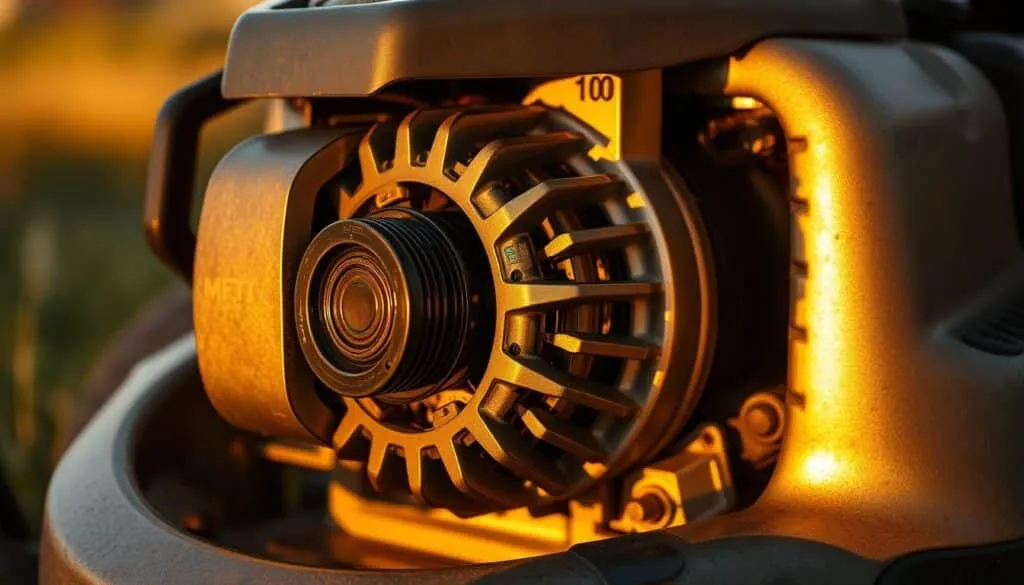
Have you ever wondered how your outdoor power equipment keeps its battery charged while you work? Many people assume all modern machines include a built-in charging system. The truth about your specific model might surprise you.
The presence of this electrical component depends entirely on the design of your machine. Key-start models, like many zero-turn mowers, typically feature an integrated charging system. This system combines a battery and an alternator to maintain power.
Conversely, simpler manual pull-start models usually operate without this feature. They rely solely on the initial charge from an external source. Understanding this distinction is crucial for proper maintenance and operation of your gear.
Manufacturer specifications determine the exact setup for each piece of equipment. Some advanced models are engineered to recharge their own battery during use. Others are designed for simpler, more straightforward operation.
Key Takeaways
- Not all lawn mowers come equipped with an alternator; it depends on the model type.
- Key-start models with electric systems typically include a battery and alternator.
- Manual pull-start mowers generally do not have this charging component.
- Zero-turn mowers may or may not include alternators based on their specific design.
- Some equipment relies on external battery chargers instead of an internal charging system.
- Checking your manufacturer’s specifications is the best way to confirm your mower’s features.
Fundamentals of Lawn Mower Alternators
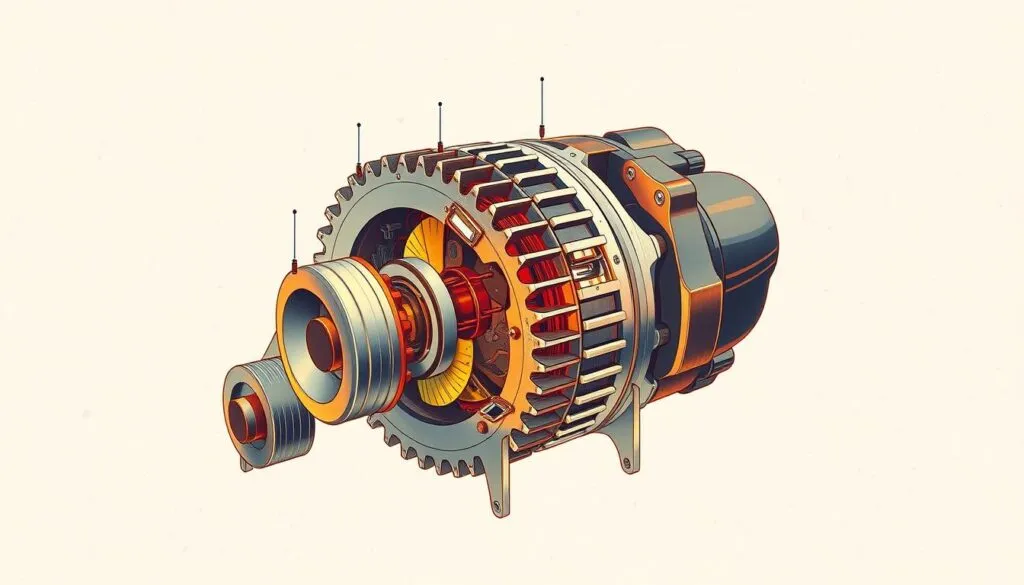
Four primary components work in concert within your equipment’s charging mechanism. Knowing these parts helps you understand how electrical power is generated while the engine runs.
Key Components: Rotor, Stator, Rectifier, and Regulator
The rotor is a central component spun by the engine’s drive belt. Its rotation is the initial source of mechanical energy.
Stationary stator windings surround the rotor. They create the essential electromagnetic field required for generating electricity.
Next, the rectifier converts the alternating current (AC) produced into direct current (DC). This DC power is what your battery and electrical accessories use.
Finally, the voltage regulator acts as a safety manager. It ensures a steady output, preventing damage from overcharging.
| Component | Primary Function | Key Characteristic |
|---|---|---|
| Rotor | Creates a rotating magnetic field | Spins with the engine via a belt |
| Stator | Generates alternating current (AC) | Fixed set of surrounding windings |
| Rectifier | Converts AC to DC power | Essential for battery charging |
| Voltage Regulator | Controls electrical output | Protects the battery from overload |
Working Principles and Magnetic Induction
The process begins when the engine turns the rotor. This spinning motion creates a changing magnetic field.
This field induces an electrical current within the stationary stator windings. This is the principle of electromagnetic induction in action.
The raw AC electricity is then channeled to the rectifier. It gets transformed into usable DC power for the entire system.
Does a Lawn Mower Have an Alternator and How It Functions
Your equipment’s electrical system relies on a specific component to maintain power during operation. This charging mechanism becomes active as soon as you start the engine.
The Role of the Alternator in Powering Electrical Systems
While your engine runs, the alternator generates electricity to keep the battery charged. This continuous power flow supports all electrical accessories on your machine.
The component ensures your headlights, electric start, and other features work reliably. Without proper charging, these systems would drain the battery quickly.
| Mower Type | Charging Capability | Typical Electrical Features |
|---|---|---|
| Key-Start Models | Full charging system with alternator | Headlights, electric start, hour meter |
| Manual Pull-Start | No internal charging component | Basic spark ignition only |
| Zero-Turn Riding | Advanced alternator system | Multiple lights, dashboard displays, accessories |
You can perform a simple test to check alternator function. Turn on the headlights with the engine running, then shut off the engine.
If the lights dim noticeably when you kill the engine, your charging system works correctly. No change indicates a potential alternator issue.
This component typically mounts near the engine, often beneath protective housing. Its location varies by design but remains accessible for maintenance.
Testing and Diagnosing Your Alternator
Accurate diagnosis is key to maintaining your equipment’s electrical health. A simple multi-meter test can confirm if your charging system is performing correctly.
This process helps you avoid unnecessary part replacements. You can pinpoint the exact issue with confidence.
Using a Multi-meter for Voltage and Amperage Readings
First, identify your system type by checking the wire colors beneath the blower housing. This tells you if you’re testing for AC voltage or DC amps.
Consult your engine’s manual or an identification chart for precise wire matching. Set your multi-meter dial to the correct setting based on your findings.
For AC voltage tests, connect the leads to a ground point and the stator output wire. For DC amp tests, connect to the battery’s positive terminal.
Start the engine and let it warm up. Then, use a tachometer to set the engine speed to 3600 RPM for an accurate reading.
Compare the result on your multi-meter against the manufacturer’s specifications. A reading outside the recommended range indicates a faulty component.
Recognizing Signs of a Failing Charging System
Listen for unusual sounds like a click or groan when you try to start the equipment. This can be a early warning sign.
If onboard electronics, like lights, flicker or operate poorly, your mower battery might not be receiving a proper charge.
A battery that drains too quickly or won’t hold a charge is a major red flag. Always check that all connections are clean and tight first.
If the battery fails to charge fully with an external charger within eight hours, it likely needs replacement. Proper diagnosis saves time and money.
Step-by-Step Alternator Replacement Guide
Proper replacement of the electrical generator involves meticulous attention to safety and procedure. Following these guidelines ensures successful installation and prevents damage to your equipment.
Safety Precautions and Battery Disconnection
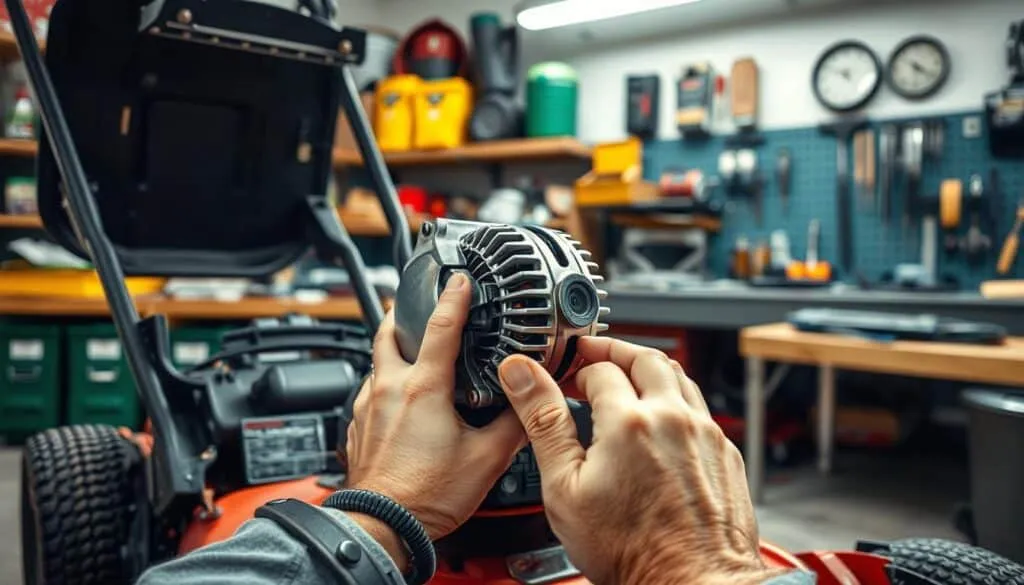
Always begin by disconnecting the battery. This critical step prevents electrical shocks and protects your system from short circuits.
Wear safety glasses throughout the process. Service batteries in well-ventilated areas away from ignition sources.
Consult your equipment manual before starting. This ensures you understand specific requirements for your model.
Installation and Reconnection Best Practices
Carefully locate the component near the engine. Note how it’s fastened and organized before removal.
Mark wires with tape for correct reassembly. This prevents confusion during reconnection.
Secure all bolts and connections tightly. Double-check everything before testing the system.
| Step | Action | Key Consideration |
|---|---|---|
| 1 | Battery Disconnection | Prevents electrical hazards |
| 2 | Component Location | Identify mounting and wiring |
| 3 | Old Unit Removal | Mark wires before disconnecting |
| 4 | New Part Installation | Ensure proper fit and alignment |
| 5 | System Testing | Verify electrical function |
Alternator Considerations Across Different Lawn Mower Types
Manufacturers design charging components specifically for each equipment category, ensuring optimal performance. The right electrical generator depends on your machine’s intended use and operational demands.
Comparing Traditional Riding Mowers and Zero-Turn Models
Traditional riding equipment often uses single-phase alternators. These provide sufficient power for basic electrical features like headlights.
Zero-turn models typically require more robust three-phase systems. These handle heavier electrical loads from advanced accessories and monitoring displays.
Permanent magnet alternators offer compact, efficient solutions for modern designs. They deliver consistent voltage output across various engine speeds.
Selecting the Right Alternator for Your Mower’s Needs
Consider your equipment’s electrical requirements before choosing a replacement. Larger riding machines with multiple accessories need more powerful charging systems.
Check manufacturer specifications for compatibility with your engine. Verify the alternator’s output matches your battery’s charging needs.
Heavy-duty commercial applications demand robust three-phase units. Residential use typically works well with simpler single-phase designs.
Conclusion
Armed with this knowledge, you can confidently address your equipment’s electrical needs. The presence of a charging component is not universal; it depends entirely on your specific machine’s design.
Key-start models with electrical features typically integrate this vital part. Simple pull-start units usually operate without an internal charging system.
Understanding this distinction is the foundation of proper maintenance. Regular checks and timely replacement of the electrical generator ensure your machine’s reliable operation.
Always consult your manufacturer’s guide for precise specifications. This empowers you to keep your outdoor power equipment running smoothly for years.
FAQ
Do all lawn mowers come with an alternator?
No, not all machines include this component. Simple push mowers often lack a charging system entirely. Riding mowers and larger equipment, like those from John Deere or Cub Cadet, typically feature an alternator to maintain the battery and run electrical parts.
What is the main job of the alternator on my mower?
Its primary function is to generate electrical power while the engine is running. This energy recharges your battery and operates accessories such as headlights, electric clutches, or a cooling fan, ensuring consistent performance.
How can I check if my mower’s charging system is working correctly?
Use a digital multimeter to check the voltage at the battery terminals with the engine at high speed. A reading significantly above 12.6 volts (typically 13.5-14.5 volts) indicates the system is charging. Dim lights or a dead battery are common signs of failure.
Can I replace a faulty alternator myself?
Yes, if you have basic mechanical skills. Always disconnect the battery first for safety. Consult your owner’s manual for specific instructions related to your model. Proper installation and secure connections are critical for the new component to function correctly.
Are alternators different for various types of mowers?
Absolutely. The charging system’s output varies based on the machine’s size and electrical demands. A large zero-turn mower with a cabin and lights needs a more powerful unit than a basic riding tractor. Always match the replacement part to your equipment’s specifications.