
Have you ever wondered why some lawn equipment lasts for decades while others break down after just a few seasons? The answer often lies in one simple but critical maintenance task that many homeowners overlook.
Proper lubrication is the lifeblood of your outdoor power equipment. When you understand the exact fluid requirements for your specific model, you’re taking a crucial step toward protecting your investment. This knowledge prevents unnecessary wear and extends the operational life of your machinery significantly.
Different types of grass-cutting machines have vastly different lubrication needs. Smaller push models require less fluid than larger riding versions. Getting this measurement right ensures your equipment runs smoothly, starts easily, and delivers consistent cutting performance throughout the season.
This comprehensive guide will walk you through everything from basic requirements to professional maintenance tips. You’ll learn to select the right lubricant type, measure the correct amount, and perform changes with confidence. Mastering this fundamental aspect of equipment care will save you from costly repairs and keep your yard looking pristine.
Key Takeaways
- Proper oil maintenance is essential for preventing engine damage and extending equipment life
- Different mower types have specific oil capacity requirements
- Correct oil levels ensure smooth operation and easy starting
- Understanding your mower’s needs prevents costly future repairs
- Regular maintenance protects your investment and maintains cutting performance
- Professional-level oil changes are achievable with the right knowledge
- Seasonal maintenance keeps your equipment running optimally year after year
Introduction to Lawn Mower Oil Maintenance
Effective equipment care starts with mastering the basics of engine lubrication. Your outdoor machinery requires consistent attention to perform reliably throughout the cutting season.
Overview of Lawn Mower Maintenance
Regular service involves multiple components, but fluid maintenance stands as the most critical factor. Your machine’s powerplant operates under demanding conditions including high temperatures and constant vibration.
Proper lubrication prevents catastrophic failure and ensures smooth operation. Always check the dipstick before each use to verify correct fluid levels.
Importance of Using the Proper Oil
Using manufacturer-recommended fluid protects internal components from friction and heat damage. The wrong type can lead to hard starting in cold weather and reduced protection.
New equipment typically doesn’t come with fluid already added. Adding the correct amount before first start-up prevents damaging your brand-new machine.
| Maintenance Aspect | Benefit | Frequency |
|---|---|---|
| Oil Level Checks | Prevents engine damage | Before each use |
| Proper Oil Type | Ensures optimal performance | Every change |
| Regular Changes | Extends equipment lifespan | Seasonally |
Establishing a consistent service schedule maximizes your investment’s longevity. This practice keeps your yard maintenance equipment running optimally year after year.
Understanding Lawn Mower Oil Requirements
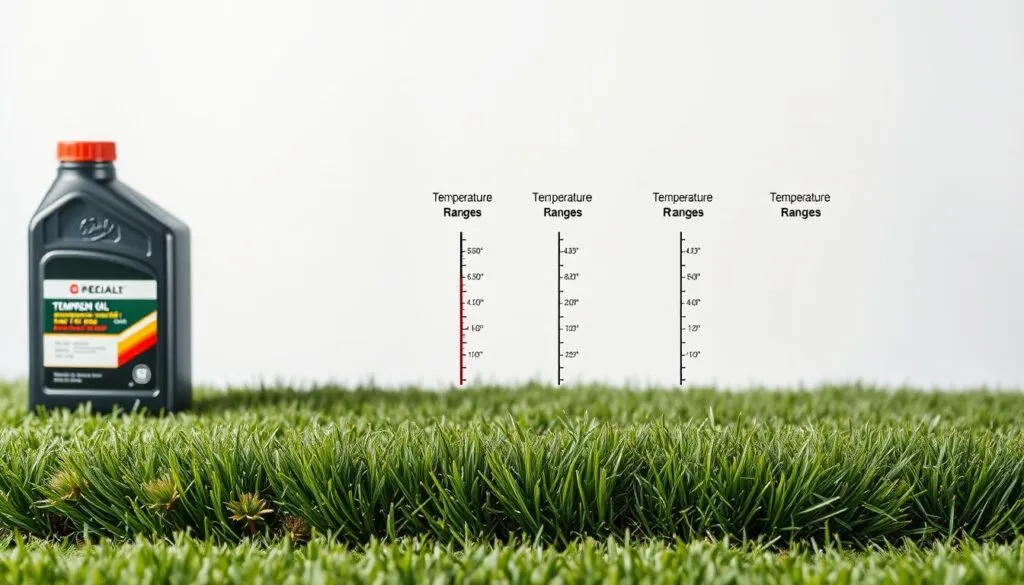
The viscosity grade you choose for your outdoor power equipment should match your regional weather patterns. Different lubricants perform optimally within specific temperature ranges, ensuring proper engine protection.
Oil Type Recommendations Based on Temperature
SAE 30 works best in warmer climates above 40°F. This common choice provides excellent protection during typical mowing seasons.
For regions with fluctuating temperatures from 0 to 100°F, SAE 10W-30 offers versatility. It improves cold-weather starting but may increase consumption above 80°F.
Synthetic SAE 5W-30 delivers superior protection across extreme ranges from -20 to 120°F. This premium option ensures reliable starting with minimal consumption.
Commercial operators should consider Vanguard 15W-50 for continuous heavy-duty use. This formulation withstands temperatures from 20°F to 130°F with enhanced thermal protection.
Engine Oil Capacity for Walk-Behind vs. Riding Mowers
Walk-behind models typically require 15 to 18 ounces of lubricant. Riding versions need significantly more, usually 48 to 64 ounces depending on engine size.
Understanding your specific equipment’s capacity prevents both overfilling and underfilling. Always consult your owner’s manual for exact specifications.
| Oil Type | Temperature Range | Best Use Case |
|---|---|---|
| SAE 30 | Above 40°F (5°C) | Warm climate mowing |
| SAE 10W-30 | 0 to 100°F (-18 to 38°C) | Variable temperature regions |
| Synthetic 5W-30 | -20 to 120°F (-30 to 40°C) | Extreme climates |
| Vanguard 15W-50 | 20°F to 130°F | Commercial continuous use |
Proper fluid levels ensure optimal performance and prevent engine damage. Never exceed your equipment’s recommended capacity.
how much oil goes into a lawn mower
Determining the correct lubricant amount for grass-cutting machinery starts with proper documentation review. Your equipment’s specifications provide the exact measurements needed for optimal performance.
Interpreting Manufacturer Guidelines
Your owner’s manual contains precise details about fluid capacity for your specific engine model. This documentation eliminates guesswork by providing exact measurements.
Locate the engine identification label on your equipment housing. The model number found here ensures you access accurate specifications for your particular configuration.
Using the Oil Finder Tool for Accurate Measurement
Many manufacturers offer digital tools that customize recommendations based on your equipment type and local climate. These resources provide precise fluid measurements for your exact setup.
Following manufacturer guidelines maintains your warranty coverage while ensuring proper lubrication. Digital manuals available online offer instant access to correct specifications when physical copies are unavailable.
Step-by-Step Guide for Changing Your Lawn Mower Oil
Performing your own equipment maintenance saves money and extends machine life. This step-by-step process makes the oil change procedure straightforward for any homeowner.
Gathering the Needed Supplies
Before starting your mower oil change, collect all necessary parts and tools. You need the correct type and amount of lubricant, a drain pan, funnel, clean rags, and potentially a wrench.
Having everything within reach prevents interruptions during the maintenance change. Proper preparation ensures a smooth process from start to finish.
Preparing the Mower for an Oil Change
The first step involves running the engine briefly to warm the fluid. Warm lubricant flows more freely and carries more contaminants during draining.
Always position your equipment on a level surface before checking or changing fluid. An uneven position gives false readings and prevents complete drainage.
Draining and Refilling the Oil
Locate the drain plug on the engine’s underside or use the dipstick tube method. Carefully tilt the machine to pour old fluid into your collection container.
After draining, securely tighten the drain plug. Refill slowly through the dipstick tube using a funnel. Add small amounts to prevent overfilling.
Check the oil level frequently during refilling. Insert the dipstick, wipe it clean, then reinsert fully to verify the level falls between the full and add marks.
Allow 2-3 minutes for fluid to settle before rechecking. Immediate readings can be inaccurate and lead to overfilling.
Choosing the Right Oil for Your Engine

Selecting the proper lubricant for your equipment’s powerplant involves more than just grabbing any bottle off the shelf. The right oil choice significantly impacts performance and longevity.
Your decision primarily revolves around two main categories of lubricants. Each offers distinct benefits for different operating conditions and budgets.
Synthetic vs. Conventional Oils
Synthetic oil provides superior protection across all temperature ranges. It offers enhanced engine cleanliness and better resistance to thermal breakdown.
You can confidently use synthetic oil without changing your maintenance schedule. This premium oil type delivers improved cold-weather starting compared to conventional options.
Conventional petroleum-based lubricants remain a cost-effective choice for small engine applications. SAE 30 works well for warm-weather operation when changed regularly.
Understanding SAE Ratings and Viscosities
The Society of Automotive Engineers developed the SAE rating system to standardize lubricant performance. These numbers indicate viscosity and temperature compatibility.
Single-grade oils like SAE 30 maintain one viscosity level. Multi-grade options like 10W-30 flow like thinner oil when cold but protect like thicker oil when hot.
Always choose high-quality detergent oils classified “For Service SF, SG, SH, SJ” or higher. Avoid special additives that can disrupt carefully balanced formulations.
Additional Maintenance Tips for Your Lawn Mower
Beyond the essential lubrication tasks, several additional practices safeguard your outdoor machinery. These routine checks form a comprehensive maintenance strategy that protects your investment.
Regular Oil Level Checks and Filters
You should verify fluid levels before each cutting session. This quick check takes less than a minute but prevents serious engine damage.
Replace the filtration component every time you perform a complete fluid replacement. Walk-behind units typically need this service every 50 hours of operation. Riding equipment requires replacement every 100 hours.
Engine Inspection and Routine Service
Regular examination of your power unit should include checking for leaks around seals. Also inspect the air filtration system for debris accumulation.
Fuel quality significantly impacts performance. Always use fresh gasoline and consider ethanol-free options when available. Add stabilizer if storing your equipment for extended periods.
| Maintenance Task | Frequency | Equipment Type |
|---|---|---|
| Oil Level Check | Before each use | All mowers |
| Filter Replacement | Every 50 hours | Walk-behind models |
| Filter Replacement | Every 100 hours | Riding equipment |
| Complete Service | Annually | All engines |
Consult your owner manual for specific maintenance schedules. Professional assistance ensures complex repairs use genuine manufacturer parts.
Conclusion
The discipline of consistent engine maintenance separates occasional users from dedicated equipment owners. Your commitment to proper lubrication ensures your investment delivers reliable performance season after season.
Knowing your specific equipment capacity prevents both underfilling and overfilling issues. Whether you own a walk-behind or riding model, following manufacturer specifications protects your mower engine from unnecessary wear.
Regular service intervals represent your best defense against costly repairs. The small time investment for fluid changes pays substantial dividends in extended equipment life and consistent operation.
By maintaining a disciplined maintenance routine using quality engine oil, you’ll enjoy trouble-free yard care for many years. Your lawn mower will reward this care with dependable starting and optimal cutting performance.
FAQ
What is the correct amount of oil for my mower’s engine?
The precise oil capacity varies by model. For most walk-behind mowers, it’s typically between 15 to 20 ounces. Riding mowers often hold 48 to 64 ounces, or even more. Always check your owner’s manual for the exact specification for your equipment.
How do I check the oil level in my small engine?
Ensure the engine is on a level surface and cool. Locate the dipstick, wipe it clean, reinsert it fully, and then pull it out again. The oil level should be between the “Full” and “Add” marks on the dipstick. Never overfill.
Can I use synthetic oil in my lawn mower?
Yes, you can use synthetic oil in most modern mower engines. Synthetic oils offer better performance in extreme temperatures and can extend engine life. However, always confirm compatibility in your owner’s manual before making the switch.
How often should I perform an oil change?
You should change your lawn mower oil at least once per mowing season, or every 50 hours of operation. For heavy use or dusty conditions, consider changing it more frequently to keep your engine running smoothly.
What type of oil should I use for my specific climate?
The best oil type depends on your average temperature. For warmer climates, a thicker oil like SAE 30 is common. In regions with cold springs and falls, a multi-viscosity oil such as 10W-30 is often recommended for easier starting.
Do I need to change the oil filter during service?
If your mower is equipped with an oil filter, you should replace it with every oil change. This is standard for most riding mowers and some high-end walk-behind models. This ensures all contaminants are removed from the system.