
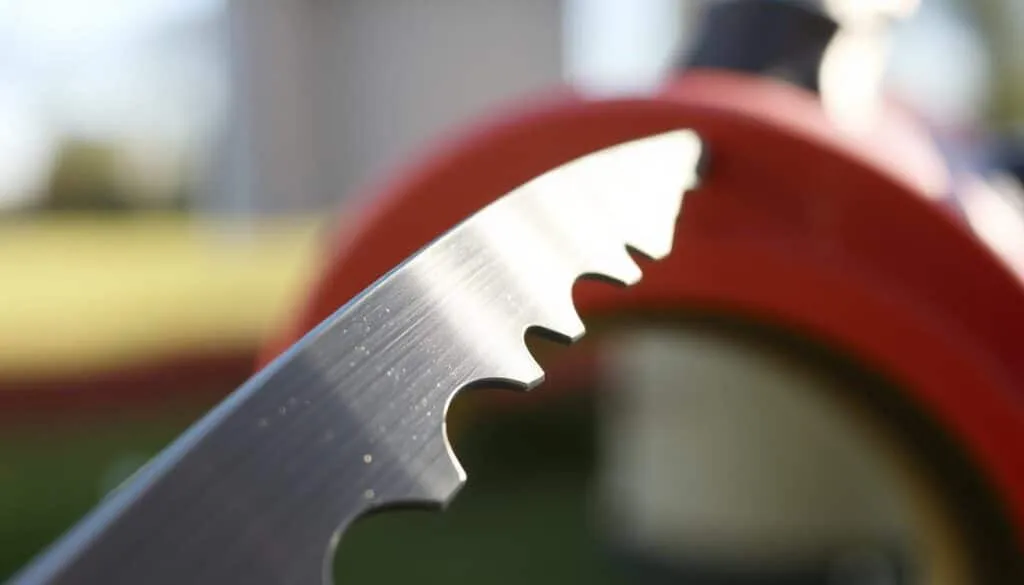
That’s a question many lawn care enthusiasts ponder when installing fresh equipment. The simple answer might surprise you. Most new lawn mower blades arrive from the factory with a sharp, precise edge, typically ground to a 30-degree angle.
This factory sharpening means they are ready for immediate use. A keen cutting edge is not just about convenience; it’s vital for your lawn’s health. A sharp blade slices grass cleanly, while a dull one tears it. This tearing can lead to brown, ragged tips and a less vibrant lawn appearance.
Understanding this relationship helps you make smart maintenance decisions. This guide will walk you through everything from identifying a ready-to-use blade to mastering long-term care strategies for your equipment. You will learn how to achieve a professional-quality cut with every mowing session.
Key Takeaways
- New mower blades are typically pre-sharpened at the factory and ready for use.
- A sharp blade provides a clean cut, which is crucial for a healthy lawn.
- A dull blade tears grass, leading to brown tips and potential lawn disease.
- Proper blade maintenance is key to your mower’s overall efficiency and performance.
- Knowing when to sharpen versus when to replace a blade saves time and money.
Understanding the Importance of Sharp Mower Blades
Your lawn’s vitality depends significantly on the quality of cut provided by your cutting equipment. Proper blade maintenance goes beyond simple functionality—it directly impacts turf health and aesthetic appeal.
Impact on Lawn Health and Appearance
Sharp blade edges create clean incisions that promote rapid healing. Each grass blade receives a precise cut that seals quickly, preventing moisture loss and disease entry.
Dull equipment produces ragged tears that stress vegetation. These jagged wounds turn brown and create openings for fungal infections. The difference becomes visible within days after mowing.
| Blade Condition | Grass Response | Lawn Appearance | Long-term Effects |
|---|---|---|---|
| Sharp Blades | Clean healing cuts | Vibrant green color | Reduced disease risk |
| Dull Blades | Torn, frayed edges | Brown tips and patches | Increased pest vulnerability |
| Properly Sharpened | Quick recovery | Professional finish | Enhanced nutrient recycling |
Achieving a Clean, Even Cut
A well-maintained mower blade ensures uniform cutting height across your entire property. This consistency eliminates streaking and patchiness that detract from landscaping appeal.
“The precision of your cut determines the health of your turf. Clean slices maintain grass integrity while torn edges invite problems.”
Properly sharpened equipment also improves nutrient cycling. Clean clippings decompose efficiently, returning valuable resources to the soil. This natural fertilization supports stronger root development.
Investing in blade maintenance demonstrates thoughtful lawn care practices. It protects your landscaping investment while reducing corrective treatments.
Do You Have to Sharpen New Mower Blades?
Manufacturers typically deliver replacement cutting tools in a state that requires no additional preparation. This factory-ready condition saves valuable maintenance time and ensures immediate optimal performance.
Factory-Sharpened Edges vs. Field Sharpening Needs
Production facilities apply precise 30-degree angles to cutting surfaces using industrial equipment. This creates a consistent, field-ready edge that often surpasses manual sharpening results.
Protective coatings prevent rust during storage without affecting the underlying sharpness. The cutting tip remains intact beneath this temporary surface treatment.
| Aspect | Factory Sharpening | Field Sharpening | Performance Impact |
|---|---|---|---|
| Edge Consistency | Machine-precise angle | Variable manual results | Superior cutting quality |
| Time Required | Zero preparation | 20-30 minutes | Immediate usability |
| Metal Preservation | Optimal material retention | Potential over-removal | Extended blade lifespan |
| Initial Performance | Professional-grade cut | Learning curve dependent | Consistent results |
Expert Opinions and Common Myths
Professional landscapers confirm that factory edges provide adequate sharpness for approximately 20-25 hours of operation. Unnecessary sharpening wastes effort and removes properly prepared metal.
Confusion often arises when comparing replacement scenarios with worn equipment. An old blade requires attention, while fresh components deliver immediate capability.
Many commercial operations rotate cutting implements directly from packaging to equipment. They simply clean mounting areas and verify bolt security before use.
Step-by-Step Guide to Sharpening Your Mower Blades
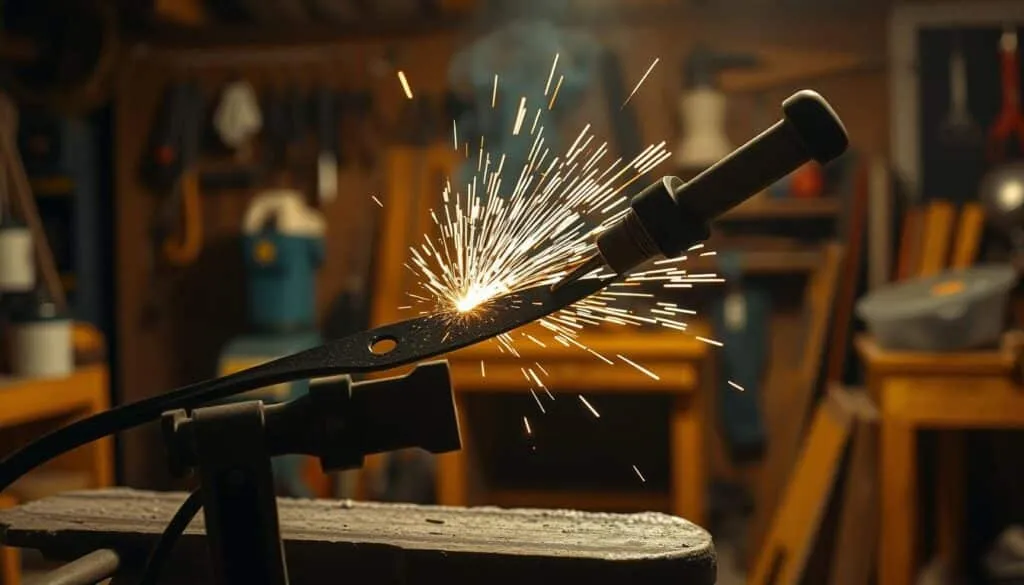
Sharpening techniques vary, but safety remains the top priority throughout the process. Proper preparation ensures efficient maintenance and prevents accidents.
Preparing and Securing the Blade Safely
Always disconnect the spark plug wire before beginning any work. This prevents accidental engine starting during maintenance.
Carefully tip the equipment on its side with the air cleaner facing upward. This positioning avoids oil contamination in the engine.
| Safety Step | Purpose | Tool Required | Time Required |
|---|---|---|---|
| Disconnect Spark Plug | Prevent accidental starting | None (hands only) | 30 seconds |
| Position Mower Correctly | Avoid oil leaks | None | 1 minute |
| Remove Blade Bolts | Access cutting surface | Wrench or socket | 2-3 minutes |
| Mark Blade Orientation | Ensure proper reinstallation | Permanent marker | 30 seconds |
Detailed Sharpening Techniques
Secure the blade in a vise with the cutting edge facing upward. Maintain the existing angle while filing.
Use smooth, consistent strokes in one direction only. Most blades require fewer than 50 strokes per side.
Aim for a butter knife sharpness rather than razor-like edges. Overly sharp tips dull more quickly.
Focus on the 3-4 inch cutting area along each edge. Wipe away metal shavings and inspect the tip before reinstalling.
Tools and Techniques for Effective Blade Sharpening
Achieving the perfect cutting edge requires understanding the strengths and limitations of each sharpening method. Different approaches offer varying levels of control, speed, and precision for your maintenance routine.
Hand sharpening with metal files provides complete control over the process. A 10-inch file works best when maintaining approximately a 45-degree angle along the blade edge.
Hand Sharpening Methods and Files
Work from the top side of the cutting edge, applying steady pressure. Push the file in one direction so you feel the teeth biting into the metal. This technique preserves the original angle while removing minimal material.
Drill-powered sharpeners feature a round grinding stone with a beveled edge. A flat guide piece automatically maintains the correct sharpening angle against the blade.
Using Power Tools and Angle Grinders
Angle grinders with flap discs offer the fastest sharpening method. Position the grinder so its blade aligns with the cutting edge of your mower blade. Move slowly back and forth while following the existing angle.
Power tools can overheat the metal if used too aggressively. If the edge becomes too hot to touch, immediately cool it in a water bucket. This prevents damage to the steel’s temper.
| Sharpening Method | Speed | Skill Level Required | Risk Factors |
|---|---|---|---|
| Hand File | Slow | Beginner | Low (minimal metal removal) |
| Drill-powered Sharpener | Medium | Intermediate | Medium (consistent angle) |
| Angle Grinder | Fast | Advanced | High (overheating risk) |
All tools work effectively when following the original blade angle. The goal remains consistent: create an edge as sharp as a butter knife that’s smooth and even.
Recognizing When to Sharpen or Replace Your Mower Blade
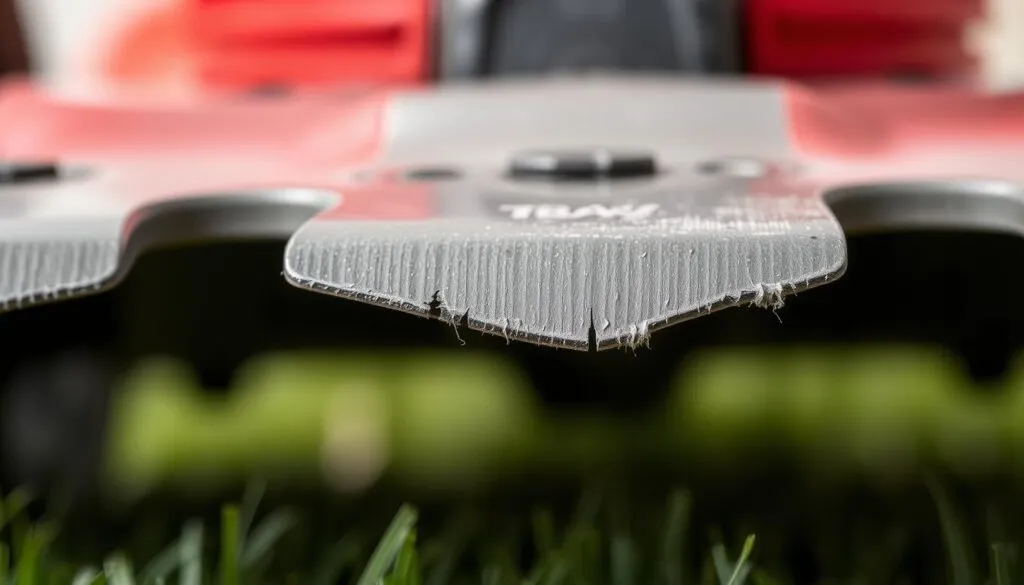
Your lawn’s appearance provides clear signals about your cutting equipment’s condition. Visible damage to the blade edge directly impacts turf health and cutting quality. Regular inspection helps identify when maintenance is necessary.
Look for dents or nicks along the cutting surface after hitting rocks or debris. These imperfections create uneven cutting patterns. Your grass will show torn edges instead of clean slices when the blade needs attention.
Identifying Dents, Nicks, and Wear Signs
Minor damage often requires simple sharpening to restore performance. An old blade with small nicks can typically be honed back to effectiveness. Focus on maintaining the original angle during this process.
Severe damage demands replacement rather than repair. Cracks, deep gouges, or bending compromise structural integrity. Attempting to sharpen compromised blades risks further deterioration and potential safety hazards.
Your lawn itself offers diagnostic clues. Brown, frayed grass tips indicate tearing rather than cutting. Uneven height after mowing suggests an inconsistent edge. Address these signs promptly to maintain turf health.
Regular inspection after each mowing session catches problems early. This proactive approach saves time and prevents minor issues from becoming major repairs. Knowing when to sharpen versus replace protects your investment.
Maintenance Tips for Prolonging Mower Blade Lifespan
Proactive maintenance schedules prevent premature wear and ensure consistent cutting quality throughout the mowing season. Establishing regular care intervals transforms reactive repairs into systematic preservation.
Routine Cleaning and Inspection
Plan sharpening sessions twice per season or after every 20-25 hours of operation. Calculate your personal schedule by multiplying session duration by weekly mowing frequency.
Maintain a blade rotation system with spare cutting tools on hand. This eliminates downtime when one set requires service. Alternate between multiple blades to extend each unit’s lifespan.
After sharpening, always verify blade balance using a screwdriver or specialized balancer. A properly balanced cutting tool remains level when supported at its center point.
If one side dips downward, remove minimal metal from the heavier end. Unbalanced equipment causes damaging vibration that affects bearings and engine mounts.
Thoroughly clean the mounting area before reinstalling any blade. Remove caked mud and grass clippings using a putty knife or scraper. A clean surface ensures proper seating and reduces operational stress.
Remember to reconnect the spark plug wire after maintenance work. Test equipment operation outdoors before returning to regular mowing duties. Consistent care preserves that ideal butter knife sharpness season after season.
Conclusion
The journey from basic mowing to exceptional turf management begins with blade knowledge. Your understanding of factory-sharpened edges and proper maintenance intervals ensures optimal performance from day one.
Regular care preserves that crisp, clean cut your lawn deserves. Consistent maintenance prevents brown, torn grass tips while promoting healthy growth. This approach saves time and money on professional service calls.
Implement these techniques for superior results season after season. Your equipment will deliver professional-quality cutting with every use. Proper blade care transforms routine lawn maintenance into exceptional turf management.
FAQ
Are brand new lawn mower blades sharp enough to use right away?
Most new blades come with a factory edge, but it’s often not the final, polished sharpness needed for the best cut. The edge can be slightly dull from packaging and handling. For optimal performance, a quick honing or light sharpening is recommended before the first mow.
What is the main benefit of using a sharp blade on my lawn?
A sharp mower blade provides a clean, scissor-like cut that slices grass cleanly. This promotes healthier turf by preventing ragged, torn tips that can turn brown and become vulnerable to disease. A sharp edge also reduces strain on your mower’s engine.
How can I tell if my mower blade needs sharpening?
Look for visible signs like nicks, dents, or a rounded edge instead of a sharp point. The best indicator is your lawn’s appearance after mowing. If the grass tips look torn and frayed instead of cleanly sliced, it’s time for sharpening or possibly a replacement.
What is the best tool for sharpening a lawn mower blade at home?
For many homeowners, a simple bastard file is a safe and effective hand tool. For faster results, a bench grinder or angle grinder can be used with caution. Always prioritize safety by securing the blade in a vise and wearing protective gloves and eyewear.
How often should I sharpen my mower blades during the season?
A good rule of thumb is to check the edge every 8-10 hours of mowing time. For an average lawn, this typically means sharpening the blade at least once or twice per mowing season. More frequent maintenance may be needed if your yard has many rocks or debris.
Why is blade balance so important after sharpening?
A> An unbalanced blade causes excessive vibration, which can damage your mower’s spindle and engine bearings. After sharpening, always check the balance using a blade balancer. If one end dips, file a small amount of metal from the heavy side until it sits level.