
Have you ever stared at your yard after a rain shower, wondering if that scheduled trim is still a good idea? Many homeowners face this exact dilemma. The temptation to stick to a routine is strong, but the sight of damp blades gives them pause.
Proceeding with lawn care under these conditions involves more than just convenience. It directly impacts the health of your turf and the safety of your equipment. Understanding the proper approach is essential for maintaining a beautiful, resilient landscape.
This guide explores the significant considerations for dealing with a saturated lawn. We will cover the potential risks to your property and provide practical tips for those times when waiting simply isn’t an option. Making an informed decision protects your investment and ensures optimal results.
Key Takeaways
- Mowing on a soaked lawn can cause significant damage to the turf.
- Wet clippings often clump, blocking sunlight and encouraging disease.
- Operating a mower on slippery ground increases personal safety risks.
- Understanding the ideal mowing conditions is key to a healthy lawn.
- Proper techniques can minimize harm if mowing wet grass is unavoidable.
Understanding the Risks of Mowing Wet Grass
Operating landscaping equipment on a saturated lawn introduces a host of problems for both the turf and the operator. The immediate visual results are often disappointing, but the underlying damage and safety risk factors are the primary reasons for caution.
Lawn Damage and Uneven Cuts
Water causes grass blades to clump and bend. This prevents the mower from achieving a uniform cut. Instead of a clean slice, the machine tears the damp foliage.
This tearing results in ragged, brown tips. Your lawn ends up with a patchy, unkempt appearance. The problem becomes more obvious once the grass dries and stands upright.
Health and Safety Hazards
Personal safety is a major concern. Slippery wet grass significantly increases the risk of falls, especially on slopes.
The U.S. Consumer Product Safety Commission reports over 250,000 lawn mower-related injuries annually. Mowing wet grass amplifies these dangers.
- Electric Shock: Using corded mowers creates a hazardous mix of water and electricity.
- Loss of Control: Riding mowers can lose traction, potentially throwing the operator.
- Projectiles: Damp turf can hide objects that become dangerous when struck by mower blades.
Understanding these threats is crucial for protecting your lawn and yourself.
How Wet Conditions Affect Your Lawn’s Health
Damp lawn conditions trigger a cascade of health issues beneath the surface. Moisture combined with mechanical stress creates vulnerabilities that pathogens exploit.
Disease Risks and Fungal Infections
Torn blades from cutting saturated turf provide entry points for fungal spores. The moist environment becomes an incubator for various lawn diseases.
| Disease | Appearance | Conditions | Treatment |
|---|---|---|---|
| Brown Patch | Irregular brown circles | High humidity | Fungicide application |
| Dollar Spot | Small bleached spots | Warm, wet weather | Nitrogen fertilizer |
| Red Thread | Pinkish patches | Cool, damp conditions | Improve drainage |
“Equipment can spread pathogens like Pythium blight across the property when turf remains saturated.”
Cutting damp turf spreads spores through clinging clippings. This turns localized issues into widespread infections.
Impact on Soil Compaction
Heavy equipment on waterlogged ground presses soil particles together. This compaction reduces pore space essential for root respiration.
Oxygen deprivation weakens turfgrass systems. The result is thin, struggling growth that requires corrective aeration.
Wet grass clippings form dense mats on the surface. These barriers block sunlight and airflow, creating dead patches.
Can You Mow When Grass Is Wet?
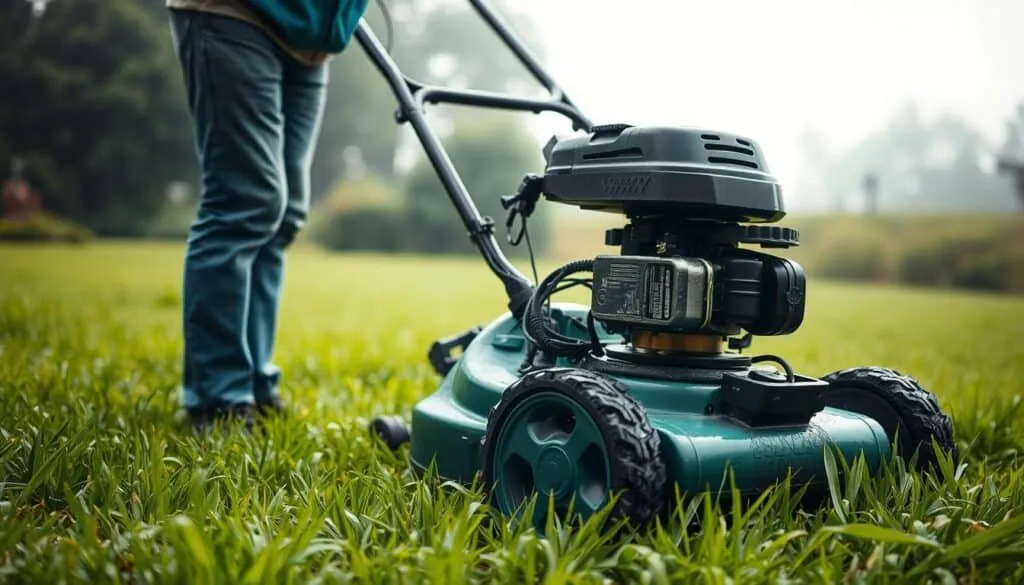
Many property owners face the practical question of whether to proceed with lawn maintenance on damp turf. While technically possible, this practice carries significant drawbacks for both your equipment and landscape health.
Optimal results come from waiting until the surface dries completely. After light rainfall, allow two to five hours for evaporation. Heavy storms may require a full twenty-four hour drying period before mowing becomes advisable.
Preparing Your Mower for Moisture
Simple tests help determine if conditions are suitable. Walk across your lawn and check if footwear becomes damp. Visible footprints that remain indicate excessive moisture levels.
Turf that springs back after stepping signals readiness for cutting. During extended rainy spells, perfect dryness may not be achievable. Purdue University experts note that trimming slightly damp turf beats allowing excessive growth.
Consult your equipment manual for specific maintenance requirements. Ensure blades remain sharp and components stay clean. Proper personal protective equipment becomes especially important when dealing with moist conditions.
These preparations help minimize potential damage when circumstances demand action on less-than-ideal turf.
Best Practices for Mowing Wet Grass
Strategic adjustments to your mowing approach can significantly reduce damage on damp lawns. Proper techniques protect both your equipment and turf health during unavoidable cutting sessions.
Adjusting Mower Height and Speed
Raise your cutting height higher than usual for saturated conditions. Kansas State University Research and Extension recommends the highest possible setting. This prevents removing excessive foliage at once.
Reduced mowing speed allows blades to cut more effectively. Slow, steady movement produces cleaner results with less clumping. Sharp mower blades are essential for clean cutting on damp turf.
Tips for Cleaner Cuts
Use side discharge instead of mulching or bagging attachments. Wet grass clippings clog mulching systems and create heavy masses in collection bags.
Periodically clean the mower deck during operation. This prevents grass buildup that impedes cutting efficiency. Consider double-cutting areas to distribute clippings evenly.
Overlap mowing paths less than usual and avoid sharp turns. Changing directions from previous cuts helps grass stand upright for better results.
Choosing the Right Mower for Wet Conditions
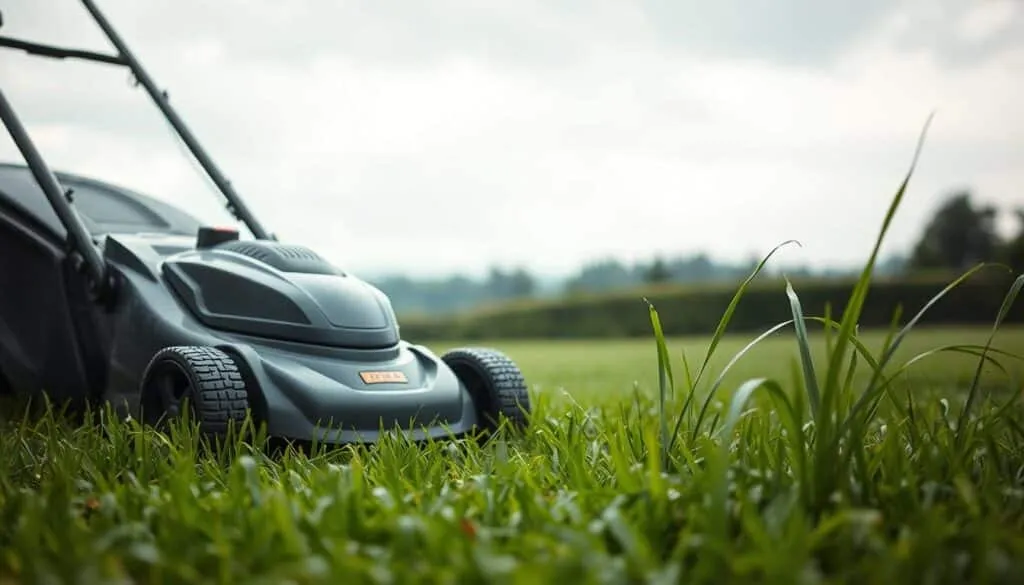
The type of cutting machine you choose significantly impacts results on damp turf. Different designs handle moisture with varying effectiveness. Proper equipment selection prevents damage to both your landscape and the machinery.
Self-Propelled vs. Traditional Mowers
Self-propelled mowers provide excellent control in challenging conditions. These machines move forward independently, reducing physical effort. They maintain steady cutting performance even on saturated turf.
However, heavier self-propelled models increase soil compaction risks. Their substantial weight can create wheel ruts in overly saturated ground. Avoid using them when the soil feels spongy underfoot.
| Mower Type | Best For | Wet Conditions Performance | Key Considerations |
|---|---|---|---|
| Self-Propelled | Medium lawns, slopes | Good control, steady cutting | Risk of soil compaction |
| Cordless Electric | Small, dry lawns | Not recommended | Water damage risk to electronics |
| Gas-Powered | Large, thick grass | Superior torque | Handles wet conditions best |
| Traditional Push | Small flat lawns | Lightweight, less compaction | Requires more physical effort |
Cordless electric mowers face limitations in damp conditions. Most manufacturers specifically advise against cutting wet grass. Their batteries and electrical components lack waterproof protection.
Gas-powered lawn mower options deliver superior torque for thick, wet grass. Traditional push mowers offer lightweight alternatives that reduce soil damage. Their lower weight minimizes compaction concerns on your lawn.
Strategies to Minimize Lawn and Mower Damage
Protecting your property requires smart strategies when dealing with a saturated lawn. Implementing proper techniques prevents long-term issues with both your turf and equipment.
Careful planning reduces the impact of necessary maintenance during damp periods. These methods help maintain landscape health while avoiding costly repairs.
Preventing Soil Compaction and Ruts
Heavy equipment on waterlogged ground creates permanent ruts in soft soil. These depressions cause multiple problems beyond simple appearance concerns.
Deep ruts create uneven terrain that complicates future mowing. They also present tripping hazards and collect rainwater, becoming mosquito breeding sites.
Vary your mowing pattern to distribute weight differently across the lawn. Avoid low-lying areas where water tends to accumulate. Test soil firmness before proceeding with equipment.
Effective Cleaning and Maintenance of Mower Blades
Wet grass clumps lodge in the mower deck, restricting airflow and jamming blades. This strains the engine, potentially causing overheating or complete breakdown.
Moisture from stuck grass causes mower blades and metal components to rust. Water can seep into the fuel tank, leading to engine malfunction.
Immediate cleaning prevents long-term damage. Use a scraper or wire brush to remove all clippings, then dry surfaces thoroughly. Wet grass accelerates blades dulling, requiring more frequent sharpening.
Recognize when blades need attention by checking cut quality. Proper maintenance extends your mower‘s lifespan and prevents expensive repairs.
Alternative Lawn Care Tips for Wet Climates
For homeowners in consistently rainy regions, traditional lawn care advice often proves impractical. Extended precipitation requires different strategies for maintaining healthy turf.
During prolonged rainy spells, waiting the recommended hours after rain becomes impossible. Property owners must develop creative approaches to lawn mowing under these challenging conditions.
When to Hire Professional Lawn Services
Professional services become valuable when personal schedules conflict with brief dry windows. These experts possess equipment designed for wet conditions and understand proper techniques.
Robotic mowers offer excellent solutions for frequent mowing during damp periods. Systems like Husqvarna Automower® maintain consistent grass height without waiting for perfect time to mow lawn.
Sometimes property owners must mow wet turf to prevent excessive growth. Tall grass creates bigger problems than careful cutting on slightly damp lawn.
Professional companies provide comprehensive care beyond basic mowing. They address weed control and soil compaction resulting from necessary lawn wet maintenance.
Conclusion
Proper turf care decisions balance ideal practices with practical realities of weather patterns and personal schedules. While cutting on saturated turf presents significant risk factors, sometimes circumstances demand action.
Operating equipment on damp surfaces threatens lawn health through torn grass blades and increased disease susceptibility. Equipment faces strain from clogged clippings and potential water damage. Personal safety concerns include slippery conditions.
When mowing wet becomes necessary, follow essential precautions. Raise the mower height and reduce speed for cleaner results. Use side discharge instead of the bag to prevent clumping.
Ultimately, informed choices protect your landscape investment. Consider professional services for challenging time constraints. Your lawn‘s vitality depends on smart maintenance decisions.
FAQ
Is it safe to cut wet grass with any lawn mower?
No, mowing wet grass poses risks with most equipment. The moisture increases the chance of slipping and can clog the mower deck. Electric mowers present a significant electrocution hazard in these conditions. Always prioritize your safety.
What are the main dangers to my lawn’s health from mowing wet?
The primary threats are fungal diseases and soil compaction. Wet grass blades tear instead of cutting cleanly, creating open wounds for pathogens like brown patch to enter. The mower’s weight also presses down on soggy soil, damaging root systems.
How can I get a cleaner cut if I must mow wet grass?
Ensure your mower blades are sharp. Dull blades shred grass, worsening the damage. Raise the cutting height to reduce stress on the turf and consider using a side-discharge or bagging attachment to manage the heavy, wet clippings effectively.
What is the best type of mower for wet conditions?
A self-propelled mower is often easier to handle on slippery terrain. However, no mower is truly ideal for wet grass. The key is meticulous preparation and careful operation to minimize harm to both the lawn and the machine.
When should I consider hiring a professional lawn service for mowing?
If your schedule is inflexible and you face consistently wet conditions, a professional service with commercial-grade equipment may be a wise investment. They can often navigate challenging situations while preserving your lawn’s long-term health.