
Is your lawn equipment’s performance silently suffering because of a simple maintenance choice you make every season? Many believe any lubricant will do, but the truth is far more specific and critical for your machine’s health.
Your mower’s engine is its heart. It relies on proper lubrication to prevent overheating and reduce wear on moving parts. Using the correct fluid is not a suggestion; it is a requirement for smooth operation and a long life.
The right choice depends on your specific equipment. Factors like engine type and local climate play a huge role. This guide will help you understand viscosity ratings, oil types, and maintenance schedules.
Making an informed decision protects your investment. It ensures optimal performance for your lawn and prevents costly engine damage, whether you have a small walk-behind or a large riding mower.
Key Takeaways
- Selecting the correct lubricant is essential for maximizing your equipment’s performance and lifespan.
- Your mower’s engine specifications and the local climate are the primary factors in choosing the right fluid.
- Proper lubrication reduces friction, prevents overheating, and ensures smooth operation all season long.
- Different models have unique requirements that directly impact how efficiently and long they run.
- Understanding oil types and viscosity ratings helps you make the best decision for your lawn care needs.
- Regularly checking and changing the fluid is a critical part of routine maintenance.
Introduction to Lawn Mower Oil and Its Importance
Proper fluid selection acts as a shield against premature engine failure. It is not a generic choice but a precise requirement for your specific equipment.
This vital lubricant serves as the lifeblood of your machine’s power plant. It reduces friction between moving metal parts, dissipates heat, and prevents damaging contact.
Using high-quality detergent oil assures compliance with warranty requirements and protects your investment.
Why the Right Oil Matters for Your Lawn Mower
Your choice directly influences starting reliability and sustained power. In cold weather, the correct viscosity ensures easy starts. During long mowing sessions, it maintains optimal engine performance.
Consistent use of the proper lubricant leads to cooler operation and less internal wear. This care extends the machine’s longevity significantly.
An Overview of Engine Performance and Maintenance
Manufacturers design engines with specific tolerances. They require appropriate lubrication to function as intended. Understanding this helps you appreciate why specific types are recommended.
Your maintenance routine must include regular checks and timely changes. Even the best fluid degrades, losing protective properties and accumulating harmful contaminants.
| Maintenance Factor | Impact on Engine | Cost Implication |
|---|---|---|
| Using Correct Oil | Reduced friction and wear | Prevents costly repairs |
| Regular Oil Changes | Maintained cleanliness and efficiency | Extends operational life |
| Ignoring Specifications | Increased overheating and failure risk | Leads to expensive replacements |
The minimal cost of proper fluid maintenance is a smart investment. It safeguards your equipment from major expenses down the line.
Understanding Different Lawn Mower Oil Types and Viscosity
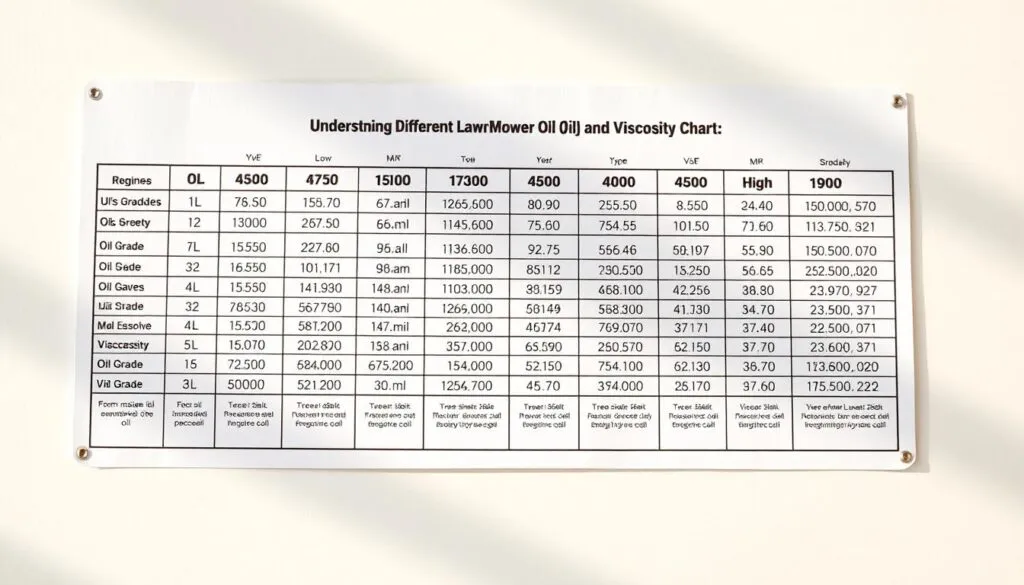
Different lubricant formulations exist to match various operating conditions and engine requirements for optimal protection. The Society of Automotive Engineers (SAE) system classifies these oil types based on viscosity performance across temperature ranges.
SAE Classifications and Temperature Recommendations
SAE 30 works best in warm conditions above 40°F. This single-grade engine oil provides excellent protection for consistent warm-weather operation.
For variable temperatures, SAE 10W-30 offers versatility from 0°F to 100°F. The “W” indicates winter capability for easier cold starts.
Synthetic SAE 5W-30 delivers superior performance across extreme conditions from -20°F to 120°F. This advanced formulation ensures reliable starting and reduced consumption.
Synthetic vs. Conventional Oils
Synthetic oils feature engineered molecular structures for consistent performance. They maintain stability better than conventional refined petroleum products.
The main difference lies in purity and temperature resilience. Synthetic type oil protects better during temperature swings and extended use periods.
Your choice between these types depends on climate conditions and equipment demands. Multi-grade options suit regions with seasonal temperature variations.
Selecting the Right Oil: What Oil to Put in Lawn Mower
Three primary considerations guide the selection process for your machine’s lubrication needs: engine specifications, climate, and usage patterns. Each factor significantly impacts which fluid provides optimal protection.
Factors Influencing Oil Choice
Your specific engine model dictates the correct lubricant. Manufacturers design each mower engine with precise tolerances requiring specific formulations.
Always consult your operator’s manual first. It contains the manufacturer’s exact recommendations for your particular equipment.
Local climate plays a crucial role. Hot regions like the Southeast United States demand thicker fluids like 20W-50 for better heat management. Colder areas benefit from multi-grade options such as 10W-30 for easier winter starting.
Usage intensity affects your choice. Commercial operations need robust formulations like 15W-50 that withstand continuous operation. Larger engines, such as Kohler 980 CC models, require thicker lubricants and hold approximately three quarts.
Use high-quality detergent oils classified “For Service SF, SG, SH, SJ” or higher. Avoid special additives that can interfere with performance. For precise guidance, consult authorized dealers or manufacturer tools.
Step-by-Step Guide to Checking and Changing Your Oil
Maintaining your equipment’s engine begins with a simple yet vital routine: checking and changing its lubricant. Following clear instructions ensures this task is done safely and correctly, protecting your machine’s heart.
Proper preparation sets the stage for a smooth process. Always consult your owner’s manual first for your specific model‘s oil capacity and recommended type.
Pre-Change Preparations and Safety Measures
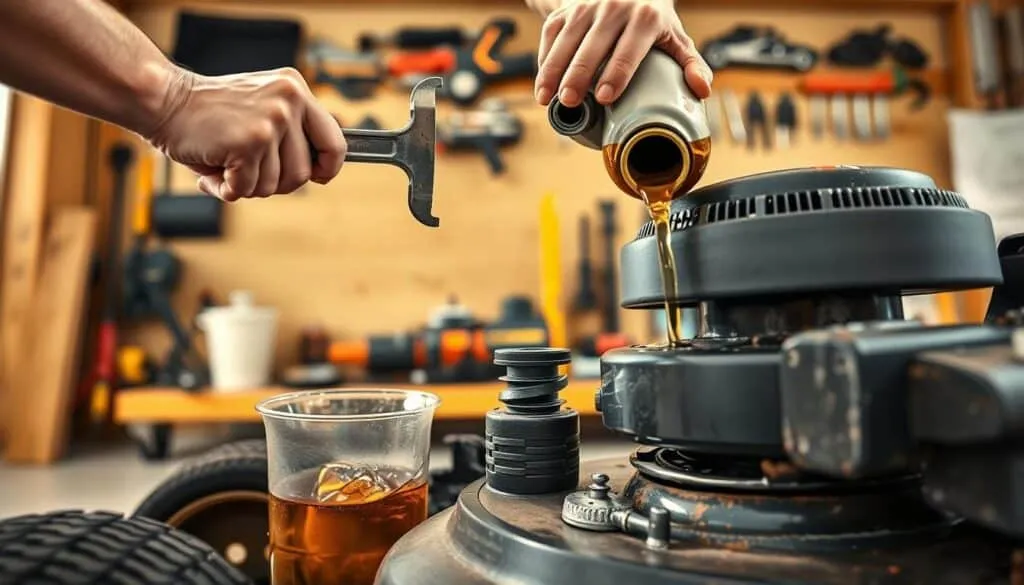
Gather your supplies before you start the oil change. You will need a drain pan, a funnel, clean rags, and fresh lubricant. If your engine has a filter, have a new one ready.
Safety instructions are non-negotiable. Work on a level surface and ensure the motor is completely cool. Disconnect the spark plug wire to prevent any accidental starting.
How to Check Oil Levels Accurately
To check oil correctly, park your mower on flat ground. Remove the dipstick cap and wipe the blade clean with a rag. This gives you a true reading.
Reinsert the dipstick fully, making sure the cap seats properly. Pull it out again to view the level. It should be between the “Full” and “Add” marks.
If the level is low, add a small amount. Wait a moment for it to settle, then re-check oil. Never overfill, as this can cause damage.
When you are ready to change oil, locate the drain plug. Position your pan and allow the old fluid to drain completely. This is a crucial step for a clean engine.
Replacing the filter with every service maintains optimal cleanliness and efficiency.
Use a funnel to add new lubricant. Add it slowly, checking the dipstick frequently. Your manual is the best guide for this entire change process.
Tips for Maintaining Your Lawn Mower Engine Efficiency
Regular upkeep transforms your equipment from a seasonal tool into a long-term asset. Proper care ensures consistent performance and prevents unexpected breakdowns during critical mowing seasons.
Oil Capacity and Filter Considerations
Understanding your machine’s specific oil capacity is essential. Walk-behind mowers typically hold 15-18 ounces, while riding models require 48-64 ounces. Never exceed the recommended capacity to avoid engine damage.
Filter selection impacts your mower engine‘s cleanliness. Always choose OEM filters over aftermarket options for proper fit and leak prevention.
| Equipment Type | Oil Capacity | Filter Replacement |
|---|---|---|
| Walk-behind Mowers | 15-18 oz | Every oil change |
| Riding Mowers | 48-64 oz | Every oil change |
| Commercial Equipment | Varies by model | More frequent changes |
Regular Maintenance and Service Intervals
Establish consistent service intervals based on usage. Walk-behind units need oil changes every 50 hours operation or annually. Riding mowers can extend to 100 hours between services.
Tracking operating hours through simple logs or hour meters ensures you never exceed recommended maintenance windows.
Extreme conditions demand more frequent attention. Dusty environments or commercial use may shorten your service intervals. Regular checks during the season maintain optimal engine oil levels between changes.
Conclusion
Achieving years of dependable service from your equipment requires following a straightforward maintenance roadmap. You now understand how engine specifications, local temperatures, and usage patterns guide your lubricant selection.
Establish a consistent routine that includes regular checks using the dipstick and timely changes based on operating hours. Consult your operator’s manual for model-specific capacity and type recommendations. Numerous instructional videos demonstrate proper techniques for complete service procedures.
Whether you perform maintenance yourself or use professional service, following manufacturer guidelines protects your investment. This approach ensures warranty compliance and prevents costly repairs.
By applying these recommendations consistently, you’ll enjoy optimal performance across all conditions. Your equipment will deliver reliable operation with maximum cutting efficiency for many seasons to come.
FAQ
How often should I perform an oil change on my mower?
You should typically change the engine lubricant every 25-50 hours of operation or at least once per mowing season. Always check your owner’s manual for the manufacturer’s specific recommendations based on your equipment model.
Can I use car engine oil in my lawn mower?
It is not recommended. Small engines in mowers are designed for specific oil types, often labeled as “small engine oil.” Using automotive lubricants can lead to poor performance and potentially damage your equipment over time.
What is the difference between synthetic and conventional oils?
Synthetic oils are engineered for superior performance, offering better protection in extreme temperatures and longer intervals between changes. Conventional oils are a good, cost-effective choice for standard conditions and regular maintenance schedules.
How do I check the lubricant level in my mower?
Ensure your machine is on a level surface and the engine is cool. Locate the dipstick, wipe it clean, reinsert it fully, and then pull it out again to check the level. The fluid should be between the “Full” and “Add” marks on the dipstick.
What happens if I use the wrong viscosity grade?
Using an incorrect viscosity can cause starting difficulties, increased wear, and reduced engine longevity. For example, a grade that is too thick for cold weather can make the engine hard to start, while a grade that is too thin may not provide adequate protection.
Where can I find the correct oil capacity for my specific model?
The precise capacity is always listed in your equipment’s owner’s manual. You can also often find this information on the manufacturer’s website or by checking the engine model number directly on the mower itself.