
Is your current lawn mower a short-term helper or a long-term investment for your property? Many homeowners base their equipment decisions on price alone, but the true value lies in understanding its potential lifespan.
Durability isn’t just about years. It’s measured in operating hours. This gives you a clearer picture of your equipment’s endurance. Knowing what to expect helps you plan your budget for upkeep or a future replacement.
Several key factors determine how many seasons your machine will effectively cut your lawn. Build quality, maintenance habits, and how often you use the mower all play a major role.
Smart care and choosing a well-built mower can add years of service. This approach protects your investment and saves you significant money over time. This guide will show you how to get the most from your lawn care equipment.
Key Takeaways
- Lawn mower durability is best measured in operating hours, not just years.
- Understanding expected lifespan helps in making informed purchasing decisions.
- Proper maintenance and usage habits are critical for extending equipment life.
- Initial investment in quality can lead to long-term savings.
- Multiple factors, from build quality to operating conditions, influence longevity.
Understanding Lawn Mower Lifespan Factors
To truly grasp your equipment’s endurance, you must look beyond its age in years. Durability is a function of work performed, not just time passed.
The Role of Usage Hours vs. Years
Think of your machine’s lifespan in operating hours, not calendar years. This method provides a fair comparison. Two identical models can have vastly different wear levels based on weekly usage.
A unit used for one hour each week experiences minimal strain. Another used for fifteen hours weekly accumulates wear much faster. Proper measurement helps you predict replacement needs accurately.
Impact of Maintenance and Operating Conditions
Your care habits directly influence the machine’s productive life. Regular maintenance like oil changes and blade sharpening is crucial. These simple acts prevent premature failure of critical components.
External factors also play a significant role. Rough, uneven terrain stresses the chassis and engine. Proper storage protects the equipment from weather-related damage. Following operational guidelines preserves mechanical integrity.
| Weekly Usage (Hours) | Maintenance Level | Operating Conditions | Estimated Total Lifespan (Hours) |
|---|---|---|---|
| 1-2 | Regular & Proactive | Flat, Smooth Lawn | 1,500+ |
| 5-7 | Basic & Seasonal | Slightly Uneven Terrain | 800 – 1,200 |
| 10+ | Infrequent or Reactive | Rough, Hilly Terrain | 500 or less |
Residential Lawn Mower Lifespans
For most property owners, residential grass-cutting machines represent a significant household investment worth protecting. Understanding typical durability expectations helps you maximize this investment.
Hours of Operation and Expected Lifespan
The average residential cutting session lasts 1-2 hours. Most homeowners complete about 35 mows annually. This creates a predictable usage pattern for estimating equipment longevity.
Lower-quality residential mowers typically deliver 450-500 hours of service. Premium brands like John Deere often reach 1,000-1,500 hours. These estimates assume consistent maintenance practices.
Quality of Models and Routine Care
Superior materials and craftsmanship directly impact how long your equipment remains operational. Investing in quality lawn equipment pays dividends through extended service life.
Regular care prevents premature wear. Mowing thick grass or debris-laden turf accelerates component deterioration. Proper maintenance combined with quality equipment creates optimal conditions for maximum durability.
| Mower Type | Typical Hours per Session | Estimated Total Lifespan | Maintenance Requirements |
|---|---|---|---|
| Budget Residential | 1-2 hours | 450-500 hours | Seasonal basic care |
| Mid-Range Residential | 1-2 hours | 700-900 hours | Regular maintenance |
| Premium Residential | 1-2 hours | 1,000-1,500 hours | Consistent proactive care |
Commercial and Riding Lawn Mowers: Lifespan Insights
Professional landscaping operations demand machinery built for endurance. Commercial-grade mowers are engineered to withstand daily intensive use.
Differentiating Commercial vs. Residential Use
Commercial equipment features heavier-duty components than residential models. These mowers have reinforced frames and more robust engines.
They’re designed for extended operating hours without performance degradation. This construction quality directly impacts their superior lifespan.
Industry Examples and Brand Comparisons
Premium brands like John Deere build commercial mowers for 2,000-2,500 hours of service. Lower-end commercial models typically deliver 1,200-1,500 hours.
Riding lawn mowers with proper care can achieve 1,000-1,500 operational hours. Your usage pattern determines how these hours translate into years of service.
“Investing in commercial-grade equipment pays dividends through extended service life and reduced downtime.”
| Mower Type | Construction Quality | Estimated Lifespan (Hours) | Typical Usage Scenario |
|---|---|---|---|
| Entry-Level Commercial | Heavy-duty components | 1,200-1,500 | Daily professional use |
| Premium Commercial | Reinforced construction | 2,000-2,500 | Intensive landscaping operations |
| Residential Riding | Standard components | 1,000-1,500 | Weekly homeowner use |
Matching your equipment to property size ensures optimal value. Large acreage requires commercial-grade durability for maximum lifespan.
Key Components Impacting Mower Performance
The performance and durability of your grass-cutting equipment depend on maintaining key mechanical parts. Regular attention to these elements prevents premature wear and ensures consistent operation.
Essential Parts: Air Filter, Spark Plugs, and Battery
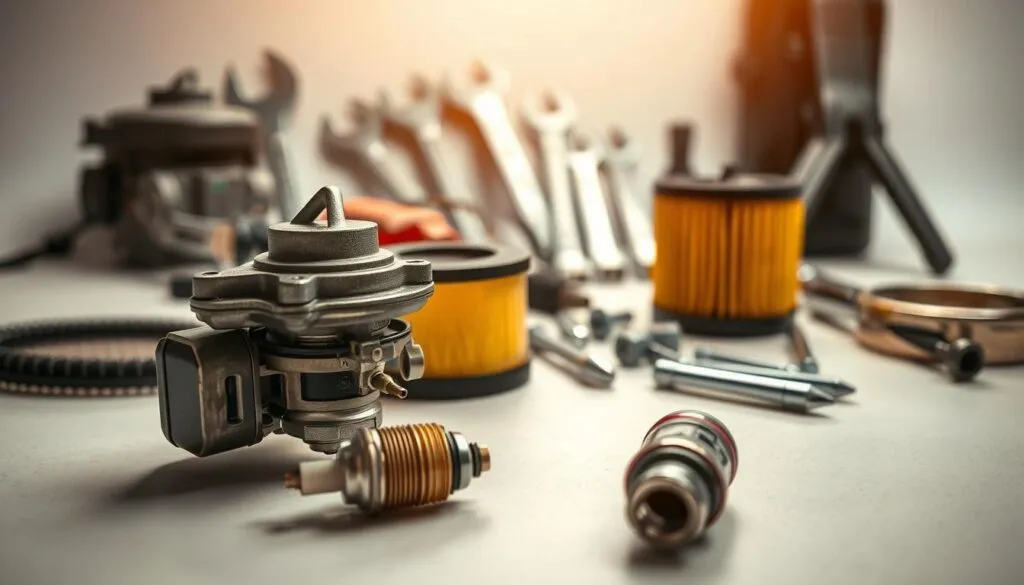
Your equipment typically contains two or three filters: oil, fuel, and air filter. Replace these with every oil change to maintain optimal engine function. Clean filters protect internal components from debris.
Spark plugs require replacement every 100 hours of operation. Old plugs stress the engine and can cause significant damage. Fresh plugs ensure efficient combustion and reliable starting.
Lawn mower batteries typically last 3-4 years. Charging them periodically during winter storage extends service life. This prevents premature failure when spring arrives.
Importance of Blade Sharpening and Engine Care
Sharp blades cut grass more efficiently, reducing engine strain. They improve cut quality while extending both blade and engine lifespan. Dull blades tear grass instead of cleanly cutting it.
Sharpen blades three times per growing season for optimal performance. Standard blades last 100-200 hours with proper care. Premium blades like John Deere can deliver up to 400 hours.
| Component | Replacement Interval | Key Benefit |
|---|---|---|
| Air Filter | Every oil change | Prevents engine debris damage |
| Spark Plugs | 100 hours | Ensures efficient combustion |
| Battery | 3-4 years | Reliable starting power |
| Mower Blades | 100-200 hours | Clean cutting, reduced strain |
Proactive maintenance of these parts prevents cascading failures. Your equipment operates at peak efficiency throughout its service life. Consistent care protects your investment.
how long should a lawn mower last
Several key elements work together to determine your equipment’s operational timeline. Quality brands like Kubota can deliver 1,000 to 1,500 hours of service when properly maintained.
Calendar years provide one measurement—typically 10 to 15 years. However, operating hours give a more accurate picture of true endurance.
Factors that Determine Mower Lifespan
Your maintenance routine forms the foundation for extended service. Consistent oil changes, filter replacements, and component inspections prevent premature wear.
Usage patterns significantly impact durability. Moderate, consistent operation typically yields better results than sporadic heavy use.
“Proper storage during off-seasons prevents rust and corrosion, adding years to your equipment’s service life.”
Terrain type directly affects component stress. Smooth, well-maintained turf causes less strain than rocky or debris-filled ground.
Construction quality remains crucial. Premium materials and engineering deliver substantially longer performance. Following manufacturer guidelines ensures optimal operation throughout the equipment’s timeline.
Tips to Extend Your Mower’s Lifespan
Simple, regular attention to your machine can significantly boost its operational timeline. Implementing consistent care practices protects your investment and ensures reliable performance season after season.
Routine Maintenance and Oil Changes
Establishing a regular maintenance schedule forms the foundation for extended equipment life. Follow manufacturer recommendations for service intervals, typically at least annually.
Key tasks include changing the oil regularly, cleaning air filters, and keeping blades sharp. Proper mower maintenance also involves checking belts and replacing spark plugs every 100 hours.
Consistent use throughout the cutting season benefits your equipment. Letting it sit idle for extended periods can cause deterioration.
Proper Storage and Timely Repairs
End-of-season preparation is crucial for preserving your machine. Drain all fuel and remove spark plugs before long-term storage.
Regular cleaning of the cutting deck prevents rust and corrosion. Address minor issues promptly through timely repair to prevent major failures.
This comprehensive approach to equipment care ensures your investment delivers maximum value over time.
Repair vs. Replacement: Making the Right Choice
Facing equipment troubles requires smart financial decisions. Knowing when to fix your machine or buy a new one saves money and frustration.
Track all maintenance and repair costs. This record helps you see the total investment in your current equipment.
Indicators for Repairing Your Mower
Minor issues are often worth fixing. Replacing a spark plug or belt is inexpensive. These simple repairs can restore performance quickly.
Your mower might need repairs costing under $100. This is usually a sensible investment. It extends the equipment’s life without major expense.
Address small problems promptly. This prevents them from becoming serious damage. Regular upkeep avoids costly engine issues later.
When It’s Time to Invest in a New Model
Consider replacement when repair bills pile up. If costs near the price of a new lawn mower, replacement makes more sense. This is especially true for models over ten years old.
Major component failures signal the end. Engine or transmission problems are expensive to fix. Your mower may not be worth this investment.
Persistent performance issues indicate decline. Difficulty starting or poor cutting performance are red flags. Excessive smoke or strange noises mean serious internal damage.
| Issue Type | Typical Repair Cost | Recommended Action | Long-Term Value |
|---|---|---|---|
| Spark Plug, Belt, Battery | $20 – $60 | Repair | High – extends equipment life |
| Carburetor, Blade Assembly | $75 – $150 | Evaluate based on mower age | Medium – consider cumulative costs |
| Engine, Transmission | $300+ | Replace (especially if mower is 10+ years) | Low – new equipment better value |
Finding parts for older models can be difficult. Sometimes replacement is your only practical option. Weigh the cost against the expected years of service from new equipment.
Conclusion
Making informed decisions about your outdoor power equipment requires balancing initial cost with long-term value. Understanding your equipment’s potential lifespan empowers smarter purchasing and care choices.
Remember that operating hours provide the truest measure of equipment life, not calendar years. Quality models deliver 1,000-1,500 hours or more with proper attention.
Your commitment to regular maintenance directly influences how long your equipment serves your property. Consistent care practices protect your investment significantly.
Implementing routine oil changes, filter replacements, and blade sharpening extends service years. These simple acts prevent premature wear of critical components.
Smart repair-versus-replacement decisions based on cost-benefit analysis maximize value. Quality equipment from reputable manufacturers paired with proper care minimizes long-term expenses.
Your knowledge now enables confident equipment selection and maintenance. This approach ensures your property remains beautifully maintained for seasons to come.
FAQ
What is the average lifespan of a residential push mower?
A well-maintained residential push mower typically lasts between 8 to 10 years. With proper care, including regular oil changes and air filter replacement, many models from brands like Toro or Honda can exceed this range. The total hours of operation are a more precise measure, with many engines rated for 300 to 500 hours of use.
How does a riding lawn mower’s lifespan compare to a push mower?
Riding lawn mowers generally have a longer operational life than push mowers, often lasting 10 to 15 years or more. Commercial-grade riders from manufacturers like John Deere or Scag, built for heavy-duty use, can surpass 1,000 hours. Their longevity heavily depends on maintenance schedules and storage conditions.
What is the single most important maintenance task to extend my mower’s life?
The most critical task is regular oil changes. Fresh oil lubricates the engine, reduces friction, and prevents premature wear. For most mowers, you should change the oil at least once per season or every 25 hours of operation. Always use the oil type recommended in your owner’s manual.
When should I consider repairing my mower instead of replacing it?
Consider repairs if the cost is less than half the price of a comparable new model and the mower’s deck and engine are in good condition. Fixing common issues like a new spark plug, sharpened blades, or a fresh air filter is often cost-effective. If you’re facing major engine or transmission failure, replacement might be the better choice.
How do operating conditions affect my equipment’s lifespan?
Tough conditions like hilly terrain, wet grass, or sandy soil can shorten your mower’s life. These conditions force the engine to work harder and can lead to faster wear on parts like the blade and drive system. Proper cleaning after each use, especially in these conditions, is vital to prevent grass buildup and corrosion.
What are the signs that my lawn mower is nearing the end of its life?
Key indicators include excessive smoke, persistent starting problems despite tune-ups, loss of power, and frequent, costly repairs. If the machine consistently fails to provide a clean cut or requires major component replacements, it’s likely approaching the end of its serviceable life.