
Have you ever wondered if the liquid you pour into your machine could be the secret to its long, healthy life? Choosing the right lubricant is not just a routine task; it’s a critical decision that impacts your equipment’s performance.
Your trusty outdoor power equipment relies on precise lubrication to function smoothly. The correct selection depends heavily on your specific model and the engine under its hood. Many of these machines use Briggs & Stratton engines, which have clear requirements.
Using an incorrect lubricant can lead to frustrating problems. You might experience difficulty starting on a cool morning or notice increased consumption during summer heat. Over time, the wrong choice can even cause serious damage to internal components.
This guide will walk you through the entire selection process. We will cover everything from identifying your equipment’s needs to understanding different lubricant formulations. Protecting your investment ensures reliable starts and efficient operation for years to come.
Key Takeaways
- Selecting the proper lubricant is essential for optimal performance and engine longevity.
- Your specific mower model and engine type dictate the correct lubricant requirements.
- Local climate and operating temperatures play a significant role in your choice.
- Using an incorrect lubricant can cause hard starting, high consumption, and potential damage.
- Most Craftsman equipment uses engines with specific recommendations for SAE grades and synthetic vs. conventional options.
- Proper selection protects your investment and ensures reliable operation throughout the season.
- This guide covers lubricant types, capacity, synthetic advantages, and tools to help you choose.
Understanding Your Craftsman Lawn Mower’s Needs
The correct lubricant choice begins with two key pieces of information: your model number and engine type. These identifiers are your guide to the manufacturer’s specific recommendations.
Locate the identification label on your equipment’s engine housing. This sticker holds the model and serial numbers. These details are essential for finding the right specifications.
Identifying Your Model and Engine Type
Your machine might have a single cylinder or a twin cylinder (V-Twin) engine. Each design has different lubrication needs and capacities. Knowing which one you have is the first step.
Reviewing Your Owner’s Manual for Oil Capacity
Your owner’s manual is the primary source for accurate information. It specifies the exact lubricant type and capacity for your specific model. This is especially important for walk-behind versus riding equipment.
If you purchased new equipment, remember that the engine typically does not come pre-filled. You will need to add the correct amount before the first use. Keep your manual accessible for regular maintenance checks.
If the physical manual is lost, you can usually find a digital copy online. Search using your specific model number to get the correct information.
| Engine Type | Typical Use | Key Consideration |
|---|---|---|
| Single Cylinder | Standard walk-behind mowers | Smaller capacity, simpler design |
| Twin Cylinder (V-Twin) | Larger riding mowers | Larger capacity, increased power |
What Oil for a Craftsman Lawn Mower: Key Considerations
Local weather patterns significantly influence which lubricant grade will work best in your equipment. The outdoor temperature becomes the single most important factor in your selection process.
Climate and Temperature Considerations
Temperature directly affects lubricant viscosity, which is its thickness. Using the wrong grade can create starting problems during cool mornings or increased consumption in summer heat.
Below 40°F (4°C), SAE 30 becomes too thick for smooth operation. This viscosity causes hard starting issues that frustrate many owners. Your equipment struggles to turn over properly when the lubricant is too viscous.
Above 80°F (27°C), certain grades like 10W-30 may lead to higher consumption. These conditions demand more frequent level checks to prevent damage. Consistent monitoring ensures proper lubrication during hot weather operation.
Consider your typical mowing season temperatures when selecting a lubricant type. Choose one that performs optimally within your specific climate range. If you experience varying temperatures, multi-grade options work well across broader spectrums.
Selecting the appropriate formulation based on climate ensures your powerplant receives proper protection. This careful choice maintains optimal performance regardless of weather conditions during turf maintenance.
Oil Types and Their Benefits
The Society of Automotive Engineers (SAE) grading system provides a clear framework for selecting the right lubricant for your power equipment. This system categorizes engine oils by viscosity and temperature performance.
SAE Grades Explained
SAE 30 is the most common choice for warmer climates, working well above 40°F. Multi-grade options like SAE 10W-30 perform across varying temperatures from 0 to 100°F.
The “W” in grades like 10W-30 stands for “winter,” indicating cold-weather flow characteristics. This helps with easier starting in cooler temperatures.
For very cold conditions below 40°F, SAE 5W-30 conventional lubricant provides better cold-start protection. Vanguard 15W-50 serves continuous-use applications from 20°F to 130°F.
Synthetic vs. Conventional Options
Synthetic SAE 5W-30 offers superior protection across the widest temperature range (-20 to 120°F). It provides enhanced starting performance and reduced consumption.
While synthetic oils cost more initially, they deliver better temperature stability and improved engine longevity. These formulations are acceptable at all temperatures without changing maintenance schedules.
Always use high-quality detergent oils classified “For Service SF, SG, SH, SJ” or higher. Modern detergent oils contain necessary additives, so avoid special additives.
Engine Oil Capacity and Maintenance Tips
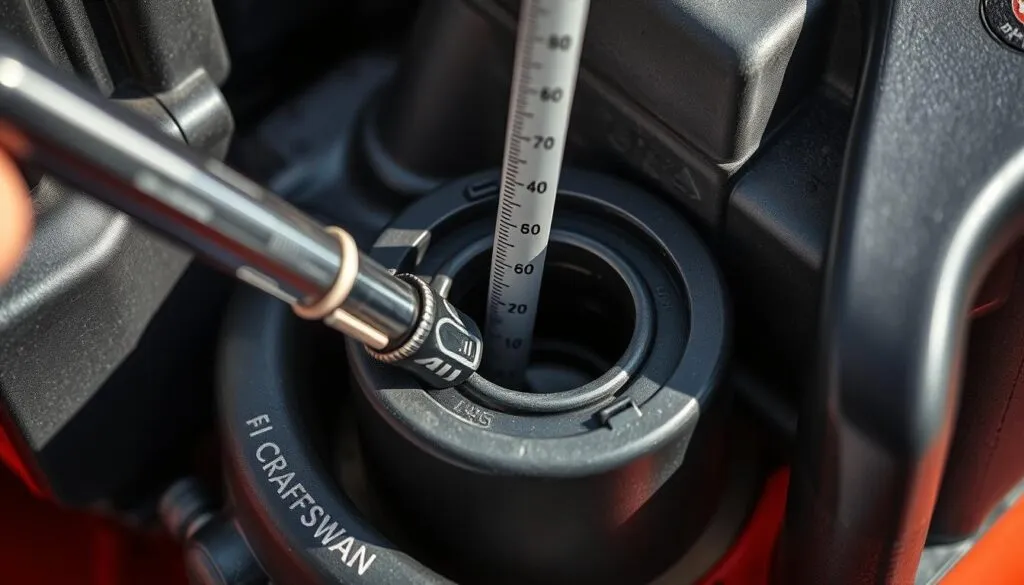
Proper fluid capacity is just as crucial as selecting the right type for your machine’s engine. Different models require specific amounts to function correctly.
Determining the Correct Oil Capacity
Your equipment’s needs vary by size and power. Walk-behind units typically hold either 15 or 18 ounces. Riding models require more—usually 48 or 64 ounces.
Never overfill your engine. Excess fluid causes smoking and potential seal damage. Always check levels before starting.
Follow these steps for accurate level checks:
- Park on level ground and wipe the dipstick clean
- Reinsert fully, ensuring cap teeth match tube grooves
- Remove again to view level between “full” and “add” marks
Add small amounts gradually if low. Allow time to settle before rechecking. This prevents accidental overfilling.
Change intervals depend on your equipment type. Service walk-behind models every 50 hours or annually. Riding mowers need changes every 100 hours or yearly.
Regular monitoring extends your small engine’s life. Consistent maintenance ensures reliable performance throughout the season.
Synthetic Oil Advantages for Your Lawn Mower
Modern synthetic formulations offer distinct benefits that protect your engine investment. These advanced lubricants work seamlessly with Briggs & Stratton powerplants found in many outdoor power tools.
Synthetic options provide superior performance across all temperature ranges. You can confidently use 5W-30 or 15W-50 grades year-round without concern.
Enhanced Engine Protection
Synthetic lubricants deliver exceptional protection against wear and deposit formation. Their advanced chemistry maintains consistent viscosity under extreme conditions.
These formulations flow better in cold weather for easier starting. They also resist thermal breakdown during hot summer operation. Your engine stays cleaner with reduced sludge buildup.
The complete additive package in synthetic products eliminates the need for supplementary treatments. These specialized additives provide superior detergent properties for long-term reliability.
Warranty and Service Benefits
Using recommended synthetic products ensures compliance with manufacturer warranty requirements. Brands like Briggs & Stratton specifically endorse their synthetic formulations.
You can use synthetic lubricants from the first fill without special break-in procedures. Maintenance schedules remain unchanged—follow the same 50 or 100-hour change intervals.
While the initial cost is higher, the long-term protection value is significant. Your investment in quality lubricants pays dividends through extended engine life and reduced repair needs.
Using the Oil Finder Tool and Brand Recommendations
Finding the perfect match for your outdoor power equipment just got easier with digital tools. Manufacturer resources take the guesswork out of selecting proper lubrication.
Leveraging Tools for the Best Match
Briggs & Stratton’s online tool provides precise recommendations. Enter your equipment type, engine name from the label, and temperature range.
The system shows exactly which product to buy and the required quantity. This ensures optimal performance for your specific model.
Featured Product Insights
Warranty Certified formulations offer superior protection for small engines. These products meet all manufacturer specifications.
Purchase directly from the official online store or local retailers. Major chains like Ace Hardware stock appropriate options starting around $7.99.
| Retailer | Price Range | Available Services |
|---|---|---|
| Official Online Store | Varies by product | Direct shipping only |
| Ace Hardware | $7.99+ | Pickup, delivery, shipping |
| Other Major Retailers | Competitive pricing | Multiple fulfillment options |
Check local store inventory online before visiting. View product labels to verify SAE 10W grades and service classifications.
Many retailers offer free returns within 30 days. This gives confidence when purchasing maintenance products.
Conclusion
Maintaining your outdoor power equipment’s peak performance starts with one fundamental decision that impacts every cutting season. Choosing the correct lubricant type ensures your machine operates reliably throughout years of lawn care service.
Your selection should consider the specific mower model, engine design, and typical operating temperatures. Whether you prefer conventional or synthetic oils, proper formulation protects your investment.
Regular maintenance extends your equipment’s lifespan significantly. Always consult your operator’s manual for specifications unique to your mower. Check levels before each use and follow recommended change intervals.
While lubricant selection may seem complex, tools like the Oil Finder simplify the process. Investing in quality products keeps your lawn mower running efficiently season after season.
FAQ
How do I find the right small engine oil for my Craftsman equipment?
Start by checking your owner’s manual. It lists the specific SAE grade and type recommended for your model. You can also use an online oil finder tool by entering your equipment’s model number for a precise match.
What is the difference between SAE 10W-30 and SAE 30 lawn mower oil?
SAE 30 is a single-grade oil best for consistent, warm temperatures. SAE 10W-30 is a multi-grade oil that performs well in both cold starts and warmer operating conditions, offering greater flexibility across seasons.
Can I use synthetic oil in my Craftsman mower?
Yes, using a high-quality synthetic oil is an excellent choice. It provides superior engine protection from wear and heat, and it can help extend the time between service intervals. Always verify that it meets the required SAE specification.
Does using a certain oil affect my mower’s warranty?
Your warranty requires that you use an oil that meets the manufacturer’s specifications. Using the wrong product could void your protection. Sticking with the recommended small engine oil ensures you maintain your warranty coverage.
Where is the best place to buy the correct oil for my mower?
You can purchase the right lawn mower oil at most home improvement store locations, auto parts stores, or online. Look for products specifically labeled for small engines to ensure they contain the necessary additives.