
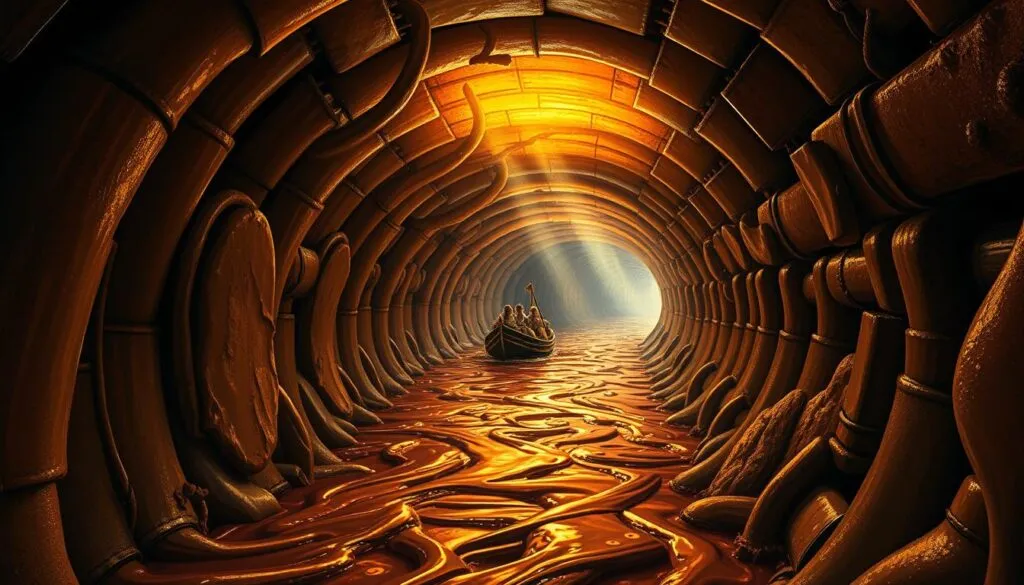
What happens when a children’s adventure suddenly turns into a nightmare? That exact question haunted countless viewers after watching one particular scene in a beloved family movie.
The 1971 film Willy Wonka & the Chocolate Factory contains a moment that has terrified generations. During what should be a whimsical boat ride through Wonka’s magical factory, passengers aboard the SS Wonkatania enter a dark tunnel. Gene Wilder’s Willy Wonka begins reciting a haunting poem that includes the unsettling line about a grisly reaper mowing.
This scene transforms innocent entertainment into something far more disturbing. Many children and adults found themselves unexpectedly facing nightmare imagery during a chocolate factory adventure. The phrase about a grisly reaper mowing became embedded in popular culture, representing a jarring moment in non-horror cinema.
You’re about to discover the origins and context of this legendary film moment. Our exploration examines five notable aspects of that unforgettable tunnel sequence.
Key Takeaways
- The phrase originates from the 1971 movie Willy Wonka & the Chocolate Factory
- Gene Wilder’s performance during the tunnel scene created lasting impact
- This moment transformed a children’s movie into something unexpectedly dark
- The scene occurs during a boat ride through Willy Wonka’s factory
- This cinematic moment has haunted viewers for decades
- The phrase represents a crossing from innocence to darker themes
- Five notable cases reveal why this scene remains culturally significant
Introduction: Unraveling the Grisly Reaper Mowing Phenomenon
Few cinematic moments have haunted childhood memories quite like the sudden turn in Willy Wonka’s chocolate river journey. This iconic scene represents a boundary-crossing moment in family entertainment that left lasting impressions.
Setting the Scene with Iconic Movie Imagery
Your journey begins aboard the SS Wonkatania, a whimsical vessel floating down a chocolate river. Everything appears magical and innocent at first. Golden Ticket winners experience wonder throughout the factory tour.
Gene Wilder’s performance shifts dramatically as the boat enters the tunnel. His character transforms from quirky host to unsettling figure. Visual projections create sensory overload with rapid movement and flashing lights.
| Scene Element | Before Tunnel | During Tunnel |
|---|---|---|
| Character Mood | Whimsical and welcoming | Unhinged and intense |
| Visual Atmosphere | Bright and colorful | Dark with disturbing imagery |
| Passenger Reaction | Curious and excited | Frightened and frantic |
Understanding the Cultural Impact on You and Your Peers
This movie sequence generated countless discussions and parodies over five decades. Modern audiences still recognize its power to disturb. The scene created a unique duality in children’s film history.
Wonka chocolate factory imagery became synonymous with both wonder and terror. Internet communities continue sharing reactions, solidifying its place in cinema history. Your understanding of this phenomenon reveals how family entertainment can challenge expectations.
Dissecting the Notable Cases and Their Disturbing Details
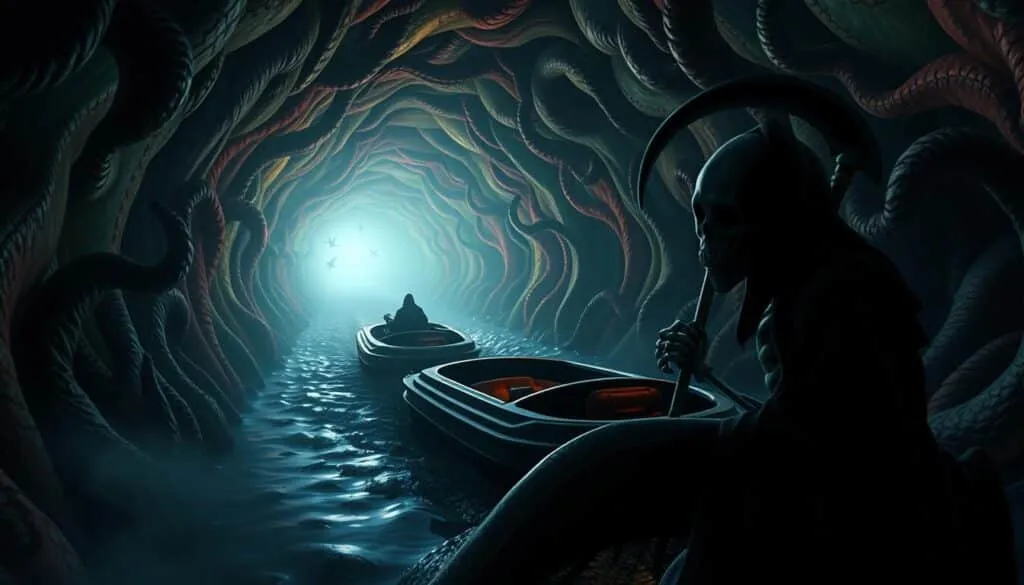
Golden Ticket winners boarded expecting factory magic but faced an unforgettable psychological ordeal. This section breaks down five key moments that transformed a simple boat ride into cinematic legend.
The Chilling Boat Ride: From Sweet Fantasy to Nightmare
Your journey begins aboard SS Wonkatania, gliding peacefully down chocolate river waters. This gentle start contrasts sharply with what follows. Passengers experience genuine distress as acceleration begins.
Young actors display authentic fear during filming. Veruca Salt’s panicked cries echo through the tunnel. Her desperate pleas for escape mirror audience unease perfectly.
Inside the Tunnel: Visuals, Sound, and Unsettling Revelations
Rapid direction changes create disorienting movement throughout this part. Passengers have no way to predict what comes next. The river setting traps everyone aboard with no escape route.
Wonka’s calm recitation contrasts with screaming children. This disturbing disconnect amplifies perceived danger. The entire sequence builds tension until abrupt resolution.
| Scene Element | Fantasy Phase | Nightmare Phase |
|---|---|---|
| Boat Movement | Gentle gliding | Violent acceleration |
| Passenger Reaction | Curious excitement | Genuine terror |
| Wonka’s Behavior | Quirky host | Unsettling poet |
Exploring How “is the grisly reaper mowing” Became an Iconic Symbol
Cinematic history contains few examples where a single poetic line achieved such lasting cultural resonance outside horror genre boundaries. The phrase’s journey from script to symbol reveals complex layers of psychological impact.
Analyzing the Lyrics and Metaphors: “Not a Speck of Light is Showing…”
Complete darkness establishes your psychological vulnerability during that chocolate factory sequence. Without any speck of light showing, imagination conjures worst scenarios. This sensory deprivation makes danger must growing feel inevitable.
Roald Dahl’s poem builds tension through escalating imagery. Natural threats give way to supernatural horror. The progression creates sophisticated literary construction rarely seen in family entertainment.
From Willy Wonka’s Set Pieces to Pop Culture Phenomenon
That wonka chocolate factory moment became cultural touchstone through unexpected darkness. Mainstream children’s films rarely acknowledge mortality so directly. The grisly reaper imagery resonated across generations.
Social media platforms like Goodreads demonstrate lasting impact. Dozens of likes and shares confirm phrase’s enduring power. This wonka chocolate scene opened doors for complex storytelling in family films.
Connections With Other Haunting Imagery and Expressions
Agricultural metaphors for death appear throughout literature. However, the reaper mowing concept feels uniquely unsettling in chocolate-themed context. Mundane activity contrasts with grave subject matter.
Parallel questions about fires hell a-glowing create one-two punch of existential dread. These lines work as rhetorical devices planting disturbing images. Your mind completes terrifying picture as light showing disappears completely.
Conclusion
Childhood cinema rarely ventures into such dark territory as that unforgettable tunnel sequence. Your exploration of five notable cases reveals how imagination and terror intersected within Willy Wonka’s chocolate factory.
This iconic movie moment demonstrates lasting power across generations. A simple boat ride through a dark passageway left indelible marks on viewers’ memories. The scene’s cultural significance continues growing decades later.
Authentic reactions from young actors created genuine sense of danger. Their performances, combined with masterful technical execution, transformed a chocolate factory tour into something profound. Filmmakers understood children appreciate thoughtful storytelling that acknowledges real fears.
This Willy Wonka scene changed direction of family entertainment forever. It proved young audiences handle complex themes when presented with care. The movie’s legacy influences content creators who respect children’s emotional intelligence.
Whether you experienced this ride as child or discovered it later, the tunnel scene remains powerful reminder. Memorable cinema often comes from unexpected places, taking us on journeys we never anticipated.
FAQ
What is the famous boat ride scene from Willy Wonka & the Chocolate Factory about?
The boat ride scene is a pivotal moment in the film where Gene Wilder’s character, Willy Wonka, takes the children on a terrifying journey through a dark tunnel. The ride quickly shifts from a sweet fantasy to a nightmare, featuring bizarre imagery, a haunting poem, and flashing lights. This part of the movie is famous for its sudden change in tone and unsettling visuals.
Why is the "grisly reaper mowing" line so memorable?
The line “Is the grisly reaper mowing?” is part of the poem Wonka recites during the tunnel scene. Its power comes from the stark contrast with the cheerful chocolate factory setting. The phrase uses strong, frightening imagery that sticks with you, making the scene unforgettable. It symbolizes the hidden dangers the children face on their tour.
How did the tunnel scene impact pop culture?
The scene became a pop culture phenomenon due to its shocking content and Gene Wilder’s intense performance. Its imagery and lines, like “There’s no knowing which way we are going,” are often referenced in other media. This part of the movie is widely discussed for its artistic direction and its ability to evoke fear and suspense.
What other haunting imagery is used in the Willy Wonka boat ride?
Beyond the “grisly reaper,” the scene includes visuals of a chicken being beheaded, a giant centipede crawling on a man’s face, and flashes of hellfire. These disturbing images, combined with the frantic speed of the boat and Wonka’s manic delivery, create a deeply unsettling experience that has captivated audiences for decades.