
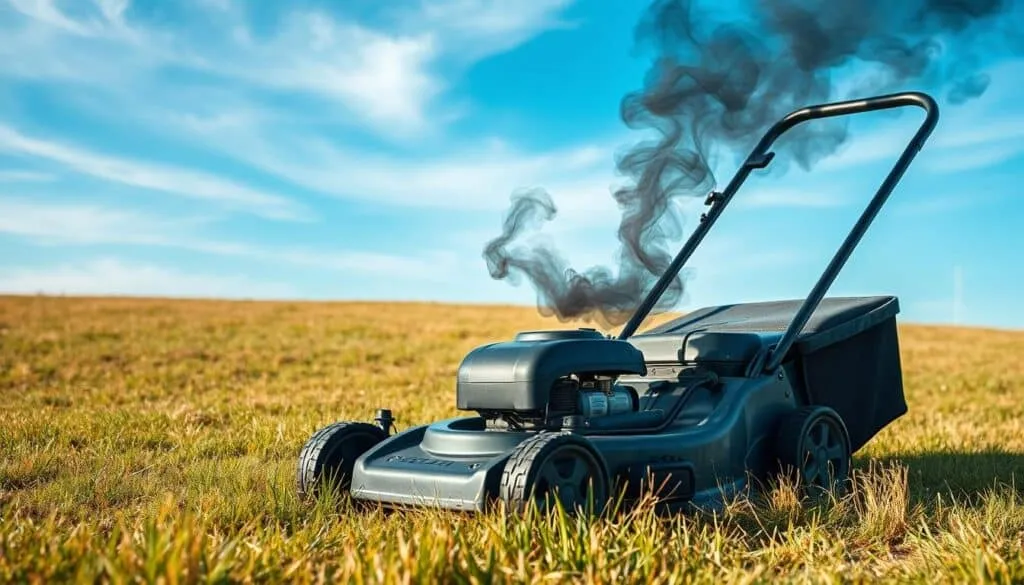
What if that plume of smoke rising from your equipment during routine yard work isn’t a disaster waiting to happen, but rather a simple message trying to get your attention?
Seeing your outdoor power equipment emit smoke can certainly cause alarm. However, industry data reveals that most smoking incidents stem from just four common issues. These account for 85% of all complaints homeowners report.
The color of the emissions provides crucial diagnostic information. White or blue smoke typically indicates oil burning in places it shouldn’t. Black smoke suggests your engine receives too much fuel and not enough air. Gray smoke may point to contamination or internal wear.
Taking quick action when you notice smoke can make a huge difference. Early intervention often means a simple repair costing under $20. Waiting could lead to expensive engine replacement running hundreds of dollars.
This guide helps you understand what your equipment’s smoke signals mean. You’ll learn to diagnose problems safely and perform straightforward fixes. We’ll also cover preventive maintenance to keep your machine running clean for years.
Key Takeaways
- Smoke color provides essential diagnostic clues about your equipment’s condition
- Four common issues cause 85% of all smoking problems reported by owners
- Early detection and action can prevent minor issues from becoming major repairs
- Most smoking problems have simple solutions costing under $20 to fix
- Understanding smoke signals helps you determine when DIY repair is appropriate
- Proper maintenance significantly reduces the likelihood of smoking issues
- Different smoke colors indicate specific types of engine or fuel system problems
Identifying Common Causes of a Smoking Lawn Mower
Different smoke colors from your outdoor power equipment indicate specific mechanical problems. The emissions provide crucial diagnostic information about what’s happening inside the engine compartment.
Overfilled Oil and Spillage Issues (White or Blue Smoke)
When you notice white blue smoke, you’re typically seeing oil burning where it shouldn’t. Overfilled oil accounts for approximately 35% of all smoking equipment cases.
Most push models require only 18-20 ounces of oil. Adding a full quart creates 12+ ounces of excess oil with nowhere to go. This surplus gets forced into the combustion chamber and onto hot surfaces.
Oil spillage can occur from tipping the equipment on its side, mowing steep slopes exceeding 15 degrees, or through worn seals and cracked components. The excess oil immediately burns on contact with hot engine parts.
Dirty Air Filter and Restricted Airflow
A clogged air filter represents about 30% of smoking problems and creates black smoke instead of white emissions. The filter’s job is to allow clean air into the engine while blocking debris.
When contaminants pack into the filter material, airflow becomes restricted. Your engine then runs “rich” with too much fuel and not getting enough air. Paper filters typically need replacement after 25 operating hours.
This imbalance in the fuel-to-air ratio causes incomplete combustion. The result is black smoke along with reduced power and efficiency. Understanding whether you’re dealing with white blue smoke or black smoke is the critical first diagnostic step.
Troubleshooting: Why Is Lawn Mower Smoking
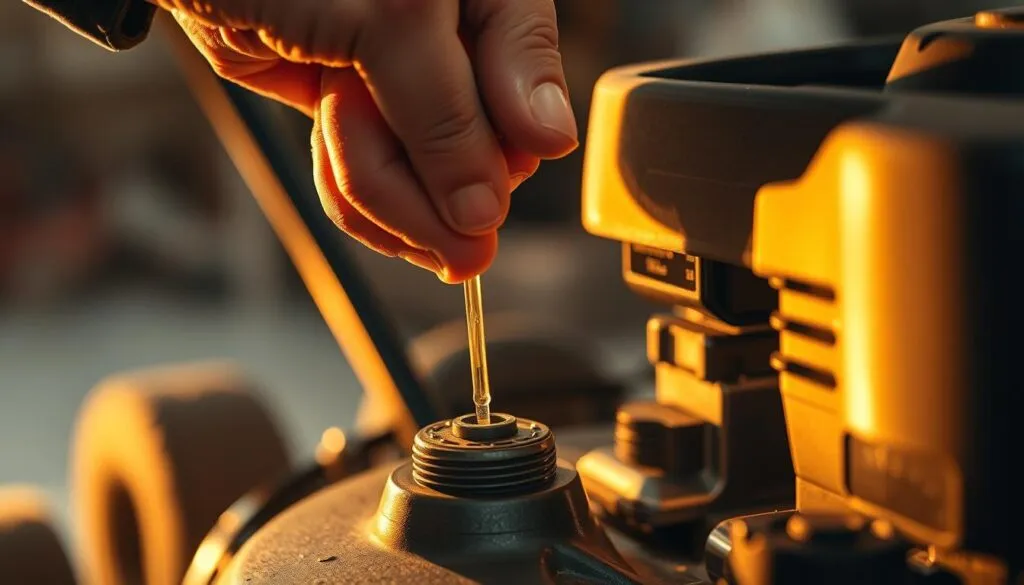
A step-by-step diagnostic process helps pinpoint the exact cause of smoke emissions from your equipment. Begin with simple checks before moving to more complex systems.
Checking Oil Levels and Using the Dipstick Accurately
Start by verifying your engine oil level. Remove the dipstick and wipe it completely clean with a rag. Reinsert it fully, then check the reading against the fill lines.
If the level sits above the maximum mark, you’ve found the issue. Excess oil in the reservoir gets forced into combustion areas. You’ll need to drain oil back to the proper level.
Inspecting the Carburetor and Fuel System Components
Fuel system problems cause approximately 15% of smoke issues. A stuck needle valve allows gasoline to drain into the crankcase. This contaminates your oil and overfills the reservoir.
Check your oil if it smells like gasoline and feels thin. This indicates contamination and poor lubrication. Old fuel older than 30 days also creates combustion problems.
Effects of Tipping and Improper Storage on Engine Performance
Tipping your equipment causes about 20% of smoke problems. Engines aren’t designed to operate beyond 15 degrees from level. Oil flows into the cylinder head when stored improperly.
The effects appear when restarting after maintenance. Smoke typically clears after running for 10-15 minutes. Proper storage prevents these issues, similar to waiting periods for other lawn care.
Quick Fixes and DIY Solutions
Quick intervention transforms a smoking equipment situation from alarming to manageable. Many common issues have straightforward solutions you can handle yourself with basic tools.
Addressing problems promptly often means spending under $30 instead of hundreds on professional repairs. The table below shows typical costs for common fixes.
Steps to Safely Shut Down and Cool Off Your Mower
Your first move when seeing smoke should be immediate engine shutdown. Step away until emissions clear completely. This prevents potential fire hazards and additional damage.
Allow the unit to cool for 10-15 minutes before inspection. Never attempt repairs on a hot engine. Safety should always come before diagnostics.
Replacing Worn Components: Spark Plugs and Air Filters
Begin your inspection with the air filter. A clogged filter restricts airflow, causing combustion issues. Paper filters require replacement when dirty, while foam types can be washed.
Check your spark plug for oil fouling or damage. A compromised plug contributes to smoking problems. Replacement typically costs under $10 and takes minutes.
After replacing components, run the engine for 5-10 minutes. This burns off any excess oil that entered combustion areas. The smoke should clear during this period.
| Repair Type | Components Needed | Estimated Cost | Time Required |
|---|---|---|---|
| Air Filter Replacement | New filter | $8-15 | 10 minutes |
| Spark Plug Replacement | New plug | $5-10 | 5 minutes |
| Complete Tune-Up | Filter + plug | $5-25 | 30 minutes |
| Carburetor Replacement | New carburetor | Under $30 | 45 minutes |
These affordable repairs resolve most smoking issues. Proper maintenance prevents many problems before they start, saving you time and money.
Maintaining Your Lawn Mower for Optimal Performance
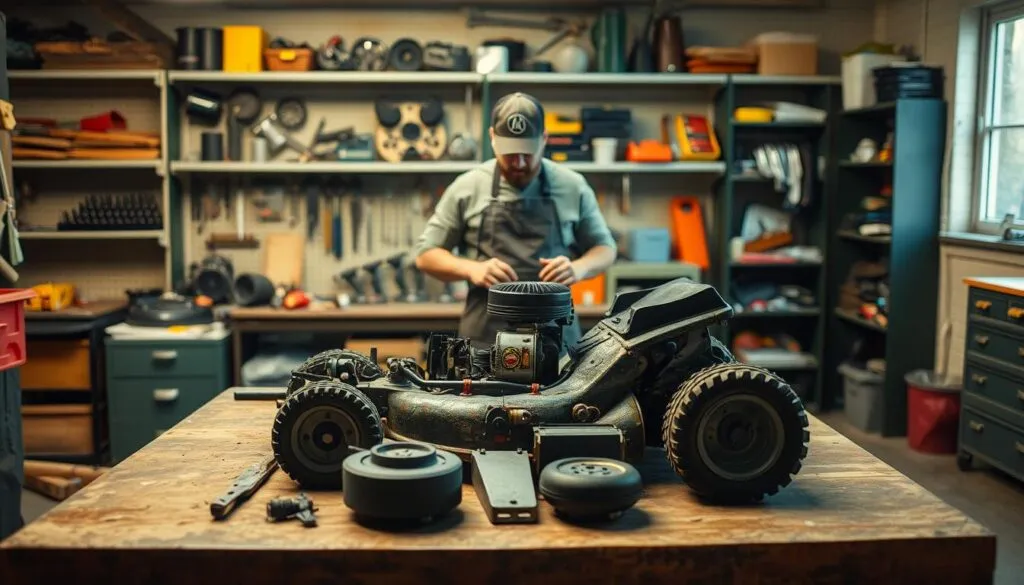
Proper care extends equipment lifespan and reduces unexpected breakdowns significantly. Consistent maintenance prevents most issues before they become serious problems. Establishing a regular schedule keeps your investment running smoothly for years.
Regular Engine Checks and Oil Management
Check oil levels before each use using the dipstick. Never exceed the maximum fill line to avoid overfilling. Change lubricant every 50 hours or seasonally for optimal performance.
Inspect air filters every 25 operating hours. Replace paper filters when dirty or clean foam types regularly. Proper fuel quality matters greatly—use fresh gasoline and add stabilizer for storage.
Examine oil seals and look for leaks around the carburetor. Secure the air filter housing properly and check the fuel cap vent. These simple steps prevent most mechanical issues.
When to Consult a Repair Shop for Professional Help
Seek professional assistance when basic fixes don’t resolve persistent issues. A qualified repair shop can diagnose deeper mechanical problems. They have specialized tools for complex repairs.
Combustion chamber seal replacement requires expert skills. Crankshaft air leaks and worn piston rings need professional attention. Carburetor problems that persist after cleaning warrant shop intervention.
Professional service typically costs $25-120 for comprehensive cleaning. This investment protects against $300-800 engine replacement costs. Knowing when to seek help saves money long-term.
Conclusion
When your equipment starts emitting smoke, consider it a diagnostic tool rather than a catastrophe. The color and behavior of emissions provide clear signals about internal conditions.
Most issues stem from just four common causes. These account for 85% of all reported problems. Simple solutions typically cost under $50 when addressed promptly.
You now possess the knowledge to interpret different smoke colors accurately. White or blue indicates oil problems. Black points to air-fuel mixture issues. Gray suggests more serious wear.
Regular maintenance prevents most problems before they start. Check your oil level frequently. Use fresh fuel with stabilizer. Avoid tipping beyond 15 degrees.
Confident troubleshooting saves both time and money. You can handle basic repairs yourself. Complex internal issues warrant professional attention.
Apply this knowledge for smoke-free operation throughout the season. Your equipment will reward you with reliable performance and longevity.
FAQ
What does it mean if my mower is emitting white or blue smoke?
This often signals an oil-related problem. The most common cause is an overfilled oil reservoir. Excess oil can enter the combustion chamber, burning off as white or blue smoke. Check your oil level with the dipstick to confirm.
Can a clogged air filter make my engine smoke?
Absolutely. A dirty or clogged air filter restricts airflow to the engine. This imbalance in the air-fuel mixture can cause incomplete combustion, leading to black smoke. It can also make the engine run rich, contributing to other smoking issues.
How do I check the oil level correctly?
Ensure your machine is on a level surface and the engine is cool. Remove the spark plug wire for safety. Wipe the dipstick clean, reinsert it fully, then pull it out again to get an accurate reading. The oil should be between the high and low marks.
What should I do if I see smoke coming from my lawn mower?
Immediately shut off the engine and allow it to cool. Investigate the potential causes, starting with the oil level and air filter. If you recently tipped the mower on its side, oil may have spilled into areas it shouldn’t be, causing temporary smoke upon restart.
When is it time to take my smoking lawn mower to a repair shop?
If basic troubleshooting—like correcting the oil level, replacing the air filter, or installing a new spark plug—doesn’t resolve the issue, consult a professional. Persistent smoke could indicate a more serious internal engine problem that requires expert diagnosis.