
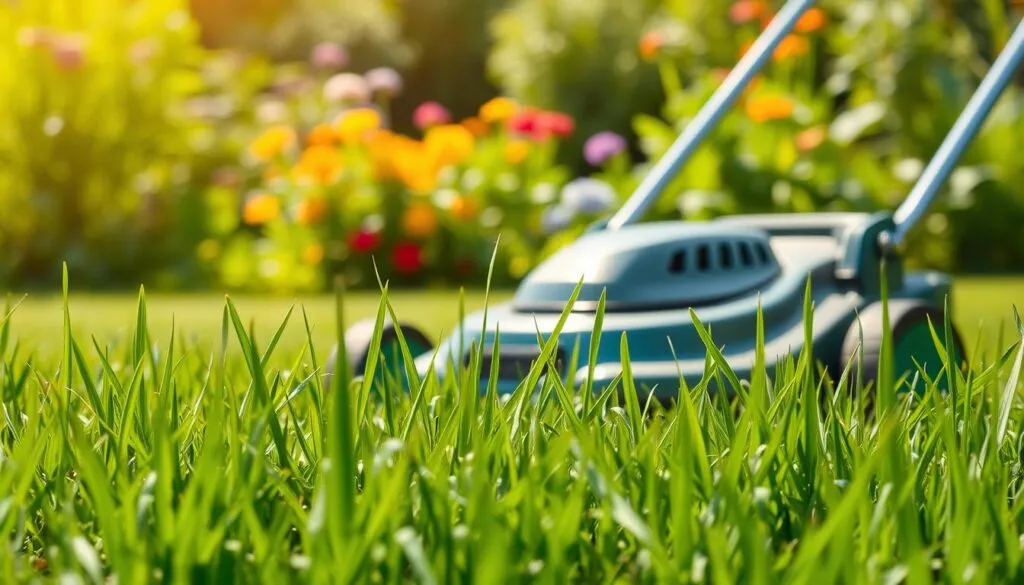
What if the secret to a perfect lawn isn’t just what you do, but when you do it? That first cut on a fresh lawn is a critical moment. Many homeowners rush this step, risking the health of their entire turf.
Timing that initial trim is everything for your lawn’s future. Mow too soon, and you risk tearing out delicate young shoots before their roots are strong. Wait too long, and the overgrowth can smother healthy development.
The right time depends heavily on your establishment method. Whether you planted seed or laid sod changes the timeline significantly. Other factors like grass type, weather, and soil quality also play a major role.
Patience during this early stage pays off with a dense, resilient lawn. Proper care now builds a turf that can handle foot traffic and environmental stress for years to come. This guide will walk you through the entire process.
Key Takeaways
- The first mow is a pivotal moment for long-term lawn health.
- Cutting too early can damage fragile roots and shoots.
- Waiting too long leads to overgrowth that harms development.
- The optimal timing differs for seeded lawns versus sod.
- Grass type, weather, and soil condition influence the best time.
- Early patience results in a thicker, more durable turf.
- Proper equipment and technique are essential for success.
Getting Started with New Lawn Care
Your approach to early lawn care depends heavily on whether you started from seed or sod. These two methods create vastly different establishment timelines and care requirements.
Understanding New Lawn Types: Seeded vs. Sod
Seeded lawns begin with individual grass seeds that must germinate and develop from scratch. This process requires significant patience as seeds need four to thirty days just to sprout, depending on soil temperature and weather conditions.
Sod installations use mature grass with established root systems. These lawns arrive as ready-made turf that simply needs to anchor into your soil. The existing roots give sod a head start over seeded options.
| Feature | Seeded Lawn | Sod Lawn |
|---|---|---|
| Establishment Time | 8 weeks minimum | 2-4 weeks typically |
| Root Development | Starts from seed | Pre-established roots |
| Initial Height | 3-4 inches before first cut | Ready immediately |
| Cost Consideration | More affordable | Higher initial investment |
Importance of Timing for Healthy Growth
Proper timing ensures strong root development for long-term lawn health. Rushing the first cut can damage fragile young shoots before they establish properly.
For seeded turf, wait approximately eight weeks after planting. Grass plugs follow a similar timeline to sod, typically ready within two to four weeks. The critical first two months determine your lawn’s future resilience.
To check sod readiness, perform a simple tug test. Gently pull the grass—if it stays firmly in place, the roots have anchored properly. This careful approach to overseeding fescue lawn timing applies to all establishment methods.
Determining When Can You Mow New Grass
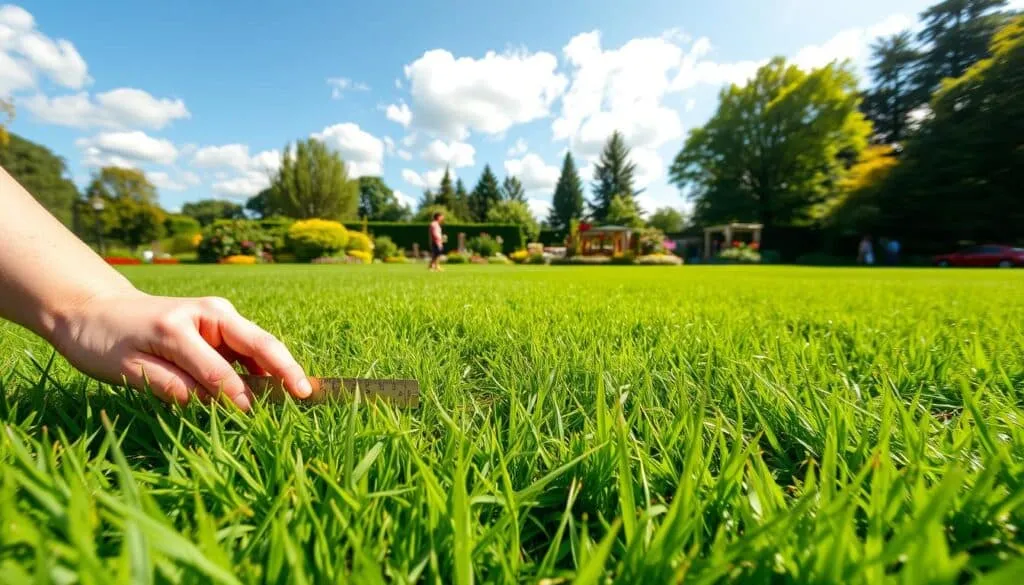
Successful establishment depends on recognizing clear visual cues from your turf. Two critical factors determine readiness: blade length and root strength.
Recognizing the Right Height and Growth Stage
The golden rule for that initial trim involves the one-third principle. Your turf should reach a height one-third higher than your desired maintenance level. For example, maintain at 3 inches means waiting until blades hit 4 inches.
Under optimal conditions, most lawns reach appropriate mowing height within four to six weeks. This timeframe ensures adequate leaf surface remains after cutting. The remaining blade length supports continued photosynthesis.
Root development proves equally important as visible growth. Strong anchorage prevents damage from equipment. Perform the simple tug test: gently pull a small clump.
- If grass stays firmly planted, roots have established properly
- If soil shifts or plants lift easily, delay the first mow
- Check multiple areas for consistent root development
Warm-season varieties typically need 2-3 inches before initial cutting. Grass plugs often reach readiness faster than seeded options. Understanding your specific turf type ensures perfect timing.
Preparing Your Equipment for the First Mow
Before that initial trim, your mower requires careful attention to ensure optimal performance. Proper preparation protects delicate growth and supports healthy development.
Checking and Sharpening Mower Blades
Sharp mower blades create clean cuts that heal quickly. Dull blades tear rather than slice, creating jagged wounds.
Each cutting action creates a small opening on grass blades. Clean cuts from sharp equipment minimize disease entry points. Thorough cleaning removes debris that could spread pathogens.
Adjusting Mower Height to Prevent Stress
Set your cutting height around 3 inches for the first few sessions. This higher setting protects tender growth from shock.
A proper height preserves leaf surface for photosynthesis. This supports continued root development and reduces plant stress. Removing too much growth weakens the entire system.
| Equipment Aspect | Proper Preparation | Improper Preparation |
|---|---|---|
| Blade Condition | Sharp, clean edges | Dull, tearing surfaces |
| Height Setting | 3 inches minimum | Too low for young growth |
| Equipment Cleanliness | Thoroughly cleaned | Accumulated debris present |
| Soil Conditions | Dry, firm surface | Wet, rut-forming ground |
Ensure soil is dry enough to prevent wheel ruts. Compacted earth restricts root growth and water movement. Proper equipment setup directly impacts long-term turf health.
Smart Mowing Techniques for New Lawns
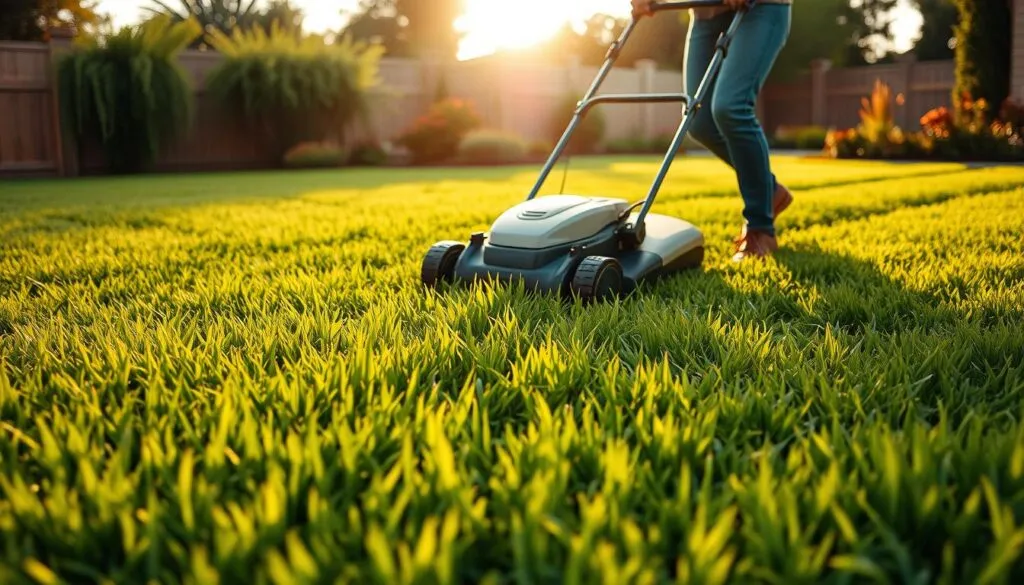
Mastering the first few cuts establishes a foundation for a thick, healthy lawn. Proper technique during these initial sessions prevents stress and encourages robust growth.
Adhering to the one-third rule is non-negotiable. Never remove more than one-third of the grass blade’s height in a single session. This practice safeguards the plant’s energy reserves.
Choosing Dry Weather and Optimal Conditions
Always schedule your mowing for dry conditions. Wet grass clumps under the mower deck, leading to an uneven cut. It also tears easily, creating jagged edges that invite disease.
The weight of your equipment on damp soil causes compaction. This restricts root growth and water movement. Aim for a warm, dry day when the turf is completely dry to the touch.
Mowing Patterns to Encourage Even Growth
Vary your mowing pattern with each session. Alternating directions prevents the turf from developing a permanent lean. It also discourages rut formation in the soil.
Move at a slow, steady pace. Rushing can pull up young shoots that lack strong anchorage. This careful approach is especially important if you are hand-pushing the mower.
| Mowing Condition | Optimal Practice | Problematic Outcome |
|---|---|---|
| Blade Moisture | Completely dry turf | Clumping, tearing, disease risk |
| Soil Condition | Firm and dry surface | Soil compaction from equipment |
| Cutting Height | Follow one-third rule | Plant stress, weakened growth |
| Mowing Direction | Alternate each session | Rut formation, leaning grass |
During the active growing season, plan for weekly mowing. Consistent care following these techniques builds a resilient lawn that thrives for years.
Post-Mow Care for a Lush, Resilient Lawn
Your lawn’s journey to lushness continues immediately after that first careful trim. Proper aftercare ensures the turf recovers quickly and continues developing strong roots.
Strategic maintenance following cutting supports healthy growth and prevents common problems. These practices help establish a thick, durable turf that withstands various conditions.
Effective Watering Strategies After Mowing
Provide a thorough watering session following each cut. This helps plants recover from the stress of trimming and encourages deeper root development.
Early morning is the ideal time for watering. This timing reduces evaporation and allows moisture to penetrate the soil effectively. Daily watering may be necessary during dry periods.
For newly seeded areas, maintain consistent soil moisture for the first two weeks. As plants mature, decrease frequency but increase duration to reach deeper roots.
Managing Grass Clippings and Weeds
Consider leaving fine clippings on the surface if your equipment has a mulching feature. These clippings decompose quickly and return valuable nutrients to the soil.
Regularly inspect for weeds after cutting sessions. Early detection prevents competition for resources and stops weed spread before it becomes problematic.
Minimizing Foot Traffic and Other Stress Factors
Limit activity on freshly trimmed areas for several days. Young plants need time to recover without additional pressure from compaction.
Monitor the turf for signs of stress like discoloration or patchy growth. Address any issues promptly to maintain consistent development across the entire lawn.
Plan subsequent trimming sessions to maintain regular growth patterns. Consistent care encourages the dense, vigorous turf that characterizes healthy lawns.
Conclusion
Proper timing and technique during establishment create the blueprint for turf resilience. Seeded areas typically need eight weeks before the initial cut, while sod installations often ready themselves in two to four weeks. Adhering to the one-third rule prevents stress on developing blades.
Sharp equipment and optimal conditions ensure clean cuts that minimize disease risk. Multiple factors work together for successful care of your lawn. These include appropriate height measurement and root stability verification.
Patience during early growth stages pays long-term dividends in turf health. Consistent mowing schedules and proper watering practices establish a dense, resilient lawn. This foundation supports vigorous development for years of enjoyment.
FAQ
How long after seeding can I mow my lawn?
You can typically perform the first mow about three to four weeks after seeding. The key indicator is grass height. Wait until the turf reaches approximately 3 to 4 inches tall before cutting. This ensures the root system is strong enough to handle the stress.
What is the best mowing height for a newly seeded lawn?
For the initial cut, set your mower blades to a high setting. Aim to remove no more than one-third of the grass blade. A final height of around 2.5 to 3 inches is ideal. This height promotes deep root growth and helps shade out weeds.
Should I water my new lawn before or after the first mow?
It’s best to mow when the grass is completely dry. Water the lawn the day before your scheduled mowing. Avoid watering immediately after cutting to prevent soil compaction and potential disease. Resume your regular watering schedule the following day.
How do I prepare my mower for cutting new grass?
Sharp mower blades are critical. Dull blades tear the tender grass, causing damage and stress. Before the first mow, sharpen your blades and adjust the deck height to the highest setting. A clean cut helps the turf recover quickly and stay healthy.
What should I do with the grass clippings after mowing a new lawn?
For the first few mows, it’s wise to bag the clippings or rake them up. This prevents smothering the young grass. Once the lawn is established, you can switch to mulching, which returns valuable nutrients to the soil.
Can foot traffic harm a newly mowed lawn?
Yes, it’s important to minimize foot traffic for at least a day after mowing. The grass and soil are more vulnerable post-cut. Limiting activity allows the turf to recover without additional stress, leading to a thicker, more resilient lawn.