
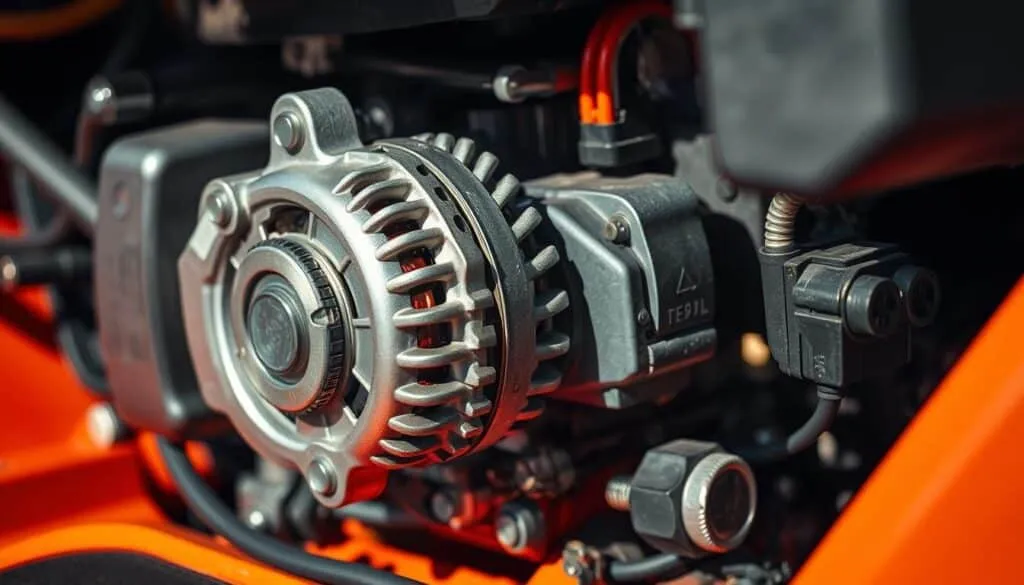
Ever wonder how your machine keeps running smoothly, cutting your entire property without the battery dying? That reliable performance often comes down to one crucial part.
If you start your outdoor power equipment with a key, its small engine uses an electrical charging system. This system includes a battery and a vital component for generating electricity.
This component powers the small engine during operation. It keeps the battery charged by sending energy back through the entire electrical system. This process is essential for continuous operation.
Understanding this part helps you maintain your equipment properly. It also explains the key difference between basic push mowers and more advanced riding models. Knowing this affects how you troubleshoot issues.
Key Takeaways
- Many riding mowers with electric-start systems include an alternator for power generation.
- The alternator’s main job is to charge the battery while the engine is running.
- This component prevents battery drain during long mowing sessions.
- Its presence is a significant advantage over push mowers that lack a charging system.
- Recognizing if your model has one is crucial for proper maintenance and troubleshooting.
- The alternator integrates with other electrical parts to ensure reliable performance.
- This technology allows for longer operation times and more dependable equipment.
Essential Components of Your Mower’s Electrical System
The charging mechanism in your outdoor power equipment consists of three main elements. These parts work together to keep your machine running smoothly during extended use.
Key Parts: Alternator, Battery, and Connections
Your equipment’s electrical setup relies on critical components. The alternator generates electricity while the engine operates. Meanwhile, the battery stores energy for starting and auxiliary functions.
Proper connections ensure efficient power transfer between these elements. Clean, tight wiring prevents voltage drops and maintains system reliability.
| Component | Primary Function | Key Features |
|---|---|---|
| Alternator | Generates electrical power | Contains rotor, stator, rectifier |
| Battery | Stores electrical energy | Powers starter motor |
| Connections | Links system components | Requires clean, tight fittings |
How Each Component Supports Engine Performance
Every part plays a vital role in overall equipment function. The alternator produces electricity to charge the battery during operation. This prevents power drain during long cutting sessions.
“The electrical system functions as an integrated unit where each component depends on the others for optimal performance.”
Your battery health directly impacts alternator efficiency. A weak battery strains the charging system. Regular maintenance ensures all elements work harmoniously.
does a riding lawn mower have an alternator

Many modern outdoor power equipment models include electrical charging capabilities. This feature separates basic machines from advanced systems that can operate for extended periods.
Understanding Your Mower’s Charging Mechanism
The charging process converts mechanical energy into electrical energy. This happens while your equipment’s engine operates at normal speeds.
This mechanism replenishes the battery during use. It prevents complete drainage after long cutting sessions.
Why the Alternator is Critical for Operation
Your equipment depends on continuous power circulation. The alternator ensures the battery maintains sufficient charge for starting and accessories.
Without this component, operation would rely solely on stored battery power. This would deplete quickly during typical use.
You can test functionality with a simple method. Turn on headlights, then shut off the engine. Dimming lights indicate proper alternator operation.
This self-sustaining electrical loop supports reliable performance. It demonstrates why electrical system maintenance matters for longevity.
How Alternators Work in Lawn Mowers
Inside your cutting machine, a sophisticated conversion system transforms engine rotation into electrical current through electromagnetic principles. This process ensures continuous operation without battery drain.
Magnetic Induction and AC to DC Conversion
Your equipment’s alternator operates through magnetic induction. As the engine turns the rotor, it creates a rotating magnetic field. This field passes stationary stator windings, inducing alternating current.
The generated AC power must convert to direct current for battery charging. This conversion happens through a rectifier containing diodes. These components allow current flow in one direction only.
| Alternator Type | Best For | Key Advantage |
|---|---|---|
| Single-Phase | Small residential mowers | Simple design, cost-effective |
| Three-Phase | Large powerful machines | Higher efficiency output |
| Permanent Magnet | Modern equipment | Compact, consistent power |
The Role of Rectifiers and Voltage Regulators
Rectifiers serve the essential function of converting AC to DC power. Your battery requires this stable direct current for proper charging and accessory operation.
Voltage regulators maintain consistent electrical output. They prevent overcharging that could damage your battery. They also ensure sufficient charging during low-speed operation.
This coordinated system between components delivers reliable performance. It supports both battery maintenance and electrical accessory function during mowing sessions.
Maintenance Tips for Your Mower’s Alternator and Battery
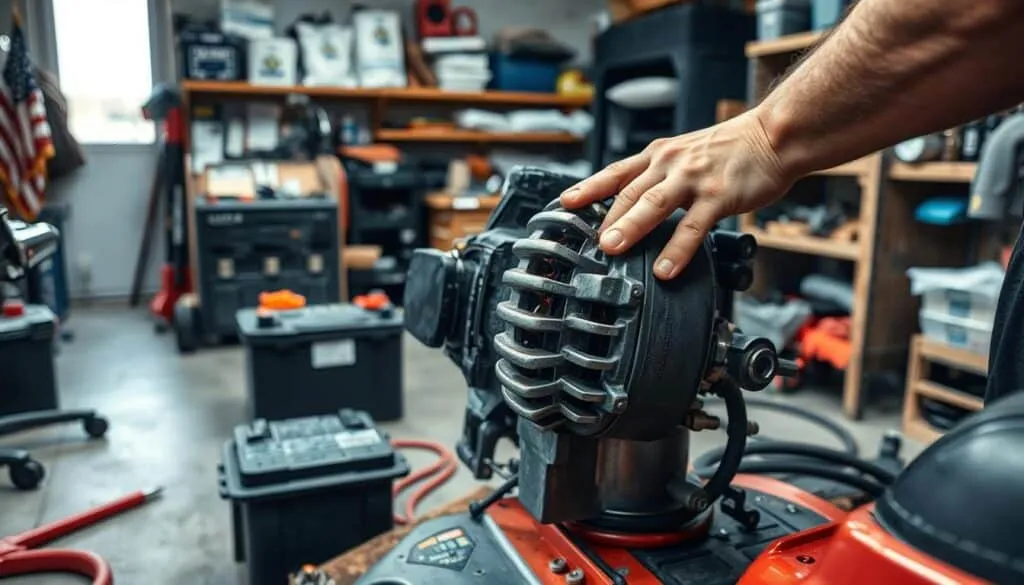
Effective electrical system care involves routine checks and preventive measures for long-term reliability. Your outdoor power equipment depends on consistent charging performance for uninterrupted operation.
Best Practices for Regular Inspections
Schedule monthly inspections during peak mowing season. Check all electrical connections for tightness and corrosion. Clean terminals with a wire brush if needed.
Monitor battery health by observing starting performance. Slow cranking may indicate charging issues. Regular maintenance prevents unexpected failures.
For belt-driven systems, inspect the alternator belt for wear and proper tension. Loose belts reduce charging efficiency. Replace worn components promptly.
Safety Precautions and Testing Methods
Always wear safety glasses when servicing batteries. Work in well-ventilated areas away from flames or sparks. Never tip the battery or remove vent caps.
Test your charger connection by verifying tight, clean terminals first. If the battery won’t hold charge, connect it to the charger. Full charge should occur within eight hours.
Consult your equipment manual for specific maintenance schedules. Manufacturer guidelines ensure proper care of your lawn mower’s electrical system.
Troubleshooting Electrical and Alternator Issues
When your equipment shows signs of electrical trouble, knowing how to diagnose the issue can save you time and money. Proper troubleshooting begins with recognizing common symptoms and using systematic testing methods.
Understanding your machine’s charging system helps you identify whether problems stem from the alternator, battery, or connections.
Identifying Common Electrical Failures
Your mower’s electrical system may show warning signs like clicking sounds during startup or electronics not working properly. Batteries that drain too quickly also indicate potential charging system problems.
A simple test involves turning on your lights while the engine is running. Shut off the engine and observe if the lights dim. This indicates whether your alternator functions correctly.
Check all connections beneath the blower housing for corrosion or looseness. These connection points often cause charging system disruptions.
When to Replace or Repair Components
Use a multimeter to test voltage output while your engine runs at 3600 RPM. Compare readings against manufacturer specifications for your specific model.
Different alternator types require different replacement parts. AC volt systems typically need stator replacement, while DC amp systems may require new stators, diodes, or voltage regulators.
Always verify your battery holds charge when disconnected before concluding the alternator has failed. The decision to replace parts should be based on multimeter readings matching manufacturer specifications.
Consider your equipment’s age and parts availability when deciding between repair and replacement. This ensures you address the actual problem rather than replacing functional components.
Conclusion
Your equipment’s electrical design directly impacts performance and maintenance requirements. This knowledge empowers confident troubleshooting and proper care.
Most riding machines include charging components. Some models rely solely on external power sources. Manufacturers base this decision on intended usage and design specifications.
The presence of this charging part provides significant advantages. You enjoy continuous operation without frequent power interruptions. Enhanced electrical functionality supports accessories like headlights during evening use.
Different equipment types require specific component specifications. Residential machines typically use simpler systems. Commercial-grade equipment benefits from more robust charging capabilities.
Your maintenance practices directly affect system reliability. Regular inspections and proper testing ensure optimal performance. Understanding these relationships helps you make informed repair decisions.
Check your specific model’s design and follow recommended schedules. This approach extends operational lifespan and prevents unexpected failures during critical tasks.
FAQ
What is the main function of the charging system on my equipment?
The primary role of your machine’s charging system is to replenish the battery while the engine is running. This ensures your battery has enough power to start the engine and run electrical features like headlights.
How can I tell if my battery is being charged properly?
You can check the voltage across the battery terminals with a multimeter while the engine is at a high speed. A reading significantly higher than the battery’s resting voltage (around 12.6V) indicates the charging system is active. Always consult your owner’s manual for specific voltage specifications.
Can I add extra lights or accessories without overloading the system?
It depends on your specific model and its power output. Adding high-demand accessories can strain the electrical system, potentially leading to a dead battery. Check your manufacturer’s specifications to understand the capacity before installing new components.
What are common signs of a failing charging component?
Frequent symptoms include a battery that won’t hold a charge, dimming headlights when the engine speed changes, or difficulty starting the machine. These issues often point to problems with the alternator, voltage regulator, or related connections.
Is regular maintenance required for the electrical system?
Yes, simple maintenance is crucial. Periodically inspect battery terminals for corrosion and ensure they are tight. Keeping the battery clean and using a smart charger during off-seasons can greatly extend the life of your entire electrical system.