

Have you ever wondered if the simple act of checking your lawn mower’s oil could be the difference between a flawless cut and a costly repair? Many homeowners overlook this basic step, assuming their equipment will run fine. This common belief can lead to serious engine trouble.
Your walk-behind mower is the heart of your lawn care. Keeping its engine properly lubricated is non-negotiable for peak performance. Most models require between 15 and 18 ounces of oil. Using the correct amount protects the engine from wear and tear.
Regular mower maintenance, including annual oil changes or after every 50 hours of use, is essential. This guide provides clear, actionable steps. You will learn to identify your specific model’s requirements and avoid the dangers of overfilling or underfilling.
Understanding these fundamentals extends your equipment’s life. It also ensures a healthy, well-manicured lawn every time you mow. Proper care saves you money and frustration in the long run.
Key Takeaways
- Most push mowers have an oil capacity of 15 to 18 ounces.
- Checking the oil level before each use is critical for engine protection.
- Change the engine oil every 50 hours of operation or once per year.
- Correct oil levels prevent premature engine failure and expensive repairs.
- Proper maintenance ensures optimal cutting performance and extends mower lifespan.
- Avoid overfilling or underfilling to protect your equipment’s engine.
Introduction to Push Mower Oil Maintenance
Proper lubrication stands as the foundation of reliable mower operation season after season. Your equipment’s engine depends on consistent oil care to function at its best. This maintenance routine protects your investment and ensures peak performance.
Why Proper Oil Levels Matter
Oil serves as the lifeblood of your mower engine. It provides essential lubrication to moving parts while also cooling components during operation. This dual function prevents excessive wear and overheating.
Maintaining correct levels significantly reduces friction between metal surfaces. This minimizes wear and extends your equipment’s operational lifespan. Regular monitoring protects against catastrophic engine failure.
Your lawn mower operates under demanding conditions with high temperatures. Proper lubrication becomes absolutely essential for reliable performance. Good maintenance habits keep your equipment ready whenever needed.
Understanding these fundamentals helps develop consistent care routines. Your lawn will benefit from equipment that operates efficiently throughout each cutting season. This attention to detail saves money on repairs and replacements.
Understanding Your Mower’s Oil Requirements
Navigating the world of small engine lubricants requires understanding how different oil types function in various conditions. Your equipment’s performance depends on selecting the right formulation for your specific climate and usage patterns.
Different Oil Types and Their Uses
SAE 30 works best in warmer temperatures above 40°F. This conventional oil provides excellent lubrication for typical summer mowing conditions.
Multi-grade options like SAE 10W-30 offer versatility across varying temperatures. They make cold starts easier during spring and fall seasons.
Synthetic SAE 5W-30 delivers superior protection across all temperature ranges. This advanced formulation provides better cold-weather starting and reduced consumption.
Recommended Oil Capacities for Push Mowers
Walk-behind mowers typically require 15 to 18 ounces of lubricant. This capacity ensures proper engine protection without overfilling risks.
Always consult your owner manual for manufacturer-specific recommendations. Different small engines have unique design specifications affecting their needs.
Using high-quality detergent oils classified as “For Service SF, SG, SH, SJ” or higher ensures optimal performance. Avoid special additives that can interfere with proper lubrication.
How Much Oil Do You Put in a Push Mower

Accurately measuring the fluid level in your lawn equipment prevents costly mechanical issues. Getting this right protects the heart of your machine.
Identifying the Recommended Oil Capacity
Most walk-behind models need about 15 to 18 ounces. This is a general guideline.
Your owner manual provides the exact number for your engine. Always check this first. Using the specified amount is vital for performance.
Checking the Oil Level Accurately
Start by parking the lawn mower on a flat, level surface. This ensures an even reading.
Remove the dipstick cap and wipe the blade clean. Reinsert it fully, then remove it again to check oil.
The oil level should be between the “Full” and “Add” marks. If it’s low, add a small amount. Wait a moment for it to settle before checking again.
This simple routine before each use safeguards your mower from damage.
Preparing for an Oil Change on Your Push Mower
A successful oil change begins with thorough preparation and the right equipment. This proactive approach ensures your maintenance goes smoothly and safely. Proper setup prevents spills and protects your equipment.
Gathering the Necessary Tools and Materials
Before you change oil in your equipment, collect all essential parts and supplies. You’ll need fresh lubricant, typically SAE 30 for warm weather. An oil pan, work gloves, and safety glasses are crucial.
Consult your owner manual for specific recommendations. Have clean rags ready for quick spill cleanup. Proper preparation with the right materials makes the entire process efficient.
Safety and Preparation Steps
Start by placing your lawn mower on a completely level surface. Ensure the engine has cooled if recently used. This prevents burns from hot components.
Warm the engine by running it briefly before the oil change. This helps the lubricant flow more easily. Always disconnect the spark plug wire for safety.
Check your gas level before beginning work. Never tip equipment with a full tank. Locate the oil fill cap, usually marked clearly on the engine.
Step-by-Step Oil Change Process for Your Push Mower
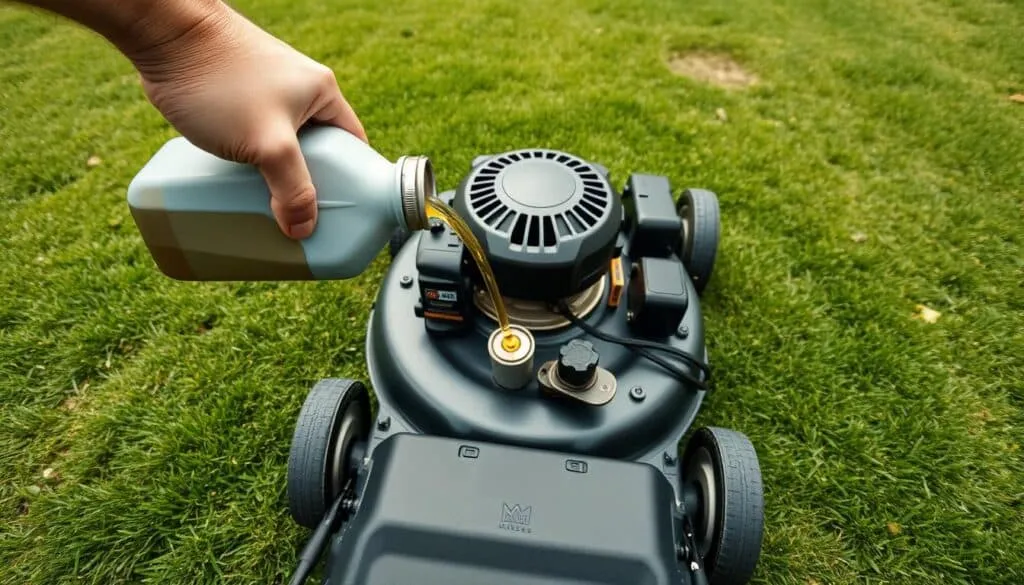
Following a systematic approach to lubricant replacement protects your investment and maintains cutting efficiency. This procedure ensures your equipment receives proper care.
The process of changing oil lawn equipment requires careful attention to detail. Proper execution prevents common maintenance errors.
Draining the Old Oil Correctly
Begin by positioning your drain pan beneath the oil drain opening. Carefully remove the cap by turning it counterclockwise.
Tilt your lawn mower with the oil side downward. This allows gravity to pull all contaminated fluid into your container.
Allow several minutes for complete drainage. The old oil contains dirt and combustion byproducts that must be removed.
Proper disposal is essential. Store used lubricant in a sealed container for recycling.
Adding Fresh Oil Without Overfilling
Return your equipment to its upright position after draining. Pour fresh oil slowly through a funnel into the fill tube.
Regularly remove dipstick to check the fluid level during filling. Add small amounts gradually to reach the proper mark.
Avoid overfilling by monitoring the indicator closely. Secure the cap firmly when finished.
This complete change oil lawn procedure takes about 20-30 minutes. It ensures optimal engine protection for your mower.
Additional Lawn Mower Maintenance Tips
Beyond basic oil changes, establishing a comprehensive maintenance routine ensures your equipment operates at peak efficiency. Regular attention to your equipment’s condition prevents minor issues from becoming costly repairs.
Regular Oil Level Checks
Make checking the oil level part of your pre-operation routine. This simple step takes seconds but provides crucial engine protection before each use.
Manufacturers typically recommend changing engine lubricant every 50 hours of operation. Some sources suggest intervals of 25-50 hours depending on usage intensity. If you don’t track running hours precisely, perform this maintenance at least once per season.
Maintain a detailed journal to record each service date and hours accumulated. This helps identify patterns in equipment performance over time. Your records become invaluable for troubleshooting unexpected issues.
During hot weather above 80°F, you may need to check oil more frequently. Increased consumption can occur under extreme operating conditions.
Additional maintenance tasks include inspecting the air filter regularly and cleaning the mower deck after use. Sharpening blades ensures clean cuts that promote healthy lawn growth.
Troubleshooting Common Oil-Related Issues
Diagnosing fluid-related issues quickly ensures your equipment continues to operate reliably. Early detection of problems prevents costly repairs and extends your machine’s lifespan.
Recognizing symptoms helps you take corrective action before serious damage occurs. This section covers common lubrication problems and their solutions.
Signs of Overfilling or Low Oil Levels
Your equipment gives clear signals when lubrication levels are incorrect. Unusual engine noises often indicate insufficient fluid.
Knocking or grinding sounds suggest metal components lack proper lubrication. These warning signs require immediate attention.
| Symptom | Likely Cause | Recommended Action |
|---|---|---|
| Excessive white/blue smoke | Overfilled crankcase | Drain excess fluid to proper level |
| Knocking engine sounds | Low oil levels | Add fresh oil immediately |
| Oil leaks around seals | Overpressure from overfilling | Reduce oil level and check seals |
| Black, gritty oil on dipstick | Old oil needs replacement | Perform complete oil change |
Using the wrong oil type for your climate creates problems. SAE 30 in cold weather makes starting difficult.
10W-30 above 80°F may increase consumption. Always match your lubricant to current temperatures.
Addressing Oil Leaks and Other Problems
Leaks often appear around the drain plug or oil filter. Tighten connections and replace worn gaskets promptly.
After adding fresh oil, run the engine briefly. Then inspect for leaks before regular use.
Performance issues like reduced power often trace back to lubrication problems. Regular checks prevent these concerns.
Addressing leaks quickly prevents fluid loss that could lead to engine seizure. Proper maintenance keeps your equipment running smoothly.
Conclusion
The investment of time in regular oil care pays dividends through extended equipment life and consistent cutting performance. Your commitment to proper maintenance separates occasional users from dedicated lawn care enthusiasts who understand long-term value.
Remember that different equipment types have unique requirements. Walk-behind models typically need service every 50 hours, while riding mowers often require attention every 100 hours of operation. Always consult your owner manual for precise specifications.
Seasonal preparation is equally important for protecting your investment. Proper winter storage procedures, including fuel management, ensure your equipment remains ready for the next cutting season. These habits prevent costly repairs and maintain optimal engine performance.
By following this comprehensive guide, you’ll extend your lawn equipment’s lifespan significantly. Consistent attention to oil levels and timely changes transforms routine maintenance into a powerful tool for preserving your investment season after season.
FAQ
What is the correct oil capacity for my push mower?
The correct capacity varies by model but is typically between 15 and 20 ounces. Always check your owner’s manual for the precise specification for your mower engine. Many Briggs & Stratton engines, for example, hold 18 ounces.
How often should I change the oil in my lawn mower?
For optimal engine performance, you should perform an oil change every season or after every 25-50 hours of use. Refer to your owner manual for the manufacturer’s specific maintenance schedule.
What type of oil should I use in my small engine?
Most modern push mowers use SAE 30 detergent oil for warmer temperatures. For variable climates, a 10W-30 small engine oil is often recommended. Always confirm the correct type in your owner’s manual.
How do I check the oil level accurately?
A> Wipe the dipstick clean, reinsert it fully without screwing it in, and then remove it to check the level. The oil should be between the “Full” and “Add” marks on the dipstick.
What are the signs of overfilling the oil in my mower?
Signs include excessive smoke from the exhaust, hard starting, and oil leaks. Overfilling can cause serious damage to engine parts, so it’s crucial to maintain the proper oil level.
Can I use the same oil for my riding mower and my push mower?
While many small engines use similar oil types, the capacity for a riding lawn mower is much larger. Always use the oil type and amount specified for each specific machine in its owner manual.