
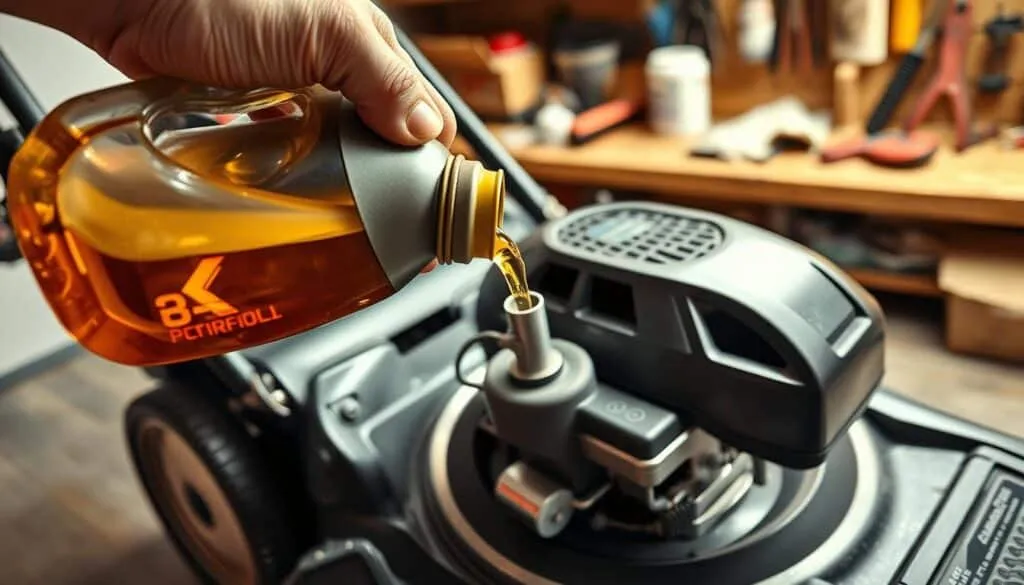
Have you ever wondered if a simple mistake could be silently damaging your yard equipment? Many homeowners focus on gas and sharp blades, overlooking a critical element for engine health.
The correct fluid level is not just a suggestion. It is a vital requirement for your machine’s performance. Using the right amount protects internal parts from friction and heat.
This simple act of maintenance can significantly extend the life of your equipment. It ensures a smooth run every time you tackle your grass.
Whether you have a push model or a riding tractor, the capacity varies. Knowing the specific amount for your model prevents common and costly errors.
This guide provides clear, step-by-step information. You will learn to check and fill your machine with confidence, keeping it in top shape for seasons to come.
Key Takeaways
- Proper lubrication is essential for preventing engine overheating and wear.
- The required amount of fluid depends on whether you own a walk-behind or riding machine.
- Overfilling can cause smoking and damage, while underfilling leads to excessive wear.
- Regular checks are a simple way to extend the lifespan of your equipment.
- This guide will help you determine the specific capacity for your model.
- You will gain the knowledge to perform this maintenance task correctly and easily.
Understanding Lawn Mower Oil Basics
Your equipment’s manual doesn’t just suggest an oil type; it provides a vital specification for optimal performance. Selecting the correct lubricant is a fundamental step in protecting your engine.
The right choice ensures smooth operation and prevents premature wear. It directly influences starting reliability and overall engine longevity.
Importance of Oil Type and Viscosity
Viscosity, or the thickness of the engine oil, is critical. It determines how well the lubricant flows and protects internal parts.
For warmer climates, SAE 30 is a common and effective type. It performs optimally when temperatures stay above 40°F.
In regions with fluctuating weather, a multi-grade oil like SAE 10W-30 offers versatility. It improves cold-weather starting but may lead to higher consumption in heat.
Synthetic SAE 5W-30 provides superior protection across a wide temperature range. It ensures easier starts in cold conditions and reduces overall oil use.
Adapting Oil Choices to Weather and Temperature
Your local climate should guide your selection. Using SAE 30 below 40°F can cause hard starting.
Conversely, using 10W-30 above 80°F might increase consumption. For commercial or continuous use, a robust oil like Vanguard 15W-50 is designed for demanding applications.
Always choose a high-quality detergent oil classified for service SF, SG, SH, SJ, or higher. Avoid special additives not recommended by the manufacturer.
Brands like Briggs & Stratton recommend using their certified oils or other quality alternatives meeting the same service classification. Consulting your manual guarantees you use the optimal product for your specific gas engine.
Essential Steps to Check & Change Your Mower Oil

Taking a few minutes to verify your engine’s lubrication can prevent costly repairs down the road. Regular maintenance ensures your equipment operates reliably throughout the mowing season.
Follow these essential procedures to maintain optimal engine performance. Proper care extends your machine’s lifespan significantly.
How to Check Your Oil Level Accurately
Begin by parking your equipment on a flat surface. This ensures an accurate reading of the fluid level.
Remove the dipstick cap and wipe the blade clean with a lint-free rag. Reinsert the dipstick fully, making sure the cap teeth align with the tube grooves.
Pull the dipstick out again and examine the oil level. It should fall between the “full” and “add” marks on the blade.
If the level is low, add small amounts gradually. Allow time for the oil to settle before rechecking to avoid overfilling.
Step-by-Step Oil Change Procedure
Consult your owner’s manual for specific instructions. Each model has unique requirements for this maintenance task.
Most walk-behind units need fresh lubricant every 50 hours or annually. Riding models typically require changes every 100 hours or each season.
Always use the recommended oil type for your climate and engine. Proper disposal of used fluid is essential for environmental safety.
| Mower Type | Check Frequency | Change Interval | Recommended Oil |
|---|---|---|---|
| Walk-Behind | Before each use | 50 hours or annually | SAE 30 or 10W-30 |
| Riding Mower | Monthly | 100 hours or annually | 10W-30 or 5W-30 |
| Commercial | Weekly | 25-50 hours | 15W-50 synthetic |
Following this maintenance schedule keeps your engine running smoothly. Consistent care prevents most common operational issues.
How Much Oil Goes in a Lawn Mower
Engine size directly determines the amount of lubricant your equipment requires. Different categories of mowers have distinct oil capacities that affect your maintenance routine.
Walk-behind models typically need 15 to 18 ounces. This amount suits their smaller engines perfectly.
Riding mowers require considerably more fluid. Most need 48 or 64 ounces to protect their powerful engines.
Capacity Guidelines for Different Mower Models
Your specific model’s manual provides the exact oil capacity. This information is essential before adding fluid.
Single-cylinder engines use less than twin-cylinder V-Twin engines. Never assume all mowers in the same category share identical requirements.
New equipment typically comes without pre-added oil. You must add the correct amount before first use.
After reaching the recommended operating hours, drain and refill to capacity. Walk-behind units need changes every 50 hours, while riding models require changes every 100 hours.
Always measure carefully when adding fluid. Check the dipstick frequently to avoid exceeding the maximum line.
Maintaining Optimal Engine Performance
Achieving peak performance from your yard equipment requires consistent attention to its internal needs. Establishing a regular maintenance routine ensures your investment delivers reliable service for years.
Routine Maintenance Tips for Longevity
Your equipment’s durability depends on simple, consistent care. Before each use, check the fluid level using the dipstick.
This quick inspection prevents most common engine problems. Follow the manufacturer’s schedule for complete fluid changes.
Walk-behind units typically need changes every 50 operating hours. Riding equipment requires service every 100 hours.
Selecting the Recommended Engine Oil
Briggs & Stratton now approves synthetic options for all temperatures. You can use their synthetic 5W-30 or 15W-50 oil year-round.
This high-quality detergent oil meets warranty requirements. It provides excellent protection for your small engine components.
Proper maintenance remains essential even with premium synthetic oil. Regular checks and scheduled changes keep your equipment running smoothly.
Using the recommended oil from trusted brands ensures optimal performance. Your investment stays protected through proper care and consistent maintenance.
Conclusion
Confident ownership of outdoor power tools comes from mastering basic maintenance routines. Understanding your equipment’s specific requirements transforms seasonal upkeep into a simple, rewarding practice.
Whether you maintain a walk-behind or riding model, proper lubrication ensures optimal engine performance. Regular checks and timely fluid changes prevent wear while extending your investment’s lifespan.
Following manufacturer guidelines for oil type and capacity protects your engine across all temperature conditions. This consistent care delivers reliable starting and smooth operation throughout the mowing season.
Your commitment to these practices pays dividends in performance and durability. Proper maintenance keeps your lawn looking great while avoiding costly repairs.
FAQ
What is the correct oil capacity for my walk-behind mower?
Most standard walk-behind mowers, like those from Briggs & Stratton, hold about 15 to 20 ounces of engine oil. This is roughly equivalent to one standard quart bottle. Always confirm the exact amount in your owner’s manual, as capacities can vary by model and engine size.
How often should I change the oil in my riding mower?
For optimal performance, you should perform an oil change after the first five hours of operation on a new riding mower. After that, change the oil every 50 hours of use or at least once per mowing season. Regular service is key to engine longevity.
Can I use automotive oil in my lawn mower engine?
It is not recommended. Small engines are designed for specific detergent levels found in lawn mower oil. Using automotive oil can lead to increased wear and potential engine damage. Always use the oil type specified by the manufacturer for your equipment.
What happens if I overfill the oil in my mower?
Overfilling can cause serious issues. Excess oil can foam up, leading to inadequate lubrication and increased pressure that may damage engine seals. Always check the level with the dipstick to ensure it’s between the “Full” and “Add” marks.
Is synthetic oil a good choice for my lawn equipment?
Yes, synthetic oil is an excellent choice. It provides superior protection in extreme temperatures and can extend the time between oil changes. Many modern small engines benefit from its advanced formulation, but check your manual for the manufacturer’s recommendation.