
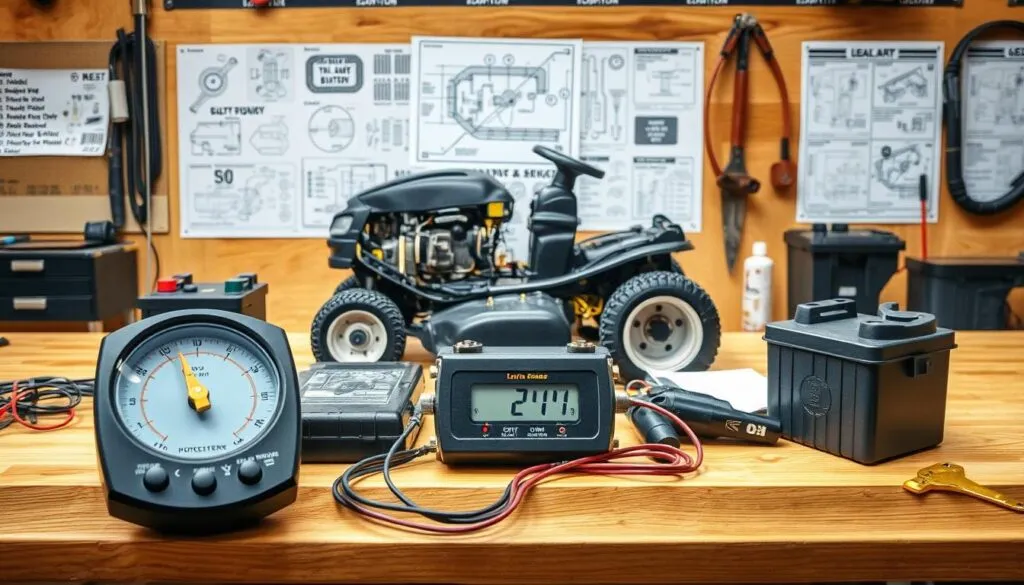
Have you ever wondered why some yard equipment starts instantly while others struggle? The answer often lies in a simple but critical specification that determines your machine’s performance.
Understanding the electrical requirements of your outdoor power tools is essential for reliable operation. The right power source ensures your equipment performs at its best throughout the cutting season.
This specification directly affects starting capability, runtime, and cutting performance. Choosing incorrectly can lead to compatibility issues and frustrating mid-task breakdowns.
Our comprehensive resource helps homeowners and professionals navigate different power requirements. You’ll learn to identify specific needs and make informed decisions about equipment maintenance.
Key Takeaways
- Battery voltage significantly impacts equipment starting power and runtime
- Different mower types have specific electrical requirements
- Proper voltage selection prevents compatibility problems
- Understanding specifications helps avoid performance issues
- Accurate testing ensures optimal equipment operation
- Informed decisions lead to better maintenance outcomes
- Industry standards provide reliable guidance for selection
Introduction to Lawn Mower Battery Voltage
The electrical heart of your outdoor equipment determines its operational capacity and longevity. This critical specification governs starting reliability, runtime duration, and cutting consistency throughout your entire yard work session.
Why Voltage Matters in Lawn Mower Performance
Correct electrical levels ensure your equipment’s engine starts smoothly while delivering consistent power to cutting blades. The specification directly impacts additional features like headlights, safety controls, and self-propulsion systems.
Operating with insufficient electrical capacity leads to deep discharge and permanent damage in lead-acid units. This reduces overall capacity and dramatically shortens service life.
An Overview of Common Battery Types and Voltages
Different technologies offer varying performance characteristics. Traditional lead-acid options provide reliable starting power, while modern lithium-ion units deliver longer runtime and faster charging.
| Battery Type | Common Voltages | Performance Characteristics | Typical Applications |
|---|---|---|---|
| Lead-Acid (Flooded) | 12V | High starting power, affordable | Gas-powered riding mowers |
| AGM (Absorbent Glass Mat) | 12V | Maintenance-free, spill-proof | Modern tractors and zero-turns |
| Lithium-Ion | 20V-80V | Lightweight, fast charging | Cordless electric models |
| Nickel-Cadmium | 12V-24V | Durable, temperature resistant | Older electric equipment |
Your electrical requirements determine which charger you can safely use and affect power delivery in challenging conditions. Proper specification selection prevents overburdening charging systems and ensures optimal performance through thick grass or wet conditions.
Determining the Right Voltage for Your Mower
Choosing the right electrical capacity for your outdoor cutting tool prevents frustrating mid-task interruptions. Your equipment’s specifications must match your yard size and grass conditions.
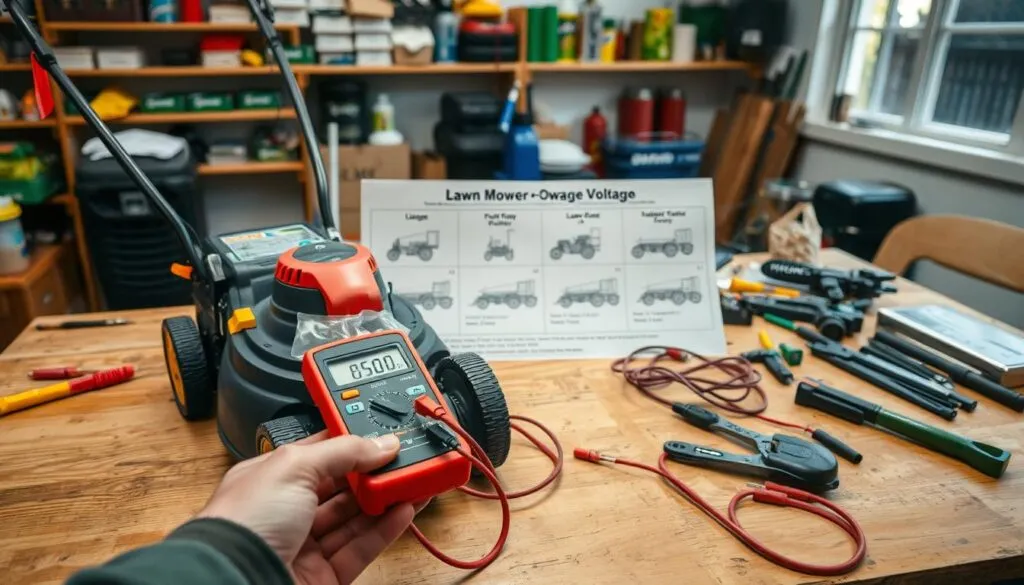
Different cutting equipment types have distinct electrical requirements. Understanding these differences ensures optimal operation.
Gas-Powered Versus Battery-Powered Mowers
Traditional gas models with electric start typically require 12V units. These provide sufficient cranking power for reliable engine ignition.
Cordless electric equipment utilizes lithium-ion technology across various capacities. The specification range depends on your property size and cutting demands.
| Equipment Type | Typical Specification | Yard Size | Best For |
|---|---|---|---|
| Small Electric | 20V | Tiny patches | Quick touch-ups |
| Medium Electric | 40V | 1/4-1/2 acre | Residential use |
| Heavy-Duty Electric | 56V-60V | Large properties | Thick grass conditions |
| Commercial Electric | 80V+ | Very large areas | Professional applications |
| Gas Riding | 12V | All sizes | Traditional operation |
Benefits of Using the Correct Voltage
Proper specification matching delivers consistent starting power and extended runtime. Your equipment performs reliably through challenging conditions.
Correct selection prevents electrical system damage and maximizes component lifespan. You avoid weak cutting performance and unexpected shutdowns.
Matching capacity to your needs ensures efficient operation throughout the season. This approach provides the best value for your investment.
How Many Volts Lawn Mower Battery: Key Specifications
The numbers on your power unit’s label reveal critical performance capabilities. Understanding these specifications ensures your equipment operates at peak efficiency throughout the cutting season.
Standard 12V Batteries for Gas Mowers
Traditional lead-acid units display specific voltage readings when fully charged. Flooded and AGM types typically measure between 12.6 and 12.8 volts at maximum capacity.
These power sources provide approximately 35 amp-hours of energy storage. They deliver 130-150 Cold Cranking Amps for reliable engine starting in various weather conditions.
Riding equipment requires around 145 CCA for standard models. Heavy-duty commercial machines may need up to 300 CCA for consistent ignition performance.
Modern Lithium-Ion Options for Electric Mowers
Lithium technology operates at higher voltage levels than traditional units. Fully charged LiFePO4 batteries reach 13.2 to 13.4 volts, delivering enhanced power density.
Capacity ratings determine runtime for cordless equipment. A 2.0 Ah unit provides 20-30 minutes of operation, while 4.0 Ah extends this to approximately one hour.
For larger properties, 6.0 Ah batteries offer around 90 minutes of continuous use. Some commercial systems utilize 24-volt configurations for increased power demands.
Techniques for Testing Your Lawn Mower Battery Voltage
Accurate voltage readings help you diagnose starting issues before they interrupt your yard work. Regular testing with a multimeter provides crucial insights into your equipment’s power status.
Using a Multimeter for Accurate Voltage Readings
A digital multimeter gives you precise numerical data about your power source’s condition. This tool measures electrical potential difference between terminals.
Always prioritize safety when handling electrical components. Wear protective gloves and ensure your equipment is completely turned off before testing.
A Step-by-Step Voltage Testing Guide
Wait at least one hour after use before taking measurements. This allows temporary surface charge to dissipate for accurate results.
Locate the power unit compartment and identify the positive and negative terminals. Clean any corrosion or debris from the contact points using a wire brush.
Set your multimeter to DC voltage mode with a 20V or higher range. Connect the red probe to the positive terminal and black probe to the negative terminal.
Interpret your readings carefully. A fully charged 12V unit should read 12.6-12.7 volts. Lithium models show higher values when properly charged.
Regular testing helps prevent unexpected failures during peak cutting season. Consistent low readings indicate when replacement becomes necessary.
Maintenance Tips to Extend Battery Life
Implementing simple upkeep practices ensures your cutting equipment starts reliably season after season. Consistent care prevents premature failure and protects your investment in quality outdoor tools.
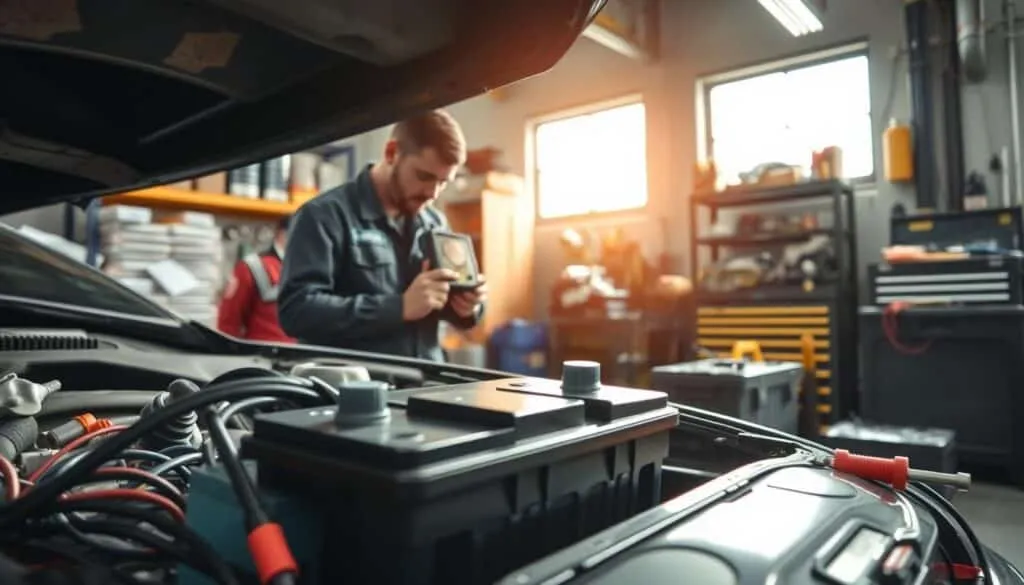
Regular Charging and Cleaning of Battery Terminals
Charge your power source after each use, especially during heavy cutting seasons. Avoid letting the electrical level drop below 12V since deep discharge causes permanent cell damage.
Inspect terminals regularly for dirt or corrosion buildup. Use a wire brush to remove contamination and apply protector spray to prevent future issues.
| Battery Type | Charging Practices | Storage Requirements | Terminal Maintenance |
|---|---|---|---|
| Lead-Acid | Charge after use, avoid below 50% | Cool, dry location off concrete | Monthly cleaning, anti-corrosion spray |
| AGM | Regular charging, automatic shutoff | Temperature-controlled area | Quarterly inspection, brush cleaning |
| Lithium-Ion | Partial charges acceptable | 40-50% charge for long storage | Minimal maintenance required |
| Nickel-Cadmium | Full discharge occasionally | Dry environment, moderate temps | Regular visual inspection |
Proper Storage Techniques and Avoiding Overcharging
Store your power unit in a cool, dry location away from extreme temperatures. Use a trickle charger to maintain appropriate levels during extended off-season periods.
Avoid overcharging, which generates excessive heat and shortens component lifespan. Always use a charger with automatic shutoff features for safety and longevity.
Check electrical readings often with a multimeter. A fully charged unit should read 12.6-12.7V. Recharge promptly when readings drop to maintain optimal performance.
Selecting the Best Battery for Your Mower Performance
Making the right choice between power source technologies significantly impacts your equipment’s efficiency and reliability. Your selection determines maintenance requirements, operational consistency, and long-term value.
Understanding the key differences helps you match the technology to your specific needs and usage patterns.
Comparing Lead-Acid and Lithium Options
Traditional lead-acid units remain popular due to lower initial cost. They work adequately for occasional cutting tasks and budget-conscious users.
These units require regular maintenance including terminal cleaning and water level checks. Deep discharge can cause permanent damage, reducing their service life to typically 3-4 years.
Modern lithium technologies offer substantial advantages for frequent users. They maintain steady power output throughout the discharge cycle, unlike traditional types that experience progressive voltage drop.
Lithium units charge 3-5 times faster and require virtually no maintenance. Their sealed construction eliminates corrosion concerns and makes them safer for residential use.
Despite higher upfront cost, lithium options typically last 5-10 years. This longer lifespan combined with better performance makes them more cost-effective over time.
Avoid using automotive power sources designed for different discharge patterns. Choose units specifically engineered for outdoor equipment applications.
Consider your usage frequency, budget, and maintenance preferences when selecting. Both technologies serve different needs effectively when matched correctly to your situation.
Conclusion
The knowledge you’ve acquired about power sources elevates your ability to maintain a perfectly manicured lawn consistently. Understanding electrical specifications transforms equipment operation from guesswork to precision.
Proper selection between traditional and modern technologies ensures your equipment delivers reliable starting power and extended runtime. Regular testing and care prevent mid-task interruptions during critical cutting seasons.
Your informed decisions lead to significant long-term savings and superior cutting results. This approach maximizes your investment while ensuring dependable performance for years.
Apply these insights to achieve professional-grade results with your residential or commercial equipment. Your attention to electrical details separates occasional yard work from true lawn care excellence.
FAQ
What is the typical voltage for a riding lawn mower battery?
Most riding mowers use a standard 12-volt system, similar to what you find in a car. This power level provides the necessary cranking amps to start the engine reliably. Always check your owner’s manual to confirm the exact specifications for your model.
Can I use a car battery charger on my lawn mower battery?
Yes, you can use a car charger, but it must be a trickle charger or a smart charger with a low-amp setting. Using a high-amp automotive charger designed for large car batteries can damage the smaller, more delicate cells in your mower’s power source.
How do I know if my battery is fully charged?
A fully charged 12-volt lead-acid battery should read approximately 12.6 to 12.8 volts when tested with a multimeter. If your reading is significantly lower, it indicates the unit needs charging. For maintenance-free or lithium-ion options, an integrated charge indicator light is often the easiest way to check status.
What causes corrosion on the terminals and how do I clean it?
Corrosion is typically caused by acidic vapor release during charging. To clean it, first disconnect the cables (negative first, then positive). Use a mixture of baking soda and water with a wire brush to scrub the terminals clean. Rinse with water, dry thoroughly, and reconnect (positive first, then negative).
How long does a typical lawn mower battery last?
The lifespan depends on the type and maintenance. A well-maintained lead-acid battery can last 3 to 5 years. Modern lithium-ion options often last longer, sometimes up to 5 to 8 years, because they are less affected by memory effect and can handle more charge cycles.
Is it safe to jump-start my mower with my car?
It is not recommended. A car’s charging system produces much higher amperage than your mower’s electrical system is designed to handle, which can cause serious damage. Instead, use a dedicated jump starter pack designed for small engines or properly charge the unit.