
What if the secret to a pristine lawn isn’t just what you do, but the order in which you do it? This single question sparks a major debate among homeowners aiming for that magazine-cover yard.
Getting the sequence right for lawn maintenance tasks makes a huge difference. A proper routine can transform an average yard into a neighborhood standout. The goal is crisp edges and uniform grass height.
This guide delivers a definitive answer to the weed whacking versus mowing debate. It covers everything from selecting the right equipment to applying the finishing touches. The focus is on achieving professional-looking results efficiently.
Understanding the correct order protects the health and appearance of your grass. This approach saves time and effort during regular care. The advice is practical for both beginners and experienced homeowners.
You will learn the reasoning behind the recommended sequence. This knowledge leads to a healthier, more beautiful lawn. The guidance is actionable for immediate improvement.
Key Takeaways
- The order of lawn care tasks significantly impacts the final look and health of your yard.
- A specific sequence helps achieve crisp, clean edges and a uniform grass height.
- Proper equipment selection is a critical first step in the maintenance process.
- Following the correct procedure enhances efficiency and saves time.
- This method benefits both new and experienced individuals managing their lawn.
- Implementing these steps immediately improves the overall appearance of your grass.
Understanding Effective Lawn Care
The foundation of exceptional lawn care lies in understanding how different tasks complement each other. Systematic maintenance creates visible improvements that go beyond simple grass cutting.
The Benefits of a Well-Maintained Lawn
A healthy lawn delivers multiple advantages beyond visual appeal. Proper care increases property value significantly. It also improves air quality and reduces soil erosion.
Dense, tall grass serves as the perfect canvas for crisp edges. Thin lawns cannot showcase professional edging effectively. Healthy turf creates a comfortable outdoor space for family activities.
| Lawn Condition | Property Value Impact | Environmental Benefits | Maintenance Requirements |
|---|---|---|---|
| Well-Maintained | Increases 5-15% | Improved air quality, erosion control | Regular systematic care |
| Average Condition | Neutral impact | Moderate environmental benefits | Inconsistent maintenance needed |
| Poor Condition | Decreases 5-10% | Limited environmental contribution | Extensive rehabilitation required |
Why Order Matters in Lawn Maintenance
The sequence of maintenance tasks directly impacts efficiency and final appearance. Each step builds upon previous work to create polished results. Proper order prevents re-cleaning areas or missing spots.
Following recommended operations creates natural guides for uniform grass height. It also ensures perfectly straight edges throughout the entire lawn. Grass clippings left after mowing provide significant nutritional benefits.
A full year’s worth of clippings equals approximately one complete fertilizer treatment. This natural approach saves money and time while supporting lawn health.
Expert Advice: should you weed whack or mow first?
For a lawn that looks like it was done by a pro, the order of operations is non-negotiable. The consensus among landscaping experts strongly favors a specific sequence.
This method starts with the mower. Cutting the main body of the grass first establishes a uniform height. This freshly cut length then acts as a perfect visual guide.
Weed Whacking vs. Mowing: Their Roles in Lawn Health
The mower and the trimmer are partners, not competitors. The lawn mower efficiently manages the large, open spaces. It sets the stage for the entire maintenance process.
The weed eater, or weed whacker, handles the detail work. It follows the mower to trim around obstacles and create crisp edges. This teamwork ensures every part of the lawn receives proper attention.
Consider the outcomes of each approach:
| Approach | Primary Benefit | Efficiency Level | Final Appearance |
|---|---|---|---|
| Mow First, Trim Second | Establishes a guide height for trimming | High – reduces correction passes | Uniform and professional |
| Trim First, Mow Second | Mows over some trimmings | Lower – can create uneven areas | Less cohesive, may require rework |
Evaluating Your Lawn’s Unique Needs
While the mow-then-trim sequence is the standard, every property has unique features. Assess the perimeter, flower beds, and trees before starting. This evaluation helps plan the trimming path after mowing is complete.
Understanding this recommended order saves significant time and effort. The result is a clean, polished lawn without the need for repeated corrections.
Preparing Your Equipment and Safety Gear
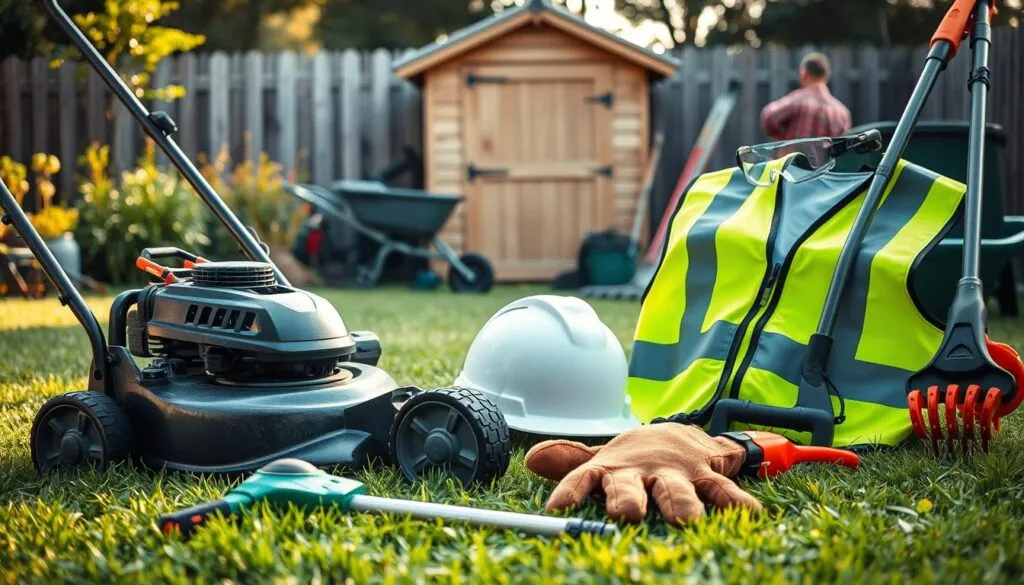
Investing in the right tools dramatically transforms the efficiency and outcome of yard work. Proper preparation ensures both safety and professional results.
Choosing the Right Mower and Weed Whacker
Selecting appropriate equipment matches your lawn size and maintenance goals. Gas or propane-powered machines deliver professional performance that electric alternatives cannot match.
Straight shaft string trimmers offer commercial-grade versatility for heavy work. Curved shaft models work well for small lawns with light trimming needs.
| Equipment Type | Best For | Performance Level | Investment Range |
|---|---|---|---|
| Straight Shaft Trimmer | Large lawns, professional work | High power, versatile | $$$ |
| Curved Shaft Weed Eater | Small yards, beginners | Light duty, easy handling | $ |
| Gas Powered Mower | Any lawn size | Professional results | $$-$$$ |
Essential Protective Gear for Safe Lawn Care
Safety equipment protects against flying debris from powerful machines. Essential items include long sleeves, gloves, and safety glasses.
“Proper protection prevents injuries that can occur in seconds but affect you for years.”
The debris guard on your trimmer automatically cuts string to optimal length. Many professionals remove it for better visibility while maintaining six inches of cutting line.
Closed-toe shoes and ear protection complete the safety ensemble. This gear makes lawn maintenance both effective and secure.
Step-by-Step Lawn Mowing Techniques
The way you approach mowing sets the stage for every other lawn care task that follows. Proper technique transforms basic grass cutting into professional-grade maintenance.
Begin with blade height adjustment based on your specific grass type. This initial step establishes the uniform height that guides subsequent trimming work.
Setting Your Mower Blade Height for a Perfect Cut
Correct blade height maintains grass health while creating a neat appearance. The mowed area then serves as a visual guide for perimeter trimming.
Avoid cutting grass too short, as this stresses the lawn and reduces edge visibility. Tall, dense turf showcases crisp edges far better than thin grass.
Establishing Crisp Edges Along Your Lawn
Follow a consistent pattern with slight overlap on each pass. This method ensures complete coverage and creates attractive light-dark stripes.
Take time on the first pass to establish straight, clean lines. These initial cuts make trimming and edging work much more precise.
Leave grass clippings on the lawn rather than bagging them. This practice provides nutritional benefits equal to one fertilizer treatment annually.
Mastering Weed Whacking Techniques
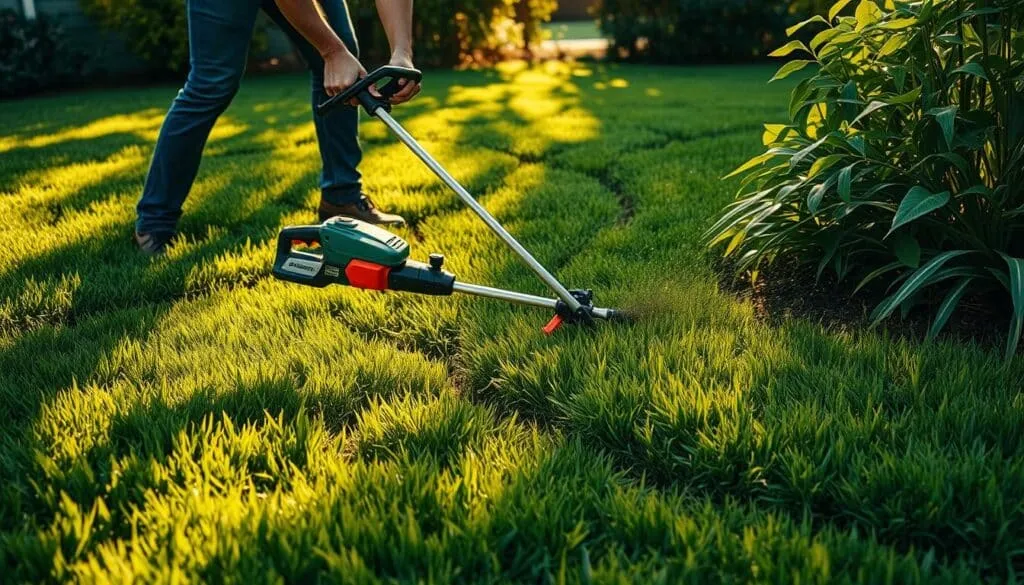
Mastering the trimmer transforms yard maintenance from chore to craft. This equipment handles areas inaccessible to mowers, creating polished edges around obstacles.
Clear the work area of hoses and debris before starting. Proper preparation prevents equipment damage and ensures safety during operation.
Trimming Around Trees, Flower Beds, and Posts
Gas-powered machines require specific starting procedures. Cold engines need priming and choke adjustments for reliable ignition.
Hold the spinning line parallel to mowed grass height when working around trees. Move the head back and forth while circling each obstacle.
Maintain distance from tree bark to prevent damage from high-speed line contact. The debris shield helps maintain this protective space.
Effective Edging and Line Control Strategies
Flip the machine upside down for vertical edging along paved surfaces. This position creates clean 90-degree angles between grass and pavement.
Understanding rotation direction improves efficiency. Counter-clockwise trimmers work best with right-to-left movement patterns.
String trimmers maintain existing edges while dedicated edgers establish new boundaries.
Landscape beds containing rocks need protective borders. Hard edges prevent dangerous projectile incidents during trimming.
Practice develops proficiency with line control. Initial attempts may seem challenging, but consistency creates professional results over time.
Additional Lawn Care Tips and Multi-Purpose Uses
The true versatility of modern lawn equipment emerges when exploring applications beyond their primary functions. These tools offer surprising flexibility for comprehensive yard maintenance.
Utilizing Your Weed Whacker for Versatile Tasks
Your trimmer serves multiple purposes beyond basic edge work. It handles tall grass on slopes where mowing proves difficult. Some machines accept brush cutting attachments for heavier vegetation.
Early morning work takes advantage of cooler temperatures. Dew-moistened grass cuts cleaner with less equipment strain. This timing improves the entire maintenance experience.
Incorporating a Blower for a Professional Finish
The final step involves clearing clippings from hard surfaces. A blower distributes debris evenly across the lawn. This creates that polished, professional appearance homeowners desire.
Systematic approaches work best around posts and fences. Consistent patterns ensure complete coverage without missed spots. The entire job flows more efficiently with proper planning.
| Guard Status | Safety Benefits | Performance Trade-offs | Recommended For |
|---|---|---|---|
| Guard On | Protection from rocks and debris | Limited visibility and reach | Beginners, safety-focused users |
| Guard Off | Better maneuverability | Increased risk from flying objects | Experienced professionals |
“Equipment flexibility transforms adequate maintenance into exceptional results.”
Regular weekly sessions maintain lawn health during peak growth. Most properties require one to two hours for complete care. Consistent routines prevent overwhelming vegetation buildup.
Conclusion
Adopting the correct sequence for lawn maintenance tasks unlocks the door to a truly professional-looking yard. The definitive approach is clear: make the initial cut with the mower, then follow with precise trimming.
This mow, edge, blow method is favored by landscaping professionals for good reason. It establishes a uniform grass height that acts as a perfect guide for detail work around trees and garden beds. This systematic approach maximizes efficiency and delivers consistently superior results.
The techniques covered, from equipment selection to safety, provide a solid foundation for excellent lawn care. Achieving crisp edges and a healthy lawn landscape takes practice. Early morning is often an ideal time for this work.
Consistent application of this proper way to care for your yard leads to a healthier turf. It also reduces long-term maintenance needs. Understanding this process ensures a beautiful, well-kept property.
FAQ
What is the best order for weed whacking and mowing?
The recommended order is to use your string trimmer first, followed by your lawn mower. This sequence allows you to trim grass and weeds along edges and around obstacles, clearing the way for a clean, even mow. The mower can then collect the clippings from the trimming work for a tidy finish.
Can I use a weed eater to edge my lawn?
Yes, many modern string trimmers have an edging feature. By tilting the machine onto its guard, you can create crisp, defined edges along sidewalks and driveways. For frequent edging, a dedicated lawn edger might provide more consistent results, but a trimmer is a versatile tool for the job.
How short should I cut my grass when mowing?
A good rule is to never remove more than one-third of the grass blade length in a single mowing session. For most turf types, this means maintaining a cutting height between 2.5 and 3.5 inches. This height promotes a healthier root system and helps shade out weeds.
What safety gear is essential for using a weed whacker?
Always wear protective eyewear to shield your eyes from flying debris like rocks and twigs. Sturdy closed-toe shoes, long pants, and hearing protection are also highly recommended for safe operation of your trimmer or edger.
What time of day is best for lawn maintenance?
Early morning or late afternoon are ideal times for yard work. Mowing or trimming during the heat of the day can stress both the grass and you. Avoid very early morning to be respectful of neighbors, and ensure the grass is dry for the best cut and to prevent clumping.
How can I get a professional-looking finish on my lawn?
After mowing and trimming, use a leaf blower to clear grass clippings from hard surfaces like your driveway and sidewalk. This final step removes debris and gives your entire lawn landscape a clean, manicured appearance that rivals pro-level maintenance.