
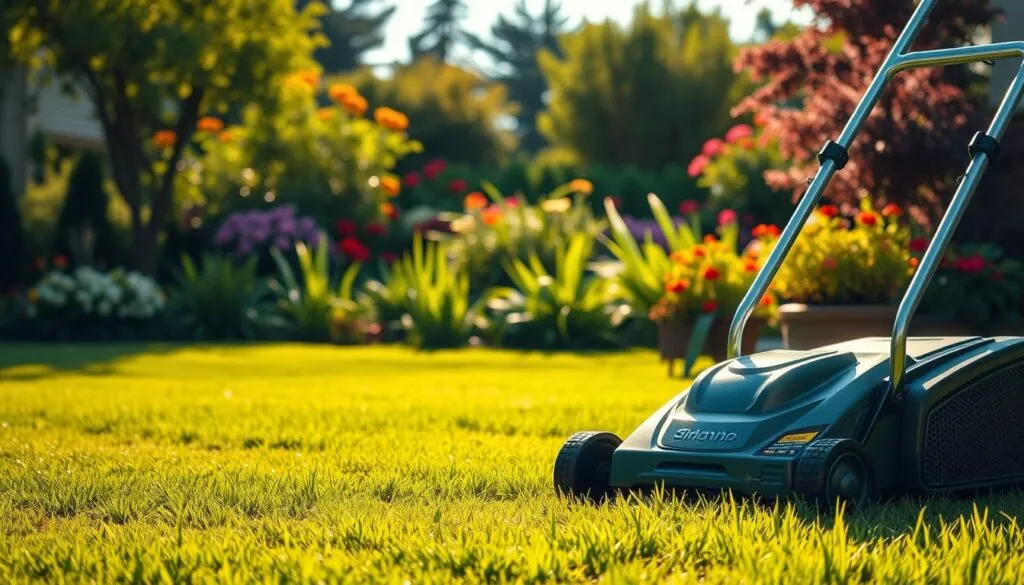
What if the single most critical step for a perfect lawn happens before you ever start the mower? Achieving a lush, green carpet of turf depends heavily on the timing of that very first cut.
This essential guide dives into the vital waiting period required for different establishment methods. Seeded areas demand significant patience, while sod offers a quicker path to readiness.
Getting the time right is not just about appearance; it is about the health of your entire landscape. Proper initial care ensures strong roots develop, creating a resilient and beautiful lawn.
We will explore the key differences and the clear signs that your young grass is truly prepared for its debut mowing.
Key Takeaways
- Timing the first cut is crucial for the long-term health of your lawn.
- Seeded lawns require a much longer establishment period than sod.
- Mowing too early can severely damage tender grass and weak roots.
- Sod installations are typically ready for mowing much sooner.
- Grass height and root strength are key indicators of readiness.
- Weather and soil conditions directly impact the ideal mowing time.
Preparing Your Mower and Tools for the First Cut
Before blades ever touch tender turf, your mower’s condition determines the outcome. Proper equipment preparation prevents damage to developing plants. The right approach ensures a clean cut rather than tearing.
https://www.youtube.com/watch?v=wxwfJLbxV0k
Sharp blades create healthy results. Dull equipment rips rather than slices, stressing young plants. This damage opens pathways for disease and creates unsightly white tips.
Sharpening the Blades
Sharp mower blades are essential for that initial trim. They provide clean cuts that heal quickly. Torn grass blades struggle to recover properly.
Consider professional sharpening if unsure about the process. Many repair shops offer this service affordably. Proper care extends your equipment’s lifespan significantly.
Cleaning and Maintenance Tips
Thorough cleaning removes debris that harbors pathogens. Old clippings and mud can spread problems across your lawn. A clean mower operates more efficiently too.
Establish a simple inspection routine before each use. Check for grass buildup under the deck. These tips protect your investment in both equipment and landscape.
Understanding Growth Stages: Seeded vs. Sodded Lawns
The path to a thick lawn diverges significantly based on your establishment method: seed or sod. Each approach has a distinct biological timeline. Recognizing these stages is crucial for perfect timing.
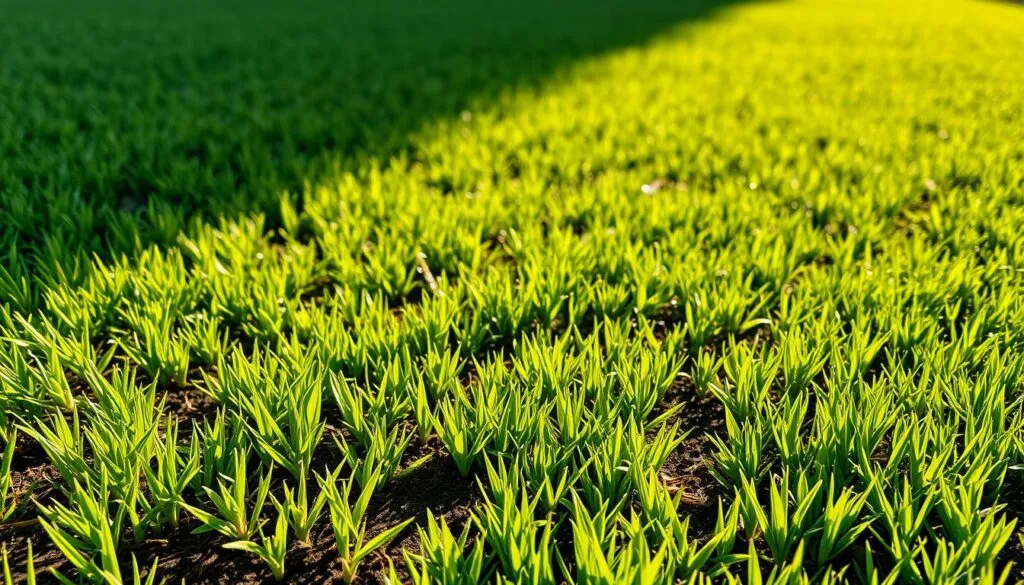
Seeding is a process of creation from the ground up. Laying sod is more like a transplant operation. This fundamental difference dictates your entire schedule.
When to Mow a Seeded Lawn
Patience is your greatest tool with a seeded new lawn. The journey begins with germination, which can span from 4 to 30 days.
This initial growth depends on several factors:
- The specific grass type you planted.
- Local weather and soil temperature conditions.
- Consistent moisture levels.
After sprouting, the young plants need several weeks to develop strong roots. A general rule is to wait about 8 weeks post-seeding. The grass should reach a height of 3 to 4 inches before the first trim.
Timing for Mowed Sodded Lawns
Installed sod offers a head start. The grass blades are already mature. Your focus shifts entirely to root establishment.
The waiting period for sodded lawns is much shorter, typically just 2 to 4 weeks. Perform the simple “tug test” to check for readiness. Gently pull a corner of the sod; strong resistance means the roots have anchored.
Weather conditions still play a role. Optimal growth occurs with moderate temperatures and adequate water. Once established, your sodded lawns will be ready for regular care.
how long before you can mow new grass
The readiness of your young turf hinges on two critical, measurable factors. These indicators provide a definitive answer, moving beyond simple week counts.
Observing these signs ensures your inaugural cut strengthens the lawn rather than causing damage.
Identifying the Ideal Grass Height
Grass height is the most visible sign of readiness. Most types are prepared when they reach 3 to 4 inches.
This specific height allows for adequate strength and deeper root development. The plants can better handle the stress of mowing.
Avoid letting the turf grow excessively tall before the first cutting. Trimming above 5 inches can shock the system. Always follow the one-third rule to protect your investment.
Checking Root Strength and Moisture Conditions
Root establishment is just as important as blade height. Perform a simple tug test on a few grass plants.
Strong resistance indicates the roots have anchored properly. This is the true test for the right time.
Check water conditions before starting your equipment. The surface should be dry for a clean cut. This protects both the tender blades and your mower.
Uniform, dense, and upright growth signals the ready first mowing time has arrived.
Best Mowing Practices for a Healthy, Lush Lawn
The initial cutting approach sets the stage for your lawn’s long-term health and appearance. Proper techniques during establishment prevent stress and promote vigorous growth.
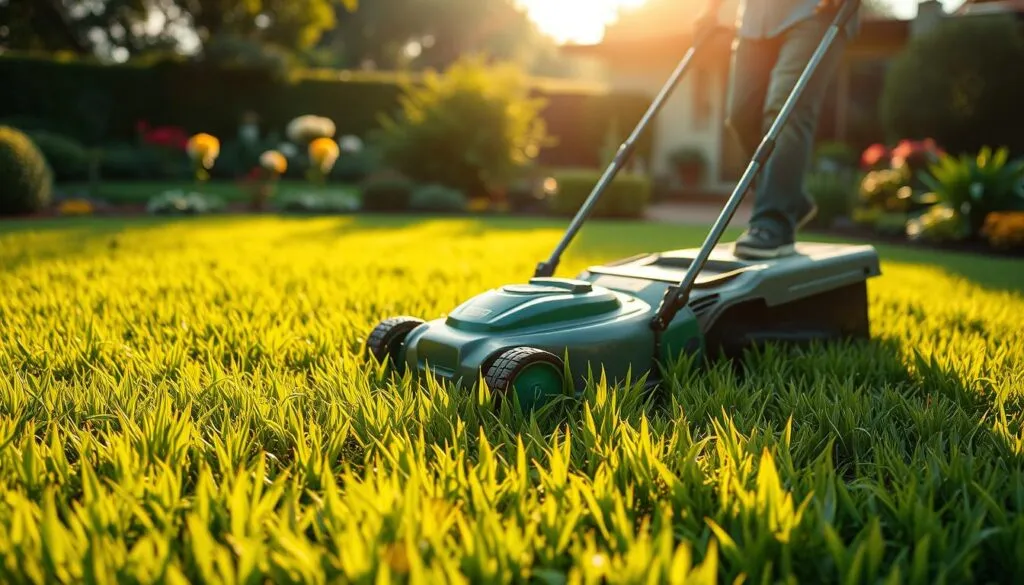
Following fundamental principles ensures your turf develops strong roots and dense coverage. These methods work for all grass varieties.
Mowing Height and the One-Third Rule
Maintain optimal mowing height for your specific grass type. Most varieties thrive when cut to 3-4 inches during establishment.
The one-third rule is crucial for healthy lawn mowing. Never remove more than one-third of the blade height in a single session. This prevents excessive stress on developing plants.
Allow the turf to reach the upper end of its recommended range before the first cutting. Gradual reduction protects tender grass blades.
Planning Your Mowing Pattern and Schedule
Alternate your mowing direction with each session. This prevents grass from leaning and promotes upright growth.
Base your schedule on growth rate rather than calendar dates. The right time for another cut depends on current weather conditions and visible growth.
Proper lawn care includes immediate watering after mowing. This helps recovery and delivers essential nutrients.
Conclusion
The successful establishment of your lawn marks the beginning of a rewarding maintenance routine. Your patience during those critical first weeks has built a solid foundation for growth. Now your focus shifts to consistent care practices.
Monitor your developing turf for signs of stress like yellowing blades or uneven patches. Early detection allows for quick adjustments to water schedules or nutrient levels. Vigilance prevents minor issues from becoming major problems.
Plan your next cutting session based on visible grass development rather than calendar dates. Continue following the one-third rule to protect tender plants. Regular inspection for weeds ensures they don’t compete with your established sod.
This comprehensive guide has equipped you with the knowledge for both establishment and ongoing care. Your investment in proper timing and technique will yield a lush, healthy outdoor space for years to come.
FAQ
How soon after laying sod can I mow?
You can typically mow new sod about 14 to 21 days after installation. The key is to ensure the root system has firmly anchored into the soil. Gently tug on a corner of the sod; if it resists, the roots have taken hold, and it’s safe for the first cut.
What is the correct mowing height for new grass?
For the initial mow, set your mower blade to a higher setting. Aim to cut grass seeded lawns when they reach about 3 to 4 inches tall, removing no more than the top third of the blade. This height helps protect the developing root system from stress.
Why is the one-third rule important for lawn care?
The one-third rule—never removing more than one-third of the grass blade in a single mowing—is vital for plant health. Cutting too much at once shocks the grass, stunting root growth and making the lawn more susceptible to disease, drought, and weed invasion.
How do I prepare my mower for cutting a new lawn?
Before the first mow, ensure your mower blades are sharp. Dull blades tear the grass, creating brown, frayed tips that increase stress and vulnerability to pests. Also, clean the mower deck to prevent spreading any old clippings or disease to your tender new grass.
What is the best time of day to mow a new lawn?
The ideal time is in the late afternoon or early evening. Mowing during the heat of the day puts extra stress on the grass. An evening cut allows the lawn to recover overnight before facing the sun again, and the grass is typically drier than in the morning.