

Have you ever glanced at your overgrown lawn after a morning rain, wondering if you should just fire up the mower? Many homeowners face this exact dilemma. The pressure to maintain a neat yard often clashes with the ideal conditions for lawn care.
This common question deserves a thoughtful answer. While waiting for dry weather is the safest choice, life does not always cooperate. Understanding the consequences of cutting a damp lawn empowers you to make an informed decision.
Your beautiful green space and your equipment’s longevity are at stake. This guide explores the critical factors that influence your choice. We will cover weather patterns, turf health, mower considerations, and vital safety tips.
You will learn practical strategies for assessing the situation. Our goal is to provide clear, actionable advice for managing your landscape, even when conditions are less than perfect.
Key Takeaways
- Mowing damp turf presents significant risks to both your lawn’s health and your equipment.
- Ideal mowing conditions are dry, but sometimes circumstances require a different approach.
- Several factors, including soil saturation and grass type, determine the advisability of cutting.
- Proper equipment selection and settings are crucial for minimizing potential damage.
- Safety must be a top priority when operating machinery on slippery, wet ground.
- This guide provides a comprehensive framework for making an educated decision.
Understanding the Risks of Mowing Wet Grass
A damp lawn presents unique challenges that every homeowner should carefully consider before starting their mower. Moisture significantly alters how your equipment interacts with the vegetation beneath it.
Potential Damage to Grass Blades and Soil
Cutting moisture-laden turf creates ragged edges instead of clean cuts. This tearing action results in brown tips that weaken your lawn’s health. The vegetation becomes more vulnerable to stress and diseases.
Water weight causes individual blades to bend over unevenly. Your equipment cannot achieve a consistent cutting height. The result appears patchy and unprofessional once everything dries.
Heavy machinery compacts damp earth, creating ruts that suffocate root systems. This compaction reduces oxygen availability to the grassroots. Long-term soil damage may require corrective aeration.
Safety Hazards and Increased Accident Risks
Slick conditions transform your yard into a potentially hazardous area. Falls and injuries become more likely, especially on slopes or uneven terrain. The U.S. Consumer Product Safety Commission reported over 250,000 lawn mower-related injuries in one year.
Electric models pose particular dangers when used with extension cords. Water and electricity create a deadly combination. Always prioritize personal protection when considering landscape maintenance under these conditions.
Assessing Lawn Conditions Before You Mow
Taking a few minutes to inspect your property can prevent costly damage to both turf and machinery. Proper evaluation helps you make informed decisions about timing your cutting sessions.
How to Check for Excess Moisture
Simple tests reveal moisture levels quickly. The walk test involves strolling across your lawn. If shoes become damp, postpone your cutting session.
Try the touch test by feeling vegetation blades. Dampness indicates unsuitable conditions. Light morning dew may be acceptable, but rain-soaked turf requires waiting.
Evaluating Rain Impact and Soil Compaction
Recent precipitation determines your waiting period. After light showers, allow 2-5 hours for drying. Heavy rainfall requires a full 24-hour delay.
Check ground saturation before proceeding. Look for spongy earth or muddy areas. Waterlogged soil compacts easily under equipment weight.
Proper assessment saves time and prevents problems. Your careful evaluation protects lawn health and equipment performance.
Is It Ok to Mow Wet Grass? Factors to Consider
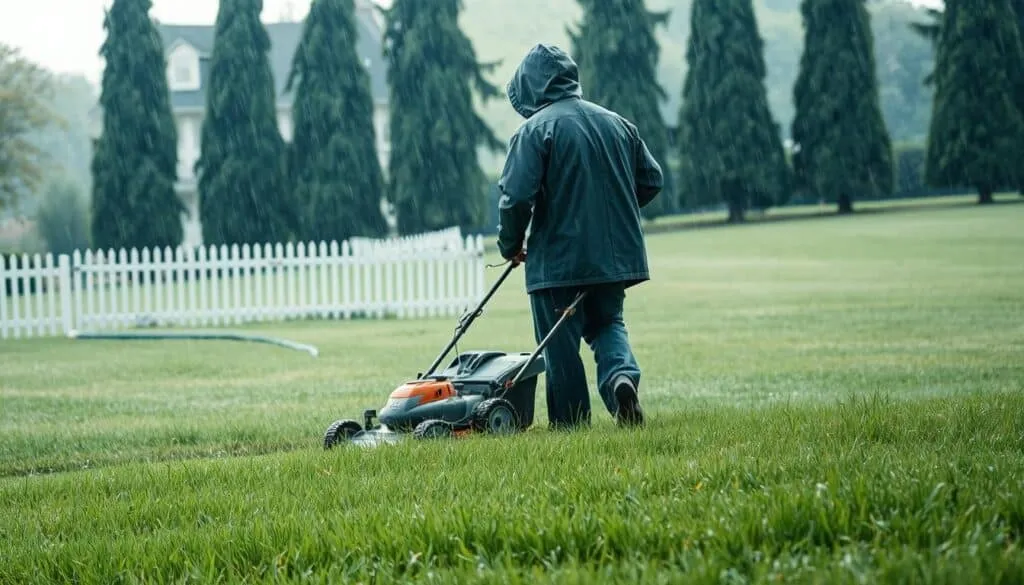
Homeowners in regions with frequent precipitation often face the dilemma of balancing lawn maintenance with less-than-ideal moisture levels. Sometimes circumstances make cutting damp turf unavoidable, requiring careful consideration of multiple factors.
The decision involves understanding “acceptable wetness” versus truly saturated conditions. Slightly damp vegetation presents fewer problems than heavily waterlogged turf. Purdue University experts note that trimming moist growth may be preferable to allowing excessive growth.
Weather Conditions and Timing
Optimal cutting windows typically occur during mid-morning or late afternoon. These periods allow morning dew to evaporate while avoiding evening moisture accumulation. Timing your session correctly minimizes potential damage to your landscape.
Evaluate your specific situation by considering turf type, property slope, and equipment capabilities. Compare the urgency of maintenance against current moisture levels. This framework helps you make informed decisions rather than seeking simple answers.
Each scenario requires individual assessment, weighing risks against the consequences of indefinite delay. Your judgment becomes the most valuable tool for maintaining healthy green spaces under challenging circumstances.
Choosing the Right Mower for Wet Conditions
Different mower types handle damp landscapes with varying degrees of effectiveness. Your equipment selection significantly impacts both cutting quality and turf health under moist circumstances.
Self-Propelled vs. Push Mowers in Wet Weather
Self-propelled models offer distinct advantages for challenging terrain. Their consistent forward motion provides better traction on slippery surfaces.
However, heavier self-propelled units may compact soil excessively. Push mowers allow more control but require greater physical effort.
Electric and Gas-Powered Mower Considerations
Gas-powered engines deliver superior torque for thick, moisture-laden vegetation. They power through resistance without overheating concerns.
Corded electric models present serious safety hazards when used near water. Battery-powered options offer compromise solutions for smaller properties.
| Mower Type | Wet Grass Performance | Soil Impact | Safety Considerations |
|---|---|---|---|
| Self-Propelled Gas | Excellent traction | High compaction risk | Standard precautions |
| Push Mower | Moderate control | Minimal soil damage | Slip hazard awareness |
| Corded Electric | Poor performance | Light weight beneficial | Extreme electrical danger |
| Battery Electric | Adequate for light duty | Minimal impact | Safer than corded models |
Consider your specific landscape needs when selecting equipment. Proper machine choice ensures better results while protecting your lawn’s health.
Best Practices and Tips for Mowing Wet Grass
Mastering a few key adjustments transforms a potentially disastrous mowing session into manageable lawn maintenance. These practical strategies help you achieve better results when cutting cannot be postponed.
Proper Mower Height and Cutting Techniques
Set your equipment to a higher cutting position than usual. This simple change prevents removing too much moisture-heavy growth at once. Kansas State University Research and Extension recommends maximizing your mower’s height setting.
Follow the “one-third rule” by trimming just the top portion of your lawn. Raising the cutting level one or two positions above normal reduces tearing and clumping. Sharp blades create cleaner cuts that minimize damage to your vegetation.
Move at a slower pace than during dry conditions. Reduced speed allows blades adequate time to slice through damp growth evenly. This technique significantly decreases clumping while protecting your equipment from strain.
Strategies to Minimize Clumping and Clogging
Clean your mower deck thoroughly before starting. Apply a non-stick spray coating to prevent grass buildup during operation. These preparations help maintain smooth performance throughout your session.
Use side discharge instead of mulching or bagging functions. Wet clippings frequently clog mulching systems and cake inside collection bags. Empty the bag frequently to prevent excessive weight accumulation.
Remove excess surface water using a hose dragged like a squeegee. Alternatively, push moisture toward lawn edges with a soft-bristle broom. These proactive steps improve cutting conditions before you begin.
Make regular stops to clear accumulated clippings from underneath the deck. Consistent maintenance during operation prevents clogging and ensures even cutting patterns. These practices significantly reduce risks when dealing with challenging conditions.
Managing Lawn Health and Preventing Disease
Fungal infections represent a hidden danger that emerges after trimming soggy lawns. Moisture creates ideal conditions for microscopic organisms to multiply rapidly across your property.
Torn grass blades provide easy entry points for pathogens. Damp clippings stick to equipment, spreading spores throughout your landscape. This transmission turns small issues into widespread infections.
Reducing the Spread of Lawn Diseases
Common turf problems thrive in moist environments. Identifying these conditions early helps protect your green space.
| Disease Name | Appearance | Conditions |
|---|---|---|
| Dollar Spot | Small silver-dollar bleached areas | High humidity, moist turf |
| Brown Patch | Large circular discolored patches | Excessive moisture, warmth |
| Rust Disease | Orange/yellow spots on blades | Damp conditions, poor growth |
| Red Thread | Pinkish patches with thread-like growth | Cool, wet weather |
Contaminated mower decks become disease vectors. Thorough cleaning after each session prevents spore transmission. This simple step protects your entire property.
Preventing Fungal Infections and Brown Patches
Sharp blades create clean cuts that heal quickly. Dull equipment tears vegetation, inviting pathogens. Regular sharpening serves as your first defense.
Proper timing between maintenance sessions allows turf recovery. Waiting for drier conditions prevents most fungal issues.
Understanding proper waiting periods after treatments maintains lawn vitality. Your vigilance prevents minor problems from becoming major outbreaks.
Dealing with Mower Maintenance and Equipment Care
Your mower’s performance and longevity depend heavily on post-mowing care, especially after challenging sessions. Proper maintenance prevents costly repairs and extends your equipment’s lifespan significantly.
Moisture from damp vegetation creates unique challenges for your machinery. Water can infiltrate fuel systems, causing engine malfunctions. Clumped clippings block blade movement, forcing the engine to work harder.
Cleaning the Mower Deck and Blades
Thorough cleaning prevents rust and corrosion on metal components. Stop periodically during your session to clear accumulated grass from the mower deck. This prevents excessive buildup that damages equipment.
After finishing, remove all clippings from underneath the deck. Use a scraper or brush to clean blades thoroughly. Moisture accelerates rust formation, potentially requiring expensive repairs.
| Maintenance Task | Frequency | Benefit |
|---|---|---|
| Deck cleaning | After every session | Prevents rust and clogging |
| Blade inspection | Monthly | Ensures clean cuts |
| Engine check | Seasonally | Maintains performance |
| Lubrication | As recommended | Reduces wear |
Ensuring Long-Term Performance After Wet Mowing
Sharp mower blades create cleaner cuts that heal quickly. Dull blades tear vegetation, inviting pathogens. Regular sharpening serves as your primary defense.
Consistent maintenance after difficult conditions protects your investment and ensures reliable operation for future sessions.
Proper storage in dry conditions completes your maintenance routine. These practices safeguard your equipment against premature failure. Your vigilance preserves both performance and value.
Conclusion
Successful property management involves recognizing that sometimes circumstances demand action despite less-than-perfect moisture levels. Your informed choices protect both landscape vitality and equipment longevity.
Primary risks include torn vegetation, soil compaction creating ruts, and increased disease vulnerability. Waiting 2-5 hours after light precipitation or 24 hours following heavy rainfall remains the safest approach.
When you must proceed, proper techniques significantly reduce negative outcomes. Raise cutting height, use sharp blades, move slowly, and prioritize safety on slippery surfaces.
Your careful assessment and application of these strategies ensure confident decision-making for maintaining a healthy, beautiful landscape.
FAQ
Can cutting wet grass damage my lawn?
Yes, trimming a soaked lawn can cause significant harm. Heavy, waterlogged grass blades tear instead of getting a clean cut, leading to frayed tips that turn brown. This also stresses the turf, making it more vulnerable to fungal diseases like brown patch. Furthermore, the extra weight of your machine can compact the soil and create unsightly ruts.
What are the main safety risks when mowing in wet conditions?
The primary dangers involve slipping on slick turf and losing control of the equipment. Electric mowers pose a severe electrocution hazard if used on damp ground. Wet clippings can also clog the mower deck rapidly, potentially causing the engine to strain or stall, and clumps of grass left on the lawn create a slippery surface for walking.
How can I tell if my lawn is too wet to mow?
Perform a simple test. Walk across your turf; if you leave deep footprints or the soil feels spongy and water squishes up, it’s too saturated. Another sign is if you see visible water pooling on the surface. It’s best to wait until the sun has dried the area for several hours after rainfall.
Are some types of mowers better for damp grass?
Self-propelled mowers are generally safer than push models because they provide better traction. However, gas-powered engines often handle the added strain of wet clippings better than some electric motors. Regardless of the type, a sharp blade is the most critical factor for a cleaner cut in challenging conditions.
What is the best technique for mowing a wet lawn?
Set your mower deck to a higher cutting height to reduce stress on the grass. Make slower, overlapping passes to prevent the machine from clogging. You might need to stop frequently to clear accumulated clippings from underneath the deck. Also, mow in a different direction than your usual pattern to minimize soil compaction.
How should I clean my mower after cutting wet grass?
It’s crucial to clean the equipment immediately after use. Turn off the engine and disconnect the spark plug wire (for gas models) or battery (for electric). Use a brush or putty knife to scrape off all grass clippings from the deck, blades, and wheels. This prevents rust and ensures your machine is ready for its next job.